When comparing bar seating options, it is natural to question what distinguishes wicker from other materials. Wicker bar stools are often chosen for their ability to combine visual warmth with functional comfort and everyday usability. Their advantages extend beyond appearance, influencing how they perform in regular use, how they age over time, and how easily they adapt to different spaces. This article examines the benefits of wicker bar stools, including their aesthetic contribution, seating experience, durability, maintenance requirements, sustainability, and design flexibility. By the end, you will have a clear sense of how these stools function in everyday settings and whether they suit your space and lifestyle.

Natural Aesthetic and Visual Warmth
One of the key benefits of wicker bar stools is the way they add visual warmth while softening spaces dominated by hard, polished materials. By introducing natural texture rather than visual clutter, wicker helps kitchens and bar areas feel more inviting, balanced, and comfortable to spend time in.
Organic Texture Appeal
When wicker stools are placed near stone counters, tile backsplashes, or stainless steel appliances, the woven surface helps soften flat, reflective materials. Depth and contrast come from the structure of the weave rather than from bold colors or decorative elements, which keeps the composition visually grounded. The material also creates a gentle transition between natural and manufactured surfaces, helping the space feel cohesive.
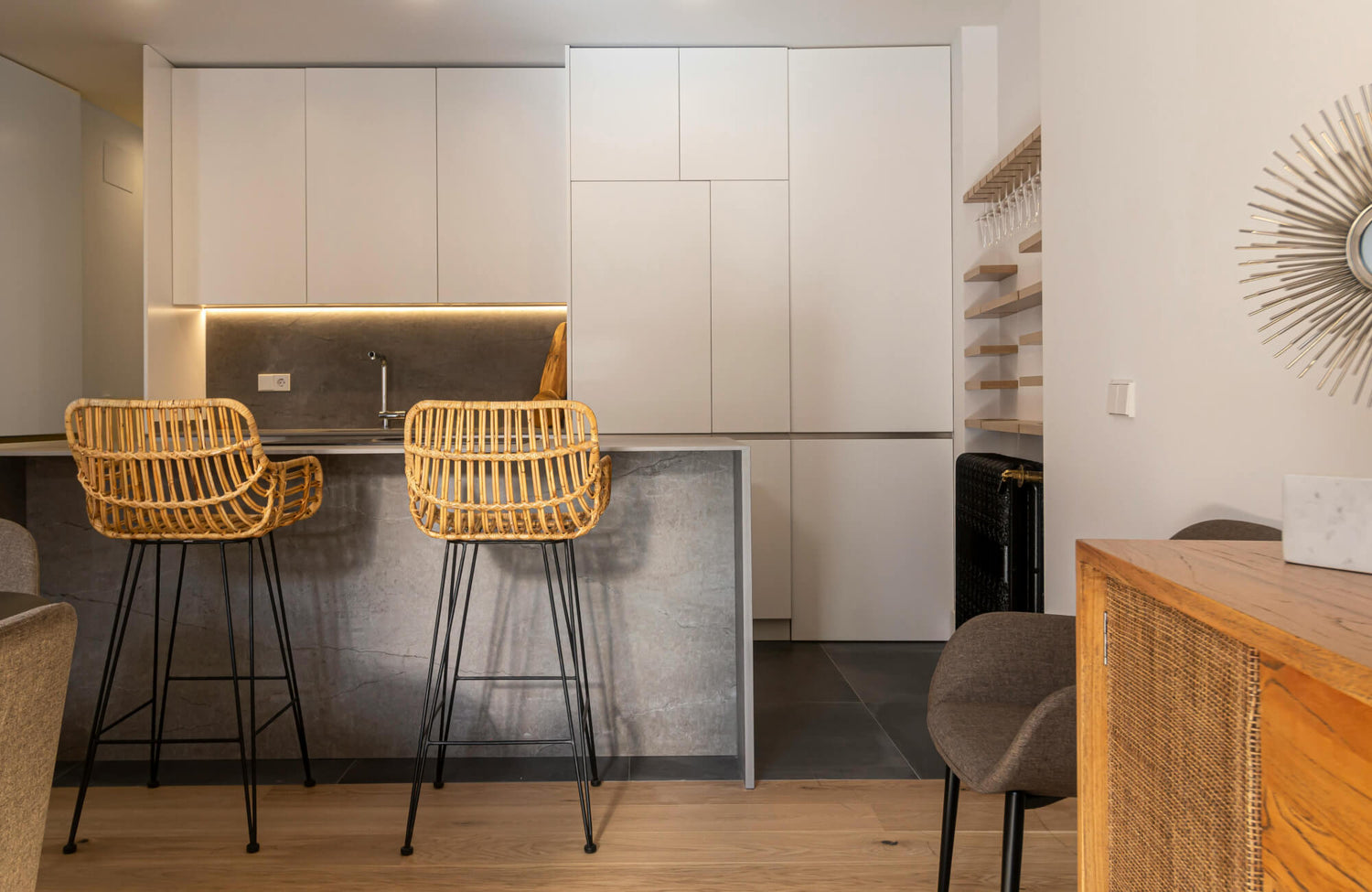
This effect is clearly illustrated in the photo featured above, where Edward Martin’s Vivian Counter Stool in Black introduces woven texture against a stone island and clean-lined cabinetry. Its subtle contrast adds warmth without competing with surrounding finishes, allowing visual interest to remain balanced while bringing quiet character to a modern, refined kitchen setting.
Versatility Across Interior Styles
One reason wicker works so well is that it adapts easily to different design directions. For example, in coastal interiors, lighter finishes and open weaves contribute to a relaxed, airy atmosphere that feels naturally at ease. In contrast, in farmhouse or bohemian settings, thicker weaves and warmer tones help reinforce a more lived-in look. Meanwhile, in modern or transitional spaces, tighter weaves paired with clean-lined frames allow wicker stools to feel intentional rather than rustic. Overall, this flexibility prevents a space from feeling tied to a single aesthetic, making the stools easier to live with over time.
Visual Lightness in Small Spaces
If you are working with a compact kitchen or a narrow bar area, bulky seating can quickly overwhelm the room. Wicker stools help avoid this issue because the open weave allows light to pass through, reducing visual density. As a result, they occupy less visual space than solid wood or upholstered stools, allowing sightlines to remain clear and unobstructed. This quality helps smaller kitchens, apartments, and bar areas feel more open and comfortably proportioned rather than crowded.

Comfort and Everyday Seating Experience
Comfort is one of the primary benefits that makes wicker bar stools suitable for regular, everyday use. Their construction allows seating to feel supportive without being rigid, helping stools remain comfortable across a range of daily activities.
Flexible Weave Support
Unlike rigid materials, wicker has a small amount of give that allows the weave to adjust subtly to your weight rather than resisting it. This creates a supportive feel without the hardness often associated with wood or metal seating. The natural flexibility also helps distribute weight more evenly across the seat. Over time, results in greater comfort during brief use as well as during longer, more relaxed conversations at the counter.
Breathability in Warm Environments
In warm kitchens or sunlit dining areas, solid seats can trap heat and become uncomfortable over time. Wicker allows air to move through the weave, helping regulate temperature while you are seated and reducing heat buildup. This breathable quality supports comfort during extended use and helps the seating feel less restrictive. It is especially noticeable in homes with large windows, southern exposures, or open layouts where warmth tends to linger.
Cushion Compatibility
If bar stools are used for longer meals or occasional work sessions, adding cushions can enhance overall comfort. Wicker pairs naturally with slim seat pads, as the woven surface helps reduce movement during use. Cushions with ties or non-slip backing are especially effective at staying in place while maintaining a clean, streamlined look.
A great example is shown in the photo above, where Edward Martin’s Darcy Outdoor Counter Stool in Cream is paired with a tailored cushion that adds comfort without overpowering the woven form. This combination demonstrates how seating comfort can be adjusted as needed while preserving the stool’s light, uncluttered appearance.

Durability and Structural Reliability
One of the practical benefits of wicker bar stools is their ability to provide reliable support when constructed with the right materials. Although wicker may appear lightweight, thoughtful construction and sturdy frames allow these stools to perform well under everyday use.
Natural Versus Synthetic Wicker
Natural wicker materials such as rattan or reed provide a traditional look and feel, although they tend to perform best in stable indoor environments. Synthetic wicker, often made from resin, is designed to withstand moisture and temperature fluctuations. In spaces near exterior doors or areas with strong sunlight, synthetic options generally offer better long-term durability. Recognizing this distinction makes it easier to choose seating that suits the conditions of your space.
Frame Materials That Matter
The frame does most of the structural work in a wicker stool. Wood frames often add warmth and visual continuity, while metal frames contribute added strength and stability, particularly at bar height. When choosing bar stools, it is useful to consider how securely the wicker is attached to the frame and whether key joints are properly reinforced. A strong frame ensures that the woven seat performs consistently rather than loosening over time.
Weight Capacity Considerations
Barstools are often used by different people throughout the day, making weight capacity an equally important consideration. Checking manufacturer load ratings gives you a clearer sense of what the stool can handle. Aside from numbers, tightly woven seats and well-supported footrests usually indicate better long-term performance. This small step helps avoid premature wear and unexpected instability.

Maintenance and Long-Term Care Advantages
One practical benefit of wicker bar stools is that they are easy to maintain. For households with busy routines, this straightforward care routine can make a meaningful difference over time.
Simple Cleaning Practices
Regular upkeep for wicker is straightforward and fits easily into everyday cleaning routines. Light dusting or vacuuming with a brush attachment removes debris from the weave, while occasional wiping with a slightly damp cloth helps keep the surface clean without saturating the material. Allowing the stool to dry fully after wiping helps preserve the integrity of the weave. Overall, the routine is quick and does not require specialized products, though it is always a good idea to follow the manufacturer’s care recommendations.
Resistance to Visible Wear
Wicker naturally disguises everyday wear in a way that smooth surfaces often cannot. Minor scuffs or subtle surface changes tend to blend into the woven pattern rather than standing out. This textured quality helps small imperfections blend in over time rather than stand out. Compared to smooth wood or fabric upholstery, the weave makes signs of aging less noticeable, allowing stools to maintain a consistent appearance year after year.
Indoor and Covered Outdoor Use
Placement plays an important role in long-term performance. Indoors, wicker typically performs reliably with minimal intervention. In covered outdoor areas, by contrast, synthetic wicker can also work well when protected from direct rain and prolonged sun exposure. Additionally, paying attention to airflow and shade helps prevent premature wear. Ultimately, choosing the right location reduces maintenance demands and extends the life of the stools.

Sustainability and Material Responsibility
One of the benefits of wicker bar stools is their potential to align with more environmentally responsible material choices. When selected with care, they can support sustainability through material sourcing, longevity, and production practices rather than relying on appearance.
Renewable Material Sources
Natural wicker materials such as rattan and bamboo grow quickly and regenerate efficiently, making them practical alternatives to slow-growing hardwoods. Their fast renewal rates help reduce the long-term environmental strain often associated with traditional timber harvesting. These materials also require less intensive processing, which can reduce overall resource use. When responsibly harvested, they offer a lower-impact option without sacrificing performance.
Longevity as a Sustainable Feature
Durability plays a subtle yet meaningful role in sustainability. When stools last longer and remain visually relevant, they are replaced less often, which helps limit unnecessary production and disposal. Long-lasting furniture also reduces the demand for raw materials over time. Wicker’s timeless appearance and dependable construction encourage long-term use, which helps reduce waste over time.
Responsible Manufacturing Choices
Paying attention to sourcing and finishes is an equally important part of making responsible furniture choices. Low-toxicity coatings, ethical labor practices, and durable construction all contribute to a product that is better suited for long-term use. These choices can also improve indoor air quality and overall safety. When these considerations are made into the design, sustainability becomes part of everyday living rather than something abstract.

Design Flexibility and Functional Use Cases
Another benefit of wicker bar stools is their adaptability to different layouts and daily needs. Their range of sizes, configurations, and lightweight construction allows them to function well in spaces that must accommodate both routine use and occasional changes.
Height Options for Counters and Bars
Proper seat height plays a bigger role in comfort than many people expect. Wicker stools are available in standard counter and bar heights, which makes it easier to achieve appropriate spacing between the seat and the surface above. This supports a more natural sitting posture, whether you are eating, working, or entertaining. Selecting the right height also helps preserve legroom and reduce strain during extended use.
Backed vs. Backless Designs
Backed stools offer added support and tend to encourage longer periods of seating, making them well-suited for meals or work at the counter. Backless designs, on the other hand, keep sightlines open and slide neatly under counters when not in use. This can be especially helpful in smaller kitchens where preserving visual openness is important. Choosing between the two often depends on how frequently the stools are used and the structure or flexibility the space requires.
Easy Repositioning and Storage
Because wicker bar stools are relatively lightweight, they are easy to move and require minimal effort. Seating can be repositioned for guests, pulled into adjacent rooms, or stored temporarily when extra floor space is needed. This ease of movement makes them especially useful in multi-purpose areas. It also allows layouts to shift throughout the day without disrupting the overall flow of the space.
Key Benefits of Wicker Bar Stools for Everyday Living
The benefits of wicker bar stools include a combination of comfort, durability, visual warmth, and everyday practicality. They offer breathable seating, flexible design options, and construction that holds up well over time, while also helping soften spaces with natural texture. Additionally, they are relatively easy to maintain and adapt well to different layouts and routines. Together, these benefits explain why wicker bar stools work well for daily use in many homes.
If you are considering how wicker bar stools might fit into your space or need guidance on selecting the right style, height, or material, our team is here to help. Contact us to explore your options or learn more about our design services for personalized support.