Outdoor ottomans don’t always get much attention at first, but once they’re in your setup, you start noticing how often you actually use them. They’re one of those pieces that quietly fill in the gaps, whether it’s adding a quick seat, giving you a place to set things down, or helping the space adjust without feeling overdone. The value usually shows up in small, everyday moments, not just how the space looks. In this blog, we’ll break down how outdoor ottomans are actually used in real setups, so you can decide where they fit and make your space work better without overcomplicating it.

Why Outdoor Ottomans Are More Than Just a Footrest
Outdoor ottomans are usually thought of as an extra, something you add after everything else is already in place. But once you actually start using them, they tend to take on a bigger role in how the space works day to day. Instead of being tied to one function, they adapt to how you use your outdoor area, which is what makes them more useful than they seem at first.
From Simple Footrests to Multi-Use Outdoor Pieces
At first glance, an outdoor ottoman looks like it’s there for one thing: giving you a place to put your feet up and relax. And while it does that well, it rarely stays limited to that role once it’s part of your setup. You might start using it as a seat when someone joins, or as a quick surface to place a drink or a book. That shift usually happens naturally, without you planning for it. Because it’s not fixed in one purpose, it becomes something you reach for in different situations throughout the day. It ends up being one of those pieces that quietly does more than expected.
What makes this even more practical is how easily it moves between those roles without needing any adjustments. You’re not rearranging the whole space just to use it differently; you’re simply using what’s already there in a new way. In a relaxed outdoor setting, that kind of flexibility matters more than having a piece that only serves one purpose. It also means you’re getting more use out of a single item instead of adding more furniture to solve small needs. Over time, it stops feeling like an accessory and starts feeling like part of how the space functions. That’s usually when it proves its value the most.
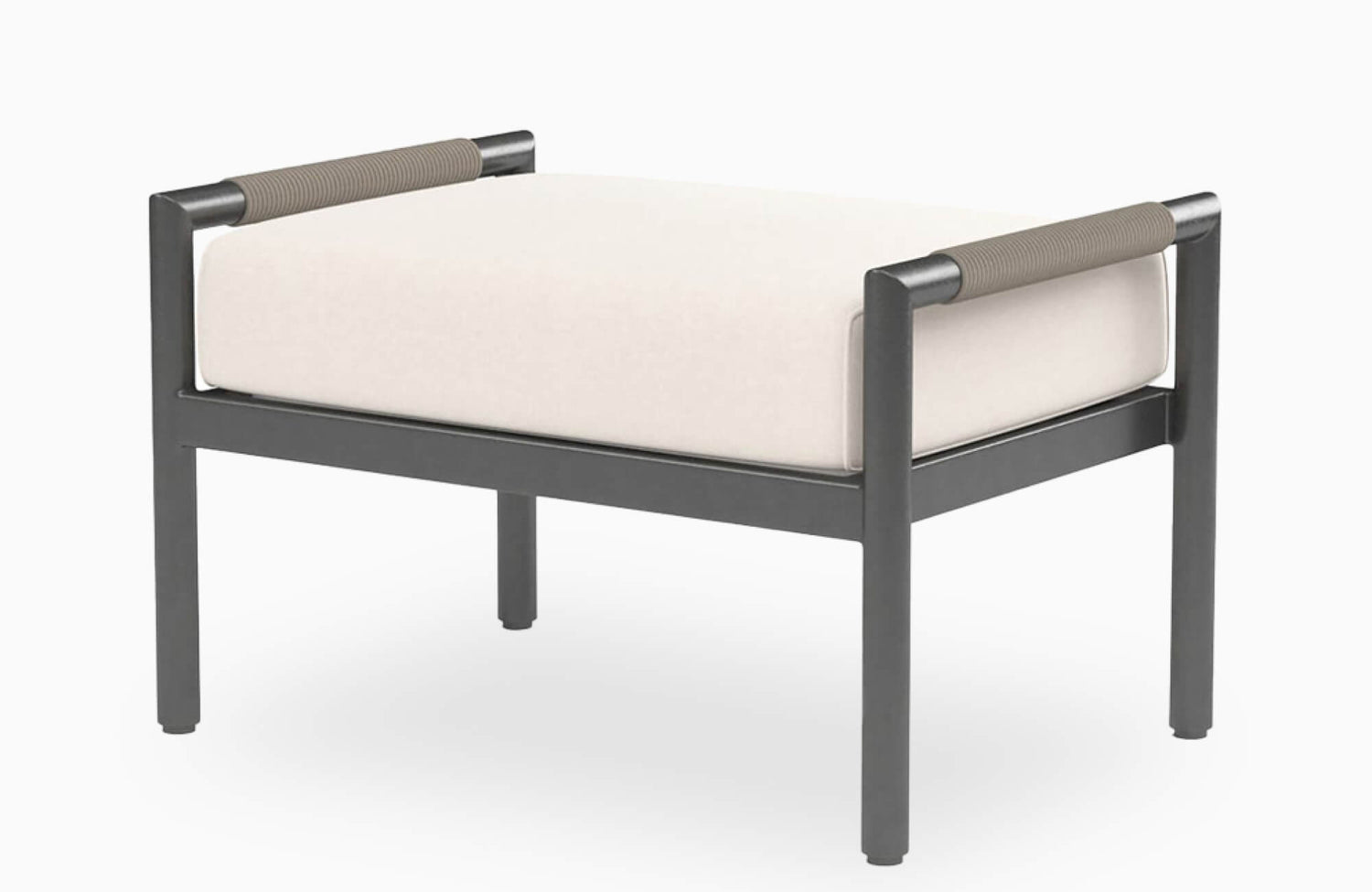
That kind of everyday flexibility is what you see in pieces like our Kova Ottoman, as shown above. Its aluminum frame is wrapped in a gray olefin rope weave that keeps the structure visually light while still holding up in outdoor conditions. The plush white cushion makes it comfortable enough for seating, while still working as a casual surface when needed. It’s a good example of how one piece can shift between uses without feeling out of place.
Why They Fit Naturally Into Outdoor Layouts
Outdoor spaces tend to feel more relaxed than indoor ones, which is why pieces that aren’t too structured often work better. Ottomans fit into that kind of setup because they don’t demand a fixed position or a strict layout. You can place them next to seating, move them to the center, or shift them out of the way, depending on how the space is being used. That flexibility makes them easier to work with compared to pieces that feel locked into one spot. They adjust to the layout instead of forcing everything else to adjust around them. That alone makes them feel more natural in outdoor settings.
Another reason they blend in so well is that they don’t interrupt the flow of the space. Chairs and tables tend to define boundaries, while ottomans sit somewhere in between, making the area feel more open. You can move through the space without feeling blocked, even when they’re in use. This is especially helpful in setups where people are coming and going or where the layout shifts depending on the occasion. Instead of creating structure, they support it in a quieter way. That’s why they often end up being one of the easiest pieces to integrate without overthinking placement.
When an Ottoman Makes More Sense Than a Fixed Piece
There are situations where adding another chair or table feels like too much, even if you need the function. That’s usually where an ottoman makes more sense, because it can cover multiple needs without taking up as much visual or physical space. Instead of committing to a piece that stays in one position, you’re choosing something that can adjust as needed. It works well when you want to keep the layout open but still have options when the space is in use. You’re not filling the area just for the sake of it; you’re adding something that can adapt. That difference shows up more clearly once you start using the space regularly.
It also helps in setups where flexibility matters more than structure, especially in smaller patios or more casual outdoor areas. A fixed piece might solve one problem but create another by making the layout feel tighter. An ottoman, on the other hand, gives you that same function without locking you into one arrangement. You can move it, repurpose it, or even set it aside when you need more room. That level of control makes it easier to keep the space feeling balanced.

Using Outdoor Ottomans as Extra Seating
When you’re setting up an outdoor space, seating is usually one of the first things you think about, but it’s also one of the easiest areas to overdo. You might feel like adding more chairs solves the problem, but then the space starts to feel tighter than expected. That’s usually where outdoor ottomans come in, not as a replacement, but as something that fills in the gaps without changing the whole setup.
Adding Seats Without Making the Space Feel Tight
If you’ve ever added “just one more chair,” you probably noticed how quickly the space can start to feel a bit crowded. It’s not always about the actual size; it’s how everything starts to look packed once every seat has a defined shape and position. With ottomans, you don’t get that same effect because they sit lower and don’t visually block the space the way chairs do. So when you place one in, it doesn’t immediately feel like you added more furniture; it just blends into what’s already there. Because of that, you can give people another place to sit without making the area feel closed in. And once you see that difference, it’s hard to go back to forcing in extra chairs.
Easy Seating for Guests Without Permanent Setup
You probably don’t need extra seating every single day; it’s usually just when people come over or when the space gets used a bit more. But if you plan for that all the time, the layout can start to feel like it’s always in “guest mode,” even when it doesn’t need to be. That’s where Ottomans make things easier, because you’re not committing to that setup permanently. When someone needs a seat, you can just pull one in, and it works right away without rearranging everything. Then, once things settle down, you can move it back without thinking twice. It keeps your everyday setup simple while still letting you adjust when needed. And honestly, that makes hosting feel a lot more relaxed.
Moving Seating Where It’s Actually Needed
If you think about how your outdoor space actually gets used, it probably doesn’t stay the same from day to day. Some days everyone gathers in one spot, other times people spread out depending on the weather or what’s going on. Fixed seating doesn’t always keep up with that, which is when things start to feel slightly off. With ottomans, you’re not stuck with one layout; you can move them closer to where people are sitting or shift them out of the way when they’re not needed. That kind of adjustment doesn’t feel like work; it just happens naturally as you use the space. And because of that, the setup starts to feel like it’s working with you instead of against you. That’s usually when the whole space feels easier to live with.
A More Relaxed Alternative to Extra Chairs
Chairs tend to set a tone; they tell people where to sit and how everything should be arranged, whether you realize it or not. That can be useful, but in outdoor spaces, it can also make things feel a bit more structured than they need to be. Ottomans, on the other hand, don’t really come with those expectations, so people use them more freely. Someone might sit on one, lean on it, or just move it slightly to make room without thinking twice. Because of that, the space feels less arranged and more natural, like it’s meant to be used however you want. And when you step back, that’s usually what makes an outdoor setup feel comfortable in the first place.

Turning Outdoor Ottomans Into Functional Surfaces
You’ll probably notice this pretty quickly once you start using your outdoor space. Not every setup really needs a dedicated table. Sometimes it’s just a place to set a drink, your phone, or a book while you’re sitting outside. That’s where Ottomans start doing more than expected, because they can take on that role without adding another piece that takes up space.
Using Ottomans as Coffee Tables or Side Surfaces
If you’ve ever felt like your outdoor table was either too big or just in the way, an ottoman can solve that without overcomplicating things. You can place it in the center like a coffee table, or keep it off to the side, depending on how your seating is arranged. What makes it work is that it doesn’t lock you into one position, so if the layout shifts, the surface shifts with it. It’s especially useful in setups where a full table would make things feel tighter than needed. At the same time, it still gives you a spot to set things down without reaching too far. And once you get used to that, it starts to feel like the more practical option in everyday use.
One thing that helps here is choosing the right height so it lines up well with your seating. If it’s too low, you’ll feel like you’re reaching down too much, and if it’s too high, it starts to feel awkward instead of natural. Try to keep it close to seat height so it works both as a surface and a footrest without feeling off. Also, if you’re using it in the center, leave a bit of space around it so people can still move comfortably. That small detail keeps the setup from feeling cramped while still doing its job.
Pairing With Trays for Stability
Now, if you’re thinking about actually placing drinks or smaller items on an ottoman, a tray makes a big difference. Without it, softer surfaces can feel a bit unstable, especially if you’re setting down something that needs to stay level. Adding a tray instantly gives you a flat, more reliable surface without changing how the ottoman looks or feels. It also helps keep everything in one place instead of spreading items across the cushion. You can pick it up and move it when needed, which keeps things flexible instead of fixed. It’s a small addition, but it turns the ottoman into something you can actually rely on throughout the day.
A good tip here is to go for a tray with a slightly raised edge so things don’t slide off easily. This matters more outdoors, where surfaces might not always be perfectly steady or level. You can also choose a material that handles outdoor use better, like wood, metal, or durable plastic, instead of something that might get damaged by moisture. Keeping a tray nearby, even if you don’t use it all the time, gives you the option when you need it. It’s one of those small things that make the setup feel more complete without adding clutter.
That kind of setup works especially well with pieces like our Vela Ottoman shown above, where the wider cushioned surface gives you enough room to actually use a tray without it feeling cramped. The rope-wrapped base keeps the overall piece visually open, so even when you’re using it as a surface, it doesn’t feel like you’ve added another solid table into the layout. The aluminum frame also holds steady, which matters more once you start placing drinks or anything that needs a bit of balance. It’s the kind of detail you don’t think about at first, but you notice right away once you start using it this way.
Keeping Everyday Items Within Reach
When you’re sitting outside, you don’t always want to get up just to grab something small. Whether it’s your drink, your phone, or even a pair of sunglasses, having a surface nearby makes a difference in how comfortable the space feels. Ottomans naturally sit close to seating, so they end up being one of the easiest places to keep those items within reach. You don’t have to stretch across a table or shift around just to grab something. It keeps everything more relaxed and easy to access while you’re sitting down. And because it’s already part of your setup, it doesn’t feel like you added something extra just for that purpose.
To make this even easier, try grouping a few essentials in one spot so you’re not constantly moving things around. A small tray, a basket, or even just a set area on the ottoman can keep items from feeling scattered. This way, everything has a place without turning the surface into clutter. It also helps you reset the space quickly after using it, especially if you’re going in and out throughout the day. Keeping things within reach is helpful, but keeping them organized is what makes it actually work.

Choosing the Right Outdoor Ottoman for Your Setup
Once you start looking at outdoor ottomans, it’s easy to get pulled into how they look instead of how they’ll actually be used. But what really makes a difference is choosing one that fits your setup, not just visually, but in how you move around the space and use it every day. When you focus on that first, it becomes a lot easier to narrow things down without overthinking every option.
Materials That Handle Outdoor Conditions
When you’re picking an outdoor ottoman, it helps to think past how it looks on day one and picture how it’ll handle a few weeks of actual use. You’ll notice pretty quickly that some materials heat up too much under direct sunlight, while others start to feel worn after getting wet a few times. That’s usually where weather-resistant wicker, treated wood, or metal frames with outdoor fabric start to make more sense, not because they’re better on paper, but because they hold up without needing constant attention. If you’ve ever had to keep bringing cushions in and out, you’ll know how quickly that gets old. So choosing something that can stay outside without extra effort makes a real difference in how often you actually use it. In the end, it’s less about durability claims and more about whether you can leave it out and not think about it every day.
One way to think about this is how the materials feel and hold up after being exposed for a few days, not just how they look at first. Pieces like our Miro Outdoor Ottoman in Cream, shown above, make this easier, since the teak base naturally resists moisture and develops a patina instead of looking worn, while the aluminum frame holds steady without worrying about rust. The cushion materials are also built to dry quickly and resist buildup, which matters more once you’re using it regularly outside. When everything is designed to handle those conditions, you stop treating it like something delicate and just use it as part of your space.
Getting the Size and Height Right
You might not think much about size and height at first, but you’ll feel it right away once the ottoman is in place. If it’s too big, it starts to crowd the seating area, especially when people are moving around or trying to find a spot to sit. If it’s too small, it ends up getting ignored because it doesn’t feel useful enough to reach for. Height is where it really shows, because if it doesn’t line up with your seating, you’ll either be reaching down too far or hovering awkwardly above it. That’s the kind of thing you only notice when you’re actually using the space, not when you’re looking at it online. So it helps to think about how you naturally sit, reach, and move around your setup. When those proportions feel right, everything just works without you having to adjust to it.
Cushioned vs Structured Designs
When you’re choosing between cushioned and structured designs, it helps to think about what you’ll actually do with it once you’re sitting outside. If you picture people casually sitting, leaning back, or even stretching out a bit, a cushioned ottoman just makes more sense because it feels comfortable without needing a second thought. On the other hand, if you know you’ll be placing drinks, plates, or anything that needs to stay steady, a more structured surface saves you from constantly adjusting things. Some people don’t realize this until they’ve used it a few times and notice drinks wobbling or items sliding around. That’s usually when the difference becomes obvious, not when you’re just looking at it. If you want both, pairing a cushioned ottoman with a tray works, but only if you’re actually okay grabbing and moving that tray when needed. So it really comes down to whether you value comfort in the moment or convenience without extra steps.
Matching With Your Existing Furniture
When you’re adding an ottoman to an outdoor setup, the goal isn’t to make it stand out; it’s to make it feel like it belongs there from the start. You’ll notice pretty quickly if something feels off, usually when the height doesn’t line up, or the scale feels slightly too big or too small next to your seating. It’s not just about color, either—it’s how the piece sits with everything else when you step back and look at the whole layout. For example, a bulky ottoman next to a lighter sofa can throw things off, even if the colors match perfectly. On the flip side, when the proportions feel right, everything starts to connect without you trying too hard. That’s usually what makes the space feel more put together, not perfect matching, but everything working at the same level.
When Storage Ottomans Actually Help
Storage ottomans sound useful right away, but they only really make a difference if you already have things that don’t have a clear place. If you’re constantly moving cushions, throws, or small outdoor items in and out, having that hidden space saves you from leaving everything out or stacking things awkwardly in a corner. It’s especially helpful when the weather changes quickly, and you need to clear things fast without overthinking where they go. At the same time, if you don’t actually have anything to store, that extra feature ends up being unused space. So instead of choosing it just because it’s there, it helps to think about what you’d realistically put inside on a normal day. When it solves something you already deal with, that’s when it actually becomes useful.
Choosing Based on How You’ll Use It Most
Before picking anything, it helps to picture how you’d actually use the ottoman on a regular day, not just when everything is set up perfectly. If you see yourself sitting on it often, then comfort matters more than anything else, and you’ll notice right away if it doesn’t feel right. If it’s more of a surface for drinks or small items, then stability and height start to matter more than softness. Some setups lean toward one use without you realizing it until you’ve used the space a few times. That’s why it’s worth thinking about how you move, sit, and reach in your space instead of just how it looks. Once that lines up, the ottoman ends up fitting into your routine instead of feeling like something you have to adjust around.
Making Outdoor Ottomans Work for How You Actually Use Your Space
Once you look at everything together, outdoor ottomans aren’t really just “extra” pieces; they’re the kind of furniture that quietly makes your setup easier to use. Whether it’s adding a seat when you need it, giving you a place to set things down, or helping the layout adjust without effort, they end up doing more than one job without getting in the way. The real value shows up when you stop thinking about where everything should go and just start using the space naturally. When a piece can move, shift, and still feel like it belongs, that’s usually when the whole setup starts to feel right.
If you’re still figuring out how an ottoman fits into your setup, it helps to look at your space as it is right now, not how it’s “supposed” to look. Edward Martin’s personalized design consultation can walk you through things like spacing, placement, and how to balance seating without overfilling the area. Instead of guessing where pieces should go or what size actually works, you get a clearer direction based on how you move and use your space day to day.