Soft textures, layered fabrics, and carefully balanced accents often define the elegance of a beautifully styled interior long before larger furniture pieces begin to shape the room's atmosphere. In modern living rooms and luxury-inspired spaces, decorative pillows have evolved far beyond simple accessories, becoming essential design elements that influence proportion, depth, tonal harmony, and visual rhythm throughout the space.
Through refined techniques such as dimensional layering, tonal coordination, tactile contrast, and sculptural arrangement, throw pillow styling now contributes significantly to creating interiors that feel polished, inviting, and professionally curated. As these carefully selected fabrics and forms interact with surrounding upholstery, lighting, and architectural details, seating areas begin to develop the warmth and sophistication commonly associated with upscale residential interiors and boutique hospitality design.

Everett 2x10 Matte Ceramic Tile in Almond, with its elongated artisanal brick look and high shade variation, pairs beautifully with the Haverford Rug in Platinum / Bronze to create a layered living space
Balance Visual Weight for a More Refined Arrangement
A beautifully styled seating arrangement rarely depends on perfect symmetry because interiors tend to feel more inviting when visual balance is achieved through subtle variation rather than strict repetition. As textures, dimensions, and tonal depth begin to interact naturally across a sofa or sectional, the entire composition develops a softer and more layered sense of refinement.
Understanding How Visual Weight Affects Sofa Styling
Visual weight refers to the amount of visual attention a decorative pillow naturally attracts through its texture, scale, color saturation, and surface reflectivity, all of which influence how the arrangement is perceived as a whole. Because darker velvet fabrics absorb and refract light more intensely than pale linen or cotton textures, they often appear visually heavier even when the pillows share the same dimensions. In luxury throw pillow styling for contemporary sofas, designers carefully distribute these denser visual elements so the arrangement feels balanced without becoming rigid or overly symmetrical.
Larger pillows are often positioned near the sofa arms, where they provide a sense of structure, while softer or lighter accents gradually guide the eye inward toward the center of the seating area. As this layering unfolds across the furniture silhouette, the composition also begins to feel more fluid and intentionally curated rather than mechanically arranged. Through this careful balance of proportion and tonal contrast, the sofa ultimately achieves a sophisticated softness that feels both elegant and comfortably lived in.
Mixing Pillow Shapes for Architectural Dimension
As decorative pillow arrangements become more layered, the introduction of varied silhouettes naturally adds architectural movement and visual depth to the overall composition. Oversized square pillows often establish structure, while elongated lumbar cushions and softly curved bolsters begin to soften the sharper geometry of contemporary upholstery, creating a more relaxed and editorial atmosphere. Rather than mirroring identical arrangements on both sides of a sofa, designers frequently vary texture, scale, or pillow placement slightly so the eye moves fluidly across the seating area instead of focusing on rigid symmetry.
This subtle asymmetry works especially well in luxury decorative pillow styling for oversized sectionals because it prevents larger furniture silhouettes from appearing static or visually overwhelming. At the same time, the interplay between angular and curved forms introduces a natural rhythm that allows the arrangement to feel layered without becoming visually heavy. As these shapes and proportions interact organically with one another, the seating area develops the effortless sophistication often associated with boutique hospitality interiors and professionally styled living rooms.

Brielle 18'' x 18'' Down Pillow in Natural / Green crafted from 100% organic fabrics brings soft texture and subtle contrast through its natural linen-toned center and muted green border detailing
Layer Textures to Create Depth and Warmth
As color palettes become softer and more tonal within modern interiors, texture begins to play an even more important role in shaping warmth, depth, and visual interest throughout the space. By layering fabrics with contrasting finishes and tactile qualities, decorative pillow arrangements develop the richness and dimensionality that allow contemporary living rooms to feel both refined and inviting.
Combining Matte and Reflective Fabrics
One of the most effective ways to create depth within decorative pillow styling is through the careful layering of fabrics that differ in both texture and light reflectivity. Linen, with its naturally irregular weave, diffuses light softly across the surface, while velvet reflects light directionally because of its dense pile construction and subtle sheen. As these contrasting materials interact with one another, the arrangement also begins to develop tonal variation and visual movement that shift gently throughout the day, depending on surrounding lighting conditions.
In luxury throw pillow combinations for elegant living rooms, designers often combine bouclé, chenille, wool blends, and silk-textured fabrics so each material contributes a distinct tactile quality without overwhelming the overall composition. This approach becomes especially important in minimalist interiors where layered texture replaces excessive ornamentation and allows monochromatic palettes to feel softer, warmer, and more dimensional. Through this refined balance of matte surfaces, plush textiles, and woven irregularity, decorative pillow arrangements achieve the quiet sophistication commonly associated with upscale residential interiors and contemporary organic design.
Selecting Durable Performance Fabrics
While aesthetics remain central to decorative pillow styling, durability becomes equally important in living spaces designed for both comfort and everyday functionality. Performance textiles engineered with stain resistance and high abrasion ratings allow decorative pillows to maintain their appearance while still preserving softness, texture definition, and structural integrity over time. Many premium upholstery fabrics are also evaluated using double-rub ratings, an industry standard that measures how effectively a textile withstands repeated friction and long-term wear.
Pieces such as Edward Martin’s Brielle 18'' x 18'' Down Pillow in Natural / Green, as displayed in the photo above, blend performance with elevated detailing through its machine-woven organic fabrics, reinforced cotton flange, and hand-stitched construction, allowing the pillow to retain both its structure and tactile richness through everyday use.
In family-friendly throw pillow styling for modern homes, designers often select treated cotton blends, performance velvets, and tightly woven fabrics because they resist pilling, fading, and seam distortion more effectively than delicate decorative materials. As these durable textiles continue to hold their shape and tactile richness through everyday use, the arrangement maintains the polished elegance expected in luxury interiors. This careful balance between resilience and refinement allows living spaces to feel sophisticated while remaining deeply comfortable and highly livable.

Marisette 12" x 27" Down Pillow in Black introduces bold linear patterning and crisp contrast, naturally layered against soft neutral upholstery and woven outdoor textures for a more tailored and dimensional lounge setting
Use Dimensional Layering to Improve Furniture Proportions
As decorative pillows begin to vary in size and scale, seating arrangements naturally gain a stronger sense of depth, proportion, and architectural balance throughout the room. Through carefully layered dimensions and gradual visual progression, sofas and sectionals develop the plush sophistication commonly associated with luxury residential interiors and boutique hospitality spaces.
Building a Layered Pillow Composition
A thoughtfully layered pillow arrangement often begins with oversized foundation pillows that establish structure and visually anchor the seating composition. From there, medium-sized accents and elongated lumbar cushions are introduced gradually toward the foreground so the eye moves naturally across the arrangement instead of encountering a flat or repetitive visual plane. This technique works especially well when styling deep sectionals because larger furniture silhouettes benefit from dimensional variation that softens their scale while preventing the seating area from appearing visually sparse.
Oversized decorative pillows also contribute to a more luxurious atmosphere because their generous volume creates plush softness and reduces the fragmented appearance caused by too many smaller accents. As larger foundation pillows transition naturally into more tailored foreground accents, rectangular pillows begin to refine both proportion and visual flow within the arrangement. A softly structured accent such as the Merelle 13" x 21" Down Pillow in Ivory, as shown in the picture above, introduces a lighter foreground layer that balances deeper tones beautifully, while its refined texture and elongated silhouette add dimension without disrupting the calm softness of the surrounding neutral upholstery.
Choosing the Right Pillow Inserts
Although decorative pillow covers often receive the most attention visually, the insert itself plays an equally important role in shaping both comfort and overall appearance. Designers frequently use inserts that are slightly larger than the pillow covers because the added fullness creates sharper corners, improved loft retention, and a more tailored silhouette. Down-feather blends remain especially popular within luxury interiors because they combine softness with enough structural resilience to maintain their shape over time.
At the same time, alternative down inserts offer similar volume and comfort while accommodating allergy-sensitive environments and lower-maintenance living spaces. As insert density begins to influence how effectively pillows recover after compression, the arrangement also retains its sculptural elegance far longer. Through this careful attention to fill quality and proportion, decorative pillow styling achieves the plush sophistication expected in refined contemporary interiors.

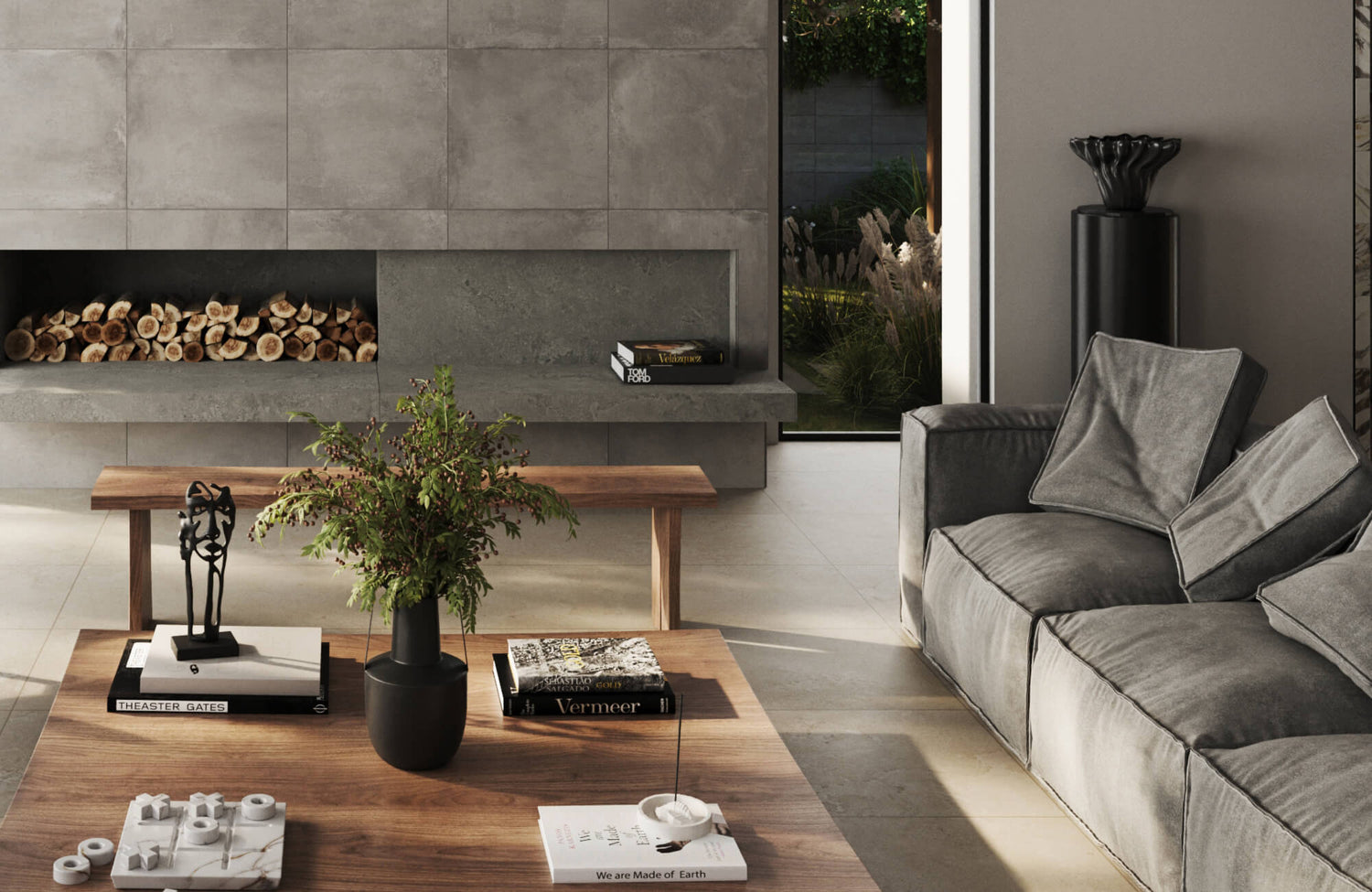
Wren 12x24 Chiseled Porcelain Tile in Dune brings an authentic stone look and subtly fluted texture that adds depth and warmth to the contemporary living space
Incorporate Negative Space for a Cleaner Aesthetic
As decorative pillow arrangements become more layered and textural, negative space becomes essential in preserving balance, openness, and visual clarity throughout the seating composition. By intentionally exposing portions of the upholstery and surrounding architecture, designers allow each textile, silhouette, and tonal transition to breathe naturally within the space.
Why Fewer Pillows Often Look More Expensive
Luxury interiors rarely depend on excessive decoration because restraint often creates a stronger sense of refinement than abundance ever could. When decorative pillow arrangements are carefully edited, the quality of the fabric, the richness of the texture, and the precision of the proportions become far more noticeable within the overall composition. In minimalist throw pillow styling for modern sectionals, fewer pillows also allow surrounding architectural details and furniture silhouettes to remain visually clear and unobstructed.
Overfilling a sofa with decorative accents can quickly make even premium upholstery appear visually dense and impractical for everyday living. For this reason, professional stylists focus more on intentional placement and layered proportion than on excessive quantity alone. Through this controlled and thoughtful approach, seating areas achieve the calm sophistication commonly associated with luxury residential interiors.
Creating Breathing Room Within Arrangements
As pillow groupings become more dimensional, subtle spacing between each layer allows the arrangement to feel lighter, more balanced, and visually refined. Rather than compressing every pillow tightly together, designers intentionally leave small areas of exposed upholstery so textures, shapes, and tonal shifts remain individually distinguishable. This measured separation improves visual flow throughout the seating area while preventing the arrangement from appearing cluttered or visually heavy.
In contemporary throw pillow styling for open-concept living rooms, negative space also helps larger furniture pieces integrate more naturally into expansive floor plans and surrounding architectural elements. As the eye moves comfortably between layered textiles and exposed surfaces, the composition begins to feel calmer and more cohesive overall. This balance between fullness and openness ultimately gives the arrangement the effortless elegance associated with professionally styled interiors.
Maintaining Comfort Alongside Style
While decorative pillow styling contributes significantly to the visual atmosphere of a room, comfort remains equally important in creating seating areas that feel functional and inviting. Over-accessorized sofas often require constant adjustment while simultaneously reducing the usable seating space intended for relaxation and conversation. In comfortable yet elegant throw pillow styling ideas, designers carefully balance layered aesthetics with ergonomic practicality so the arrangement feels luxurious without becoming excessive.
Lumbar cushions, for example, provide lower-back support while also introducing architectural structure and visual variation into the composition. Softer inserts and breathable upholstery fabrics further enhance comfort while preserving the refined appearance of the seating area. Through this thoughtful integration of practicality and sophistication, decorative pillow styling remains both visually elevated and deeply livable.

Brielle 18'' x 18'' Down Pillow in Natural / Mustard paired with the Merelle 22" x 22" Down Pillow in Tan creates a warm coordinated palette through organic fabrics and rich earthy tones
Coordinate Undertones for a Cohesive Color Palette
As tonal palettes become more layered and nuanced within modern interiors, undertone coordination plays a crucial role in maintaining harmony throughout decorative pillow arrangements. By carefully balancing warm and cool hues alongside varied fabric finishes, designers create compositions that feel cohesive, elegant, and naturally connected to the surrounding space.
Understanding Warm and Cool Undertones
Every decorative fabric carries subtle undertones that influence how the color interacts with nearby upholstery, flooring, and surrounding light conditions throughout the room. For instance, warm undertones often contain traces of terracotta, muted gold, or earthy red, while cooler palettes lean toward slate blue, charcoal, and soft gray variations. In neutral throw pillow combinations for beige sofas and gray couches, even slight undertone inconsistencies can create visual tension that disrupts the softness of the overall composition.
Designers therefore study surrounding finishes carefully before selecting decorative pillow palettes so each hue transitions naturally into the next. Warm camel and earthy rust tones blend beautifully with creamy neutrals, whereas cooler charcoal and slate hues create greater harmony within gray-toned interiors. As these carefully calibrated tones begin to interact with one another, the seating arrangement develops the layered sophistication commonly associated with luxury home décor.
Using Tonal Layering Instead of High Contrast
Rather than relying on dramatic contrast, high-end interiors often achieve visual richness through carefully layered tonal variation that feels soft, cohesive, and naturally refined. Designers frequently work within closely related palettes of taupe, walnut, mushroom, sand, and espresso, so subtle shifts in color begin to create depth without overwhelming the surrounding space.
As these muted tones blend gradually into one another, layered textiles and softly contrasting accents begin to create depth without disrupting the calm elegance of the arrangement. Pieces such as the Brielle 18'' x 18'' Down Pillow in Natural / Mustard, as featured in the photo above, introduce a gentle warmth through its muted golden undertones and organic woven texture, allowing richer orange and golden hues to transition more naturally within the overall palette.
This approach is particularly effective in luxury decorative pillow styling for contemporary living rooms, where understated elegance is often preferred over bold or heavily saturated palettes. The layered tones also respond beautifully to natural light, allowing the composition to feel warm and dimensional throughout the day. Through this restrained and carefully balanced use of color, interiors develop a timeless sophistication that remains both modern and inviting.
How Fabric Texture Changes Color Perception
Because different textiles interact with light in unique ways, fabric texture significantly influences how decorative pillow colors are ultimately perceived within a space. Velvet intensifies saturation through directional reflection, while linen softens pigment because of its matte finish and naturally irregular woven structure. Bouclé and wool fabrics diffuse light more broadly, allowing colors to appear gentler and slightly muted within the surrounding composition.
In professional throw pillow color coordination for upscale interiors, designers evaluate both hue and texture simultaneously so tonal consistency remains balanced across every layer of the arrangement. Even when two pillows share the same color family, variations in surface finish can dramatically alter how the shades interact visually with one another. By carefully coordinating undertones alongside textile texture, decorative pillow arrangements achieve the seamless elegance and depth associated with professionally curated interiors.
Elevated Details That Define Luxurious Interiors
Thoughtfully styled throw pillows bring far more to a space than decorative softness because they quietly shape the balance, texture, depth, and overall atmosphere of an interior. Carefully balancing visual weight, dimensional layering, and negative space allows decorative pillow arrangements to appear elegant without overwhelming the furniture or disrupting functionality. When these advanced styling techniques are combined with subtlety and intention, decorative pillows become an essential finishing detail that elevates contemporary interiors with warmth, sophistication, and timeless visual appeal.
For a more personalized approach to luxury interior styling, Edward Martin’s design services offer thoughtfully curated guidance tailored to refined modern living spaces. To explore elevated material palettes, decorative styling, and custom design solutions, contact us and discover interiors shaped with timeless sophistication!