Decorative pillows are one of the easiest ways to introduce warmth, color, and visual layering into a space. Whether used on sofas, beds, accent chairs, or window seats, they can soften architectural lines and make interiors feel more inviting and thoughtfully styled. However, without careful coordination, decorative pillows can quickly overwhelm a room through excessive layering, competing patterns, or disproportionate arrangements.
Creating a balanced look requires more than simply selecting attractive fabrics or colors. Scale, material variation, placement, and surrounding design elements all influence how decorative pillows interact with the overall space. By approaching pillow styling with greater intention and restraint, it becomes possible to create arrangements that feel refined, cohesive, and visually comfortable without sacrificing functionality or openness.

Vela Sofa feels effortlessly refined with the bold contrast of the Marisette 12" x 27" Down Pillow in Black, Merelle 13" x 21" Down Pillow in Tan, and Merelle 13" x 21" Down Pillow in Ivory
Choosing Pillow Sizes and Shapes That Feel Balanced
The size and shape of decorative pillows play a major role in determining whether a room feels layered and inviting or visually crowded. Even well-coordinated colors and fabrics can appear overwhelming if the proportions are not suited to the surrounding furniture. Thoughtfully combining scale and silhouette allows decorative pillows to add depth, softness, and structure while maintaining comfort and visual openness throughout the space.
Building Arrangements With Larger Foundation Pillows
Larger decorative pillows often create a cleaner and more refined appearance because they establish visual structure without requiring excessive layering. Oversized pillows anchor the arrangement and help furniture feel more proportionate, particularly on deep sofas, sectionals, or expansive beds. Smaller pillows used alone can sometimes appear scattered or disconnected, whereas larger foundation pillows provide a more cohesive and tailored base for additional accents.
Selecting the appropriate pillow size depends heavily on the scale of the furniture. Standard sofas typically accommodate 22-inch to 24-inch square pillows comfortably, while sectionals or oversized seating often benefit from even larger dimensions to maintain balance across wider surfaces. Accent chairs generally require more restraint, with smaller lumbar pillows or compact squares helping preserve the chair’s silhouette without overpowering it. On beds, larger Euro pillows positioned at the back create structure and visual height while supporting a more layered arrangement.
In outdoor lounge settings like the space shown above, layering smaller accent pillows against deeper seating helps create a more relaxed and visually grounded arrangement without overwhelming the furniture. The elongated silhouette of the Marisette 12" x 27" Down Pillow in Black introduces subtle contrast and structure against the sofa’s light upholstery, while the Merelle 13" x 21" Down Pillow in Tan and Merelle 13" x 21" Down Pillow in Ivory soften the composition through their understated woven texture and tonal warmth. Together, the combination reinforces the patio’s modern organic aesthetic, echoing the natural wood ceiling, earthy stone surfaces, and layered neutral palette while maintaining an open and inviting atmosphere.
Mixing Shapes for Visual Variety
Combining different pillow shapes introduces dimension and prevents arrangements from feeling overly uniform. Square pillows are commonly used as the foundation because they provide symmetry and visual stability, while lumbar pillows help break up repetitive lines through their elongated silhouette. Bolster pillows, though used more selectively, can introduce sculptural softness and create additional variation within more relaxed or layered interiors.
However, visual variety works best when shape combinations remain controlled and intentional. Incorporating too many different silhouettes within one arrangement can make the composition feel fragmented or visually chaotic. Limiting the grouping to two or three complementary shapes helps maintain cohesion while still creating contrast. This balance allows the arrangement to feel thoughtfully designed rather than overly decorative, particularly in modern or transitional interiors where simplicity often contributes to a more elevated aesthetic.
Avoiding Overfilled Seating Areas
Excessive decorative pillows can quickly reduce both the functionality and visual clarity of a room. Seating areas crowded with cushions often feel impractical because users must constantly remove or rearrange pillows to sit comfortably. In addition to affecting usability, overfilled arrangements can make furniture appear heavier and diminish the openness that helps interiors feel balanced and inviting.
Maintaining appropriate pillow quantities depends on the type and scale of the furniture. Standard sofas generally feel balanced with three to five pillows, while larger sectionals may accommodate slightly more without appearing overcrowded. Accent chairs often require only a single lumbar or small accent pillow to enhance comfort without concealing the chair’s form. Beds also benefit from restraint, as too many decorative layers can make the room feel overly formal and visually dense. Allowing portions of furniture upholstery to remain visible helps preserve proportion and ensures the arrangement contributes softness without overwhelming the space.

Layered in warm earthy tones, Merelle 22" x 22" Down Pillow in Terracotta, Merelle 13" x 21" Down Pillow in Terracotta, Merelle 22" x 22" Down Pillow in Tan, and Brielle 18" x 18" Down Pillow in Natural / Mustard create a cozy, inviting retreat with rich texture and effortless depth
Coordinating Colors and Patterns More Intentionally
Color and pattern selection significantly influence whether decorative pillows feel cohesive or visually disruptive within a room. Even carefully arranged pillows can appear disconnected if their tones, prints, or contrasts compete with surrounding elements. Thoughtful coordination allows decorative pillows to introduce depth and personality while supporting the room’s overall palette and maintaining visual harmony.
Pulling Colors From the Surrounding Space
One of the most effective ways to create a cohesive pillow arrangement is by referencing colors already present within the room. Existing design elements such as rugs, artwork, upholstery, drapery, and wood finishes often provide a natural palette that decorative pillows can reinforce. Rather than introducing entirely unrelated colors, repeating subtle tones throughout the space helps establish continuity and makes the arrangement feel intentionally connected to the broader interior.
This layered approach also creates a more refined and balanced atmosphere because the eye can move naturally across the room without interruption. For example, warm caramel tones within a leather chair may be echoed through woven accent pillows, while muted greens pulled from botanical artwork can subtly reappear in patterned textiles. Even neutral interiors benefit from tonal repetition, as variations of cream, taupe, charcoal, or soft gray can create dimension without overwhelming the space visually.
In the reading nook seen above, the pillow arrangement demonstrates how tonal repetition can create warmth and continuity without relying on excessive contrast or overly complex layering. Edward Martin’s Merelle 22" x 22" Down Pillow in Terracotta establishes a rich foundational accent, while the smaller Merelle 13" x 21" Down Pillow in Terracotta introduces variation in scale that keeps the arrangement visually dynamic. Complemented by the Merelle 22" x 22" Down Pillow in Tan and the Brielle 18" x 18" Down Pillow in Natural / Mustard, the layered palette echoes the earthy tones within the woven Roman shades and upholstered window seating, creating a setting that feels cohesive, inviting, and softly refined.
Combining Patterns Without Visual Chaos
Pattern mixing introduces movement and visual interest, but without careful balance, multiple prints can quickly make a room feel busy or fragmented. One of the most important principles when combining patterns is varying scale. Large-scale motifs often work best when paired with smaller or more understated designs because the contrast prevents patterns from competing for attention. This layering technique creates visual rhythm while maintaining a sense of structure within the arrangement.
Different pattern styles can also complement one another when unified through color or overall mood. Geometric prints may pair successfully with softer organic patterns when they share similar tonal qualities, while stripes can act as grounding elements alongside more expressive motifs. Limiting the number of dominant patterns within one arrangement further helps maintain clarity and ensures the composition feels intentional rather than overly decorative. In many professionally styled interiors, restraint in pattern selection contributes to a more timeless and sophisticated appearance.
Introducing Contrast With Restraint
Contrast plays an important role in creating depth and preventing decorative pillow arrangements from feeling flat or monotonous. Variations in light and dark tones, warm and cool hues, or matte and textured finishes can help define the arrangement while adding subtle visual energy. However, contrast is most effective when used selectively rather than aggressively, particularly in spaces designed to feel calm and cohesive.
In neutral interiors, a few darker accent pillows can anchor lighter furniture and introduce dimension without overpowering the room. Similarly, muted earthy tones or softened jewel colors often create stronger visual balance than highly saturated shades used in excess. Contrasting elements should enhance the surrounding palette rather than dominate it. By balancing bold accents with softer neutrals and quieter textures, decorative pillows can create visual interest while preserving the room’s openness and overall sense of harmony.

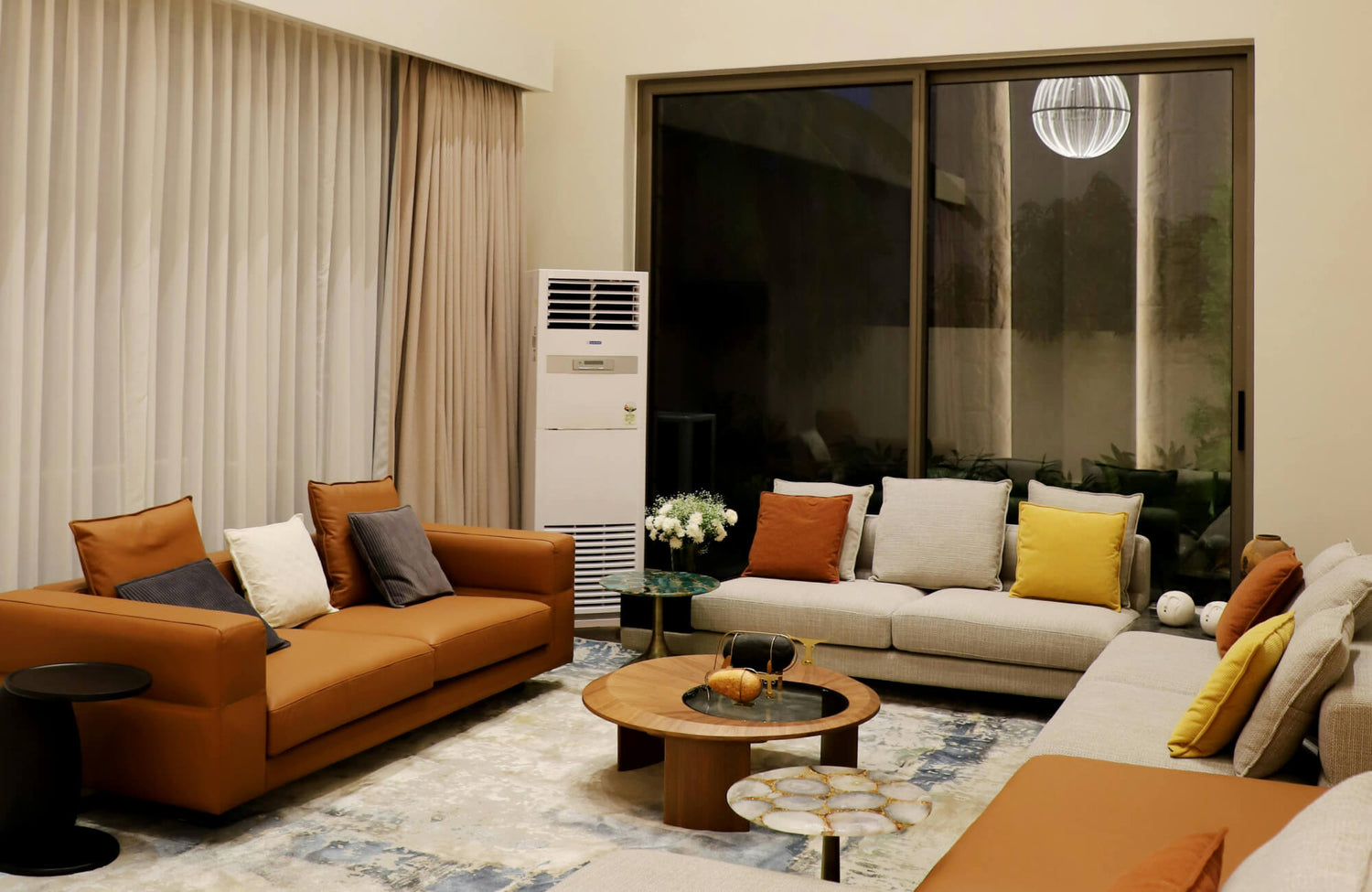
Warm accent pillows bring balanced color and inviting comfort to this clean, contemporary living space
Layering Materials and Finishes for Added Dimension
Material variation gives decorative pillow arrangements a more refined and inviting appearance by introducing depth beyond color alone. Different fabrics and finishes interact with light, furniture upholstery, and surrounding textures in ways that help a room feel more layered and visually balanced. However, too many competing materials can create visual heaviness and disrupt the overall cohesion of a space. Thoughtful fabric combinations allow decorative pillows to enhance warmth and dimension while maintaining a clean and intentional aesthetic.
Combining Smooth and Textured Fabrics
A successful decorative pillow arrangement often balances smoother materials with more tactile fabrics to create subtle contrast. Linen and cotton introduce a relaxed, breathable quality that works well as foundational materials, while boucle, velvet, or woven textiles add softness and visual depth. Combining these finishes thoughtfully prevents arrangements from appearing flat without making them feel overly styled or visually crowded.
The key to balanced material variation is moderation. Instead of layering several heavily textured pillows together, pairing one or two tactile accents with smoother fabrics typically creates a more sophisticated result. For example, a boucle lumbar pillow placed against crisp linen squares can add warmth and dimension without overwhelming the furniture. This controlled layering approach helps decorative pillows contribute comfort and richness while preserving the openness of the overall space.
Incorporating Organic and Natural Details
Natural-looking materials help decorative pillows feel more grounded and approachable, particularly in interiors designed to emphasize warmth and relaxed sophistication. Subtle woven detailing, soft embroidery, raw-textured linen, and earthy fabric finishes introduce depth while maintaining a calm and understated appearance. These details often work especially well in spaces that rely on organic materials such as wood, stone, or rattan because they reinforce the room’s natural design language.
Modern organic and coastal-inspired interiors frequently benefit from decorative pillows with tactile but understated detailing. Softly woven fabrics in muted tones can complement light oak furniture, natural fiber rugs, and neutral upholstery without introducing excessive ornamentation. In contemporary spaces, simpler organic textures often feel more timeless and adaptable than heavily embellished fabrics, allowing decorative pillows to add softness while preserving the room’s clean architectural lines.
Matching Materials With the Room’s Overall Style
Decorative pillow fabrics should always feel connected to the surrounding furniture, finishes, and architectural style of the room. In minimalist interiors, streamlined materials such as linen, brushed cotton, or finely textured weaves typically support the clean simplicity of the space more effectively than ornate trims or high-contrast embellishments. Restrained fabric selections help maintain visual clarity while still contributing warmth and softness.
Traditional and transitional interiors, on the other hand, often support richer material combinations that add depth and sophistication. Velvet, subtle embroidery, or layered woven textiles can complement classic millwork, tailored upholstery, and warmer wood tones without feeling visually disconnected. Transitional spaces frequently benefit from combining refined traditional textures with cleaner contemporary silhouettes, creating a balanced look that feels both timeless and updated. Aligning decorative pillow materials with the room’s broader aesthetic ensures the arrangement feels cohesive rather than stylistically inconsistent.

Merelle 22" x 22" Down Pillow in Ivory and Merelle 13" x 21" Down Pillow in Olive add soft contrast and organic warmth to this refined, nature-inspired setting
Styling Decorative Pillows for Different Furniture Pieces
Decorative pillow arrangements should always respond to the scale, function, and proportions of the furniture they are placed on. A layout that works well on a large sectional may feel excessive on an accent chair, while bedding arrangements require a different level of layering than living room seating. Adapting pillow styling to each furniture type helps maintain comfort, visual balance, and cohesion without making spaces feel overcrowded or overly styled.
Sofa
Sofas often serve as the visual anchor of a living room, making pillow placement especially important in establishing balance and structure. Symmetrical arrangements typically create a more tailored and formal appearance by mirroring pillow groupings on each side of the sofa. This approach works particularly well in traditional or transitional interiors where clean proportion and visual order contribute to a polished atmosphere. Matching pairs of larger pillows layered with smaller accents can also help frame the sofa while maintaining a composed aesthetic.
Asymmetrical arrangements, by contrast, introduce a more relaxed and contemporary feel. Rather than evenly distributing pillows, this styling approach may use varied sizes or groupings concentrated on one side of the sofa to create softer visual movement. Sectionals often benefit from asymmetrical layouts because they prevent large seating areas from appearing overly rigid or repetitive. Regardless of arrangement style, maintaining visible seating space is essential to ensuring the sofa remains comfortable and visually breathable instead of crowded with unnecessary layers.
Beds
Bed pillow arrangements require careful balance because excessive layering can quickly make a bedroom feel visually dense and overly formal. Euro pillows are commonly used at the back of the arrangement to provide height and structure, while standard sleeping pillows create functional support within the middle layer. Decorative accent pillows positioned at the front introduce softness, pattern, or tonal contrast that completes the composition without overwhelming the bed.
Simplified arrangements often create a more calming and refined bedroom aesthetic than highly elaborate layering systems. Instead of stacking numerous decorative pillows of varying shapes and sizes, many professionally styled bedrooms rely on a limited combination of coordinated pillows that maintain openness and practicality. This approach not only reduces visual clutter but also makes the bed easier to use and maintain daily. Selecting a few impactful accents rather than excessive decorative layers allows the room to feel more restful and cohesive.
Accent Seating
Smaller furniture pieces generally benefit from more restrained decorative pillow styling because excessive layering can overpower their proportions. Accent chairs, benches, and window seats typically require only one carefully selected pillow to enhance comfort and introduce visual softness. Oversized or heavily layered arrangements can conceal the furniture’s silhouette and make compact spaces feel more crowded than intended.
Lumbar pillows are often especially effective on accent seating because their elongated shape provides support while preserving the openness of the furniture. Benches and window seats may also benefit from a single textured or subtly patterned accent that reinforces the surrounding palette without drawing excessive attention. Keeping arrangements simple allows smaller furniture pieces to contribute to the overall room composition while maintaining clarity, proportion, and functional usability.
The vignette above illustrates how a minimal pillow arrangement can still create a layered and inviting focal point within transitional spaces. Paired against the bench’s warm leather upholstery and softly textured woven backrest, the Merelle 22" x 22" Down Pillow in Ivory introduces subtle softness and tonal continuity, while the Merelle 13" x 21" Down Pillow in Olive provides a muted earthy accent that draws from the botanical-inspired wallpaper. By combining only two complementary pillows with varied scale and restrained contrast, the seating area maintains a clean, tailored appearance while still feeling comfortable and visually connected to the surrounding materials and finishes.

Corvin Outdoor Sofa in Cream feels elevated and effortlessly modern with the layered contrast of the Marisette 12" x 27" Pillow Cover in Black and Merelle 13" x 21" Pillow Cover in Tan pillows
Refreshing Decorative Pillow Arrangements Over Time
Decorative pillow styling should adapt as interiors evolve rather than remain static year after year. Changes in furniture, seasonal palettes, lighting conditions, and lifestyle needs can all influence how pillow arrangements interact with the surrounding space. Periodically reassessing decorative accents helps maintain a room that feels current, balanced, and visually intentional without relying on excessive layering or unnecessary additions.
Rotating Pillow Styles Seasonally
Seasonal updates offer an effective way to refresh decorative pillow arrangements without continuously increasing the number of pillows within a space. Instead of introducing entirely new collections each season, many interiors benefit from rotating covers, fabrics, or tonal palettes that reflect shifts in temperature, lighting, and atmosphere. This approach keeps rooms feeling visually refreshed while preserving a more controlled and cohesive arrangement.
Lighter materials such as linen, cotton, or softly woven fabrics often complement spring and summer interiors by creating an airy and relaxed appearance. During colder months, richer textures like velvet, boucle, or heavier woven textiles can introduce warmth and visual depth. Muted seasonal color adjustments, such as earthy terracotta tones in autumn or softer neutrals during warmer months, also allow decorative pillows to evolve naturally alongside the space without overwhelming the room’s overall palette.
Removing Pillows That No Longer Fit the Space
Editing decorative pillow arrangements periodically is essential for maintaining clarity and cohesion within a room. As interiors change over time, certain pillows may begin to feel visually disconnected due to outdated colors, overly complex patterns, or materials that no longer complement the surrounding furnishings. Removing unnecessary layers helps restore visual balance and prevents arrangements from appearing cluttered or stylistically inconsistent.
Evaluating decorative pillows individually can also help determine whether each piece still contributes meaningfully to the overall composition. Pillows that introduce excessive visual weight, disrupt the palette, or compete with focal elements often diminish the room’s sense of refinement. Simplifying arrangements through selective editing allows furniture silhouettes, architectural details, and surrounding materials to remain more visible, resulting in a cleaner and more polished environment.
Creating Decorative Pillow Arrangements That Feel Intentional
Decorative pillows are most effective when they enhance a room’s overall atmosphere without competing for attention. Thoughtful combinations of scale, color, texture, and placement allow pillows to introduce warmth, softness, and visual depth while still preserving openness and functionality throughout the space. Rather than relying on excessive layering, balanced arrangements prioritize cohesion and proportion, creating interiors that feel refined, comfortable, and effortlessly livable.
To further refine your decorative pillow selections and create a more cohesive interior, consulting with design professionals can provide valuable guidance tailored to your space and lifestyle needs. Edward Martin offers personalized support, helping you explore materials, color palettes, and styling combinations that feel intentional and visually balanced. Whether updating a single room or layering decorative accents into a larger design scheme, expert insight can help ensure every element contributes to a polished and harmonious result!