Outdoor dining chairs are asked to perform under conditions far more demanding than most interior furnishings. They support guests through long meals, endure seasonal exposure, and remain visible within some of the most design-sensitive areas of the home, from tiled terraces and covered verandas to poolside dining zones and open-air kitchens. When premium patio furniture begins to fail, the signs are not always immediate. A chair may still look serviceable from a distance while its joints, fibers, coatings, or support systems are already compromised.
Knowing when to replace outdoor dining chairs requires more than judging surface wear. Structural integrity, material behavior, environmental exposure, repair economics, and visual continuity all matter. A refined outdoor setting depends on seating that feels stable, looks intentional, and aligns with the architectural quality of the surrounding space. The following guide outlines the key indicators that your patio chairs have reached the end of their useful life, along with the material and design considerations that should guide your next investment.

Verdanta Outdoor Dining Table in Aged Grey pairs with Wren 24 x 24 Grip Porcelain 2cm Paver Tile in Oat for a textured garden dining scene framed by ivy and soft shadow.
Understanding the Structural Lifespan of Premium Patio Furniture
Outdoor furniture does not age on a single timeline. Two chairs purchased in the same year may deteriorate at very different rates depending on material composition, construction quality, placement, maintenance habits, and climate exposure. Rather than waiting for a chair to collapse, wobble, stain permanently, or disrupt the appearance of the patio, it is worth understanding how long each material class is expected to perform and what conditions accelerate decline.
Average Lifespans by Material Class
High-quality outdoor dining chairs typically last longest when their materials are matched to the setting. Solid teak, for example, can remain structurally sound for decades when properly maintained, even as its surface gradually weathers to a silver-gray patina. Powder-coated aluminum often performs well for many years because it resists rust, remains lightweight, and can withstand repeated seasonal movement. Wrought iron and steel offer exceptional strength, but their longevity depends heavily on protective coatings and prompt attention to oxidation. Marine-grade polymers and high-density synthetics can also deliver strong durability, particularly in damp or coastal environments where organic materials may require more care.
The distinction between premium and mass-market seating is often found beneath the visible finish. Full-circumference welds, reinforced joints, thicker wall tubing, stainless or corrosion-resistant hardware, kiln-dried hardwood, and commercial-grade UV inhibitors all extend a chair’s operational life. Edward Martin’s Calandor Outdoor Dining Chair in Vintage White, shown with a continuous woven form on a stone patio beside an ivy-covered wall, reflects how material selection and construction language can shape both durability and visual lightness in an outdoor dining setting.
A chair’s true lifespan is therefore not defined by material alone. It is defined by how the material is processed, joined, finished, and protected. A teak chair with poor joinery may fail earlier than a well-engineered aluminum frame, while a high-density polymer chair with UV-stabilized pigmentation may outlast painted resin furniture several times over.
Environmental Factors Speeding Up Material Decay
Climate can shorten the life of outdoor dining chairs even when the furniture is well made. Coastal properties expose frames and hardware to salt-laden air, which can speed corrosion on steel, iron, and lower-grade metal components. Aluminum is naturally corrosion-resistant, but poor-quality coatings, exposed fasteners, or damaged finishes can still allow deterioration around seams and joints. In alpine or high-altitude settings, intense ultraviolet exposure can accelerate fading, drying, and brittleness in plastics, resin wicker, sling fabrics, and painted finishes.
Freeze-thaw cycles create another form of stress. Moisture that enters wood checks, metal seams, or woven materials can expand as it freezes, gradually widening cracks or loosening structural connections. In humid garden settings, shaded furniture may remain damp for long periods, encouraging mildew, rot, and coating failure. Poolside dining areas bring their own concerns. Chlorinated water, sunscreen residue, and constant moisture can break down fabrics, finishes, and synthetic fibers more quickly than a dry covered terrace.
These environmental pressures rarely appear as a single dramatic event. More often, they accumulate. A slightly roughened polymer surface becomes chalky, then brittle. A tiny rust spot grows beneath the powder coat. A hardwood joint that once felt tight begins absorbing moisture, softening internally before showing visible decay. Regular inspection is the only way to catch these changes before they affect safety and design cohesion.

Selena 55" Outdoor Dining Table in Cream sits beneath the Rivington Outdoor Pendant, Large, with Pember Outdoor Wall Sconce, Medium adding architectural warmth against the gray wall.
Structural Red Lines That Compromise Guest Safety
Some signs of deterioration are cosmetic. Others are non-negotiable. When an outdoor dining chair begins to lose load-bearing capacity, replacement is no longer an aesthetic preference. It becomes a safety decision. Once its frame, welds, joints, seat support, or material core has been compromised, it may fail suddenly. This is especially important in entertaining spaces, rental properties, hospitality-adjacent residences, and homes where outdoor dining is used frequently.
Identifying Fractured Welds and Internal Metal Fatigue
Metal dining chairs should be inspected closely at their load-bearing joints, especially where the legs meet the seat frame, where arms connect to the back, and where crossbars stabilize the lower structure. Hairline cracks around welds are often subtle. They may appear as thin dark lines, slight separations in the coating, or small areas where the finish has split near a joint. Wobbling that persists after tightening hardware can also indicate stress fatigue within the frame rather than a simple loose screw.
Aluminum chairs can fatigue over time when repeatedly flexed, especially if the frame is lightweight or poorly reinforced. Wrought iron and steel are heavier and rigid, but they are not immune to failure. Corrosion beneath a finish can weaken tubing from the inside, while repeated movement can stress welded connections. If a chair creaks, shifts, or visibly opens at a joint when weight is applied, it should be removed from use.
Frame components with compromised or cracked welds cannot safely support standard weight capacities and should be decommissioned immediately to reduce the risk of injury. Weld repair may be possible in isolated cases, but it should be evaluated by a qualified metalwork professional. For dining chairs that are part of an aging set, widespread weld fatigue usually points to replacement rather than restoration.
Detecting Deep Rot and Structural Checking in Hardwood Frames
Wood naturally expands, contracts, and develops surface checks as it responds to outdoor conditions. On premium hardwoods such as teak, small surface cracks are not automatically a sign of failure. Cosmetic checking usually remains shallow, follows the grain, and does not cause the chair to flex, wobble, or lose support.
Deep rot is different. It compromises the tensile strength of the timber and often appears near joints, leg bases, screw holes, or areas where water collects. A chair affected by rot may feel spongy, show darkened patches, release a musty odor, or crumble slightly when probed. The most revealing test is a careful pressure check with an awl or similar pointed tool. If the tool presses easily into the wood near structural connections, the fibers may be softened beyond safe use.
Dining chairs with deep rot at load-bearing points should not remain in service. Surface refinishing cannot restore internal wood strength once decay has advanced through the frame. Professional repair may address isolated damage on valuable pieces, but widespread softness, loose joints, or repeated splitting around fasteners usually means the chair has reached the end of its functional life. In contrast, Edward Martin’s Kendra Outdoor Dining Chairs in Natural, Set of 2, illustrated around a round dining table on a gray tiled patio, show how exposed wood frames and woven seats depend on clean joinery, balanced proportions, and material stability to maintain their refined structure over time.
The Hidden Danger of UV-Induced Resin and Polymer Brittleness
Synthetic outdoor chairs can appear intact until the material has become dangerously brittle. Ultraviolet radiation gradually alters the molecular structure of plastics, resin wicker, and lower-grade polymers. As the material loses flexibility, it becomes more likely to snap under ordinary use.
Early signs include chalking, uneven fading, rough texture, and a porous feel where the surface once seemed smooth. Resin may shift from a saturated color to a pale, powdery tone. Woven synthetic strands may become stiff and fragile, breaking when bent. Molded plastic chairs may sound hollow or brittle when tapped and may develop stress marks near the seat edge, arms, or legs.
The risk with UV-damaged synthetics is sudden failure. Unlike metal, which may bend, or wood, which may creak and loosen, brittle resin can fracture abruptly. Once a chair shows extensive chalking, cracking, or strand breakage, replacement is the safer course. Temporary patching cannot restore the flexibility and impact resistance lost through environmental degradation.

Elysia Dining Chair brings natural woven texture and a pale cushion to a rustic outdoor dining setting grounded by Marlow 24 x 48 Grip Porcelain 2cm Paver Tile in Navona.
Material Degradation Signs That Ruin Your Patio Aesthetic
Not every failing outdoor chair poses an immediate safety risk, but visual deterioration still matters. Outdoor dining areas often sit beside permanent architectural elements such as stone paving, porcelain tile patios, exterior kitchens, custom landscaping, and architectural lighting. At a certain point, cleaning and small repairs no longer preserve the intended design language.
Irremediable Fabric Degradation and Sling Sagging
Outdoor performance fabrics are designed to resist moisture, fading, mildew, and daily use, but they still have limits. Sling chairs are particularly dependent on fabric tension. When the sling loses its elastic memory, the seat begins to sag deeply, reducing ergonomic support and changing the chair’s silhouette. Guests may feel as though they are sinking too low, while the frame may experience uneven stress because the fabric no longer distributes weight correctly.
Staining is another marker. Some surface marks can be cleaned, but embedded discoloration from mildew, tannins, sunscreen, food oils, or mineral deposits can become permanent. Cushions may also lose internal resilience as foam breaks down. Edward Martin’s Elysia Dining Chair, seen with a pale cushion nested inside a rounded natural rattan frame, offers a useful visual counterpoint: cushion condition, seat height, and woven support all contribute to whether a chair still feels tailored rather than tired.
Maintenance should always follow the manufacturer’s care instructions, particularly for performance fabrics, sling mesh, cushion foam, and protective coatings. Harsh cleaners, abrasive brushes, or pressure washing can accelerate damage. If proper cleaning no longer restores the chair’s appearance or support, replacement is often more effective than trying to revive materials that have already lost their structure.
Unraveling Resin Wicker and Core Material Splitting
Resin wicker relies on continuous tension. Individual strands do more than provide texture. They help distribute weight across the seat and back. A few isolated breaks may be manageable if the surrounding weave remains tight, but widespread cracking, unraveling, or splitting signals a deeper material failure.
Once synthetic wicker dries out completely, it becomes difficult to repair convincingly. Replacement strands rarely match the original color, sheen, diameter, or weathered condition of the surrounding weave. Even if a repair is visually acceptable at first, adjacent strands may continue breaking because the entire material system has become brittle.
Core splitting is another concern. Some woven chairs use internal frames or support structures beneath the resin surface. If the visible weave is deteriorating and the seat begins to flex unevenly, the issue may extend beyond appearance. Chairs in this condition often feel unstable, look untidy, and undermine the tailored character expected in a refined outdoor dining area.
Severe Metal Oxidation Beyond the Paint Layer
Surface rust can sometimes be cleaned and treated, especially when caught early. The more serious problem is pitting oxidation, where corrosion eats into the metal itself and reduces wall thickness. On steel or iron tubing, this can weaken the frame even if the chair still appears mostly intact.
Powder-coated metal requires particular attention. Bubbling, lifting, or flaking powder coat often means moisture has moved beneath the finish. Once trapped, it can spread laterally, causing corrosion under areas that still look sound. A small bubble near a weld or leg base may indicate a larger hidden problem.
When oxidation has penetrated the metal, repainting is usually cosmetic rather than structural. Professional sandblasting and recoating may be appropriate for valuable frames, but if the tubing is pitted, perforated, or weakened at load-bearing points, replacement is the more responsible choice. The goal is not simply to refresh the chair’s color. It is to preserve the safety and visual discipline of the outdoor dining setting.

Vetra Armless Dining Chair and Maris Teak Rectangular Dining Table, 96" x 42" create a tailored dining area, with Elysia Sofa softening the covered outdoor lounge backdrop.
The Financial Equation of Repairing Versus Replacing
Repair can be worthwhile when the chair has strong bones, replaceable components, and a design worth preserving. It becomes less practical when restoration costs approach or exceed the price of new premium seating. A thoughtful replacement decision is not wasteful. In many cases, it is the more economical and design-conscious option, especially when new seating offers improved materials, better ergonomics, stronger weather resistance, and a more cohesive relationship to the outdoor architecture.
Calculating the True Cost of Component Restoration
Outdoor chair restoration can involve several specialized services. Metal frames may require sandblasting, rust remediation, welding, and powder coating. Sling chairs may need complete fabric replacement, not just tightening. Cushions may require new foam, new outdoor-rated fabric, custom sewing, and replacement ties or hardware. Wood chairs may need structural repair, sanding, refinishing, and careful joinery work.
Each item may sound manageable in isolation. Together, they can become expensive and time-consuming. Transporting heavy furniture, matching discontinued finishes, sourcing compatible hardware, and waiting for custom fabrication all add to the real cost. A full restoration may also leave you with chairs that look better but still rely on older engineering, outdated ergonomics, or frames nearing the end of their service life.
Replacement becomes financially sensible when restoration does not meaningfully extend the chair’s safe and attractive use. New premium seating collections often offer stronger material technology, improved UV resistance, cleaner silhouettes, and more consistent finish quality. For a patio that functions as an extension of the home, that reliability can be worth more than preserving chairs that require repeated intervention.
Evaluating Aesthetic Continuity and Collection Longevity
Outdoor dining sets are usually selected as part of a larger composition. The chairs relate to the dining table, lounge seating, planters, hardscaping, tile surfaces, exterior lighting, and surrounding architecture. When one or two chairs fail, replacing them with near matches can be difficult, particularly if the original collection has been discontinued.
A mismatched solution may solve an immediate seating problem while creating a fragmented visual effect. Slight differences in frame color, arm height, weave texture, cushion thickness, or metal sheen become obvious when the chairs surround the same table. This is especially true in symmetrical layouts, where repetition is part of the design. The covered outdoor dining scene featuring Edward Martin’s Vetra Dining Chair shows this principle clearly, with its slim dark frame, light cushion, and linear back detailing coordinated with the wood dining table, gray floor tile, nearby lounge seating, and built-in grill.
Before repairing or replacing individual chairs, assess the remaining lifespan of the entire setting. If the dining table, lounge pieces, or companion chairs are also showing age, a complete update may create a more coherent and longer-lasting result. If the table remains strong and visually current, new chairs can be selected to complement it intentionally rather than imitate an unavailable original.

Mysa Round Dining Table, 60" anchors a sunlit courtyard with Wren 24 x 48 Grip Porcelain 2cm Paver Tile in Dune and Marlow 24 x 48 Chiseled Porcelain Tile in Titanium.
Planning Your Next Long-Term Outdoor Seating Investment
Once replacement becomes the stronger choice, the next step is not simply selecting attractive chairs. Outdoor seating should be chosen with the same discipline applied to interior furniture and architectural finishes. This is especially important in high-end exterior environments where outdoor rooms are designed for frequent use. Dining chairs must support the way the space functions, but they should also harmonize with permanent elements that are far more difficult to change.
Selecting Materials Tailored to Your Specific Microclimate
The best outdoor dining chair for one property may be wrong for another. A covered courtyard in a temperate region can support a wider range of materials than an exposed coastal bluff, a mountain terrace, or a poolside deck. Material selection should respond to the site’s specific stressors.
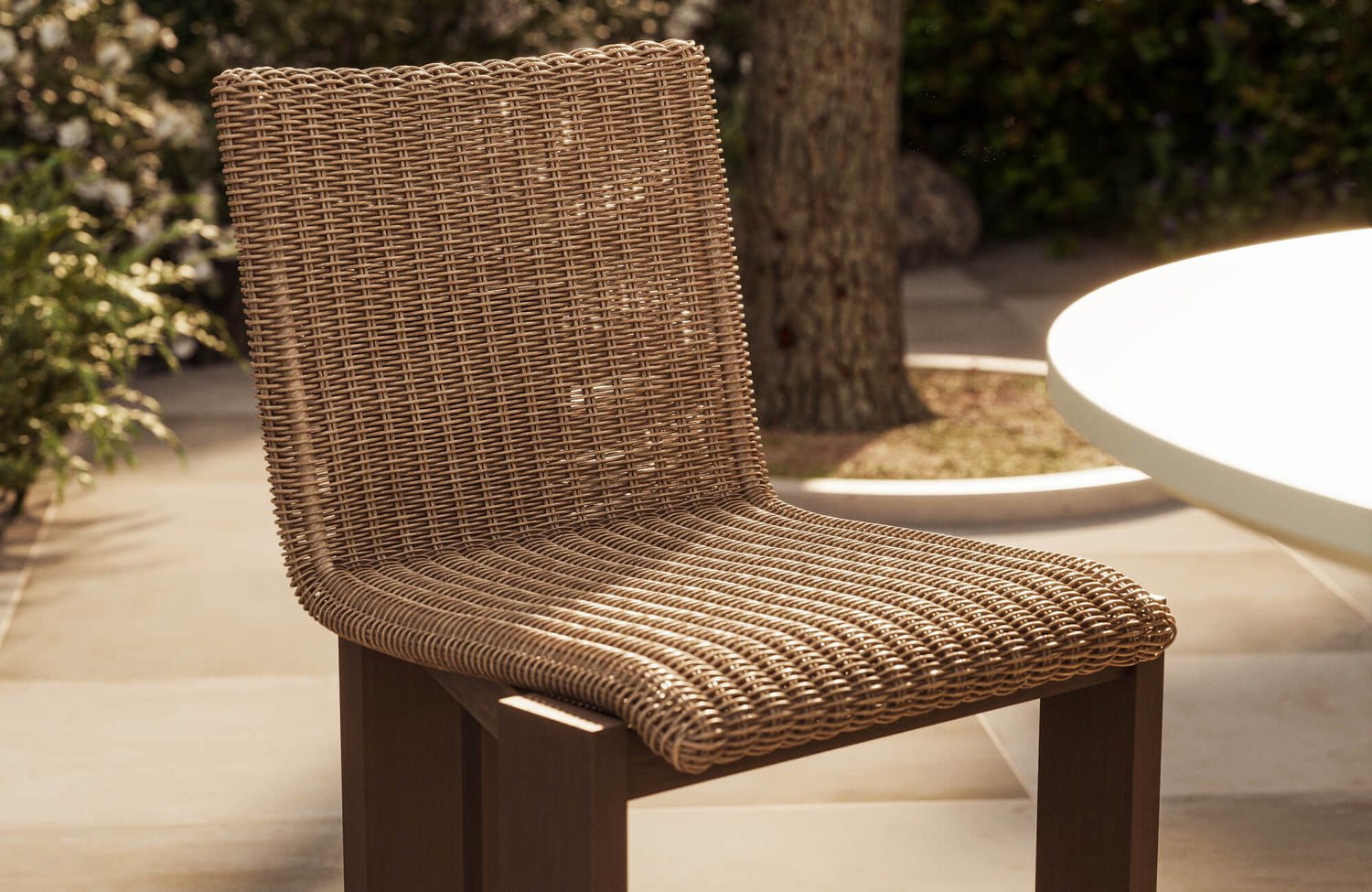
For coastal settings, marine-grade metals, high-density polymers, and corrosion-resistant hardware are often preferable because they tolerate salt air and moisture more effectively. On windy terraces, heavier materials such as solid teak, reinforced metal, or substantial woven frames can provide stability. In high-UV regions, colorfast synthetics, solution-dyed fabrics, and UV-stabilized finishes help reduce fading and brittleness. Edward Martin’s Calandor Outdoor Dining Chair in Tanned Weave, shown around a round stone table in a sunlit garden patio, illustrates how a deeper woven finish can visually ground an open-air setting while still reading as relaxed and architectural.
Maintenance expectations should also be considered honestly. Teak offers exceptional longevity, but its appearance changes over time unless maintained. Powder-coated aluminum is relatively low-maintenance, but chips should be addressed before moisture reaches vulnerable areas. Performance fabrics last longer when cleaned according to manufacturer guidelines and stored properly during harsh seasons. The most successful choice is one that suits both the climate and the level of care the property owner is willing to provide.
Integrating Advanced Seating Durability Into Home Architecture
Outdoor chairs should not be chosen in isolation from the architecture around them. Their lines, proportions, and materials affect how the patio reads as a finished room. Slim aluminum frames may suit a contemporary terrace with large-format porcelain pavers and minimal exterior lighting. Teak can soften stone, concrete, or custom tile patios by adding warmth and natural texture. Woven or upholstered outdoor chairs may create a more relaxed resort sensibility when paired with layered landscaping and generous dining layouts.
Scale is equally important. Chairs must fit comfortably around the table while allowing enough clearance for movement, serving, and circulation. Oversized dining chairs may feel luxurious in a showroom but crowd a narrow terrace. Compact chairs may look under-scaled beside a substantial stone table or expansive outdoor kitchen. The relationship between seat height, arm height, table apron, and walkway clearance should be checked before purchasing.
For expansive patio layouts or unusual spatial constraints, Edward Martin’s design services can help map seating selections to lifestyle needs, architectural scale, and material harmony. This type of guidance is particularly useful when coordinating new dining chairs with permanent finishes such as tile patios, exterior stonework, lighting, and adjacent lounge zones. When those decisions involve multiple materials or a complex outdoor footprint, Edward Martin’s contact page provides a straightforward way to discuss the project in greater detail before making a final seating investment. The goal is not merely to replace worn furniture, but to create an outdoor dining environment that feels deliberate, comfortable, and enduring.
Knowing When Outdoor Dining Chairs Have Reached Their Limit
Outdoor dining chairs should be replaced when they can no longer offer dependable support, lasting comfort, or a level of visual refinement that belongs within the surrounding patio architecture. Cracked welds, deep rot, brittle resin, severe oxidation, and unstable joints are clear safety thresholds, while sagging slings, permanent staining, unraveling wicker, and mismatched repairs often indicate a broader decline in material integrity. A chair may not need to fail dramatically to be past its useful life; often, the more telling signs are cumulative, appearing through weakened structure, diminished ergonomics, and a setting that no longer feels composed.
A thoughtful retirement decision balances safety, climate exposure, maintenance history, repair cost, and design continuity. Biannual inspections before peak entertaining season and winter storage can reveal whether a chair is worth preserving or whether replacement will better serve the space over time. When restoration no longer extends safe performance or supports the character of the outdoor dining area, new seating becomes part of a larger architectural decision, one that protects comfort, strengthens visual cohesion, and allows the patio to function with the same confidence as the home itself.