A dining room rug takes on more responsibility than most people expect because it sits under the table, chairs, and constant movement. The choice between a dark or light rug affects how grounded the space feels, how open it looks, and even how comfortable it is to use day to day. In this blog, we’ll walk through how dark and light rugs behave in dining rooms, how they work with different layouts and dining sets, and how to choose a rug color that feels balanced, practical, and easy to live with.

Why Rug Color Matters In A Dining Room
Rug color plays a bigger role in dining rooms because it sits directly beneath the table, chairs, and everyday movement. Unlike other spaces, the rug becomes a visual foundation that affects balance, mood, and how grounded the room feels. Choosing between dark and light tones here often shapes the entire dining experience.
How Dark Rugs Anchor The Dining Area Visually
Dark rugs naturally ground a dining space by adding visual weight beneath the table and chairs. This anchoring effect helps the furniture feel intentional rather than floating within the room. In larger dining areas, darker tones can prevent the space from feeling sparse or unfinished. They also create contrast that highlights lighter tables or upholstered chairs more clearly. Because the dining set sits firmly within the rug’s boundaries, the overall layout tends to feel more structured. This sense of grounding can make meals feel more intimate and composed.
How Light Rugs Create A More Open Feel
Light-colored rugs can make a dining room feel brighter and more spacious, especially in compact or enclosed areas. Their softer presence reduces visual heaviness, allowing the room to feel less crowded around the table. Light tones also help reflect available light, which can soften shadows created by chairs and table legs. This effect often makes the dining area feel calmer and more relaxed. In rooms with minimal furniture or clean-lined dining sets, a light rug supports that airy look.
How Rug Color Shapes The Dining Atmosphere
Beyond scale and balance, rug color directly influences the atmosphere of the dining room. Dark rugs often create a sense of warmth and formality, making the space feel more grounded and intentional. Lighter rugs tend to feel casual and inviting, encouraging a relaxed dining experience. The color beneath the table also affects how surrounding finishes are perceived, from wood tones to wall colors. Because the dining room is both functional and social, this subtle shift in mood matters. The right rug color helps align the space with how you want it to feel during everyday meals and gatherings.
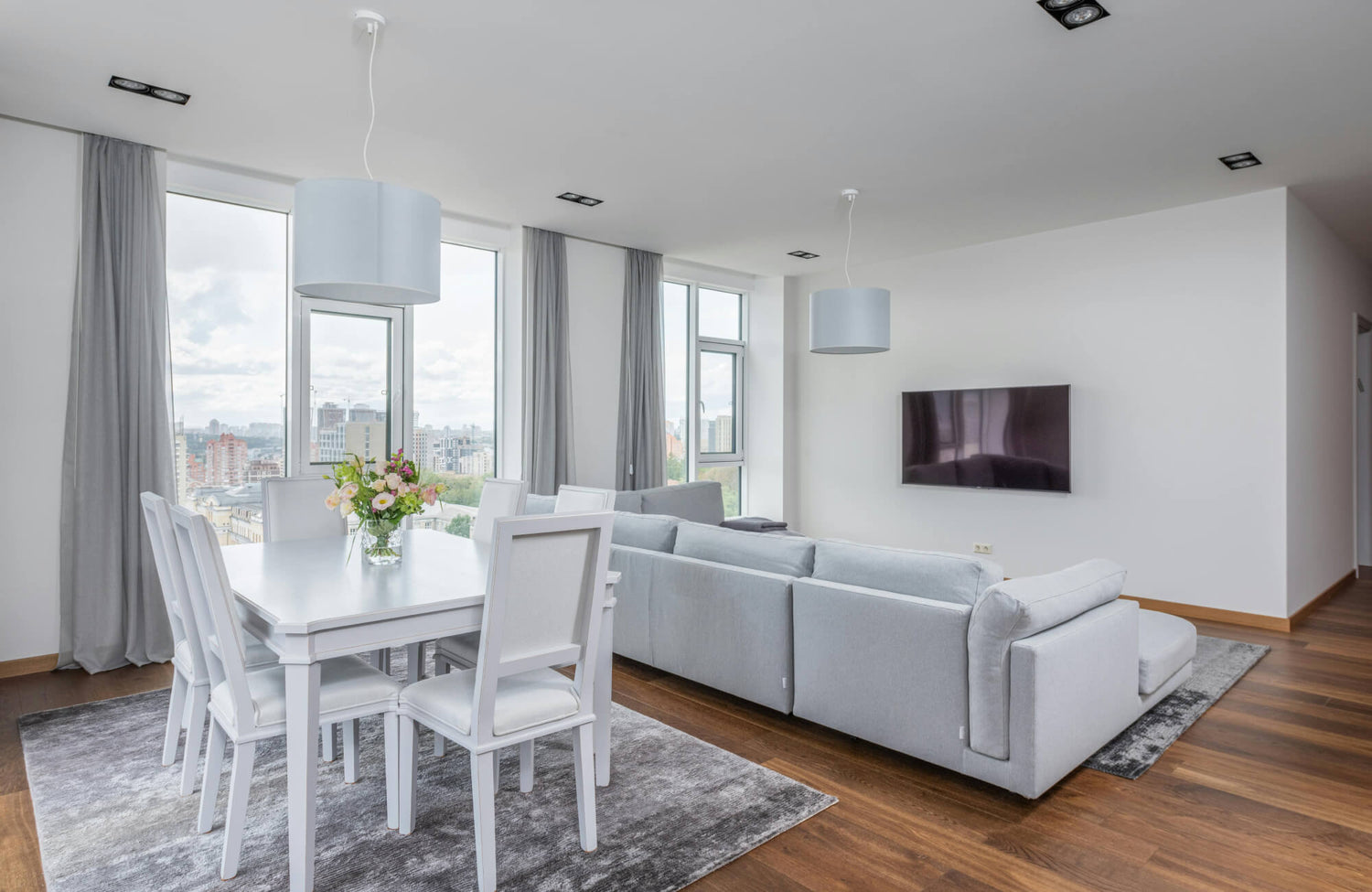
A great example is our McGowan Rug in Moss / Sand, shown above, which sits comfortably between light and dark tones to create a relaxed yet refined dining atmosphere. Its blend of beige and soft gray-green hues adds warmth without feeling heavy, helping the space feel inviting rather than formal. The layered surface and subtle patterning introduce depth and texture, which enhances the room’s mood without overpowering surrounding finishes. This kind of balanced color choice supports everyday dining while still giving the space a thoughtful, composed feel.

How Room Size And Layout Affect Dark Vs Light Rugs
Room size and layout have a direct impact on how dark and light rugs are experienced in a dining room. Because the rug sits beneath the table and chairs, its color helps guide proportions, define boundaries, and influence how spacious or grounded the room feels.
Small Dining Rooms And Lighter Rug Choices
In smaller dining rooms, lighter rugs often help prevent the space from feeling visually compressed. Their softer presence reduces the visual weight beneath the table, allowing the room to feel more open and breathable. Light tones also help soften the contrast created by chair legs and table bases, which can otherwise feel crowded in tight layouts. This approach works well when walls or cabinetry already carry darker finishes. By keeping the floor visually lighter, the dining area feels balanced rather than boxed in.
Larger Dining Spaces That Benefit From Dark Rugs
Larger dining rooms, as mentioned before, often benefit from darker rugs because they help anchor the furniture within a broader footprint. Without that visual weight, the table and chairs can feel disconnected from the surrounding space. Dark rugs create a stronger focal point, making the dining area feel intentional rather than spread out. They also help visually contain the layout, especially in rooms with wide expanses of flooring. This grounding effect can make larger spaces feel warmer and more cohesive. The dining area gains definition without needing additional furniture or dividers.
Open-Plan Layouts And Defining The Dining Zone
In open-plan homes, rug color plays an important role in defining where the dining area begins and ends. Dark rugs tend to create clearer separation, helping the dining space stand apart from nearby living or kitchen zones. Lighter rugs can offer a more subtle transition when the goal is visual continuity across the floor. The choice depends on whether the dining area should feel distinct or integrated. Rug color becomes a visual cue rather than a physical boundary. This allows the space to stay open while still feeling organized.
How Sightlines Influence Rug Color Perception
Sightlines affect how noticeable a rug’s color is within a dining room and from surrounding spaces. When the dining area is visible from entryways or adjacent rooms, darker rugs tend to draw the eye more immediately. Lighter rugs may feel less dominant when viewed from a distance, especially in open layouts. This changes how the dining area reads as part of the overall home. Considering where people first encounter the rug helps guide the color choice. The goal is to support a smooth visual flow rather than create an abrupt contrast.

Matching Rug Color With Dining Tables And Chairs
Rug color feels most successful in a dining room when it responds naturally to the table and chairs placed on top of it. Since these pieces are always seen together, the rug helps either bring the setup together or introduce contrast that keeps the space from feeling flat or unfinished.
Dark Rugs Paired With Light Wood Tables
Dark rugs, such as our Liddy Rug in Graphite / Pearl, tend to work especially well with light wood dining tables because they create a clear, comfortable contrast. This separation helps the table stand out without making it feel disconnected from the rest of the room. Light wood finishes often appear warmer and more defined when set against a darker surface below. At the same time, the rug grounds the dining set, which helps the layout feel stable and well-placed. When the contrast is handled thoughtfully, the pairing feels balanced rather than dramatic. Both the rug and the table get to contribute visually without competing for attention.
Light Rugs Under Dark Or Statement Dining Sets
Light rugs can soften the presence of darker or more sculptural dining sets, which helps prevent the space from feeling too heavy. By lifting visual weight off the floor, lighter tones give dark tables and chairs more breathing room. This approach works particularly well when the furniture already makes a strong statement through color, shape, or material. Instead of competing, the rug supports the dining set by acting as a calm backdrop. It also allows details in the furniture to stand out more clearly. Overall, the room feels layered but still relaxed.
Upholstered Dining Chairs And Rug Color Balance
Upholstered dining chairs introduce softness and texture, which makes rug color an important part of the overall balance. A rug that contrasts gently with the upholstery helps define the seating area without overpowering it. When tones are too similar, chairs can visually blend into the floor and lose definition. On the other hand, contrast that’s too strong may feel distracting rather than supportive. The key is finding a middle ground where materials feel connected but still distinct. In that way, the rug quietly supports the chairs instead of competing with them.
Leg Visibility, Contrast, And Visual Clarity
The way table and chair legs read against a rug has a big impact on how clean and organized the dining area feels. When the rug contrasts slightly with leg finishes, the furniture becomes easier to visually follow. If legs disappear into the rug color, the space can start to feel undefined or visually busy. This is especially noticeable in dining rooms with multiple chairs or open sightlines. Clear contrast improves legibility and helps the layout feel more intentional. As a result, the dining area reads as more composed and thoughtfully arranged.

Rug Materials And How They Handle Dining Room Use
Material choice matters just as much as color in a dining room because rugs here deal with frequent chair movement, spills, and everyday activity. Some materials handle this environment more comfortably than others, depending on texture, weave, and fiber strength.
Wool Rugs In Dining Rooms
Wool rugs are a popular choice for dining rooms because they strike a strong balance between comfort and resilience. The natural fibers bounce back well from chair movement, which helps the rug maintain its shape over time. Wool also handles everyday messes more gracefully than many people expect, since its fibers resist absorbing spills right away. For instance, quick cleanup often prevents stains from setting. At the same time, wool adds warmth and texture that make the dining area feel inviting. This combination makes it a reliable option for both casual meals and gatherings.
Synthetic Fiber Rugs For Busy Dining Areas
Synthetic rugs are often chosen for dining rooms that see frequent use because they are designed to handle daily wear with ease. Materials like polypropylene and polyester resist moisture, which can be reassuring in spill-prone spaces. These rugs also tend to slide more easily under chairs, reducing resistance during movement. Because of their durability, they’re a practical option for households with kids or regular entertaining. At the same time, many synthetic rugs now mimic the look of natural fibers. This allows you to balance function with a more refined appearance.
Cotton Rugs For Casual Dining Spaces
Cotton rugs work well in dining rooms that lean more relaxed and informal. They tend to feel lighter underfoot and are easier to adjust or reposition as needed. Because cotton is softer, chair movement may cause more shifting, so this option suits spaces with less frequent rearranging. Cotton rugs also pair nicely with simple dining setups and airy interiors. For example, they complement lighter furniture and open layouts. While they may not be the most durable option, they offer comfort and ease in lower-pressure spaces.
Viscose And Bamboo Silk Rugs For Visual Impact
Viscose and bamboo silk rugs are often chosen for their sheen and smooth finish, which can elevate the look of a dining room. These materials reflect light beautifully, adding depth and dimension under the table. However, they tend to be more delicate when it comes to spills and chair movement. Because of this, they’re better suited to dining spaces used less frequently. For instance, formal dining rooms benefit most from their polished appearance. They deliver visual impact, but they do require more mindful use.
Blended Material Rugs For Balanced Performance
Blended rugs combine different fibers to offer a balance of durability, texture, and comfort. By mixing materials, these rugs often perform better in dining rooms than single-fiber options. For example, blends can improve resistance to wear while maintaining a softer feel underfoot. They also tend to handle chair movement more evenly. This makes them appealing to homeowners who want flexibility without sacrificing style. Blended rugs offer a practical middle ground for dining spaces used regularly.
A great example is our Quinton Rug in Ash above, which uses a thoughtful blend of wool, cotton, and polyester to balance softness with everyday durability. The mixed fibers help the rug hold up to chair movement and regular dining use while still feeling warm and comfortable underfoot. Its subtle geometric pattern and layered brown and gray tones add visual depth without overpowering the space, making it a reliable choice for dining rooms that need both performance and refined style.

Maintenance Expectations For Dark Vs Light Rugs
Rug color has a noticeable impact on how maintenance feels in a dining room, especially once the space is in regular use. Dark and light rugs respond differently to crumbs, spills, and everyday wear, which shapes how forgiving they feel over time.
How Dark Rugs Mask Everyday Marks
Dark rugs are often appreciated because they tend to disguise everyday marks more easily. Small crumbs, minor spills, and light scuffs don’t stand out as quickly against deeper tones, which can feel reassuring in a dining setting. This makes dark rugs feel more forgiving during frequent meals or gatherings. That said, certain shades may show dust or lint more clearly, depending on lighting and texture. Because of this, regular upkeep still matters even with darker colors. Overall, dark rugs offer visual ease when it comes to minor, day-to-day imperfections.
What Shows More Easily On Light Rugs
Light rugs make spills and crumbs more noticeable, which can feel intimidating at first glance. At the same time, this visibility often leads to quicker cleanup, which helps prevent messes from lingering. Lighter tones also highlight texture and pattern more clearly, adding to their visual appeal. For example, marks from chair movement may appear sooner simply because the surface is more revealing. This doesn’t make light rugs impractical, but it does mean they reward attentiveness. Many homeowners still choose them because of the fresh, open feel they bring to the space.
Chair Movement And Wear Over Time
Chair movement affects all dining room rugs, but color plays a role in how wear shows up over time. On darker rugs, subtle changes often blend into the overall tone, making wear feel less obvious. Lighter rugs may reveal compression or shading shifts sooner, especially in frequently used spots. These changes don’t necessarily signal damage, but they do alter how the rug looks as it ages. Because dining chairs are moved daily, some level of wear is unavoidable. Choosing a color that aligns with your comfort level helps set realistic expectations from the start.
Dining Spills And Realistic Upkeep
Spills are simply part of dining room life, and rug color influences how stressful those moments feel. Dark rugs usually offer a bit more breathing room, allowing you to respond without immediate visual impact. Light rugs, on the other hand, make spills obvious right away, which encourages faster action. In practice, both can perform well when messes are handled promptly. The difference often comes down to perception rather than actual durability. Knowing this helps reduce unnecessary worry during everyday use.
Long-Term Appearance And Aging
Over time, every rug develops signs of use, but color affects how that aging is perceived. Dark rugs often age gradually, with wear blending into the overall look in a subtle way. Light rugs tend to show changes more clearly, which can feel either honest or distracting depending on personal preference. For some people, this visible evolution adds character, while others prefer a more concealed look. Thinking about how you feel about aging helps guide the color choice. The best rug is one that still feels right years down the line.
Making A Confident Rug Choice For Your Dining Room
Choosing between a dark or light rug for your dining room ultimately comes down to how you want the space to feel and function day to day. Color affects more than appearance here, shaping balance, mood, and how the dining area holds up to everyday use. When room size, layout, furniture, and materials are considered together, the right rug choice starts to feel clear rather than overwhelming. The goal is a dining space that feels intentional, comfortable, and easy to live with.
If you’d like support narrowing down your options, our design team is here to help guide the process. A design consultation can help you visualize how rug color, material, and scale work with your dining table, chairs, and layout. Having a second set of eyes often makes it easier to move forward with confidence, especially when multiple factors are at play.