Choosing the right dining table shape is a decision that affects far more than how a room looks. It shapes movement, conversation, comfort, and the way a household interacts daily. For homeowners who value thoughtful design and quality craftsmanship, the choice between a round or rectangular wood table becomes a question of lifestyle as much as layout.
Understanding how each form responds to space, social dynamics, and functionality can turn your dining room into an environment that not only looks cohesive but also feels intuitively designed for the way you live.

Matching The Table Shape To Your Room Dimensions
Before choosing between a round or rectangular dining table, it’s essential to understand how each shape interacts with your room’s footprint. The dimensions and flow of the space establish a foundation that influences every design decision that follows.
Why Square Rooms Demand A Round Table
In a perfectly square dining room, sharp corners and rigid symmetry can sometimes create a static or overly formal atmosphere. A round table softens that geometry and helps the eye travel smoothly across the space. With no corners to interrupt the visual field, it enhances openness and allows the room to feel more balanced from every angle. Its circular footprint naturally accommodates even seating distribution, creating a harmonious center point that complements the equal proportions of the room, much like Edward Martin’s Alice 54" Round Dining Table in Light Oak shown in the image above.
Homeowners often find that this shape allows for better circulation as well, since its curved edges remove the risk of awkward corner collisions in compact layouts. When the goal is to create a relaxed, welcoming environment without compromising space, a round table becomes the anchor that elevates both form and function.
Utilizing The Length Of Rectangular Spaces
Rectangular rooms, with their elongated dimensions, align intuitively with a rectangular dining table. The parallel relationship between table and walls enhances the room’s architectural rhythm, drawing the eye along the length of the space and emphasizing spaciousness. A rectangular table uses this layout strategically by providing ample seating without overwhelming the width of the room.
Even in narrower dining areas, the linear shape encourages efficient placement, allowing chairs to pull out comfortably while still preserving walking paths along the longer sides. This proportional harmony gives the dining area the sense of being purpose-built, reinforcing a clean, streamlined look that appeals to homeowners who prioritize order and classic spatial symmetry.
Navigating Tight Corners And Flow
Some dining rooms come with unique challenges: a stray column, a recessed corner, or a circulation path that doubles as a route to another part of the home. In these cases, table shape becomes a crucial tool for spatial problem-solving. A round table can adapt to irregularities by introducing an organic silhouette that doesn’t compete with off-angle architectural lines.
Meanwhile, a rectangular table can work beautifully when you want to define a strong central axis in a corridor-like space. The key is considering how people move through the room. A table that interrupts the natural flow quickly becomes an obstacle, while a shape that aligns with the direction of movement feels intentional and comfortable. When selecting between round and rectangular, homeowners benefit from observing how they enter, cross, and exit the room, because the table will ultimately guide that experience daily.

How Table Shape Impacts Conversation And Social Flow
Once the table is positioned in a way that fits your room’s proportions, the next consideration is how it supports the way people connect around it. Social dynamics and conversational comfort become just as important as spatial fit, shaping the atmosphere of every meal.
The Egalitarian Nature Of Round Tables
Round tables are inherently democratic. With no head of the table and no hierarchy implied by seating position, every person has equal visibility and presence within the group. This creates a social dynamic that favors intimate conversation and effortless engagement. Guests can easily communicate across the table, and the absence of corners brings everyone physically closer together.
For families that prioritize shared meals filled with interaction, or for those who frequently entertain in a more relaxed setting, the round table fosters a sense of connection that feels inviting and inclusive. Its shape becomes more than a design feature, it becomes a catalyst for the kind of communal experiences that make dining memorable.
The Formal Hierarchy Of Rectangular Tables
Rectangular tables, with their elongated form, naturally introduce a more structured seating arrangement. The ends of the table become focal points, often associated with hosts or heads of household, giving gatherings a subtle sense of formality. This isn’t inherently limiting; many homeowners appreciate the visual and social clarity that a rectangular table provides during events, celebrations, or dinners with guests who prefer well-defined spatial cues, as reflected in Edward Martin’s Kyla 94.5" Dining Table visible in the image above.
The linear format also supports simultaneous conversations along the length of the table, allowing larger groups to split into comfortable sub-conversations. This shape caters to households that appreciate tradition, hosting, and the elegant order that a rectangular silhouette brings to the dining experience.
Flexibility In Seating Capacity
Table shape also plays a significant role in how many people can comfortably gather around it. Round tables often feel more communal but can become less functional as diameter increases. At larger sizes, conversation becomes strained and the table’s center may be difficult to reach. Rectangular tables, on the other hand, can scale more easily. Their length can extend to accommodate additional seating, making them ideal for growing families or those who entertain frequently.
However, flexibility is not only about numbers, it’s also about the quality of the seating experience. Round tables offer equal elbow room and leg comfort for everyone, while rectangular tables provide clear personal space along the edges. The best choice depends on whether you prioritize closeness or structured seating when hosting gatherings of any size.

Assessing Versatility And Functional Surface Area
After considering both spatial layout and social flow, it’s helpful to evaluate how each table shape performs in day-to-day use. The surface area, functionality, and adaptability of the table play a major role in how well it supports everything from serving meals to multitasking.
The Serving Dish Dilemma
One of the most practical considerations in table shape comes down to functional surface area. Round tables create a sense of togetherness, but their circular layout can make serving dishes and centerpieces more challenging in larger sizes. Homeowners may find that platters and bowls become crowded toward the middle, making casual family-style dining slightly less convenient when space gets tight.
Rectangular tables excel in this regard, offering a generous linear surface that accommodates both decorative elements and functional items without feeling cluttered. The elongated proportions, similar to what you see with Edward Martin’s Dominic 95" Dining Table in Dark Mango in the image above, support buffet-style setups during gatherings and make it easy to distribute dishware along the length of the table. Ultimately, the choice hinges on whether visual harmony or enhanced serving flexibility matters more for your household.
The Work From Home Factor
Dining rooms have increasingly become multi-purpose areas, serving as temporary home offices, homework stations, or creative workspaces. In these scenarios, the table’s shape once again influences usability. A rectangular table provides a natural desk-like structure, offering clear divisions of space so multiple people can work side by side. Its linear edges support laptops, documents, and equipment without encroaching on others at the table.
Round tables are more fluid, encouraging collaborative interaction but offering less spatial clarity for organized work. For households where the dining room frequently doubles as a workspace, the rectangular option often proves more aligned with daily practicality. Meanwhile, homeowners who use the dining area purely for meals may find the softer presence of a round table better complements their lifestyle.
The Visual Weight Of The Wood Grain
A table’s surface isn’t just functional; it’s a significant visual element that defines the dining room’s aesthetic tone. Wood grain interacts differently depending on the table’s shape. On a rectangular table, the direction of the grain reinforces linearity and length, accentuating the architectural alignment within the room. This long, continuous grain pattern often conveys timeless elegance, making the table a natural focal point.
A round table, by contrast, highlights the wood through movement and symmetry. Its shape allows the grain to radiate or flow in patterns that feel organic and sculptural, softening the room’s visual lines. The choice depends on whether you prefer the structured sophistication of straight grain direction or the artistic fluidity that round silhouettes bring to the dining experience.

The Impact Of Legs And Pedestals On Comfort
With shape, social experience, and functionality in mind, the final layer is understanding how the table’s base affects comfort. Leg placement and structure influence how naturally people can sit, move, and interact, completing the overall picture of what makes a table truly practical.
The Legroom Freedom Of Pedestals
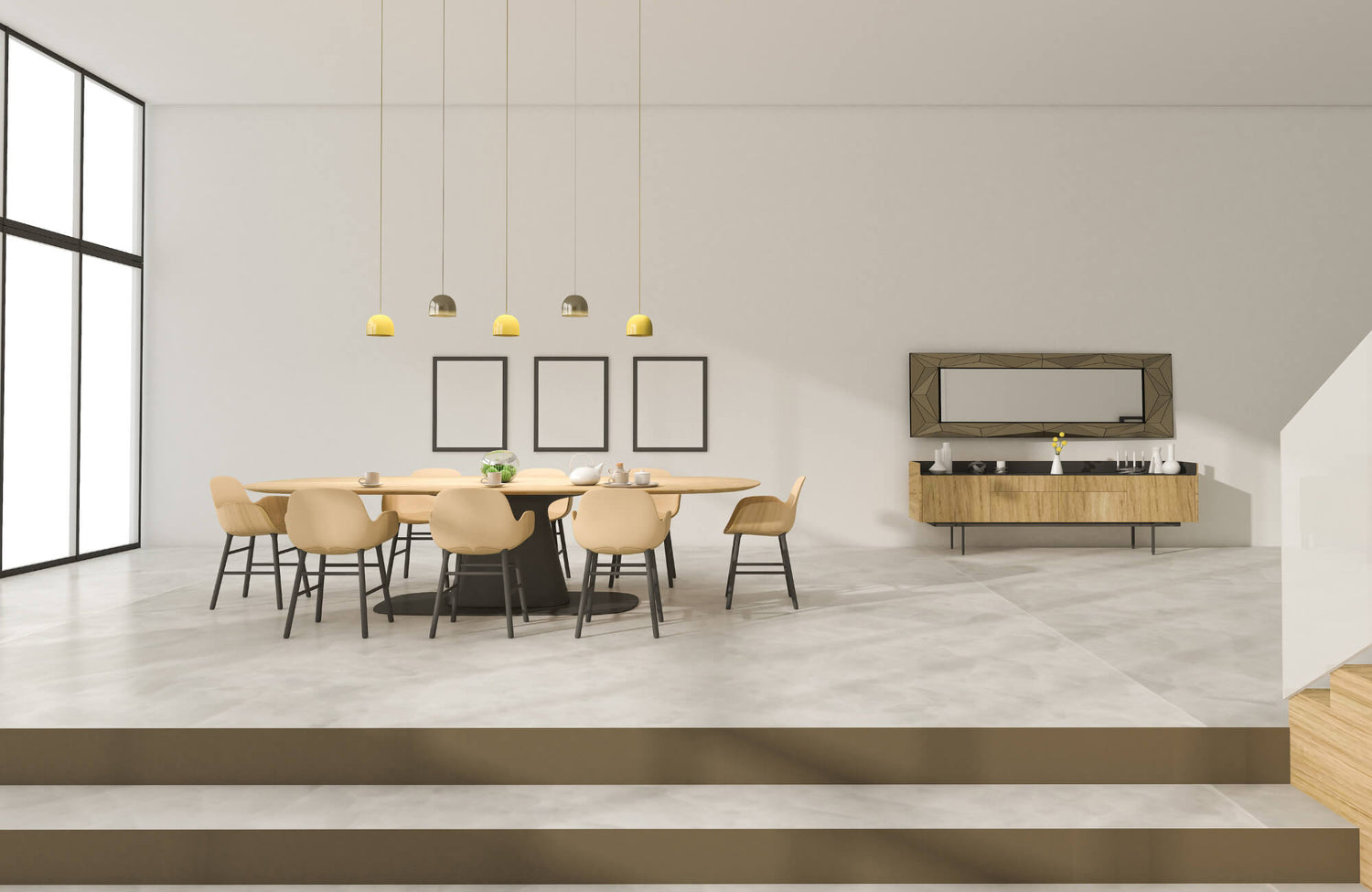
Table comfort extends beyond shape to the structure supporting it. Pedestal bases, commonly found on round tables, offer excellent legroom by eliminating corner legs that might interfere with seating. This unrestricted space makes it easy to slide chairs around the table, adjust seating positions, and accommodate additional guests without bumping into structural supports, a benefit seen clearly with Edward Martin’s Rebecca 86" to 120" Dining Table in Greige featured in the image above.
Pedestals also contribute to the table’s overall visual lightness, creating a streamlined appearance that enhances a room’s sense of openness. For homeowners who value comfort and flexible seating arrangements, a pedestal-based table can quietly elevate the dining experience.
The Stability Of Four Corner Legs
Rectangular tables traditionally feature four legs positioned at the corners, providing straightforward structural stability. This familiar format offers a solid, grounded presence and ensures dependable support no matter how many items are placed on the tabletop.
Corner-leg designs also complement the table’s linear visual identity, reinforcing its architectural alignment. While they can slightly restrict seating placement at the ends or near the corners, many homeowners appreciate the balanced look and sturdiness these tables provide. The design resonates with those who value time-tested construction and traditional craftsmanship.
The Limitations Of Trestle Bases
Trestle bases introduce a distinctive design element but come with their own considerations. They offer strong support and a visually appealing structure, yet their cross-beam designs can restrict legroom depending on chair placement. When homeowners are unsure whether a trestle style will work with their layout, Edward Martin’s design consultation service can help clarify how this base type fits into their overall project needs.
Homeowners drawn to their rustic or classic appeal must weigh aesthetic preference against everyday comfort. Trestle bases tend to work better in larger dining rooms where chairs can be spaced more generously, allowing the design to shine without compromising functionality. When space is tight, however, the limitations may outweigh the decorative benefits, and reaching out to contact Edward Martin ensures access to expert guidance, whether for personalized recommendations, product questions, or help coordinating furniture, tile, or rug selections.
Choosing The Shape That Fits Your Life
In the end, selecting between a round or rectangular dining table is less about choosing one shape over another and more about understanding the unique rhythms of your home. A round table invites closeness, conversation, and a sense of ease that perfectly suits square rooms or spaces where connection matters most. A rectangular table offers structure, versatility, and efficient use of elongated spaces, making it an ideal fit for households that balance meals, work, and gatherings in one shared environment. Both shapes hold their own in beauty and practicality, and each one can transform the dining experience when paired thoughtfully with the room’s proportions and the needs of the people who use it.
The dining table is one of the most meaningful pieces of furniture in a home. Choosing the right shape allows it to support not only the design of the room but the lifestyle lived within it. Whether your priority is social warmth, functional surface area, architectural harmony, or day-to-day comfort, the perfect shape is ultimately the one that reflects the life you envision at your table.