A farmhouse foyer chandelier can completely shape the mood of your entryway, offering the perfect blend of warmth, charm, and character the moment someone steps inside. The right fixture doesn’t just brighten the space, it supports the style, scale, and personality of your home in a way that feels intentional and inviting. In this blog, we’ll walk through the essential considerations that help you narrow your options and find a chandelier that beautifully reflects the atmosphere you want to create.

What Is the Farmhouse Foyer Look You Want?
Creating the perfect farmhouse foyer starts with deciding which version of the style speaks to you, from rustic and weathered to clean and modern. Each variation shapes the mood, materials, and scale of the chandelier you’ll eventually choose.
Defining Your Farmhouse Style Direction
Farmhouse style has evolved into several distinct directions, and clarifying which one you prefer makes your lighting choices much easier. Some homeowners love the charm of rustic farmhouse, with distressed woods and heritage-inspired shapes, while others lean toward the clean lines of modern farmhouse. Industrial farmhouse brings a stronger, more architectural feel, while refined farmhouse softens the look with subtle details and polished finishes. Thinking through which variation reflects your home’s personality helps narrow the visual language of your chandelier.
Balancing Warmth, Texture, and Simplicity
Farmhouse design thrives on a mix of warmth, subtle texture, and clean simplicity, and these elements become especially important in a foyer. Wood tones, soft metals, or woven textures can create a welcoming feel the moment someone steps inside. At the same time, overly ornate or overly minimal fixtures can disrupt the balance, so keeping the overall look calm and grounded works best. Think about how much warmth you want to introduce and how that interacts with your existing floors, wall tones, or architectural trim. When these elements are balanced, the chandelier becomes a natural extension of the foyer rather than a competing focal point.
Matching the Chandelier to Your Home’s Architectural Features
Your home’s architectural details often guide the best chandelier shape, scale, and overall presence. Tall ceilings, open staircases, and wide entryways can support larger fixtures with more visual impact, while compact foyers benefit from simpler silhouettes. Elements like exposed beams, shiplap, window shapes, or farmhouse-style railings can also help determine whether a chandelier should feel rustic, modern, or somewhere in between. Paying attention to these details ensures the light feels integrated rather than added on. When the chandelier aligns with the architecture, the foyer gains a cohesive, welcoming feel right from the first glance.

Measure Your Foyer for Proper Fixture Size
Choosing the perfect farmhouse foyer chandelier starts with understanding the proportions of your space. A well-sized fixture should feel visually balanced, never too heavy, too small, or too low once installed.
Calculating the Right Chandelier Diameter
A chandelier’s diameter should feel proportional to your foyer, and using simple measurements helps you find the best fit. One common method is to add the room’s length and width (in feet) and convert that number to inches to estimate the ideal chandelier width. This keeps the fixture visually centered without overwhelming the space. If your foyer opens into other rooms, consider how the chandelier interacts with those sightlines as well. With the right diameter, the fixture complements the room’s footprint and maintains a comfortably balanced look.
Choosing the Correct Height for Tall or Two-Story Foyers
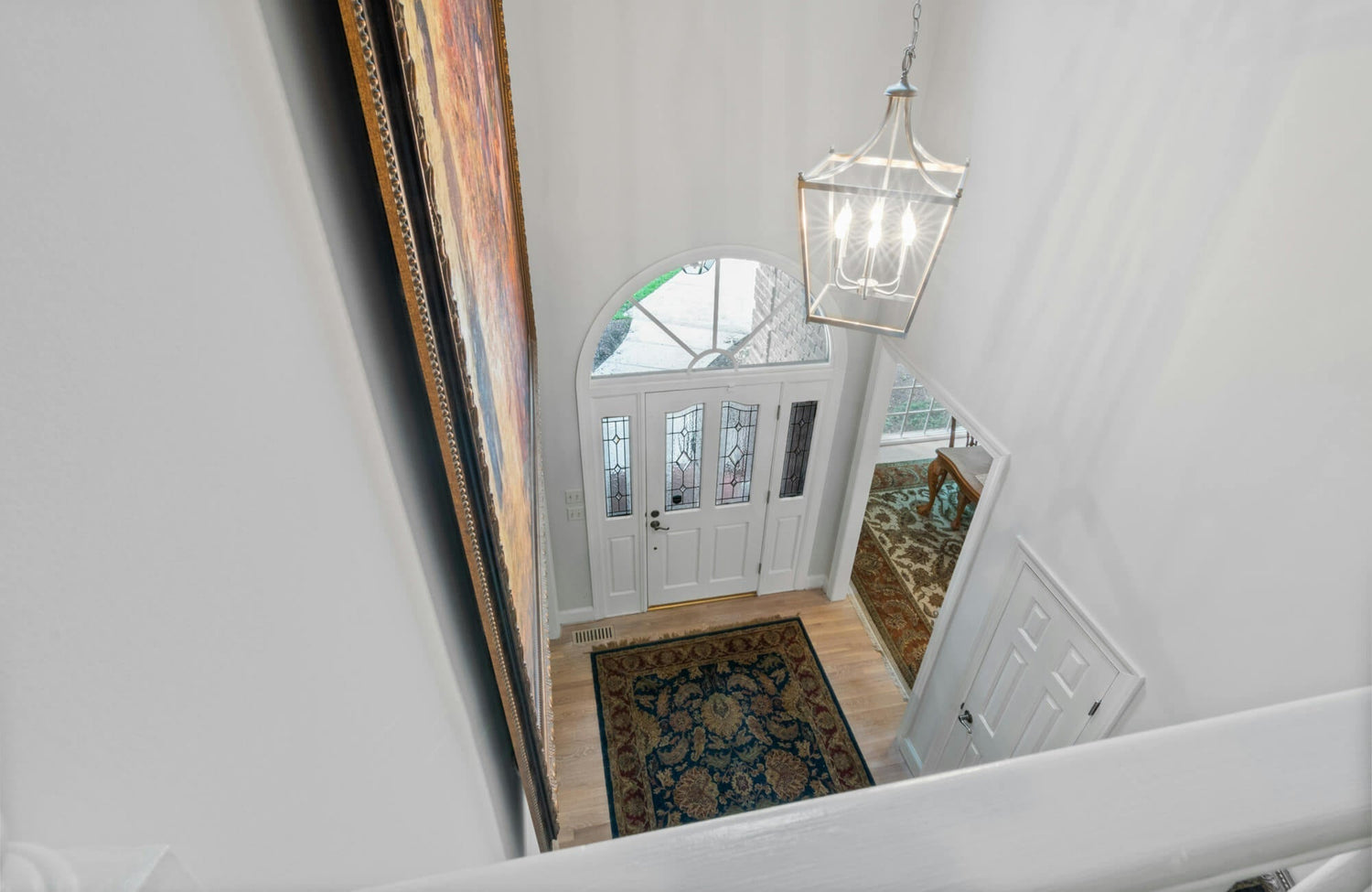
Tall or two-story foyers require chandeliers with enough vertical presence to fill the height without feeling oversized. A common guideline is to allow 2–3 inches of chandelier height for every foot of ceiling height, ensuring the fixture feels substantial from below. In two-story spaces, the chandelier should sit visually centered relative to upper-level windows or railings for the best sightline. Avoid hanging the fixture too low, where it can disrupt movement or appear intrusive in the space below. When adjusted correctly, the chandelier becomes a graceful focal point that enhances both levels of the foyer.
Ensuring Proper Scale for Narrow or Compact Spaces
Compact foyers require chandeliers that provide visual impact without crowding the space. Opting for slimmer silhouettes or vertically oriented fixtures helps maintain clearance while still offering presence. It’s also important to leave enough space between the walls and the chandelier so it doesn’t feel squeezed or oversized for the entryway. Consider how the fixture relates to nearby doors, windows, or furniture to avoid obstructing movement. With the right scale, even a small foyer can feel open, welcoming, and thoughtfully proportioned.

Determine the Ideal Hanging Height and Placement
Getting the hanging height and placement right is essential for a foyer chandelier that feels intentional, safe, and visually balanced. The goal is to provide enough clearance for movement while making sure the fixture aligns naturally with nearby architectural features.
Safe Hanging Height Over Open Floor Space
A chandelier hanging over an open foyer space should maintain comfortable clearance so it never feels too low or obstructive. Most foyers benefit from at least 7 feet of clearance from the bottom of the fixture to the floor, ensuring guests can walk beneath it safely. In taller spaces, the chandelier can hang slightly lower for visual impact, as long as movement beneath it remains unobstructed. It’s helpful to view the fixture from both inside and outside the home to ensure it appears balanced from every angle.
Placement Under a Balcony or Loft Overlook
If your foyer includes a second-floor balcony or loft overlook, the chandelier’s height becomes even more important. The fixture should sit low enough to be seen from the upper level without blocking the view across the railing. Ideally, it should occupy the vertical space between the two floors without coming too close to the walkway above. Ensuring comfortable clearance from the upper level prevents the chandelier from feeling cramped or oversized. When positioned thoughtfully, the fixture becomes a focal point that connects both floors with a cohesive, inviting look.
Centering the Fixture With Doors, Windows, or Staircases
Centering a chandelier involves more than placing it in the geometric middle of the foyer; it should align with the architectural anchors that define the space. This might mean positioning it in line with the front door, a large window, or the curve of a staircase for a more natural visual flow. Viewing the room from multiple angles helps confirm that the fixture feels centered from both inside and outside perspectives. Avoid letting the chandelier drift too close to any wall or opening, which can throw off the room’s symmetry. When centered correctly, the chandelier reinforces balance and creates a polished, welcoming entry.

Choose the Right Material, Finish, and Shape
Creating the right farmhouse foyer look depends on choosing a chandelier that feels honest, grounded, and visually balanced. Below, we’ll take a closer look at how the material, overall silhouette, and finish work together to shape the mood of your entryway.
Selecting Materials That Set the Farmhouse Mood
Choosing the chandelier’s material is one of the biggest factors in creating an authentic farmhouse foyer feel. Iron brings durability and a timeless, grounded look, while wood accents add warmth and a more organic touch. You can also consider mixed-material chandeliers, which blend the two and create a balanced style that works across rustic, modern farmhouse, and transitional homes. By choosing materials that age well, the foyer maintains its character even as the rest of the home evolves.
How Chandelier Shapes Influence the Entryway
The overall shape of the chandelier also influences how the foyer feels the moment you walk in. Lantern-style silhouettes offer structure and a classic farmhouse nod, while globe frames create softer lines suited for modern farmhouse spaces. You can also look to wagon-wheel designs, which introduce an open, airy presence that works beautifully in larger or double-height foyers. Since each shape affects how light spreads, the silhouette becomes just as important as the material.
A great example of a silhouette that suits larger or double-height foyers is our Clement Chandelier in Aged Brass, shown above. Its expansive circular frame and upward-reaching lights create an airy, balanced presence that fills the space without feeling heavy. With its warm metallic finish and open structure, it demonstrates how a well-chosen wagon-wheel–inspired form can brighten the entryway while keeping the design grounded and inviting.
Choosing a Finish That Complements Your Home
Finishes then tie everything together, helping the chandelier blend smoothly with nearby hardware and architectural details. Matte black coordinates well with most railings and front-door hardware, while aged brass or antique bronze adds warmth to a farmhouse backdrop. You can also match the finish to surrounding elements to keep the foyer cohesive without feeling overly designed. With the right material, shape, and finish, the chandelier becomes a natural focal point that strengthens the overall entry space.

Plan for Lighting Output and Bulb Type
Your chandelier’s brightness and bulb type play a major role in how welcoming your foyer feels, especially since this space sets the tone for the entire home. The right lighting output helps you strike a balance between visibility and ambiance, while thoughtful bulb choices reinforce the warmth that defines farmhouse style.
How Bright Your Foyer Should Be
Determining the right brightness starts with understanding your foyer’s size and natural light levels. Larger or double-height foyers typically need more lumens to avoid dim or shadowed corners, while compact entries stay comfortable with moderate output. A good guideline is to multiply the foyer’s square footage by 20 to estimate the ideal lumen range. This ensures the space feels bright enough for everyday use without feeling harsh.
Foyers with darker walls or limited windows may require bumping the lumen count slightly higher to offset absorbed light. On the other hand, if your entry opens directly into bright adjacent spaces, a softer output may create a smoother transition. You can also use dimmers to adjust brightness throughout the day, giving you more flexibility. Proper brightness planning allows your chandelier to work well across seasons, time of day, and different lighting needs.
Choosing Bulbs for Farmhouse Warmth
Warm lighting is one of the hallmarks of a cozy farmhouse foyer, and choosing the right bulbs makes a big difference in achieving that feel. Bulbs in the 2700K to 3000K range cast a soft, inviting glow that pairs well with wood accents, iron fixtures, and rustic textures. You can also use Edison-style bulbs to reinforce a vintage-inspired look, offering gentle warmth with a bit of character.
Beyond color temperature, you can consider bulb shape and opacity to fine-tune the overall effect. Clear bulbs provide crisp illumination and highlight decorative filaments, while frosted bulbs diffuse light for a softer, ambient spread. Both work well in farmhouse settings, depending on whether you prefer a bolder or more understated glow. Choosing bulbs that support your desired atmosphere helps your chandelier create a foyer that feels relaxed, welcoming, and thoughtfully lit.
Pairing the Chandelier With Sconces or Accent Lights
Layering your foyer lighting helps avoid heavy shadows and gives the entryway more depth and dimension. Wall sconces, picture lights, or soft accent lamps can support the chandelier by filling in areas where overhead lighting doesn’t reach. This layered approach keeps the space comfortable during evenings and creates a more sophisticated lighting plan overall. It also helps guide movement through hallways or adjacent rooms.
When deciding on placement, ensure secondary fixtures complement, not compete with, the chandelier. Spacing should feel intentional, with each light source adding coverage without overwhelming the room. Coordinating bulb temperature across all fixtures also helps create a seamless visual flow throughout the foyer. With proper layering, your entry feels inviting, balanced, and perfectly illuminated from every angle.
Bringing Your Farmhouse Foyer Vision Together
Choosing the perfect farmhouse foyer chandelier becomes much more approachable when you understand how style, scale, materials, and lighting all work together to shape the first impression of your home. Each decision, from the silhouette you prefer to the warmth of the bulbs you select, helps define the foyer’s character and ensures the space feels intentional the moment someone steps inside. With the right combination in place, your chandelier becomes more than a statement piece; it sets the tone for the entire home in a way that feels grounded, inviting, and true to your style.
If you’d like guidance refining your ideas or want help choosing pieces that fit your foyer’s proportions, our design team is here to support you. We can help you compare options, plan measurements, and create a cohesive lighting approach that complements your entryway beautifully. Book a personalized design consultation and start shaping a farmhouse foyer that feels warm, balanced, and thoughtfully designed from the very first glance.