Your bathroom vanity does more than frame the sink. It also takes on splashes, heat, humidity, and daily wear in one of the busiest rooms in your space. Although style draws you in, true value lies in what’s under the surface. Quality isn’t always obvious at a glance, but knowing what to look for can make the difference between a vanity that endures and one that disappoints.
This article breaks down the essential traits of a high-quality vanity, from construction methods and material choices to hardware, installation ease, and brand trustworthiness. With these insights, you’ll be able to look beyond the finish and choose a piece that performs as well as it looks.

Construction Methods That Define Structural Integrity
A bathroom vanity may catch your eye with its style, but what truly matters is what holds it all together. The way it’s built (what you can’t always see) plays the biggest role in how well it performs and how long it lasts.
Importance of Solid Joinery Over Glue and Staples
You might not think much about how the drawers or panels of your vanity are attached, but that detail speaks volumes about quality. A vanity that’s merely glued or stapled can fall short quickly, especially in the constantly humid environment of a bathroom. Over time, these shortcuts loosen, warp, or even separate altogether, leaving you with frustrating repairs or the need for a full replacement.
Instead, look for vanities that showcase time-tested joinery methods like dovetail or mortise-and-tenon. These joints interlock wood components in a way that’s both elegant and strong, offering mechanical resistance to the shifting, swelling, and shrinking caused by daily use and fluctuating moisture levels. It’s these hidden but crucial details that keep drawers operating smoothly and structures intact for years.
Reinforced Corner Brackets and Interior Framing
A well-constructed vanity supports its weight and withstands stress through smart internal reinforcements. If you take a closer look inside, beneath the sink, or behind the drawers, you might notice wooden corner blocks or metal brackets anchoring the structure. These reinforcements keep the vanity square and stable, even after repeated use or the added burden of a stone countertop.
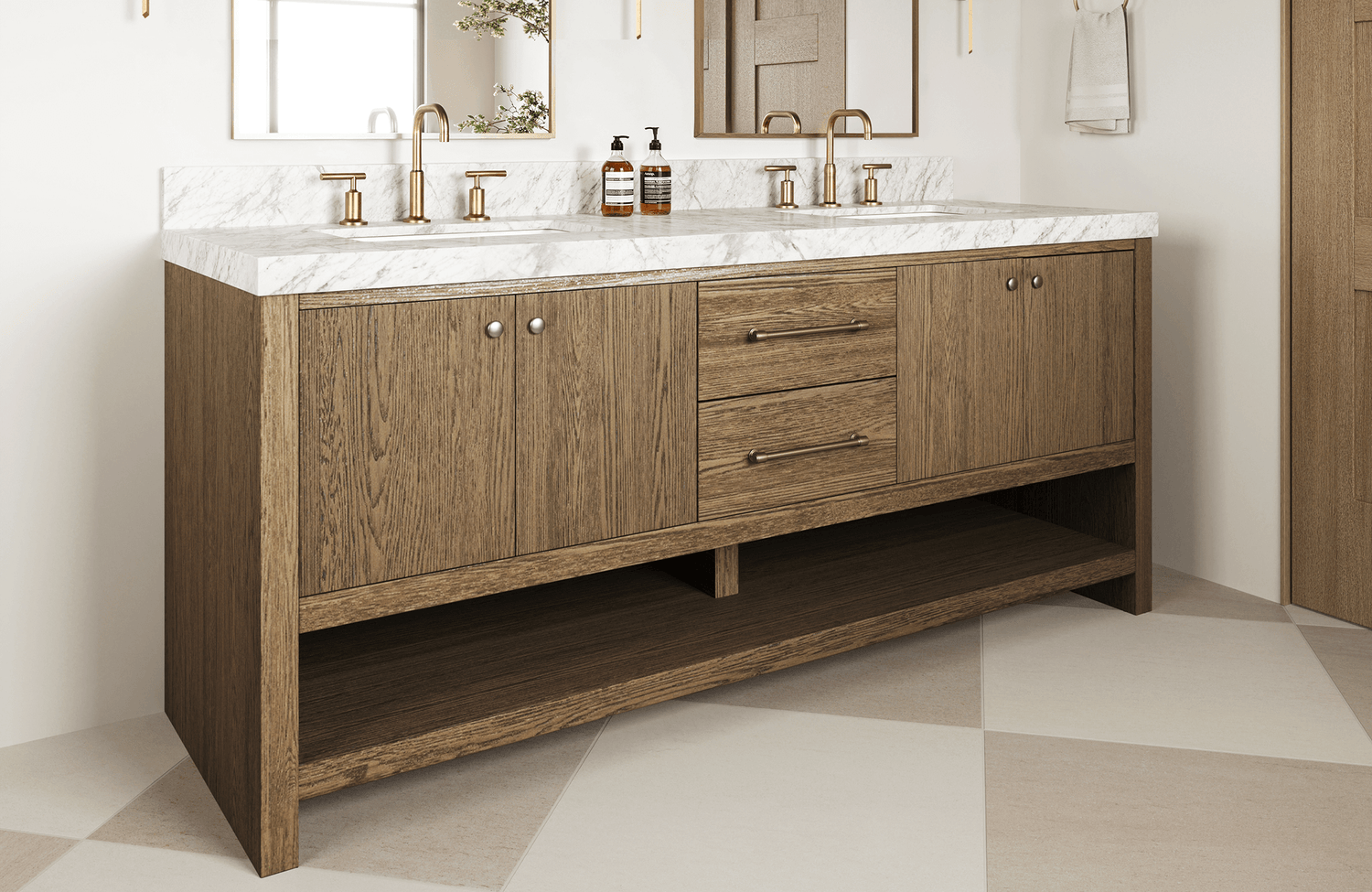
That hidden interior framework also plays a quiet yet critical role. It prevents the frame from twisting, ensures drawer alignment stays true, and absorbs the everyday impact of use. With a strong internal skeleton, the vanity also maintains its shape and function, making it not just a pretty addition to your bathroom but a reliable one too. A great example is our Abigail 60" Single Vanity in Light Natural Oak with 3 cm White Zeus Quartz Top, which features solid wood framing, soft-close drawers, and reinforced construction throughout. As seen in the image above, the light natural oak finish, often referred to as a warm honey or blonde wood tone, complements its sturdy build with timeless charm. Even the layout of the internal compartments is thoughtfully designed to support plumbing, storage, and built-in electrical features without compromising structural integrity.
Advanced Fastening Systems and Moisture Barriers
Construction methods continue to evolve, and the best vanities take advantage of modern fastening techniques that go beyond traditional screws and nails. Systems like confirmat screws or cam locks provide tighter, more secure assembly, especially when using engineered woods. These fasteners also help hold components together under stress without loosening over time.
Protection doesn’t stop at fasteners, though. A high-quality vanity guards against moisture with details like sealed edges, moisture-repellent laminates, and water-resistant coatings. Even something as subtle as a slightly raised base can keep your vanity safe from splashes or standing water. These thoughtful additions don’t just enhance performance. They help your vanity stay beautiful and functional as well, despite the tough conditions of the bathroom.

Material Choices That Withstand Moisture and Daily Use
What your vanity is made of matters just as much as how it looks. In a space where water, steam, and daily activity are constant, the materials beneath the surface play a huge role in how well your vanity holds up.
Common Materials
When selecting a vanity, the type of core material can mean the difference between long-lasting performance and early replacement.
Solid Wood
Solid wood brings undeniable charm and strength, especially when it’s a dense hardwood like teak or mahogany. These species naturally handle moisture better than softer woods, though even the best must be thoroughly sealed to guard against warping and cracking.
Medium-Density Fiberboard (MDF)
Medium-Density Fiberboard, or MDF, offers a smooth, consistent surface perfect for painted finishes. It can perform surprisingly well in bathrooms. MDF is also cost-effective, making it a popular choice for budget-conscious projects. Moreover, its uniform composition allows for easy cutting and shaping, ideal for detailed cabinetry or trim work.
A prime example is shown in the photo above with our Royce 36" Single Vanity in Chestnut with 3 cm White Zeus Quartz Top, featuring intricate geometric door detailing that highlights MDF’s ability to achieve bold, precision-cut patterns. The rich chestnut finish also adds depth and warmth, while the durable construction pairs beautifully with its crisp White Zeus quartz top, offering both visual contrast and long-term resilience in humid environments.
Veneers
Veneers combine the beauty of real wood with the stability of engineered materials. When applied over MDF or plywood, they offer the appearance of solid wood without the same susceptibility to warping. Veneered vanities can also deliver a high-end look at a more accessible price point while maintaining reliable performance in moisture-prone environments.
A beautifully executed use of veneer can be seen in our Josephine 60" Double Vanity in Satin Drifted Black Veneer with Carrara Marble Top. With its refined black wood grain and soft satin finish, this vanity elevates the space with a modern, architectural presence. Paired with a classic Carrara marble top, it delivers both visual contrast and material durability, offering the luxurious appearance of solid wood with enhanced stability for daily bathroom use.
Particleboard
Particleboard is less forgiving. Although affordable, it absorbs moisture quickly and breaks down easily unless it’s completely encapsulated. If you’re aiming for durability, you’ll want to steer clear of vanities built with unprotected particleboard.
Choosing Water-Resistant Finishes and Coatings
A strong finish acts as armor against daily wear and moisture intrusion. Lacquered finishes, applied in multiple layers, provide a hard, resilient coating that resists both water and scratches. Glossy enamel also creates a tough exterior that’s easy to clean and repels splashes effectively, adding both function and flair.
Thermofoil finishes take protection even further. By wrapping a vinyl layer seamlessly around MDF, they leave no exposed surface for water to invade. But even the most advanced finishes are only as good as their coverage. Pay attention also to whether the vanity’s undersides, edges, and inner panels are sealed—these hidden spots are where moisture sneaks in and damage often begins.
Advanced Sealing Techniques and Substrate Treatments
Top-tier vanities don’t just rely on surface finishes; they defend from the inside out. You’ll find edge banding sealed with waterproof adhesives, helping keep moisture from penetrating vulnerable edges. Some vanities go further with hydrophobic treatments on interior surfaces, which actively repel moisture and prevent it from settling in.
Extra protection often comes in the form of vapor barriers or waterproof laminates placed behind the sink and along the back panels. These layers are especially valuable in bathrooms where humidity lingers or leaks are more likely. For even greater defense, applying a bath-safe sealant to seams, joints, and hidden edges can help lock out moisture in the spots most prone to damage. By reinforcing your vanity with these internal safeguards, you can enjoy peace of mind knowing your investment is built to endure the demands of daily life.

Hardware and Functionality as Quality Indicators
How a vanity feels and functions on a daily basis says a lot about its overall quality. From the smoothness of a drawer glide to the quiet close of a door, the right hardware elevates both your experience and the durability of the piece.
Soft-Close Hinges and Full-Extension Slides
When you open and close your vanity drawers or doors, the type of hardware behind that motion makes a noticeable difference. Soft-close hinges not only eliminate noisy slams but also extend the life of the vanity by minimizing impact and stress on the joints. Over time, this gentle mechanism helps maintain the alignment and condition of both the cabinet doors and the internal framework.
Full-extension slides are another sign of a well-made piece. They allow you to access the entire drawer without reaching awkwardly into the back, making storage far more convenient. Ball-bearing or undermount systems also deliver smooth, consistent motion and can easily handle the weight of your daily essentials without sticking or sagging. This kind of hardware isn’t just about luxury; it’s about long-term reliability. Thoughtfully engineered with these features in mind, our Elodie 72" Double Vanity in Whitewashed Oak with 3 cm White Zeus Quartz Top offers a seamless balance of form and function. As displayed in the picture above, its elegant exterior is matched by practical details like soft-close operation, integrated outlets, and generously sized drawers that glide open effortlessly, making daily routines feel both refined and efficient.
Mounting Systems That Provide Long-Term Stability
Behind every sturdy vanity is a solid mounting system. If you’re opting for a wall-mounted style, it’s crucial that the brackets are made from heavy-duty steel and anchored into the wall studs. This ensures that the weight is distributed safely and won’t lead to sagging or detachment, especially once a stone countertop or sink is added.
For freestanding vanities, stability begins at the base. Adjustable leveling feet help the vanity sit evenly, even on floors that aren’t perfectly flat, which is more common than you might think. Some models even go a step further with anti-tip features, an important detail if you share your space with young children or curious pets. Ultimately, the way a vanity is secured is just as important as how it looks or functions.

Design Details That Reflect Craftsmanship
True craftsmanship reveals itself in the smallest details. When a vanity is built with care and precision, it’s easy to spot even without opening a single drawer. These subtle touches not only enhance appearance but also signal a higher standard of quality and longevity.
Seam Alignment and Drawer Spacing
As you examine a vanity, start with the lines. Consistent spacing between drawers and cabinet doors tells you that the piece was assembled with precision. When seams align perfectly and the reveals are uniform, it reflects careful workmanship and high manufacturing standards. On the flip side, uneven gaps or crooked drawers often point to poor assembly or flimsy materials beneath the surface.
This kind of visual harmony isn’t just for show. It also affects functionality. Even, flush surfaces mean that doors close properly and drawers glide without friction. When every part fits just right, it’s a strong indicator that the rest of the construction was treated with the same attention to detail. As featured in the image above, our Sasha 48" Single Vanity in Bright White with 3 cm White Zeus Quartz Top demonstrates this beautifully with its crisp fluted drawer fronts and flawless drawer alignment, highlighting the level of precision built into every inch. Its elegant brass hardware and sculptural symmetry further bring a refined sense of style that effortlessly elevates any bathroom space.
Finish Consistency and Surface Smoothness
Run your hand over the surface and let your eyes scan the finish—quality is easy to feel and see. A well-applied finish should be free of flaws like bumps, streaks, or dull patches. Whether the vanity is painted, lacquered, or wrapped in veneer, the texture should be smooth and the color consistent from edge to edge.
These finishes do more than add visual appeal. In a humid bathroom environment, they serve as a crucial protective layer, helping to shield the underlying materials from moisture. A flawless finish not only elevates the look but also signals durability and resistance to everyday wear.
Innovative Storage Solutions and Ergonomic Integration
Beyond the basics, high-quality vanities often surprise you with clever, user-friendly features that go beyond appearance. Integrated electrical outlets tucked into drawers, adjustable shelving that adapts to your routine, and tilt-out trays that make the most of narrow spaces all reflect thoughtful design. These additions aren’t just convenient. They’re also proof that the vanity was built with your daily habits in mind.
Organizers and dividers built right into the vanity further help reduce clutter and streamline your morning routine. When a vanity blends visual craftsmanship with practical innovation, it becomes more than just a piece of furniture but a tailored part of your everyday life.

Compatibility with Plumbing and Installation Demands
A vanity that’s difficult to install can quickly turn into more hassle than it’s worth. No matter how well it’s built, thoughtful design must also account for real-world installation challenges like plumbing access, wall irregularities, and long-term maintenance needs.
Access Panels and Plumbing Clearance
Behind every vanity is a network of pipes and fittings that need to be reached, sometimes more than once. Because of that, smart vanities include removable back panels or generously sized cutouts that give installers clear access to plumbing without forcing them to dismantle or cut into the cabinet. This kind of planning not only speeds up installation but also protects the structural integrity of the vanity.
On the other hand, vanities with tight or misaligned cutouts can create unnecessary headaches. If plumbing lines don’t align with the existing openings, they may require modifications that reduce storage space or weaken the frame. A design that prioritizes accessibility helps ensure that installation and any future maintenance are simple and stress-free. Our Gabriella 60" Double Vanity in Light Natural Oak with 3 cm White Zeus Quartz Top, as shown in the picture above, takes this into account with smartly designed internal access and generous spacing that eases installation without compromising strength or style. Its clean-lined wood grain and soft brass hardware also bring a warm, modern feel that complements both contemporary and transitional spaces.
Adjustable Legs and Leveling Features
No floor or wall is perfectly straight, and a vanity that can’t adapt will either wobble or pull against its own weight. That’s where adjustable legs come in. They help you fine-tune the height of each corner, so the unit sits flat and stable even on uneven flooring. This not only improves appearance but also prevents stress fractures in the countertop or joints over time.
For wall-mounted vanities, mounting brackets with built-in adjustment tolerances make it easier to achieve a level, snug fit against walls that may not be perfectly square. These subtle engineering choices can make installation smoother and ensure that your vanity remains secure and aligned for years to come.
Identifying a Quality Vanity
A high-quality bathroom vanity goes beyond surface appeal; it’s built to handle moisture, daily use, and the test of time. From solid joinery and sealed edges to water-resistant materials and smooth, reliable hardware, every detail should contribute to strength and functionality. Additionally, features like soft-close drawers, bath-safe sealants, adjustable legs, and accessible plumbing cutouts show that the design supports both longevity and ease of use. When these elements come together, the result is a vanity that not only looks great but also performs beautifully for years to come.
If you're still unsure which vanity best fits your space or want help evaluating specific options, our team is here to guide you. Visit our Contact Us page to reach out with questions, request personalized recommendations, or get support with measurements and installation considerations. We're committed to helping you find a vanity that meets your needs, both in style and in long-term performance.