A clean, low-maintenance bathroom starts with smart vanity selection, an often-overlooked decision that directly affects hygiene, durability, and daily upkeep. Beyond style, the right combination of materials, finishes, and functional design features can minimize buildup, resist moisture, and streamline cleaning routines.
Equally crucial are the details that support practical use over time. From soft-close drawers that contain clutter to matte hardware that conceals fingerprints, every element should contribute to both function and ease of care. In this article, we’ll explore the essential materials and design strategies that make a vanity truly effortless to maintain, without compromising on visual appeal.

Understanding Easy Clean Vanity Materials
To keep your bathroom vanity looking fresh with minimal effort, it all starts with choosing the right materials. From surfaces that resist stains to finishes that shrug off daily grime, every component directly influences how easily your vanity stays clean over time.
Countertop Materials for Minimal Effort
As one of the most used surfaces in a bathroom, the countertop should be both durable and low maintenance. To that end, quartz remains a top choice for its non-porous, stain-resistant structure that resists mold, mildew, and etching, no sealing required. As featured in the photo above, a refined example is Edward Martin’s Gwen 48" Single Vanity in Pebble Oak with a 3 cm White Zeus Quartz Top, which pairs everyday durability with timeless style.
In addition to quartz, solid surface materials (like Corian) offer seamless integration with sinks and backsplashes, reducing crevices where grime collects. They're easily repairable and light scratches can be buffed out. For those seeking a more contemporary option, tempered glass, while less common, offers a sleek look and resists heat, water spots, and etching when properly coated.
Cabinet Finishes That Repel Dirt
Moving from countertops to cabinetry, finishes also significantly impact how easily surfaces stay clean. For example, thermofoil, applied to MDF under heat and pressure, creates a smooth, non-porous layer ideal for humid environments. High-pressure laminates (HPL) offer similar benefits, resisting chips, scratches, and stains with minimal upkeep.
Furthermore, matte finishes conceal fingerprints better than glossy ones, while catalyzed varnishes on painted cabinetry add moisture and chemical resistance. Together, these options reduce cleaning demands and enhance long-term durability.
Sink Materials for Spotless Shine
Finally, when it comes to sink selection, the right material ensures easy daily upkeep. A classic option is vitreous china, with its glass-like enamel finish that resists stains, scratches, and microbial buildup while maintaining a glossy look.
Alternatively, cast polymer sinks, often integrated with solid surface countertops, offer a grout-free design that minimizes cleaning points. For a more modern aesthetic, brushed stainless steel provides corrosion resistance and simple maintenance, making it an increasingly popular choice in residential bathrooms.

Design Features for Simplified Cleaning
Beyond choosing the right materials, how your vanity is designed can make a big difference in day-to-day maintenance. Thoughtful features that minimize crevices, reduce contact with the floor, and simplify surfaces can help keep cleaning quick and hassle-free.
Integrated Sinks and Countertops
One effective design feature to consider is integrated sink and countertop units, typically made from solid surface materials like Corian, cultured marble, or cast polymer, which eliminate joints where water and grime often collect. Their seamless construction also removes the need for caulk or grout, areas prone to mold and discoloration, making them especially hygienic.
Additionally, some countertop designs feature a subtle slope around the basin, guiding water efficiently into the drain. A standout example is Edward Martin’s Sasha 36" Single Vanity in Mid Century Walnut with a 3 cm White Zeus Quartz Top, which combines integrated functionality with stain resistance and minimalist elegance. As shown in the picture above, features like soft-close drawers and internal outlets also enhance its low-maintenance appeal.
Wall Mounted Vanities and Open Space
Beyond their stylish appearance, floating vanities simplify cleaning by lifting cabinetry off the floor, reducing dust and moisture buildup at the base. This open space makes sweeping and mopping easier while enhancing the overall roominess of smaller bathrooms.
Moreover, when paired with under-cabinet lighting, these vanities improve visibility during cleaning. Proper wall anchoring also ensures durability, while the pared-down structure translates to fewer surfaces to maintain.
Minimalist Hardware and Smooth Surfaces
Even small design decisions, like choosing the right hardware and cabinet style, can have a big impact on cleaning effort. Simple hardware and flat-panel cabinet doors eliminate many of the grooves and crevices where dust and grime tend to accumulate.
For best results, opt for integrated finger pulls, flat-bar handles, or push-to-open systems that offer clean lines and minimal contact points. When finished in matte laminates or satin paints, these surfaces help resist fingerprints and water spots. Touchless faucets can also enhance hygiene by reducing the need for physical contact.

Practical Considerations for Long Term Cleanliness
Even with the right materials and design, keeping your vanity clean over time comes down to the details that support everyday use. From smart maintenance habits to storage and water quality, a few practical choices can make all the difference in preserving its look and performance.
Proper Sealing and Maintenance
Natural stone countertops like granite and marble require regular sealing, typically once or twice a year, to prevent moisture absorption, staining, and bacterial buildup. A high-quality penetrating sealer creates a protective barrier that helps maintain the stone’s integrity over time.
In addition, wood cabinetry should be protected with a moisture-resistant finish such as polyurethane or catalyzed varnish to guard against warping and mold. Routine cleaning with pH-neutral products also helps preserve these finishes, while wiping down hardware with a soft cloth minimizes corrosion, especially in humid environments. Ultimately, following the manufacturer’s care guidelines ensures your vanity materials continue to perform as intended.
Smart Storage Solutions
Beyond routine care, maintaining a clean vanity depends on minimizing surface clutter. Interior organization is key; features like drawer organizers, pull-out trays, and divided compartments help keep essentials contained and reduce the likelihood of spills.
For instance, Edward Martin’s Gabriella 48" Single Vanity in Light Natural Oak with a 3 cm White Zeus Quartz Top exemplifies this approach with its symmetrical drawer layout and spacious center cabinet, combining clean design with efficient storage. As illustrated in the photo above, its moisture-resistant interiors, soft-close drawers, and wipeable finishes further simplify upkeep while protecting stored items.
Water Hardness and Cleaning Products
Another factor to consider is the quality of your water. Hard water, rich in minerals like calcium and magnesium, can leave behind stubborn deposits on sinks and fixtures, gradually dulling finishes. Installing a water softener, whether whole-house or point-of-use, can significantly reduce limescale buildup and extend the life of your fixtures.
Similarly, the cleaning products you choose will directly impact the longevity of your vanity’s materials. Harsh chemicals can degrade sealants and finishes, while abrasive tools may cause scratches. To avoid this, opt for non-abrasive, pH-balanced cleaners and microfiber cloths. Also, avoid silicone-based polishes, which tend to attract dust and leave behind a film that dulls surfaces.

Common Pitfalls to Avoid When Selecting a Vanity
It’s easy to get caught up in style and layout when choosing a vanity, but some common missteps can turn everyday cleaning into a chore. To avoid unnecessary frustration down the line, it’s worth taking a closer look at the details that often get overlooked during the selection process.
Overlooking Grout Lines and Porous Surfaces
Tile countertops or backsplashes with visible grout lines may look stylish, but they can quickly become cleaning challenges. Grout is highly porous and prone to staining, mildew, and moisture retention, especially in humid bathroom environments.
In the same vein, porous materials like marble, limestone, and unsealed concrete demand regular upkeep to prevent stains and surface etching. Even with sealing, these materials require continuous care. For an easier alternative, non-porous surfaces like quartz, solid surface, or tempered glass resist moisture, simplify cleaning, and reduce long-term maintenance.
Choosing Open Shelving Without a Plan
Another common oversight is installing open shelving without a clear strategy. While it can add visual interest and accessibility, disorganized open storage quickly collects clutter, dust, and moisture, especially near sinks or close to the floor.
To make it work, incorporate storage bins, lined baskets, or modular organizers to keep essentials tidy. Combining open shelving with enclosed or floating cabinetry also helps strike a balance between design appeal and functionality.
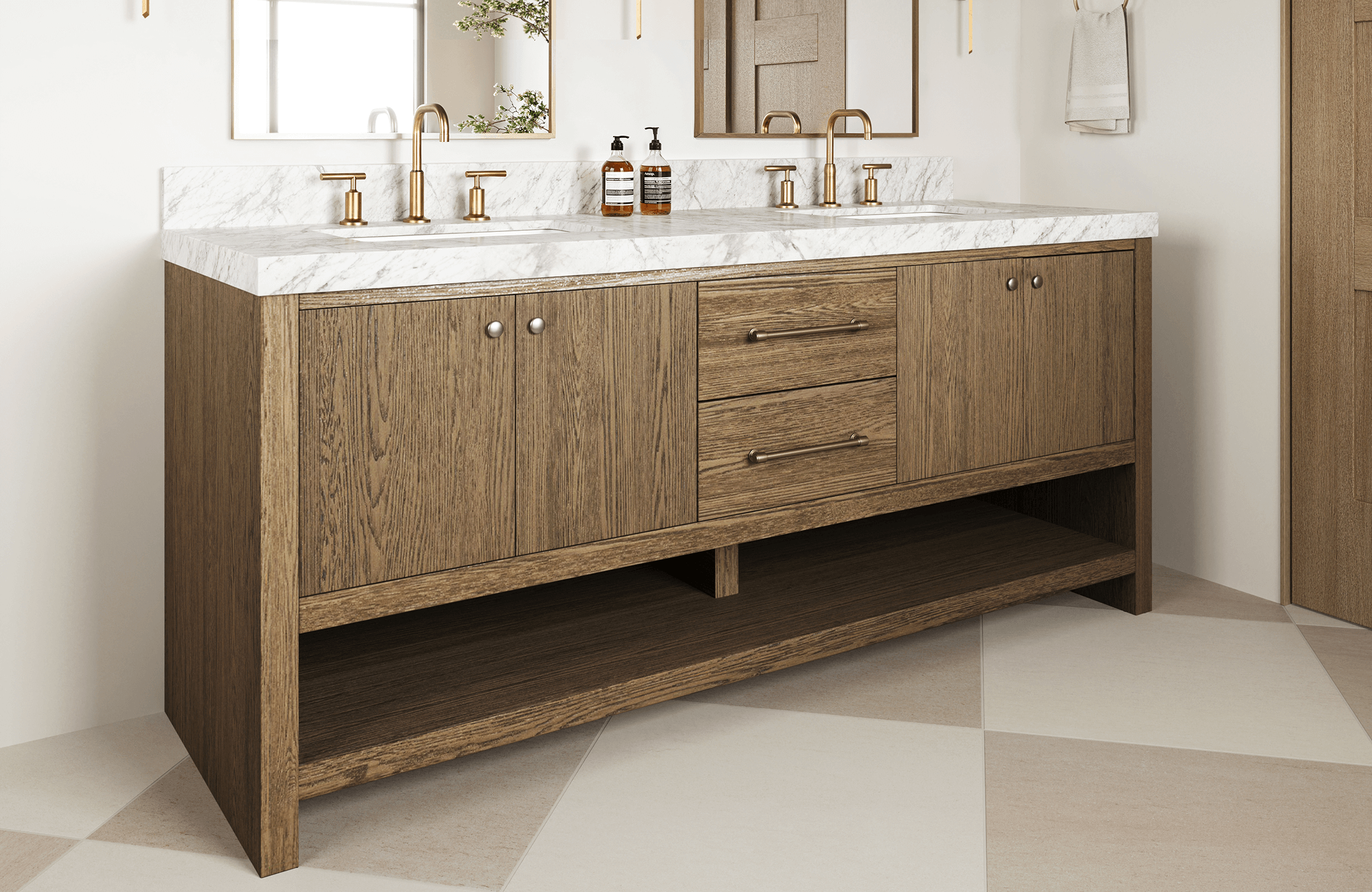
A thoughtful example is Edward Martin’s Delilah 72" Double Vanity in Seaside Oak with a 3 cm White Zeus Quartz Top, which includes an open lower shelf ideal for towels or decorative storage. As featured in the picture above, its symmetrical layout keeps items accessible while preserving a clean, cohesive look.
Neglecting Faucet and Hardware Compatibility
Lastly, failing to coordinate faucet styles with sink and countertop cutouts can lead to costly installation issues or water splashing beyond the basin. Always confirm mounting types, center-set, widespread, or single-hole, to avoid retrofitting or unnecessary drilling.
Ornate or oversized hardware with grooves or exposed fasteners can also complicate cleaning. Instead, opt for streamlined, ergonomically designed pieces in fingerprint-resistant finishes like brushed nickel or matte black. Properly scaled hardware improves accessibility and simplifies upkeep in tight spaces.
To avoid these pitfalls altogether, Edward Martin’s personalized design consultation service offers one-on-one guidance through every step, from product selection to layout coordination. Our dedicated follow-ups to keep your project on track.
For additional help, you can simply contact us, where knowledgeable support is available for product inquiries and tailored design advice on vanities, tile, rugs, and furnishings.
The Clean Choice Starts with Smart Design
An easy-to-clean vanity isn’t just about looks, it’s the result of smart decisions that combine durable materials, efficient layouts, and low-maintenance finishes. When each element, from surface to installation, is chosen with care, you create a bathroom that’s as functional as it is beautiful.
At Edward Martin, we’re here to help you make choices that elevate both form and function. Explore our curated collections or connect with our team to design a space that stays effortlessly clean, day after day!