Greyish rugs have emerged as more than just a neutral design choice—they are foundational tools that help shape mood, define space, and elevate interiors with both style and subtlety. Whether you're working with a minimal modern layout or a layered cozy retreat, these rugs can effortlessly adapt to your vision. Their ability to blend seamlessly with varied tones, textures, and materials also makes them ideal for anyone looking to create a space that feels grounded yet visually dynamic. Throughout this article, you’ll discover how greyish rugs serve different purposes depending on their tone, placement, and surrounding elements. From zoning an open-plan room to coordinating with seasonal decor, grey rugs offer versatility that goes beyond trend.

Curating Your Ambiance with the Nuance of Grey Tones
Choosing a greyish rug goes far beyond matching a color swatch to your furniture. Grey may be a neutral, but it carries incredible range and emotional depth through its undertones. Whether your goal is to cultivate serenity, inject subtle energy, or warm up a space, the specific tone of grey you select can dramatically influence the atmosphere. Cool greys with hints of blue or green, for instance, offer a crisp, clean effect that suits minimal or contemporary styles. In contrast, warm greys tinged with taupe or rust evoke softness and earthiness, making them ideal for spaces where you want a more relaxed, welcoming vibe.
To make the most of this tonal versatility, it's important to consider more than just the rug in isolation. The interaction between your rug, the room's architecture, and how natural light flows through the space also plays a pivotal role in the final look and feel. For example, light grey rugs in dim, north-facing rooms can help reflect available light and visually open the space. In sun-soaked, south-facing areas, deeper or cooler greys can provide needed balance and prevent glare. Moreover, your wall colors act as a canvas that either complements or contrasts with the rug’s undertone, so aligning warm greys with creamy walls or cool greys with bolder, saturated colors can establish either harmony or deliberate contrast.
In the image shown above, a narrow runner rug in a deep charcoal tone is used to anchor a utility space filled with warm wood cabinetry and soft cream flooring. This rug is our Hutchinson Polyester Face Rug in Graphite / Olive, and its graphite, a common name for this cool, smoky grey, serves as a grounding element in a room with natural light and earthy finishes. The slight olive undertones further enrich the palette, blending seamlessly with both rustic and modern details while reinforcing a clean and composed ambiance.

Strategic Anchoring and the Role of Grey Rugs in Open-Plan Spaces
In open-plan spaces where walls are minimal and sightlines are long, visual cohesion can easily slip into visual chaos. This is where greyish rugs become quietly powerful. Their neutral tone doesn’t compete with the rest of the décor, making them ideal for anchoring multiple zones like living, dining, or work areas without interrupting the openness of the layout. Instead of physically dividing a space, a well-placed grey rug also gives each area its own identity while still keeping the room feeling unified and breathable.
A particularly effective approach is to use different types of greyish rugs throughout the open-plan layout to establish a subtle contrast between zones. A lighter, low-pile rug in the lounge area, for instance, can foster a calm, relaxed atmosphere, while a deeper grey or patterned rug under the dining table offers grounding and durability. These distinctions also help clarify the function of each area without requiring furniture-heavy dividers or visual clutter. Because grey works harmoniously with almost any texture or material, layering becomes an easy and elegant tool. You can place a smooth, woven rug beneath boucle seating or pair it with wood and metal furnishings for textural richness and balance.
Another thoughtful styling move is to let your furniture interact with the rug boundaries, like placing sofa legs partially on a rug, which creates the illusion of zones without sharp separation. This method maintains the openness of your layout but adds visual cues that guide flow and activity. In essence, grey rugs allow you to build structure without adding weight, offering a grounded, intentional foundation for a dynamic, multi-use space that still feels cohesive and calm.

Enhancing Tactility and Warmth through Layered Design
Modern interiors often risk feeling too sleek or sterile. A grey rug provides the perfect neutral base for layering textures, infusing spaces with warmth, personality, and depth.
Introducing Dimension with Secondary Layering Pieces
Layering rugs is one of the most effective ways to add dimension without cluttering your space. By starting with a large flatweave grey rug as your base, you create a neutral canvas that quietly anchors the room. On top of that, placing a smaller, tactile piece like a soft sheepskin, a richly knotted wool, or a textured jute immediately shifts the energy of the space. These secondary rugs not only enhance the tactile feel underfoot but also visually signal areas of comfort and retreat.
This technique is especially impactful in intimate corners. A sheepskin draped over the edge of a greyish base rug in a reading nook, or a warm jute runner layered beside the bed, can instantly add depth and softness. The layering effect introduces a curated, collected feel that enhances comfort without overwhelming the eye. Since grey pairs effortlessly with a wide range of textures, you have the flexibility to explore materials that balance both warmth and visual interest.
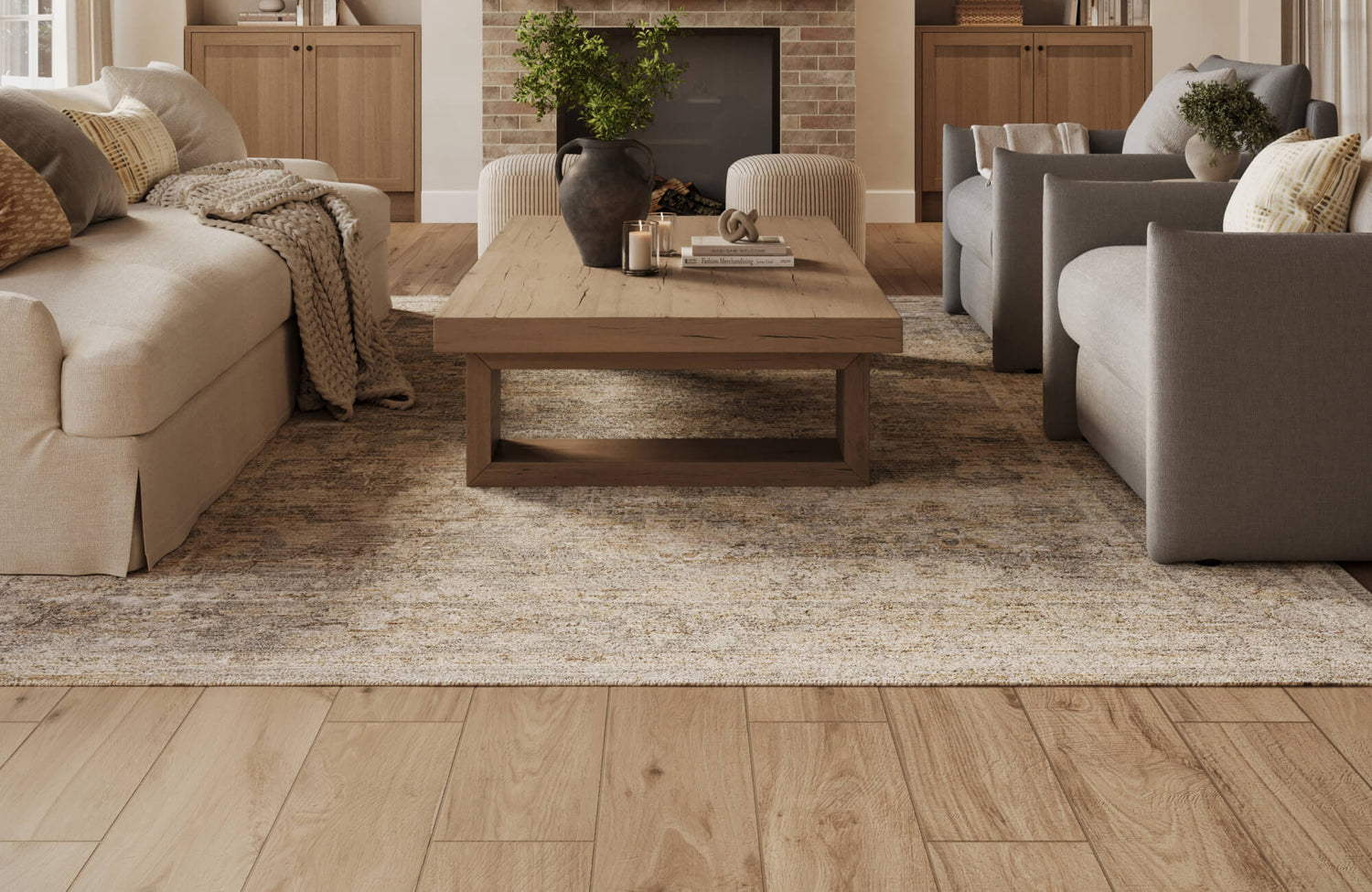
A perfect example of this layering-ready foundation is our Pascal Polyester Face Rug in Platinum / Mist. Its soft grey-toned surface, detailed with subtle beige and stone hues, lends a timeless quality to the space while allowing any textural additions like woven stools, boucle cushions, or organic throws to shine. In a setting like the one seen above, this rug adds both elegance and versatility without demanding attention, making it ideal for spaces where comfort and visual harmony go hand in hand.
Cultivating a Cohesive Tactile Narrative
Once you’ve introduced texture through your greyish rug, the next step is to extend that tactile language across the room. Think of your rug as the first chapter in a sensory story. If you’ve opted for a thick, handwoven weave, you might mirror that texture in oversized knit throws or nubby, ribbed cushions. These complementary elements echo the rug’s material qualities, reinforcing the feeling of cohesion and comfort.
Even color can follow texture’s lead. A warm-toned greyish rug might inspire taupe or oatmeal-toned curtains, beige boucle upholstery, or ivory wool accents. For instance, our Haverford Polyester Pile Rug in Slate / Sand blends smoky slate greys with soft sand tones, offering a grounded yet versatile palette that invites these warm, tactile layers to flourish around it. These choices don’t just match; they harmonize, creating a sense of warmth that radiates from the ground up. The beauty of this approach is that it doesn’t rely on loud statements. Instead, it draws you in through subtle, consistent layering that makes the room feel lived-in, grounded, and deeply personal.

Styling Greyish Rugs with Color, Mood, and Seasonal Intent
Greyish rugs offer a flexible design foundation that allows you to introduce color, personality, and mood into your space without overwhelming it. Their neutrality opens the door to vibrant accents, thoughtful themes, and seasonal updates that evolve throughout the year. This section explores how you can use a grey rug not only to build cohesive color stories but also to adapt your decor as the seasons change.
Using Accent Colors to Create Depth and Focus
A greyish rug gives you the rare freedom to highlight bold accent colors while keeping the room grounded. By selecting just one standout hue such as mustard yellow, forest green, or navy blue, you can shape a cohesive visual rhythm that’s strong without being chaotic. When repeated through textiles, art, or accessories, that accent color brings clarity to your design and helps unify the space. The grey rug, in turn, also ensures that everything remains anchored and never visually noisy.
For instance, a muted greyish rug beneath a grey-toned sofa becomes the perfect backdrop for a series of green elements: a velvet cushion, a glazed vase, and an abstract print. These accents pop without clashing because the rug tempers the energy, acting as a subtle stage for intentional color play. Rugs like our Micah Wool Blend Rug in Natural / Graphite, displayed in the photo above, are ideal for this effect. With its cool graphite weave and creamy geometric pattern, it introduces visual structure without dominating the palette, allowing accent colors to breathe and shine.
Pairing Undertones with Finishes and Wall Art
Beyond color, your greyish rug’s undertone can inform key styling decisions from the metals you use to the artwork you hang. A cool grey rug, with notes of blue or silver, naturally complements finishes like chrome, brushed nickel, or polished steel. These combinations lean modern and crisp, making them perfect for contemporary or minimal interiors. When paired with monochrome artwork or black-and-white prints, the effect is also clean and refined without feeling sterile.
On the warmer end of the spectrum, greyish rugs with taupe or clay undertones bring a different sensibility. Metals like brass, matte black, or aged bronze feel more at home. You can echo this warmth in your art choices; opt for terracotta tones, ochre brushstrokes, or organic subjects that mirror the rug’s earthy quality. A great example is our Haverford Polyester Pile Rug in Fog / Dune, which blends soft grey and sandy beige for a refined neutral base. Its tonal warmth works effortlessly with brushed gold accents and earthy, textured decor, giving your room a grounded, natural elegance.
Transitioning Your Space Seasonally
One of the most useful features of a greyish rug is its ability to support seasonal styling. In the colder months, it invites you to add warmth and richness through texture and color. Chunky knits, faux furs, and deep autumnal tones like rust, olive, or plum work beautifully with grey, giving your space a sense of retreat and comfort. The rug’s neutrality also allows these additions to feel intentional rather than overpowering, creating a soft, layered environment that mirrors the mood of the season.
A versatile option for this kind of seasonal fluidity is our Broderick Polypropylene Pile Rug in Taupe / Stone. With its soft grey base interwoven with warm taupe hues, it offers just the right balance between cool neutrality and inviting warmth. This tonal mix makes it easy to shift from rich, cozy fall palettes to lighter spring motifs without needing to change your foundational pieces. Its geometric pattern also adds a quiet layer of texture, which subtly enriches both minimalist and layered spaces.
As spring and summer arrive, the same greyish rug seamlessly shifts into a breezier role. Lighter accessories like white or pastel cushions, airy linen curtains, and blonde woods contrast gently with the rug’s tone, keeping the space feeling fresh and open. Even reflective elements like glass or glazed ceramics can brighten up the design without disrupting the rug’s quiet presence. The result is a home that feels in tune with the seasons, changing fluidly while staying grounded in timeless design.

Selecting and Sustaining Grey Rug Materials
Aesthetics are just one part of the equation. A rug’s material plays a vital role in how it performs over time, especially in homes with kids, pets, or heavy use.
Aligning Rug Fiber with Zonal Functionality
Not all greyish rugs are created equal, especially when it comes to the material they're made from. To make the most of your investment, it’s essential to match the rug’s fiber to the needs of the space where it will live. In busy areas like hallways, living rooms, or under dining tables, durability becomes the top priority. A polypropylene rug, for instance, holds up well to daily wear, resists staining, and is easy to clean, making it ideal for busy zones. Low-pile wool blends are another strong option, offering a balance of softness and resilience that’s well-suited to homes with children or pets.
One excellent example is our McGowan Rug in Moss / Sand, depicted in the image above. With its blend of polyester and polypropylene, it performs well in busy areas like entryways while retaining an elegant, textured appearance. Its greyish sand base is subtly layered with earthy tones, helping it adapt seamlessly to varied palettes and transitional styles.
In quieter, more intimate areas such as bedrooms or reading nooks, comfort often takes precedence over durability. This is where plush wool or even a soft shag rug can truly shine. The deep pile adds a sense of coziness that encourages you to kick off your shoes and relax. Since these areas typically see less usage, you can afford to prioritize touch and texture without worrying as much about wear and tear. When you choose a rug based on how the space is used, you ensure that it not only looks great but also continues to serve its purpose comfortably and efficiently.
Implementing a Proactive Maintenance Routine
Even the most durable greyish rug needs a little attention to stay looking its best. A simple, consistent care routine can go a long way in preserving both its appearance and longevity. Start with regular vacuuming, ideally once a week, to keep dust and debris from settling into the fibers. This small habit also prevents buildup that can dull the rug’s surface and break down its structure over time. Every few months, rotate the rug slightly to balance out wear from constant use or direct sunlight. This keeps patterns from fading unevenly and corners from curling.
Spills are inevitable, but how you respond makes all the difference. Blotting (never scrubbing) is key to lifting moisture and avoiding fiber damage. Pairing your rug with a high-quality rug pad also adds another layer of protection, helping to keep the rug in place while reducing stress on its backing. Moreover, small additions like entryway mats to trap dirt or coasters beneath drinks can quietly but effectively extend the life of your rug. With just a few mindful steps, you not only maintain its look; you protect the investment it represents.
Lasting Impact through Thoughtful Grey Rug Styling
Styling greyish rugs in modern and cozy homes is ultimately about balance, adaptability, and intentionality. By selecting the right undertone, integrating color and texture, and tailoring your styling choices to both the seasons and your lifestyle, you allow the rug to serve as a flexible canvas for ongoing transformation. Rather than fading into the background, a well-chosen grey rug enriches your space with quiet elegance and depth. As your needs evolve, it remains relevant, effortlessly complementing new accents, layouts, or themes. In the end, grey rugs prove their value not only through aesthetics, but also through the lasting cohesion they bring to a thoughtfully curated home.
If you're ready to bring your vision to life or need guidance choosing the right greyish rug for your space, our team is here to help. Whether you have specific questions about material, sizing, undertones, or you’re simply looking for expert recommendations tailored to your home’s unique aesthetic, you can easily reach out through our Contact Us page. Our personalized support ensures that your rug choice not only meets your practical needs but also aligns beautifully with your design goals.