Arch mirrors introduce softness and vertical movement in a way that straight-edged pieces cannot. When styled thoughtfully, they can help shape how a room feels and functions, guiding the eye while reflecting light and space in a controlled, intentional way. Rather than treating an arch mirror as a decorative afterthought, approach it as a design tool. When you understand where it belongs, how it relates to surrounding elements, and how much presence it should hold, styling becomes far more intuitive and effective.

Choosing The Right Location For Visual Impact
Where you place an arch mirror determines how it interacts with light, movement, and architectural lines. Instead of thinking about decoration first, focus on how placement influences perception and usability within the room.
Enhancing Natural Light
Start by observing how daylight moves through the space. Placing an arch mirror opposite or slightly offset from a window allows it to reflect natural light farther into the space, helping the room feel brighter without relying on additional lighting. It is equally important to avoid positioning the mirror where it reflects direct sunlight at eye level, which can cause glare. Small adjustments in angle or placement often soften reflections while still improving overall brightness, an approach that is especially helpful in rooms with limited natural light.
Defining Entry Points
In entryways and transitional areas, an arch mirror helps establish orientation and a sense of arrival. When placed near the front door or at the end of a hallway, it creates a visual pause that naturally marks the transition between spaces. Keeping adequate wall clearance around the mirror allows it to feel intentional rather than forced into leftover space. Positioning it so it is visible upon entry, without interrupting movement paths, helps the mirror feel welcoming and well-considered rather than intrusive.
Creating Height In Low Rooms
Low ceilings can start to feel compressed when most of the room’s lines run horizontally. A vertically oriented arch mirror helps counter this effect by guiding the eye upward through its curved top. Floor-length placement is especially effective, particularly when the arch aligns with door frames, wall panels, or other vertical lines. The aim is not to overemphasize height, but to restore visual balance so the ceiling feels comfortably proportioned rather than heavy.

Balancing Scale And Proportion In The Room
Once placement is established, scale and proportion become the next focus. An arch mirror should relate naturally to the surrounding surfaces and furnishings, feeling present without fading into the background or overpowering the space.
Matching Mirror Size To Wall Width
When considering mirror size, it helps to consider how much of the wall you want it to occupy. A mirror that occupies a substantial portion of the wall, without sitting too close to adjacent boundaries, may feel intentional and well-placed. As a general guideline, spanning roughly half to two-thirds of the available wall width often creates a well-balanced result.
On the other hand, a mirror that is too small can feel disconnected, as though it were added as an afterthought. In contrast, an oversized mirror may begin to compete with architectural features already present. When the proportions are right, the space feels visually comfortable, even if that sense of balance is perceived more instinctively than consciously.
Pairing With Furniture Below
When an arch mirror sits above a console, vanity, or mantel, spacing becomes just as important to the overall look. Maintaining a consistent gap between the furniture surface and the bottom of the mirror helps the pairing feel structured and intentional, allowing each element to remain visually distinct while still connected. This balance is clearly illustrated in the photo featured above, where Edward Martin’s Esmeralda Wide Mirror in Polished Brass is paired with the Leonardo Sideboard in Brown. Its curved silhouette and refined finish are given room to breathe above the sideboard, creating a composed arrangement that supports everyday function while avoiding visual clutter from overlapping lines and forms.
Avoiding Visual Crowding
Negative space plays an important role in preserving the shape of an arch mirror. When shelves, frames, or tall decor are placed too close together, the curved silhouette loses its impact. Allowing breathing room on all sides helps the mirror feel grounded rather than boxed in. This sense of restraint keeps the arch as the focal point, rather than forcing it to compete with surrounding elements.

Using Arch Mirrors As Standalone Statements
In some spaces, an arch mirror does not need supporting decor to make an impact. When treated as a standalone element, its shape and scale are enough to carry the design on their own.
Leaning vs. Wall Mounting
Leaning an arch mirror creates a relaxed, architectural feel that suits bedrooms and living spaces well. It adds depth and a sense of layering without requiring permanent installation. Wall-mounted mirrors, by contrast, feel more structured and deliberate, which makes them better suited to bathrooms or more formal areas. Choosing between the two often comes down to whether you want the mirror to feel more flexible or firmly anchored within the room.
Letting The Frame Lead
The frame often determines whether a mirror can stand on its own successfully. Thicker frames with defined finishes naturally draw the eye, while slimmer or frameless designs rely more heavily on precise placement and proportion. Metal frames, in particular, bring a crisp, architectural quality that allows the mirror to function as a focal point with minimal support. This approach is clearly illustrated in the photo featured above, where Edward Martin’s Esmeralda Wide Mirror in Iron Matte Black anchors the wall through its clean lines and confident silhouette, demonstrating how a strong frame can lead the design without the need for additional styling.
Styling With Minimal Surroundings
When the mirror is meant to take center stage, the surrounding elements are best kept understated. A single floor lamp, a textured wall finish, or subtle nearby lighting can enhance the mirror without drawing attention away from it. In this case, restraint becomes part of the design. The absence of excess decor is what allows the mirror’s presence to feel confident and intentional.

Layering Decor Around An Arch Mirror
In spaces where added warmth and character are desired, surrounding decor can enhance an arch mirror when approached with intention. The focus is on supporting the mirror’s presence rather than competing with it for attention.
Incorporating Symmetry Or Asymmetry
Symmetry introduces a sense of structure and calm, which works well in more formal settings. Matching sconces or evenly spaced accessories help reinforce balance around the mirror. Asymmetry, on the other hand, brings movement and softness. A single plant or an offset object can feel more organic, especially when the mirror’s shape already provides visual stability.
Mixing Materials And Textures
Pairing an arch mirror with a mix of materials adds depth and dimension to the space. Wood brings warmth, stone adds visual weight, textiles soften hard edges, and ceramics introduce subtle contrast. At the same time, limiting the number of materials helps avoid visual noise. The mirror remains the anchor, while surrounding textures provide layered interest without overwhelming it.
Maintaining The Arch Silhouette
Decor should never obscure the curved top of an arch mirror. Placing objects too high or framing the mirror too tightly can diminish its defining feature. Keeping the surrounding elements lower or spaced farther outward allows the arch to remain fully visible. This approach preserves the mirror’s character and prevents it from fading into the background.

Styling Arch Mirrors For Different Room Types
Each room places different demands on a mirror, shaping how it should be styled and experienced. Instead of relying on the same placement strategies throughout the home, adjust the approach based on how each space is used.
Living Rooms
In living rooms, an arch mirror often serves as a visual anchor for the space. When placed near a fireplace or along a large wall, it helps define the room without overpowering seating areas. At the same time, positioning the mirror to align with the furniture layout, rather than compete with it, allows reflections to add depth while keeping the focus on conversation and comfort. The mirror should enhance the overall arrangement without pulling attention away from the primary gathering areas.
Bedrooms
In bedrooms, arch mirrors help soften the room’s geometry while supporting daily routines. Corners and areas near dressers are especially effective placements, as they offer function without disrupting the layout. The mirror should be easy to use without drawing too much attention, helping maintain a calm, balanced atmosphere suited to both rest and daily routines. Keeping the mirror slightly offset from the bed further supports a relaxed, uncluttered feel.
Bathrooms And Vanities
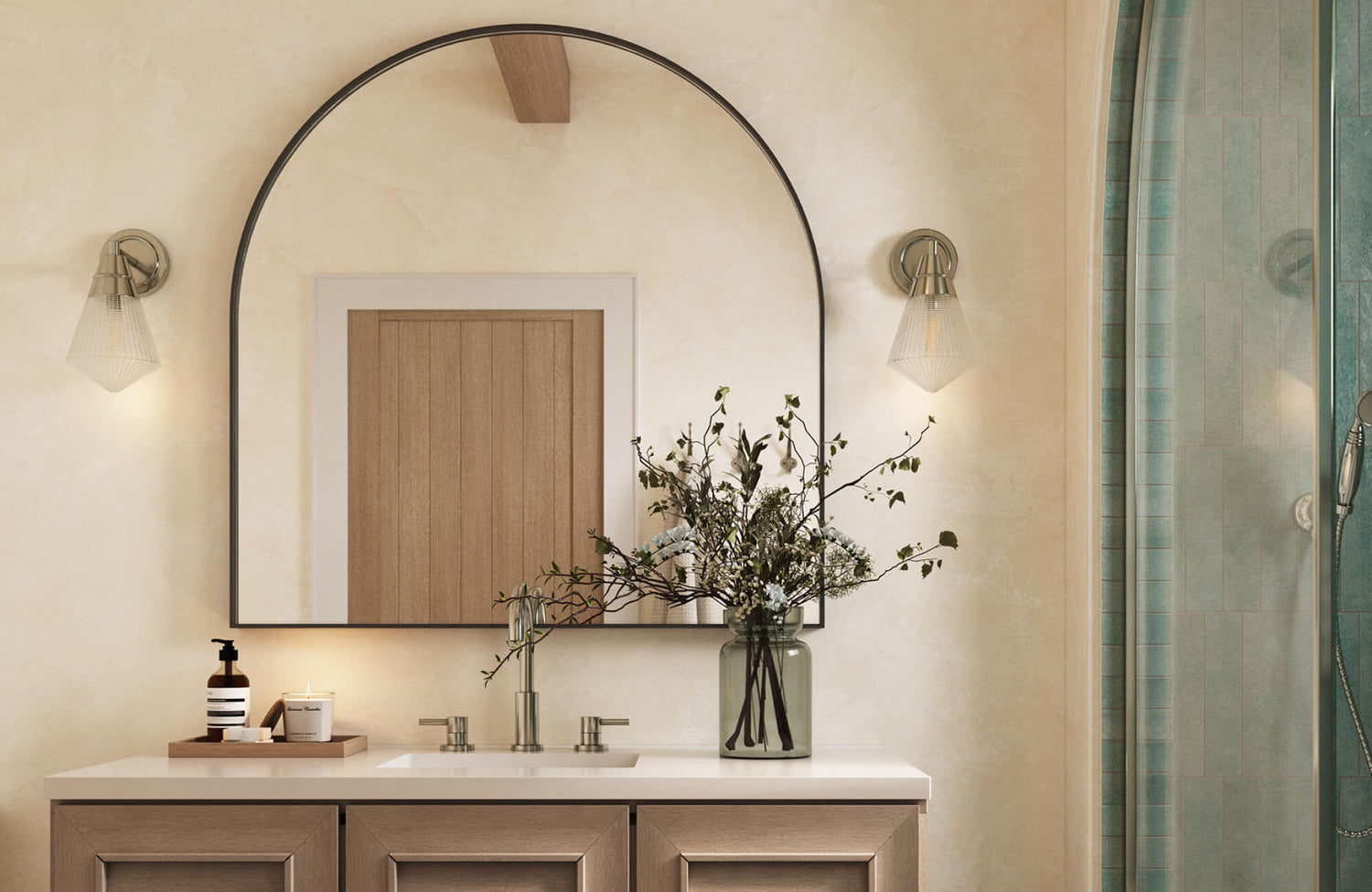
Bathrooms call for careful attention to both proportion and durability. Arch mirrors work best when paired with lighting that evenly highlights the curved shape, while finishes must be chosen to withstand moisture without losing visual consistency over time. This approach comes together in the photo featured above, where Edward Martin’s Clancy Small Arch Mirror in Antique Brass is thoughtfully paired with the Colton 72" Double Vanity in Sable with a 3 cm White Zeus Quartz Top. The mirrors are evenly aligned across the double vanity, maintaining visual order, while balanced spacing and coordinated materials ensure each element feels intentional, refined, and well-suited to daily use.
Hallways And Transitional Spaces
Narrow spaces often benefit from the sense of openness an arch mirror can provide. Placing mirrors at intervals along a hallway creates visual rhythm and helps the space feel more expansive. Thoughtful spacing allows each mirror to be appreciated on its own while naturally guiding movement through the area. In longer corridors, this approach can also prevent the space from feeling flat or repetitive.

Aligning Arch Mirrors With Interior Styles
An arch mirror should feel cohesive with the overall design language of the home. Styling choices shift depending on the aesthetic direction of the space.
Modern And Minimal Interiors
Clean lines and restrained finishes help arch mirrors integrate into modern spaces. Monochromatic palettes allow the shape to stand out without distraction. The mirror becomes a subtle architectural feature rather than a decorative statement. Keeping the surrounding decor minimal ensures the mirror reinforces the clean, uncluttered look of the space.
Traditional And Classic Spaces
In traditional interiors, arch mirrors echo historical forms. Warmer finishes and symmetrical placement reinforce a sense of structure and familiarity. The mirror feels rooted, complementing rather than contrasting the surrounding elements. Thoughtful placement near architectural details further strengthens its connection to classic design principles.
Organic And Contemporary Styles
Curved forms pair naturally with organic materials. Textured walls, sculptural furniture, and natural finishes enhance the mirror’s fluid shape. This approach emphasizes softness and continuity throughout the space. Allowing the mirror to interact with natural light further enhances its organic presence.
Styling An Arch Mirror With Intention
Styling an arch mirror starts with understanding its role within a space, rather than treating it as an impulsive decorative addition. When placement, proportion, and restraint are considered together, the mirror enhances light, structure, and flow without overwhelming the room. Approaching each decision with intention allows the arch mirror to serve as both a practical element and a defining design feature.
If you’d like guidance selecting or styling an arch mirror for your space, you can contact us to explore personalized design services and layout recommendations tailored to your needs.