A well-lit bathroom feels more than functional; it also feels intentional, balanced, and even a little luxurious. But getting the lighting just right isn’t about adding fixtures and calling it a day. It’s about understanding how each layer of light functions, its role, and its place. If you’ve ever dealt with harsh mirror shadows or dim corners in the shower, you’re not alone. In this article, we’ll walk you through simple, effective lighting strategies and smart placements to help your bathroom look its best and work exactly the way you need it to.

Think Layers, Not Fixtures
Bathroom lighting works best when you think in layers, not just individual fixtures. Each one serves a different purpose; some add clarity, others create mood, and getting the balance right is what makes your lighting feel both functional and thoughtfully designed.
Ambient Lighting Sets the Base
When layering your lighting, ambient light is where it all starts; it creates a soft, even backdrop that supports everything else in the room. It fills the space with consistent brightness, softens harsh shadows, and makes sure you’re not depending on just one source of light. A flush-mount ceiling fixture is a go-to choice for most bathrooms, but thoughtfully spaced recessed lights also work well. For a balanced effect, try placing them about 30 to 36 inches apart and 12 to 18 inches from the walls. Additionally, pairing this setup with a light-colored ceiling can help bounce the light around the room, making the entire space feel brighter and more pulled together.
For a more comfortable glow, go with fixtures with frosted lenses or diffused covers, which can also help the light feel gentle instead of harsh. Ambient lighting isn’t there to highlight any one area; it’s meant to provide a steady, balanced foundation for other layers to do their part effectively.
Task Lighting for Precision
As part of a layered approach, task lighting brings clarity where it matters most, whether you're grooming, applying skincare, or doing anything that calls for accuracy. This layer isn’t about setting a mood; it’s also about making sure you can see exactly what you’re doing. Although ambient lighting covers the room as a whole, task lighting zeroes in on specific zones that need focused illumination. One example of this done well can be seen in the photo above, where Edward Martin’s Prudence 1-Light Wall Sconces in Aged Brass are placed on either side of each mirror. Their placement at eye level helps eliminate facial shadows and ensures an even, flattering glow, exactly what task lighting is meant to do.
Task lighting should be bright enough to eliminate shadows, yet still soft enough to avoid feeling harsh or clinical. It’s that focused balance that makes your bathroom not only more functional, but far more comfortable to use day to day.
Accent Lighting Adds Depth
Within a layered lighting plan, accent lighting is what brings personality and polish. It’s the layer that softens edges and adds visual interest, helping the space feel more inviting and less clinical. Though it’s not meant to light the entire room or support daily tasks, it still plays a powerful supporting role. This might mean installing LED strips beneath a floating vanity to create a subtle glow, or adding an edge-lit mirror that gives the space a soft, ambient finish. Additionally, these touches can highlight details, introduce warmth, and transform the bathroom from purely functional to thoughtfully designed.

Placement Around the Vanity Matters
The vanity is where precision matters most. It’s the spot where you want a clear, accurate reflection. When lighting falls short here, it’s more than just an inconvenience, it can also take away from how well the space works for you.
Side Lighting Beats Overhead
Overhead lighting may be common, but it often casts downward shadows that make it harder to see your face clearly, especially around the eyes and under the chin. That’s why placing sconces on either side of your mirror remains the gold standard for vanity lighting. When positioned at eye level, typically around 65 to 70 inches from the floor, and spaced about 36 to 40 inches apart, these fixtures can create even, flattering illumination that gives you a true reflection without distortion.
In the photo shown above, Edward Martin’s Larson Wall Sconces in Aged Brass demonstrate this setup beautifully. Their placement not only enhances visibility but also adds a sculptural detail that complements the mirror’s shape and the bathroom’s overall aesthetic. In addition, this approach isn’t just about enhancing how you look, it’s about making sure you can see everything clearly and comfortably, every single day.
Layering Above and Beside
In some layouts, there simply isn’t enough wall space for sconces. When that happens, the key is to combine lighting creatively to maintain clarity and balance. One effective option is pairing a horizontal fixture above the mirror with a backlit mirror or recessed lighting. The upper fixture should be mounted between 75 and 80 inches from the floor and span most of the mirror’s width to distribute light evenly across your face. By layering light from above and behind, you can eliminate uneven shadows and ensure both your forehead and jawline are well lit. This combination not only enhances visibility but also adds depth to the overall lighting plan, proving that thoughtful layering can work beautifully, even in tight spaces.
Dimming is Essential
Bathroom lighting shouldn’t be one-size-fits-all. Not every moment calls for full brightness, especially when transitioning from day to night. That’s where dimmers make a noticeable difference. By adding a dimmer switch to your vanity setup, you can easily adjust the light to suit your routine, whether you need crisp illumination for a morning routine or a soft glow during a late-night visit. Beyond comfort, dimmers offer practical benefits too: they can reduce energy use, extend the life of your bulbs, and give you more control over the atmosphere of the space.

The Shower and Tub Need Focus Too
In a truly well-lit bathroom, the shower and tub areas deserve just as much attention as the vanity. Yet these zones are often left as an afterthought. Giving these spaces the right layer of illumination not only boosts visibility but also makes everyday routines easier and more comfortable.
Use Wet-Rated Fixtures
When it comes to lighting in wet areas, safety has to come first. Any fixture installed in or directly above a tub or shower must be specifically rated for wet locations. These ratings aren’t just technical; they’re designed to protect you from moisture-related hazards like short circuits or electrical shock. Opt for fixtures with a UL Wet Location rating to ensure they’re built to handle exposure to water. And if you're unsure about installation requirements, it's always best to consult a professional. In spaces like these, there’s no room to take risks or cut corners.
Overhead Fixtures Keep It Clean and Bright
Overhead lighting is one of the most effective ways to illuminate shower and tub areas without getting in the way. Whether you choose recessed lights, surface-mounted options, or compact ceiling fixtures, the key is placement and moisture protection. Install fixtures directly above the shower or tub to keep the area well-lit while maintaining a clean, unobtrusive look. Make sure any fixture in these zones is fully sealed and rated for wet locations. In most standard showers, one well-placed overhead light does the job, but larger spaces may need two to eliminate shadowy spots. Position the fixture slightly closer to the wall to better light where you stand, improving both visibility and comfort during daily routines.
Accent Options Elevate Mood
Accent lighting above or around a tub isn’t just decorative, it also helps create a sense of calm and comfort. Instead of relying solely on recessed fixtures, explore other options like wall-mounted sconces, hanging pendants, or even a small chandelier to introduce visual softness and depth. In addition, a bulb with a warmer color temperature, say around 2700K, can add a gentle, inviting glow, though neutral tones around 3000K can work just as well, depending on your style and the overall palette. When paired with natural textures like stone, tile, or brushed metal finishes, these accent lights can also help transform your tub area into a serene, spa-like retreat.

Natural Light Shouldn’t Be Overlooked
Natural light is one of the most flattering and often most overlooked elements in bathroom design. When thoughtfully used, it not only helps cut down on energy use but also enhances the look and feel of every surface, color, and material in the space.
Skylights Brighten from Above
If your bathroom is located on the top floor or has roof access, adding a skylight can be a transformative choice. It brings in ample natural light from above while maintaining full privacy, a key advantage in personal spaces. Skylights distribute light evenly across the room, helping to soften shadows and highlight surfaces without relying solely on artificial fixtures. Installing one above the shower or tub introduces a sense of openness and airiness, which is also valuable in compact or enclosed layouts.
Frosted or High Windows for Privacy
Letting in natural light doesn’t have to mean giving up your privacy. Frosted glass, textured panes, or high-set windows are all smart solutions that allow daylight to enter while keeping sightlines blocked. These choices are also helpful in urban settings or close quarters where privacy is a daily concern. Placing windows higher on the wall maintains seclusion and helps light travel deeper into the room. Additionally, it keeps lower wall space open, ideal for adding mirrors, shelving, or other functional features.
Mirrors Magnify the Effect
One of the simplest ways to enhance natural light in your bathroom is by placing a mirror opposite or next to a window. This setup allows the mirror to reflect daylight deeper into the space, brightening areas that might otherwise feel dim. As illustrated in the photo above, this small adjustment helps make the most of available light while reducing the need for artificial fixtures during the day. Moreover, it’s a subtle design move that can have a big impact on the overall lighting experience.

Safety and Function
Style is important, but bathroom lighting also needs to stand up to daily moisture, heat, and regular use. Here, we’ll shift the focus from style to the details that make your lighting safe, durable, and built to last.
Mind the Electrical Zones
Bathrooms are divided into zones based on how close fixtures are to water, and each zone comes with its own safety requirements. For example, lights installed near a tub or shower may need to be low-voltage or connected to a GFCI circuit. It’s always best to check local building codes and have a licensed electrician review your plan before installation. This isn’t just a technicality; it’s also a key step in keeping your space safe and up to code.
Avoid Glare and Shadows
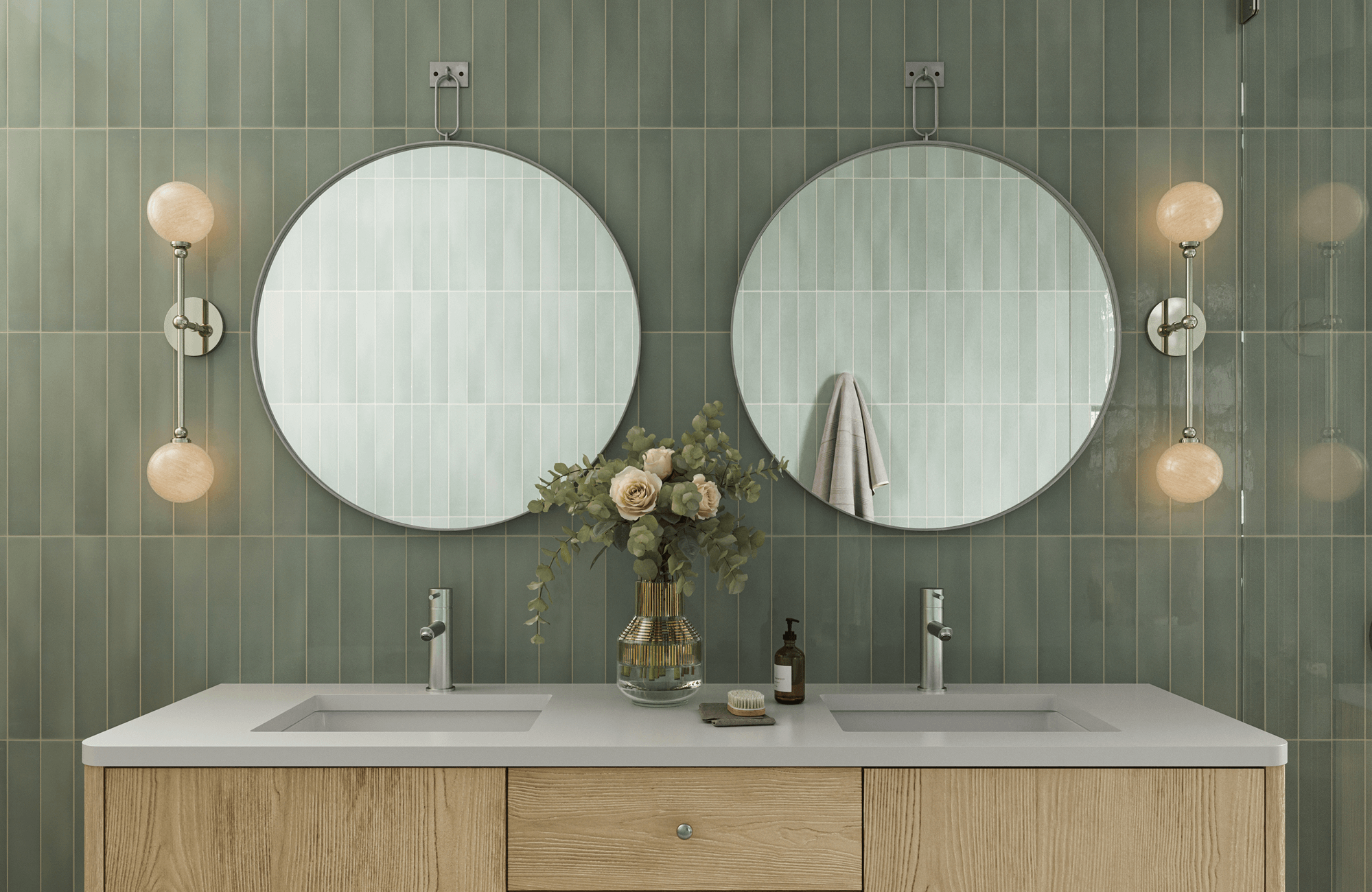
When it comes to lighting, brighter isn’t always better, especially near mirrors. Harsh, unfiltered light can create glare and cast unwanted shadows, making everyday tasks less comfortable. To soften the effect, choose fixtures with frosted or diffused lenses that can help spread light more evenly. For example, Edward Martin’s Isadora Wall Sconce in Polished Nickel, as featured in the photo above, adds both function and elegance. Its frosted globe design also gently illuminates the space, reducing eye strain while enhancing visibility.
Once your fixtures are installed, it’s a good idea to test the lighting at different times of day and adjust as needed to eliminate dark corners or overly bright spots. The ultimate goal is lighting that’s clear, flattering, and easy on the eyes.

Match the Lighting to the Bathroom’s Style
Lighting does more than brighten a bathroom, it also helps shape its overall style and feel. The right fixture brings in texture, contrast, and a sense of balance that ties the whole space together.
Modern Bathrooms
In modern bathrooms, lighting should feel intentional yet understated. Clean lines and minimal profiles are key, so opt for integrated LED strips under vanities, low-profile sconces beside mirrors, or simple geometric pendants overhead. Placement matters just as much as style; fixtures should highlight key areas like the vanity and shower without overwhelming the space. Finishes such as matte black, brushed nickel, or polished chrome can also complement the neutral tones and sleek surfaces often found in contemporary design. Rather than standing out, modern lighting should blend in gracefully, bringing structure and balance to the room.
Classic Bathrooms
If your bathroom leans traditional, the right lighting can elevate its charm and bring a sense of timeless warmth. Think about fixtures like lantern-style sconces, fluted glass shades, or those finished in aged brass or polished nickel. These details introduce elegance without overpowering the room. Placement matters too; wall sconces beside mirrors, pendants above vanities, or a small chandelier above the tub can all enhance classic features when used thoughtfully.
In the photo displayed above, Edward Martin’s Alma Pendants in Ecru Marble Solid add a graceful touch with their soft contours and natural material, perfectly framing each mirror while complementing the warm wood vanities. It’s a great example of how classic design benefits from thoughtful lighting choices. The key is balance: go too ornate and the space can feel busy; go too minimal and it risks feeling unfinished. Look for fixtures that can echo the curves of your mirrors or the finish of your faucet to create a cohesive, well-rooted look.
Eclectic Bathrooms
In an eclectic bathroom, lighting isn’t just functional, it’s part of the story. This is where you can lean into bold choices, whether that means a sculptural pendant above a freestanding tub or a colorful fixture that plays off vibrant tile patterns. Placement still matters, but there’s more freedom to mix styles, shapes, and finishes. A vintage chandelier might hang near a modern mirror, or unexpected wall sconces might frame a space with playful contrast. As long as the lighting supports how you use the room, this is your chance to break a few design rules and let personality take the lead.
Brighten Your Bathroom with Purpose
Learning how to place lighting in a bathroom is about more than picking fixtures; it’s about creating a space that feels intentional, balanced, and easy to use. From layering light and positioning fixtures to working with natural daylight and following safety guidelines, every detail plays a role in how the space looks and functions.
If you’re ready to take the next step, we’re here to help. Contact us to schedule a complimentary design consultation and get expert guidance tailored to your space. We’ll help you bring your bathroom lighting plan to life, comfortably, and beautifully.