Perfect home lighting isn’t just about brightness, it’s a calculated interplay of light quality, purpose, and spatial impact. Far beyond flipping a switch, today’s lighting design considers how ambient, task, and accent lighting can be layered to support daily routines while defining a room’s character. From the warmth of a 2700K glow in a bedroom to the clarity of high-CRI lighting in a kitchen, every detail contributes to visual comfort and cohesion.
At the intersection of design and technology, modern lighting integrates seamlessly with architecture and automation. Features like dimmable LEDs, smart controls, and daylight-aware sensors now allow you to craft adaptable environments that shift with the time of day or activity. In this blog, we’ll dive into the principles and innovations that unlock truly exceptional lighting for every room.

Understanding the Fundamentals of Light
To create lighting that truly works for your home, it helps to first understand what’s happening behind the scenes. From how warm or cool a room feels to how accurately colors appear, key factors like color temperature, brightness, and CRI shape the entire visual experience.
The Science of Light Color Temperature
Measured in Kelvins (K), color temperature affects the perceived warmth or coolness of a light source and strongly influences mood. Lower values (2700K–3000K) cast a warm, yellow glow ideal for relaxing environments like bedrooms and living rooms. Mid-range temperatures (3500K–4100K) provide a neutral white light suited for kitchens and workspaces, while higher temperatures (5000K–6500K) emit a crisp, bluish tone that enhances focus in garages or home offices. Therefore, purposeful transitions between color temperatures help reinforce the function and ambiance of each space.
Lumens and Brightness Explained
Equally important, brightness is best measured in lumens, the total amount of visible light a source emits. A 60-watt incandescent bulb, for example, produces around 800 lumens, whereas an LED can achieve the same output using far less energy. Depending on the application, ideal lumen levels vary: 1,500–3,000 lumens for general living areas, and 400–800 lumens per fixture for focused tasks like cooking or reading. To ensure adaptability, dimmers and layered lighting provide flexibility, allowing users to adjust brightness throughout the day.
The Importance of Color Rendering Index (CRI)
In addition to brightness and temperature, CRI indicates how accurately a light source reveals colors compared to natural sunlight (CRI 100). Values above 90 are recommended in spaces where true-to-life color is essential, such as bathrooms, dressing areas, and rooms showcasing art or textiles. When used in combination with an appropriate color temperature, high-CRI lighting enhances both aesthetics and functionality across the home.
Altogether, by understanding these three fundamentals, color temperature, brightness, and CRI, you can make informed choices that support both visual harmony and everyday performance.

Layering Light for Optimal Effect
Once you understand the basics of light quality, the next step is knowing how to apply it effectively throughout your space. That’s where layering comes in, a design approach that uses different types of lighting to create depth, balance, and purpose in every room.
Ambient Lighting
To start, ambient lighting serves as your primary source of illumination, ensuring safe navigation and overall visibility. It’s typically soft and diffused, minimizing shadows and providing a consistent base layer of light. Common fixtures include chandeliers, recessed downlights, flush-mounts, and cove or indirect lighting that reflects off ceilings and walls. Depending on the room, ideal light levels vary: living areas may need 10–20 foot-candles, while kitchens or workspaces might require 30–50. Ultimately, effective ambient lighting depends on thoughtful fixture placement, appropriate lumen output, and an awareness of surrounding surfaces that influence how light is absorbed or reflected.
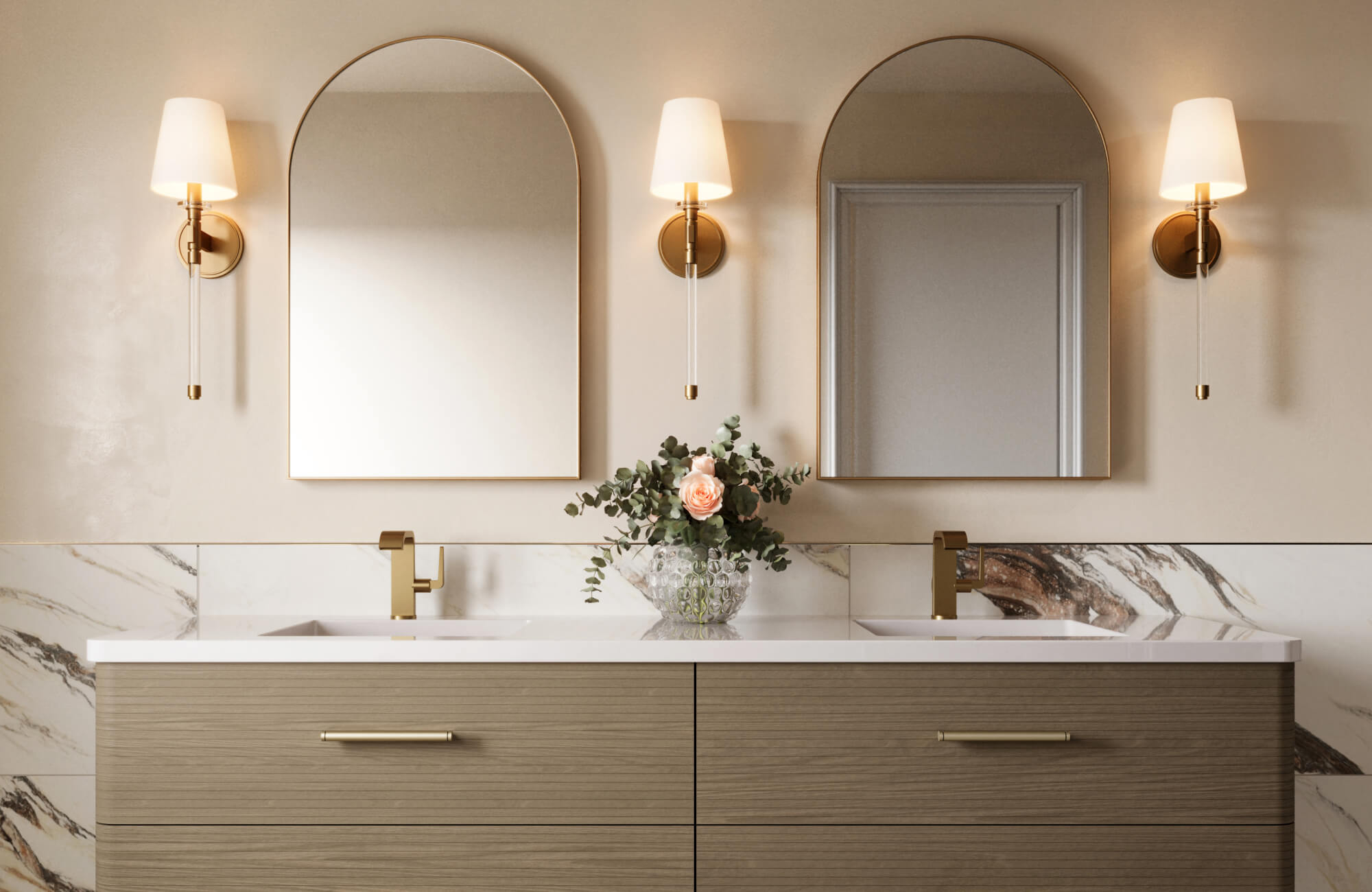
Illustrating this principle, the Robbins Pendant in Aged Brass from Edward Martin, featured above in a serene bathroom, delivers warm, diffuse light through its conical form, enhancing ambient brightness while complementing the space’s architectural warmth and balance.
Task Lighting
Building on that foundation, task lighting provides focused illumination for specific activities like reading, cooking, or grooming, where precision and clarity are essential. Fixtures such as under-cabinet strips, swing-arm sconces, or adjustable desk lamps deliver targeted light while minimizing glare through directional beams and shielding. To meet functional needs, illuminance levels between 50 and 100 foot-candles are ideal. Neutral white light (around 3500K–4100K) enhances visibility and contrast without distorting color, especially in detail-intensive areas.
Accent Lighting
To complete the trio, accent lighting brings dimension and emphasis, spotlighting art, architectural details, or textured surfaces. It’s typically three times brighter than ambient light to create effective contrast and visual interest. Tools like wall washers, picture lights, and directional recessed fixtures shape light precisely, and high CRI values (90+) ensure that color and material depth are faithfully rendered. Moreover, techniques such as grazing or spotlighting can elevate focal points, transforming functional rooms into dynamic environments.

Choosing the Right Fixtures and Controls
With a solid lighting plan in place, the next step is choosing the right tools to bring it to life. From fixture styles that complement your aesthetic to smart controls that fine-tune function, the details make all the difference.
Styles of Lighting Fixtures
Fixtures serve more than a utilitarian purpose; they influence how light interacts with space and help define your interior aesthetic. Generally speaking, they fall into three categories: ceiling-mounted, wall-mounted, and portable. Chandeliers, pendants, recessed lights, and flush-mounts offer ambient or focal lighting from above and must suit the room’s scale and proportions. Meanwhile, wall-mounted options like sconces and vanity lights provide lateral illumination, often used in hallways and bathrooms to minimize facial shadows. In contrast, portable fixtures such as table and floor lamps offer versatility, filling gaps in fixed lighting layouts and adapting to changing needs.
Beyond placement, material and finish significantly influence both the fixture's visual impact and how it interacts with light. From polished nickel to matte black, fixture finishes influence visual weight and texture. Similarly, shade types, clear glass, fabric, or diffused, affect how light is dispersed. Photometric performance is also important: uplighting reflects light gently off ceilings to create a soft ambient effect, while downlighting delivers more focused, task-oriented illumination.
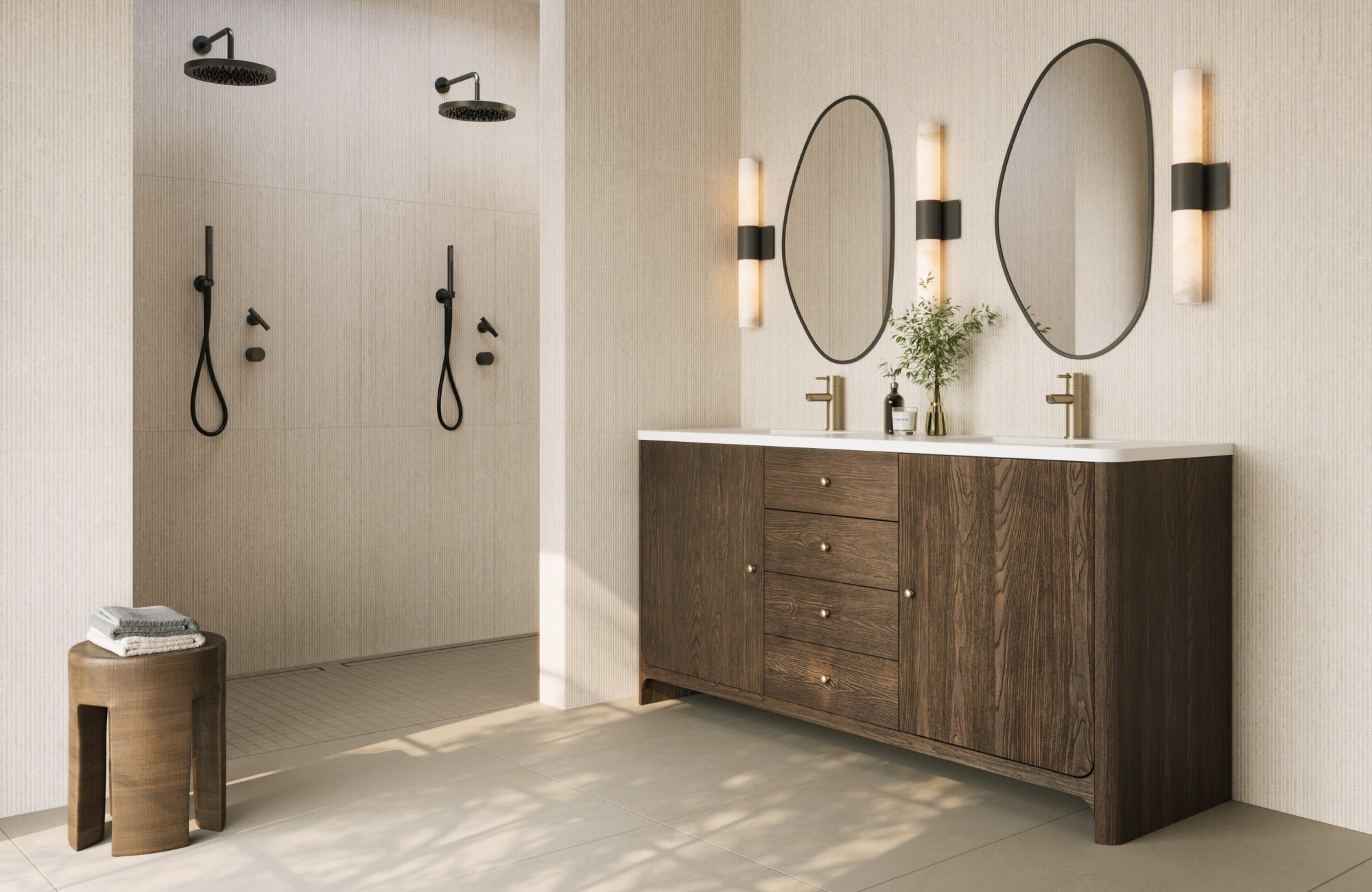
As a compelling example, the Esme 26" Wall Sconce in Aged Brass by Edward Martin blends aesthetic elegance with practical functionality. As shown in the photo above, its sleek vertical form and diffused glow offer refined support within a layered lighting scheme, making it ideal for dining rooms, hallways, or entry spaces.
The Power of Dimmers and Smart Controls
To further enhance your system, lighting controls extend both its usability and efficiency. Dimmers allow users to fine-tune brightness for specific tasks or moods, while also reducing energy use and prolonging bulb life, especially with dimmable LEDs. However, proper compatibility is crucial: make sure your dimmer type (TRIAC, ELV, or 0–10V) matches the specifications of your fixtures and transformers.
Taking this a step further, smart controls introduce even more personalization. App-connected systems like Lutron Caséta, Leviton Decora Smart, and Philips Hue support scheduling, voice commands, and integration with motion or daylight sensors. Larger homes, in particular, benefit from centralized panels or wireless mesh networks (e.g., Zigbee, Z-Wave), which simplify control across multiple rooms and zones.
Whether managed through a tactile dimmer, a wall-mounted keypad, or a mobile interface, the control method should align with your lifestyle. Ultimately, thoughtful integration improves functionality, enhances ambiance, and elevates the entire lighting experience.
When combined, intentional fixture selection and smart control strategies transform lighting from a background utility into a dynamic, expressive element of home design. In the next section, we’ll explore how to apply these principles to the unique demands of each room.

Lighting Design for Every Room
Every room in your home serves a different purpose, and your lighting should reflect that. By tailoring light to the specific function and atmosphere of each space, you can enhance both how it looks and how it feels.
Living Room Lighting
As a multifunctional space for entertainment, reading, and relaxing, the living room benefits from a layered lighting approach. To establish a welcoming baseline, ambient light typically comes from recessed fixtures, a central chandelier, or cove lighting that fills the room with a soft, balanced glow. To add visual dimension, accent lighting, such as wall sconces or uplighting behind artwork, introduces texture and highlights architectural features.
To further support specific activities, task lighting, like floor lamps or directional fixtures, can be placed near seating areas for reading or crafts. Additionally, dimmable controls offer flexibility to shift brightness based on the time of day or mood. When combined with warm white temperatures (2700K–3000K) and high-CRI fixtures, the result is a cozy and visually cohesive atmosphere that highlights furnishings and décor authentically.
Kitchen Lighting
The kitchen demands bright, functional lighting that also complements materials and layout. To meet these needs, a combination of recessed ceiling fixtures for ambient light and focused task lighting, such as under-cabinet strips and pendants above islands, ensures both safety and visual clarity. Specifically, fixtures with a CRI of 80+ and a color temperature of 3000K–3500K are ideal for minimizing shadows and accurately rendering colors.
Beyond practicality, pendant lights contribute to both illumination and design appeal. Adjustable beam angles and fixture height help reduce glare while enhancing aesthetics. On top of that, elements like toe-kick and cabinet interior lighting improve visibility and lend a contemporary touch. Smart lighting presets, in turn, make it easy to transition from cooking to entertaining with a single tap.
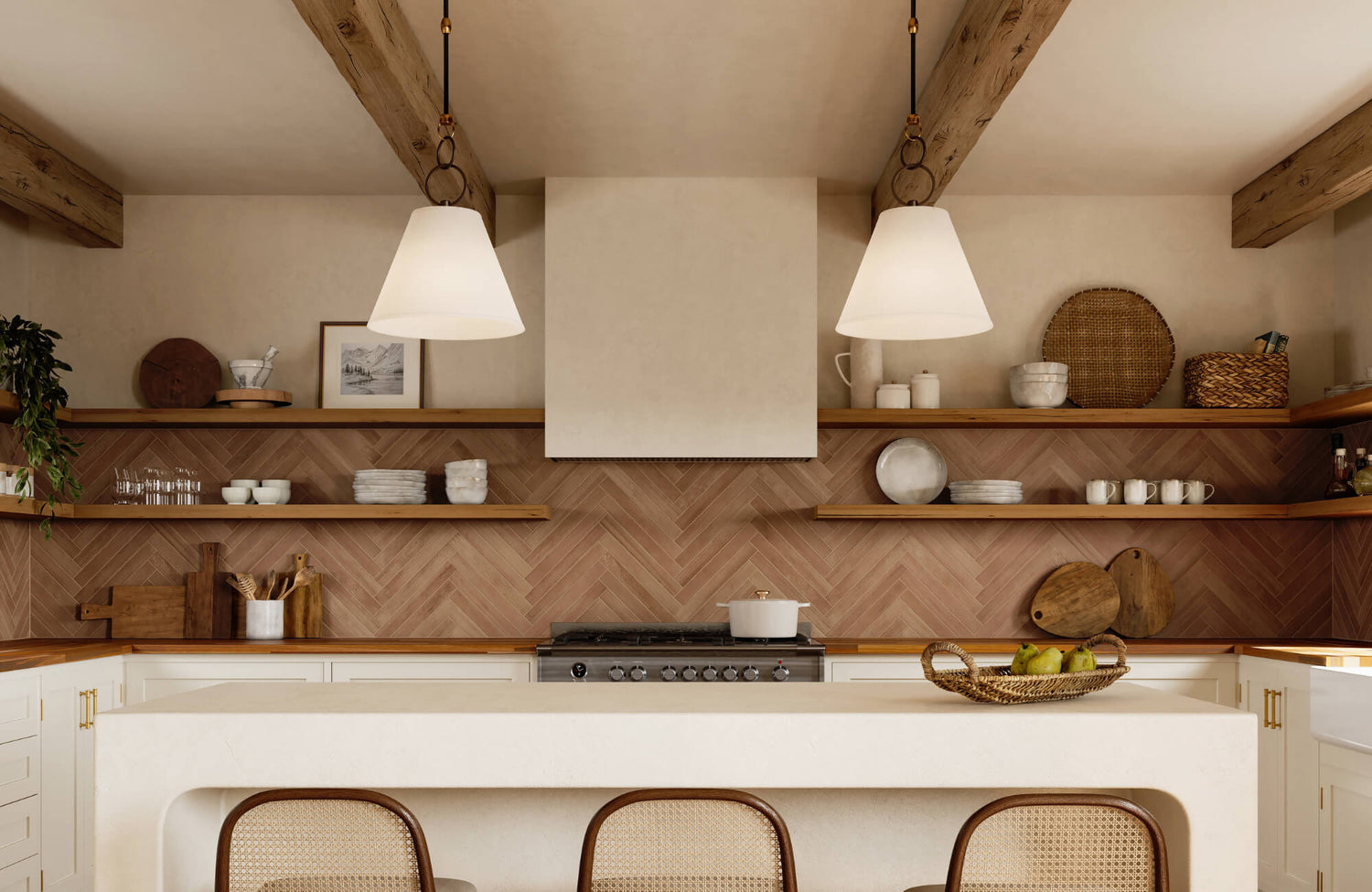
For example, the Sable Pendant in Distressed Bronze/Ceramic Ivory Crackle by Edward Martin, shown above, exemplifies the blend of artistry and function. Its focused, ambient glow and handcrafted texture bring character to modern kitchen environments.
Bedroom Lighting
In the bedroom, lighting should promote relaxation while offering flexibility. To create this balance, ambient light from flush-mount fixtures or cove lighting establishes a calming atmosphere, especially when using warm tones around 2700K. Dimmable systems further support circadian-friendly transitions from active evenings to restful nights.
For more targeted needs, localized task lighting, like sconces or bedside lamps, offers practical solutions for reading, ideally with individual controls to suit each occupant’s preferences. Subtle accents, such as lighting behind mirrors or floating shelves, add soft depth without becoming a distraction. Motion-sensor nightlights, meanwhile, offer gentle navigation after dark, enhancing safety without disturbing sleep.
Bathroom Lighting
Bathroom lighting requires precision, with emphasis on clarity and moisture-safe functionality. To begin, vertical vanity lighting mounted on either side of the mirror, or integrated LED-backlit mirrors, helps minimize facial shadows and ensures accurate color reflection. This is best achieved with lighting that boasts a CRI of 90+ and a color temperature in the 3000K–3500K range.
For overall coverage, recessed ceiling fixtures rated for damp conditions offer ambient light, while toe-kick or under-vanity lighting adds a low, comforting glow for nighttime use. In showers and above bathtubs, wet-rated fixtures should be paired with dimmers to allow for adjustable brightness that shifts from invigorating to soothing as needed. When thoughtfully layered and zoned, these solutions elevate the bathroom into a spa-like experience.
To tie it all together, Edward Martin’s design consultation service provides one-on-one guidance, helping you integrate lighting choices with surrounding finishes like tile and cabinetry. Our expert input ensures cohesion across style and function from concept to installation. For additional support, contact Edward Martin for curated product recommendations and design advice on everything from lighting and tile to rugs and furnishings, helping you elevate your home with ease.

Energy Efficiency and Sustainability in Lighting
As lighting design evolves, energy efficiency and sustainability have taken center stage, shaping not just how we illuminate our homes but how we impact the planet. By making smarter choices in both artificial and natural light sources, it’s possible to create spaces that are as responsible as they are beautiful.
The Benefits of LED Lighting
Light Emitting Diodes (LEDs) have become the benchmark for energy-efficient lighting. Unlike traditional incandescent bulbs, which convert most of their energy into heat, LEDs operate at 80–90% efficiency, delivering equivalent brightness with significantly lower wattage. For example, a 10-watt LED can match the output of a 60-watt incandescent bulb, making it a smarter, more sustainable choice.
Beyond efficiency, LEDs offer exceptional longevity, often lasting between 25,000 and 50,000 hours. This durability reduces the frequency of replacements and lowers material waste. Furthermore, LEDs emit very little heat, easing the burden on cooling systems in climate-controlled interiors. Environmentally speaking, they contain no hazardous substances like mercury, commonly found in CFLs, and are often fully recyclable, further supporting eco-conscious design goals.
On a technical level, LEDs provide precise control over factors like beam angle, color temperature (ranging from warm 2700K to crisp 6500K), and Color Rendering Index (CRI), with many models scoring above 90. Their adaptability also shines in modern lighting systems, as they work seamlessly with dimmers, timers, and smart platforms. These capabilities enable features like daylight harvesting and occupancy sensing, allowing you to cut energy usage without compromising quality or convenience.
Incorporating Natural Light
Complementing artificial lighting, maximizing natural light, or daylighting, is a powerful way to enhance sustainability. Through architectural strategies, such as installing large operable windows, skylights, solar tubes, and light shelves, designers can harness and distribute sunlight throughout the home. This reduces reliance on electric lighting during the day while supporting health, productivity, and circadian rhythm alignment.
To fine-tune this strategy, glazing technologies like low-emissivity (low-E) coatings and spectrally selective films help control heat gain and glare without blocking visible light. Orientation is equally important: north- and south-facing windows offer consistent daylight, while east- and west-facing exposures may require shading to balance brightness and thermal comfort.
To further amplify daylight, industry experts often incorporate matte wall finishes, reflective ceilings, and well-placed mirrors, which help bounce sunlight deeper into rooms. When these passive strategies are paired with responsive systems, such as dimmable LEDs and ambient light sensors, homes can automatically adjust artificial lighting to ambient conditions. The result is a lighting system that intuitively balances energy efficiency and user comfort.
In well-lit interiors, a thoughtfully selected fixture like Edward Martin’s Matteo Pendant in Aged Brass complements natural light beautifully. As displayed above, its diffused glow and warm metallic finish blend seamlessly with daylight, providing just the right amount of supplemental illumination without overpowering the room’s natural ambiance.
The Secret Revealed
Nonetheless, perfect home lighting isn’t about following a formula, it’s about blending technical precision with creative intent. When done right, combining color temperature, lumen output, and CRI with layered lighting and smart fixture choices, lighting becomes a powerful design tool that elevates both function and feel.
And as today’s homes shift to serve more roles than ever, lighting must respond with the same versatility. From energy-smart LEDs to daylight-conscious layouts, the key is aligning performance with purpose. For those seeking expert guidance, Edward Martin offers expert insight and lighting ideas tailored to how you live.