Bathroom lighting is one of the most overlooked elements of design, yet it plays a powerful role in how your space feels and functions. Whether you're rushing through a morning routine or winding down in a relaxing soak, the right lighting can set the tone, improve visibility, and enhance your overall experience.
In this article, you’ll discover how to build a lighting strategy that goes beyond just flipping a switch. From layering techniques and fixture placement to choosing the right color temperature, CRI, and smart features, you’ll learn how to transform your bathroom into a functional, beautiful space tailored to your lifestyle.

Understanding Bathroom Lighting Layers
Effective bathroom lighting is built on a three-layer system: ambient, task, and accent lighting. Each layer serves a unique purpose, and together they create a balanced, versatile environment. Proper layering also eliminates shadows, highlights design features, and sets a welcoming tone for the entire room.
Ambient Lighting
Ambient lighting sets the stage for your entire bathroom experience. It fills the space with a soft, uniform glow that makes everything visible without creating sharp contrasts or unflattering shadows. If you’ve ever walked into a bathroom and felt instantly comfortable, chances are the ambient lighting was well thought out.
You can achieve this kind of lighting by installing flush or semi-flush ceiling fixtures, wide LED panels, or recessed lights that wash the room evenly with light. For a refined touch, consider a fixture like the Mendes Flush Mount in Gradient Brass, which features a warm, golden tone that blends beautifully with both traditional and modern design schemes. These solutions work especially well when paired with reflective surfaces like tile or glass, which help bounce the light around the room. With ambient lighting as your base, you can navigate the space easily and comfortably at any time of day.
Task Lighting
Task lighting steps in where ambient light falls short, particularly around the vanity, where you need direct, reliable illumination. Whether you're shaving, applying makeup, or managing skincare routines, having accurate, focused lighting makes these tasks not only easier but also more effective. It allows you to see fine details without shadows distorting your reflection.
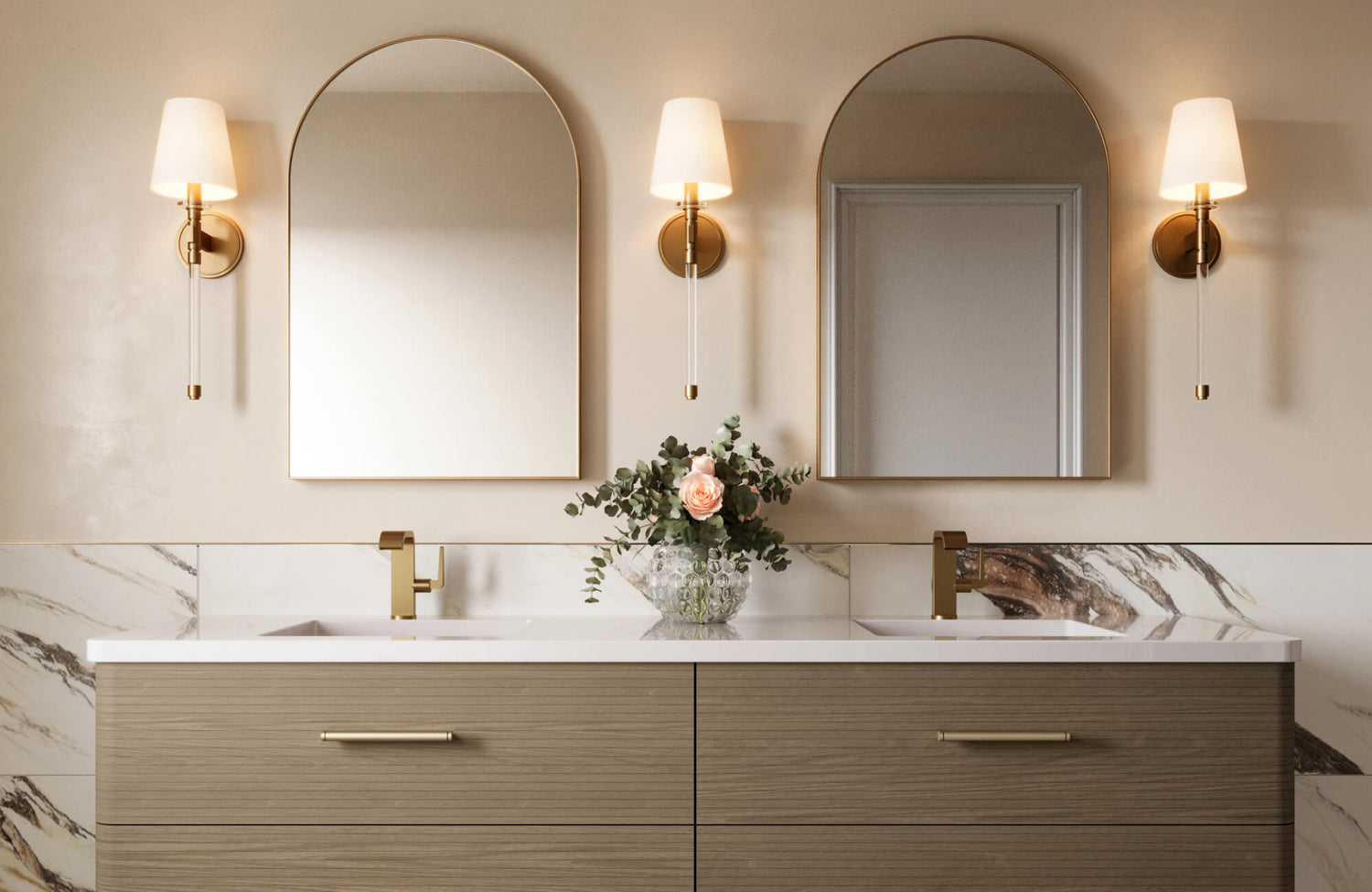
Placing vertical sconces at eye level on either side of your mirror is one of the most effective ways to get consistent, balanced light across your face. In the photo shown above, the clean, symmetrical placement of sconces flanking the round mirror ensures shadow-free visibility and visual harmony. Edward Martin’s Russell Wall Sconce in Old Bronze features a rich, dark brown tone that pairs beautifully with natural wood cabinetry and muted tilework. These lighting solutions not only enhance clarity but also add a refined, architectural detail that elevates the overall design.
Accent Lighting
Although ambient and task lighting focus on visibility and functionality, accent lighting is where your bathroom begins to show personality. It brings depth and visual interest by spotlighting features that deserve attention, whether that’s a floating vanity, a textured backsplash, or a unique piece of art.
You can use small recessed spotlights to highlight a niche shelf or install LED strips beneath a vanity to create a soft, floating effect. Even subtle lighting along a toe-kick can add an upscale touch and help with nighttime visibility. Accent lighting doesn’t just beautify your bathroom; it also gives it a layered, intentional feel that elevates the entire design without needing to overhaul the space.

Matching Lighting Color Temperature With Bathroom Function
Color temperature affects how a space feels and functions. Understanding the Kelvin (K) scale allows you to choose lighting that supports relaxation, alertness, or day-to-day versatility. Choosing the right color temperature not only shapes the mood of your bathroom but also influences how well the space serves your daily routine.
Warm White
If your goal is to create a tranquil, spa-inspired retreat, warm white lighting in the 2700K to 3000K range is your best bet. This temperature emits a soft, golden glow that feels inviting and soothing, almost like candlelight but more practical. It naturally softens shadows, flatters your skin tone, and creates a sense of comfort, making it perfect for evening wind-downs or a leisurely soak in the tub.
This warmth also pairs beautifully with natural materials such as wood, stone, and matte finishes. If your bathroom features earthy tones or organic textures, warm white lighting enhances their richness and adds to the calming atmosphere. You’ll find it especially beneficial in master bathrooms where relaxation and mood take precedence over task efficiency.
Neutral White
Neutral white light, ranging from 3500K to 4000K, provides a balanced tone that works well throughout the day. It doesn’t lean too warm or too cool, which makes it an ideal choice if your bathroom serves multiple purposes for multiple people. Whether you're waking up early for work or brushing your teeth before bed, neutral white offers clarity without being harsh.
This range is especially useful in family or shared bathrooms where flexibility is key. It offers enough brightness for tasks like grooming and dressing, but still maintains a level of softness that keeps the room from feeling clinical. If you're aiming for an all-purpose lighting setup, this is the safest and most adaptable color temperature to choose.
Cool White
Cool white lighting, measured between 5000K and 6500K, closely resembles natural daylight. This makes it especially useful in the morning when you're trying to fully wake up and prepare for the day ahead. The crisp, bright quality of cool white enhances visual sharpness and is particularly effective in task-oriented areas like vanities and mirror zones.
If you rely on your bathroom for activities that demand detail, like precise makeup application or shaving, cool white light ensures every feature is visible. However, because of its intensity and slightly bluish tone, it’s best used sparingly. Overusing cool white can also make the space feel stark or even uncomfortable, so consider limiting it to specific areas rather than illuminating the entire bathroom with it.

Selecting Fixtures That Suit Bathroom Zones
Bathrooms contain both dry and wet zones, requiring fixtures with appropriate Ingress Protection (IP) ratings. Choosing the right lighting for each zone ensures safety, longevity, and style. With the right selections, you can achieve a lighting scheme that’s both functional and cohesive, even in a moisture-rich environment.
Ceiling-Mounted Lights
Dry zones like the center of the bathroom or over open floors allow for more flexible lighting choices. Ceiling-mounted flush or semi-flush fixtures are ideal, offering broad, general illumination while staying out of the way. They work especially well in compact spaces where vertical clearance is limited, providing ample brightness without interfering with movement or airflow.
If your bathroom is spacious or has higher ceilings, you can incorporate more decorative options like a small chandelier or pendant light. In the picture displayed above, the centerpiece pendant complements the airy, symmetrical layout while adding visual interest. Edward Martin’s Matteo Pendant in Aged Brass features a warm, brushed gold tone that brings softness and sophistication to the room. Its elevated placement also makes it ideal for dry zones, while its sculptural form adds elegance without overpowering the space.
Damp-Rated Lights
In areas directly exposed to humidity, such as near bathtubs, inside shower stalls, or just outside wet zones, you need lighting designed to withstand moisture. Damp-rated fixtures are specifically engineered for these conditions. Installing the wrong type of light risks both safety and premature wear, so it’s important to use products that meet safety standards for wet environments.
Recessed can lights with gasketed trims are among the most popular and practical choices for these zones. They offer a clean, unobtrusive look while forming a tight seal against moisture. Many models also come with vapor barriers that protect both the fixture and the ceiling cavity. Be sure to follow local electrical codes and always reference the manufacturer’s guidelines to ensure safe placement, particularly in areas with direct exposure to water.
Integrated Vanity Lighting
The mirror area is where precision matters most, and your fixture choice can either enhance or hinder visibility. Integrated LED vanity mirrors provide bright, even lighting exactly where you need it—on your face. These mirrors also often feature built-in controls for brightness and color temperature, allowing you to tailor the light for tasks like makeup, skincare, or shaving.
Alternatively, wall sconces mounted on either side of the mirror deliver balanced illumination without casting awkward shadows. Look for damp-rated models if your vanity is close to a water source, and choose fixtures with frosted or opal diffusers for glare reduction. These lighting options aren’t just functional; they add polish and intention to your bathroom’s design, proving that practical solutions can also be beautiful.

The Role of CRI in Bathroom Lighting Quality
The Color Rendering Index (CRI) determines how accurately a light source shows colors compared to natural light. High CRI lighting is essential for tasks like makeup and shaving, ensuring your reflection looks as true to life as possible. It plays a direct role in how you see yourself and your surroundings, making it a non-negotiable factor in any well-designed bathroom.
Why CRI Above 90 Matters for Personal Care
When your bathroom lighting has a CRI of 90 or above, you immediately notice the difference in color clarity. Your skin tone appears natural, your makeup shades reflect their true hues, and your hair color looks as it does in daylight. This is especially important when you’re getting ready in front of the mirror, whether for work, a night out, or just a regular day.
Additionally, using high-CRI lighting around grooming zones gives you visual confidence. There’s no guesswork involved because the lighting closely mimics natural light, allowing you to apply products more precisely and identify any small details that lower-quality light might obscure. It’s not just about practicality. It’s also about feeling assured in how you look before stepping out the door.
How Low CRI Lighting Can Distort Color Perception
Lighting with a CRI below 80 can be misleading. Colors may appear muted, washed out, or entirely different from their true tones. Under these conditions, even the most carefully chosen makeup or hair products can look off, and it becomes frustrating to achieve the results you want.
This kind of distortion not only affects grooming; it also impacts how your bathroom itself is perceived. Wall paint, tile patterns, and accent décor, for instance, can lose their vibrancy under low-CRI lighting, dulling the overall aesthetic of the space. If you’ve invested in design details, poor color rendering can undermine them, making the bathroom feel less polished and more utilitarian than intended.
Balancing CRI with Efficiency and Bulb Type
Fortunately, today’s LED technology makes it easy to have both high CRI and energy efficiency in a single fixture. You no longer have to sacrifice clarity for sustainability. Many modern LED bulbs and integrated fixtures now feature CRI ratings of 90+ while consuming a fraction of the energy older options required.
When selecting lights, look for those specifically labeled with a high CRI, along with Energy Star or DLC certifications. This way, you ensure not only visual fidelity but also long-term performance and lower utility costs. With the right bulb or fixture, you can enhance your grooming accuracy, elevate your space visually, and still stay eco-conscious.

Smart Lighting Controls for Customization and Efficiency
Smart lighting brings personalization and efficiency to your bathroom routine. With motion sensors, dimmers, voice assistants, and scene presets, you can tailor the lighting to your lifestyle. These features offer more than just futuristic appeal; they help you save energy, increase comfort, and simplify your daily flow.
Motion Sensors and Dimmers
Installing motion sensors in your bathroom ensures lights only turn on when needed. Whether you're walking in for a quick visit or starting your morning routine, the lighting responds automatically. Vacancy sensors can also detect when the room is empty and turn the lights off after a short delay, helping reduce energy waste without any extra effort on your part.
Pairing these sensors with dimmers takes the experience even further. You can adjust brightness levels depending on the time of day or activity, like lowering the lights for a calming bath or brightening them for precision grooming. This level of control also helps extend bulb lifespan and reduces your power usage, giving you a smarter, more sustainable setup.
Voice and App Controls
When your hands are full or wet, voice control becomes incredibly helpful. Syncing your bathroom lights with platforms like Alexa, Google Assistant, or Apple HomeKit gives you the power to control brightness, color temperature, and on/off settings with a simple command. It's a small feature that makes a big difference, especially in the early morning or late at night. Using mobile apps also adds another layer of control. You can manage lighting from anywhere in your space or even when you’re away.
Scene Presets
With scene presets, you can instantly transform your bathroom lighting to suit different moods and tasks. Imagine a bright, energizing setup for your “Morning Routine” that shifts into a soft, warm “Spa Mode” for winding down at night. With just one tap or a voice command, you can trigger a complete shift in ambiance that matches your intent.
These personalized settings help you move through your day with more ease and comfort. You won’t have to manually adjust the lights every time you use the space. Instead, your lighting works in sync with your lifestyle, providing a thoughtful layer of customization that improves both functionality and enjoyment. From soft glows at midnight to invigorating brightness at dawn, scene presets make your bathroom smarter, smoother, and more tailored to you.

How Design Style Influences Lighting Choices
Lighting is a key expression of your bathroom’s design. Whether your space is modern, traditional, or eclectic, matching fixtures to your aesthetic ensures cohesive style and optimal function. The right lighting also enhances the personality of your bathroom and elevates its visual impact.
Minimalism
If your bathroom leans into modern minimalism, clean lines and a clutter-free aesthetic are likely top priorities. Recessed downlights and linear LED fixtures are perfect fits for this style. They sit flush with surfaces and provide ample brightness without adding visual noise. These types of lights also blend into the architecture, creating a seamless, open feel.
In minimalist spaces, lighting needs to work hard without being showy. Linear LEDs placed under cabinets or along mirror edges can deliver powerful, focused illumination while staying visually understated. When done right, this style of lighting supports a calm, organized atmosphere and makes every element feel intentional. It also gives your bathroom a polished, contemporary edge without overcomplicating the design.
Classic
For a more traditional or vintage-inspired bathroom, lighting should feel warm, inviting, and full of character. Fixtures like wall-mounted sconces with ornate detailing, small chandeliers with soft curves, or lantern-style lights act as both functional elements and decorative accents that reflect the timeless charm of the space.
To further elevate the look, consider a statement fixture like the Alma Pendant in Ecru Marble Solid. With its soft, creamy stone hue and refined form, this pendant introduces a sense of sculptural elegance while nodding to classic materials. Using warm-toned bulbs also enhances this effect by adding a soft glow that flatters both your features and the surrounding finishes. As shown in the picture above, pairing these fixtures with other traditional elements such as natural stone, brass fittings, or wood vanities reinforces the cohesive look.
Eclectic and Transitional
If your bathroom mixes modern lines with vintage touches or unexpected materials, eclectic lighting gives you the freedom to experiment. Matte black pendants, mixed-metal finishes, or sculptural wall fixtures can become focal points that express your personal style.
To maintain balance, consider layering your lighting with both form and function in mind. For instance, pair a bold ceiling fixture with more subdued sconces or adjustable track lights. This lets you enjoy creative contrast while still meeting your practical needs. Transitional and eclectic styles thrive on blending eras and textures, and your lighting should reflect that same dynamic spirit—expressive, curated, and completely your own.
Your Bathroom Lighting Blueprint
The best bathroom lighting is the result of a well-balanced strategy that considers both form and function. By combining layered lighting, thoughtful color temperatures, high CRI accuracy, and smart controls, you create a space that supports your daily routines and enhances your comfort. When each lighting element aligns with your design style and practical needs, your bathroom becomes more than just functional. It also becomes a personalized retreat that feels intentional, efficient, and beautifully lit from every angle.
If you're ready to take the next step in refining your bathroom lighting plan, don't hesitate to reach out for expert guidance. Whether you need help choosing fixtures, selecting finishes, or ensuring compatibility with your overall design, professional support can make the process smoother and more rewarding. With the right advice and product recommendations, you can bring your vision to life confidently and effortlessly.