Hexagon tiles bring a timeless blend of geometry and artistry, transforming ordinary bathrooms into spaces of refined elegance. Their six-sided form creates striking visual rhythm, offering endless opportunities to pair with classic subway tiles, bold chevron layouts, or luxurious marble slabs. When harmonized with other tile shapes, they also introduce depth, movement, and texture that elevate both walls and floors into curated design statements. From functional shower flooring to accent walls that command attention, hexagon tiles adapt seamlessly while maintaining their distinctive character. By exploring the art of mixing hexagon tiles with complementary shapes, homeowners and designers alike can achieve bathroom interiors that are as enduring as they are visually captivating.

Harmonizing Hexagons with Subway Tiles
The clean linearity of subway tiles provides the perfect counterpoint to the angular geometry of hexagons. As a result, the pairing produces bathroom designs that balance structured order with creative rhythm.
Grout Alignment and Joint Consistency
When hexagons are paired with subway tiles, consistent grout alignment ensures a professional finish that avoids visual disruption. In addition, matching grout joint widths across both shapes creates a sense of continuity, even when the tile dimensions differ. Epoxy grout with high stain resistance is particularly beneficial in bathrooms, since moisture and cleaning products can erode standard cement-based grout quickly. For example, a soft grey grout that complements both white subway tiles and neutral hexagons can unify the overall look. Staggering subway tiles in a brick bond also softens the transition into the tessellating hexagonal field. Together, these techniques establish a refined balance between geometric complexity and minimalist order.
Finish Contrast for Depth
Finish contrast adds depth when subway tiles and hexagons are used together in a bathroom design. For example, matte hexagons placed near the floor can visually ground the space, while glossy subway tiles above reflect light to brighten the atmosphere. This layered approach is especially effective in compact bathrooms, where vertical differentiation creates the illusion of added height. In addition, darker hexagons on the lower half of the wall create a strong base, while light subway tiles prevent the design from feeling heavy.
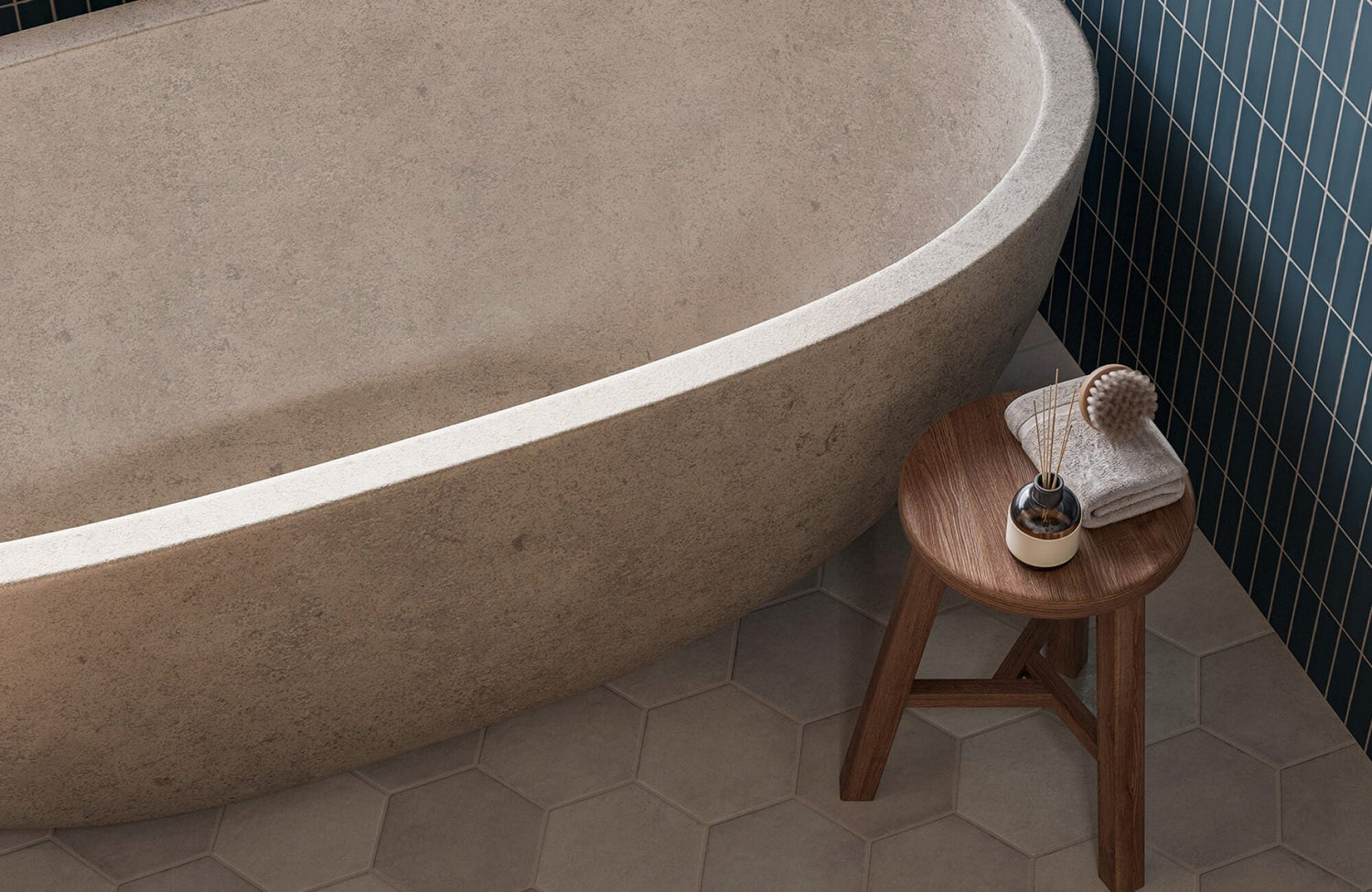
A refined example can be seen in the photo above with Edward Martin’s Reagan 5x6 Matte Porcelain Hexagon Tile in Dove paired with the Maisie 2.5x16 Glossy Ceramic Tile in Ocean. The soft matte hexagons ground the floor while the glossy ocean-toned subway tiles introduce vertical shimmer and serene color. Together, they create a calming yet elevated aesthetic that feels both contemporary and timeless. By mixing finishes thoughtfully, designers enhance both aesthetics and functionality while maintaining cohesion.

Creating Transitional Borders with Large Format Tiles
Large format porcelain or ceramic slabs maximize space with minimal grout lines, while hexagons add texture and dimension. When used together, they form smooth transitions that separate functional zones without harsh interruptions.
Functional Zoning
Hexagon tiles are highly effective for establishing functional zoning in open bathroom layouts. For example, by inserting hexagonal borders between large-format slabs, designers can separate wet zones such as showers from vanity areas without the need for intrusive dividers. This zoning technique also allows the floor plan to remain cohesive while naturally guiding movement through the room. In addition, color contrast, such as darker hexagons framing lighter porcelain slabs, makes the separation visually intuitive.
A great example, as displayed in the picture above, is the Chantel 12x11 Matte Porcelain Hexagon Mosaic Tile in Imperial on the shower floor paired with the Chantel 24x48 Matte Porcelain Tile in Imperial extending across the main bathroom floor, where the change in scale naturally defines wet and dry zones. Ultimately, hexagonal zoning enhances practicality while reinforcing visual harmony.
Precision Cutting and Edge Treatments
Integrating hexagons with large format tiles requires careful precision to avoid irregular edges. For this reason, contractors typically rely on a wet saw with a diamond blade to achieve clean, accurate cuts. Moreover, trims such as Schluter profiles or sleek metal edging protect exposed tile edges and provide crisp boundaries. Beveled edges on hexagons can also soften transitions while minimizing the risk of chipping at borders. In addition, dry-laying the pattern prior to final installation ensures correct alignment and reduces costly mistakes. With these strategies, the union of hexagons and large format slabs feels both flawless and durable.

Mixing Hexagons with Square Tiles
Hexagons and square tiles create a dialogue between angular intricacy and geometric simplicity. Together, their interplay introduces balance and structure, making them ideal for accent walls, flooring patterns, or backsplash details.
Scale Balance for Cohesion
When mixing hexagons with square tiles, proportion is the key to achieving visual harmony. For example, medium-sized hexagons pair seamlessly with modest square tiles, ensuring neither shape dominates the composition. This thoughtful proportion allows both forms to complement each other while establishing balance across the surface. In addition, designers often frame hexagon clusters with square borders to define focal areas, producing clear visual boundaries.
A vibrant example is achieved with the Quinn 12x12 Matte Porcelain 1x1 Hexagon Mosaic Tile in Black & White Flower on the floor paired with the Mikayla 5x5 Glossy Ceramic Tile in Cerulean on the walls, as featured in the photo above. The floral hexagon mosaic grounds the room while the bold blue squares introduce depth and vibrancy. This layered technique works especially well in bathrooms, where the interplay of geometry and color creates a cohesive design that feels intentional, structured, and timeless.
Slip Resistance and Surface Performance
In bathrooms, performance is just as important as appearance, and square tiles bring functional advantages when paired with hexagons. Their uniform edges provide stability underfoot, while hexagons contribute texture and grip, especially in wet zones. For instance, matte hexagons can anchor shower floors, while smooth square tiles create easy-to-clean surfaces in surrounding areas. Moreover, alternating finishes, such as pairing glossed squares with matte hexagons, adds visual depth without compromising practicality. This balance of safety, durability, and design interest ensures that the pairing serves both form and function. By integrating performance-driven materials, bathrooms achieve long-lasting beauty with everyday usability.

Layering Hexagons with Natural Stone and Marble Look Tiles
Hexagon mosaics crafted in natural stone or marble elevate bathroom interiors with artisanal character and luxury appeal. When combined with larger stone slabs, they highlight material beauty while maintaining cohesive continuity.
Shower Floors and Wall Continuity
Using marble hexagons on shower floors alongside larger marble slabs on the walls ensures cohesion without monotony. For example, Carrara hexagons provide slip resistance and visual texture, while the veining in larger slabs establishes elegant continuity. This combination also improves both safety and aesthetic balance in wet areas. Designers often use tonal variation, such as pairing white marble slabs with subtly darker hexagons, to achieve contrast without disrupting harmony. In addition, the interplay of scale emphasizes craftsmanship, as the larger surfaces highlight veining while the smaller mosaics add tactile richness. Consequently, this layered approach achieves a refined blend of luxury and practicality.
Sealing and Maintenance Requirements
Natural stone surfaces require proper sealing to preserve their integrity in moisture-rich bathrooms. Since hexagonal mosaics include more grout joints than slabs, they demand additional sealing attention. High-quality penetrating sealers also provide long-term resistance to staining and etching. In addition, epoxy grout offers better protection against water absorption compared to cement grout, ensuring greater durability. Regular maintenance with pH-neutral cleaners prevents surface damage as well, maintaining both luster and longevity. With proper care, stone hexagons and slabs continue to exude elegance long after installation.
Marble Look Tile Pairings
Marble look porcelain tiles provide an elegant alternative to natural stone, combining timeless beauty with enhanced durability and easier maintenance. For instance, our Aniston 2x2 Matte Porcelain Hexagon Mosaic Tile in Calacatta Quarzite on the bathroom floor creates texture and slip resistance, while the Aniston 24x48 Matte Porcelain Tile in Calacatta Quarzite across the walls and tub surround delivers a sweeping, luxurious backdrop. As shown in the picture above, the interplay between small-scale hexagons and large format slabs highlights veining patterns beautifully while ensuring practical performance in moisture-rich areas. Together, they achieve a spa-like ambiance that feels both sophisticated and enduring, capturing the essence of marble with the reliability of porcelain.

Mixing Hexagons with Wood Look Tiles
Hexagons and wood look tiles create a warm interplay between geometric precision and natural texture. Together, their contrast introduces visual depth and organic character, making them ideal for feature walls, shower surrounds, and bathroom flooring layouts.
Scale Balance for Cohesion
When mixing hexagons with wood look tiles, scale plays the most important role in maintaining visual harmony. For instance, medium-sized hexagons pair beautifully with elongated wood planks, ensuring that neither shape overwhelms the other. This proportional blend also allows both geometric rhythm and natural grain to stand out without clashing. In addition, designers often use wood look tiles as grounding backdrops while hexagons highlight focal areas such as vanities or shower niches.
A refined example, as displayed in the photo above, features our Aniston 2x2 Matte Porcelain Hexagon Mosaic Tile in Calacatta Cremo on the shower floor, bordered by slender green ceramic tiles that provide a smooth transition into elongated wood look planks. This subtle intermediary band maintains proportional balance while visually linking the geometric mosaic to the organic grain of the planks. The result is a cohesive, spa-inspired design that feels intentional and seamlessly curated.
Texture Contrast and Natural Warmth
When combining hexagons with wood look tiles, texture contrast plays a key role in creating balance between modern geometry and organic warmth. The smooth, matte surface of hexagon mosaics enhances the tactile realism of wood grain, allowing each material to accentuate the other’s natural character. This interplay also adds depth and visual softness, transforming functional areas like shower surrounds and vanities into inviting focal points. Moreover, subtle tonal variation, such as pairing creamy hexagons with honey-toned planks, creates a layered effect that feels cohesive and serene. Lighting further elevates this composition by revealing surface nuances and natural textures. Together, these materials evoke a spa-inspired atmosphere where geometric precision meets the comforting essence of nature.

Color and Finish Coordination Across Mixed Shapes
The success of blending hexagons with other tile shapes depends heavily on color harmony and surface finish coordination. By considering contrast, cohesion, and lighting, designers can create bathrooms that feel refined and intentional.
Monochromatic and Contrasting Palettes
Monochromatic palettes emphasize the form of hexagons while keeping the bathroom design unified. For example, layering light grey hexagons with pale subway tiles achieves spa-like tranquility. Conversely, bold contrasts, such as black matte hexagons against glossy white rectangles, establish dramatic, modern compositions. In addition, muted accents like taupe or greige can soften transitions between shapes, avoiding sharp visual breaks. Strategic lighting further enhances these palettes by highlighting tone variations across surfaces. As a result, the right palette provides balance, drama, or calm depending on the desired atmosphere.
Surface Finish Interplay
Mixing finishes creates added dimension by manipulating how surfaces interact with light. For instance, glossy subway or penny round tiles reflect task lighting, while matte hexagons diffuse ambient illumination to reduce glare. Honed stone hexagons can also provide tactile depth when paired with polished marble slabs, accentuating natural material beauty. Moreover, texture contrast draws attention to craftsmanship without overwhelming the space. Lighting placement plays a crucial role, as layered illumination highlights both reflective and matte qualities effectively.
A beautiful example is the Juliet 7x8 Hexagon Matte Porcelain Tile in Rust, where the earthy matte finish grounds the bathroom floor and balances the soft sheen of surrounding materials. Its subtle surface texture diffuses light gently, complementing warm neutral tones and natural accents. Together, these finishes create a layered composition that feels warm, balanced, and visually engaging.
To further support homeowners and designers in visualizing these nuanced combinations, Edward Martin’s augmented reality (AR) tool allows users to preview tile shapes, colors, and finishes directly within their bathroom space. By virtually layering hexagons with complementary tiles, the AR experience ensures confident design decisions while bridging imagination with reality.
Achieving Balance with Hexagon Tile Combinations
Hexagon tiles reveal their full potential when thoughtfully paired with other tile shapes, creating designs that feel both contemporary and timeless. Through careful attention to scale, finish, and color harmony, bathrooms gain layers of depth and character that elevate them beyond purely functional spaces. Each combination, whether with subway tiles, chevron patterns, or natural stone, unfolds as a unique expression of style and craftsmanship. The result is a bathroom design that balances practicality with beauty, offering a space that remains captivating for years to come.
To help you make confident choices, services such as Edward Martin’s sample tile request allow materials to be seen and felt before final installation. This hands-on approach ensures that subtle details, whether in texture, veining, or finish, align seamlessly with the overall design vision. Each combination, whether with subway tiles, chevron patterns, or natural stone, then becomes a unique expression of style and craftsmanship. The result is a bathroom design that balances practicality with beauty, offering a space that remains captivating for years to come!