

)
)
)
)
)
)
)
)
What Subway Tile Size Is Best For A Kitchen Backsplash?
When choosing subway tile for a kitchen backsplash, size is one of the decisions that subtly influences every other choice. While color and finish often receive the most attention, subway tile size plays a major role in proportion, installation, maintenance, and how the kitchen feels over time. In this article, we take a clear, measured approach to help you understand how different subway tile sizes work in everyday kitchens, so you can make the right choice with confidence and select an option that feels balanced, practical, and well-suited for long-term use.
How Tile Size Shapes Kitchen Proportions
Tile size plays a key role in how a kitchen is perceived at first glance. Before focusing on style, it is important to understand scale so the backsplash reinforces the space rather than competing with the surrounding elements.
Visual Scale and Wall Coverage
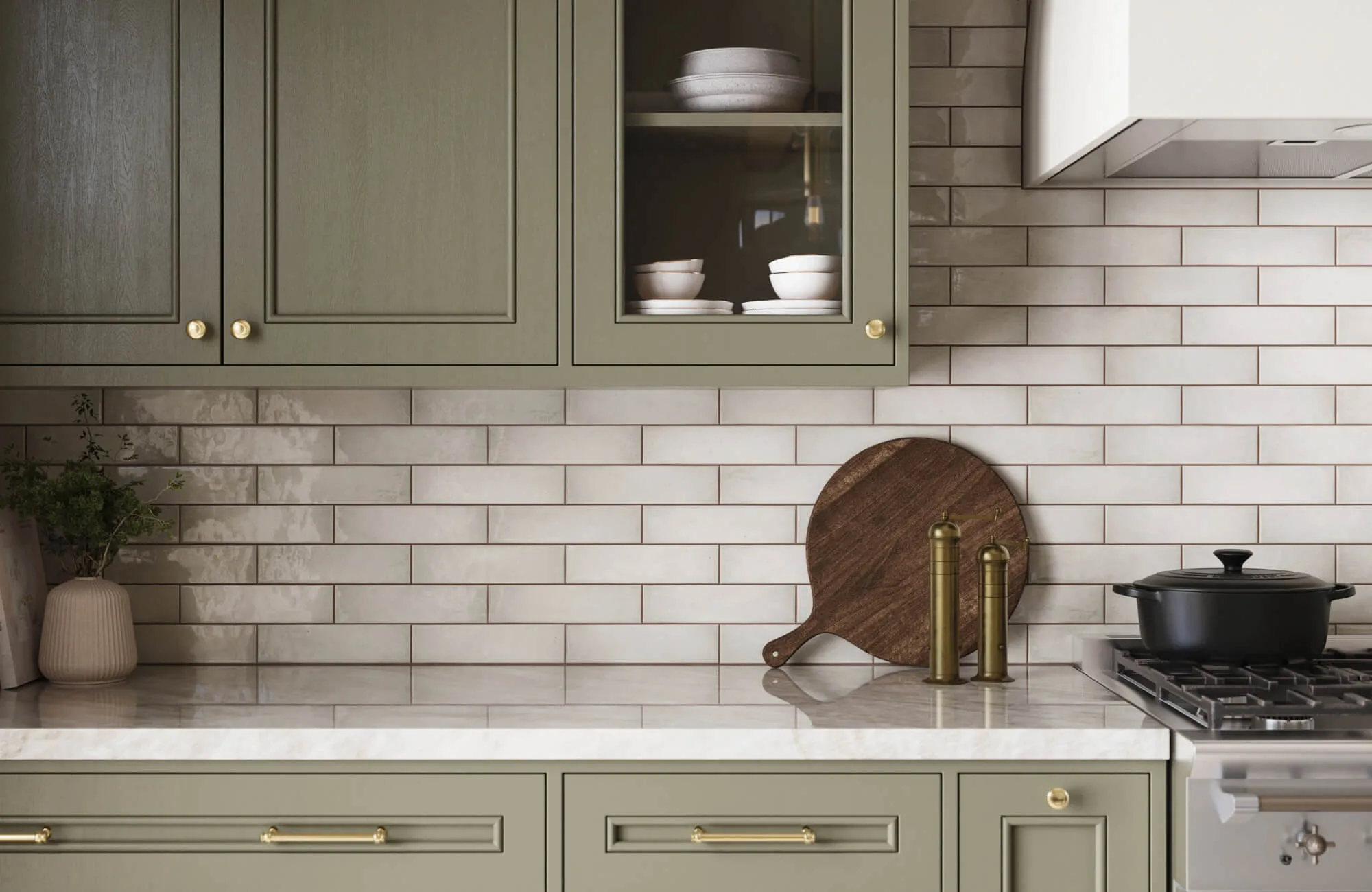
Smaller subway tiles introduce more grout lines, adding texture and visual movement to the backsplash. In compact areas, this added detail can bring energy and intention to the wall, but when the backsplash extends across a long surface, the same effect can feel visually crowded.
This balance is illustrated in the photo above, where Edward Martin’s Natasha 2x6 Glossy Porcelain Tile in Amber Grey creates subtle rhythm through its smaller scale while still maintaining a clean, composed appearance across the full backsplash.
Larger subway tiles, by contrast, cover more area with fewer breaks, resulting in a calmer and more continuous appearance. When a backsplash runs the full length of the counter, these larger formats help the wall read as a single, cohesive surface rather than a series of segmented sections. In general, the tile size should feel proportional to both the length and height of the backsplash, allowing it to support the space without drawing unnecessary attention.
Ceiling Height and Tile Dimensions
Tile dimensions play a subtle role in how tall or grounded a kitchen feels. Longer horizontal tiles draw the eye across the wall, making the space appear wider and more open. This approach is particularly effective in kitchens with lower ceilings, where emphasizing width helps avoid drawing attention to vertical limitations.
Tiles with a stronger vertical emphasis have the opposite effect, gently guiding the eye upward. In kitchens with higher ceilings or open shelving, this vertical movement helps the backsplash feel connected to the surrounding architecture rather than visually truncated. Aligning tile orientation with the desired perception of the room ensures the backsplash enhances the space as a whole, not just its own surface.
Small Kitchens vs. Open Layouts
In smaller kitchens, tile size plays an important role in maintaining visual balance. Oversized tiles can feel disproportionate when the backsplash area is narrow, while very small tiles may introduce too much visual activity. Mid-sized subway tiles often provide a comfortable middle ground, adding definition without making the wall feel crowded.
Open-plan kitchens allow for greater flexibility. In these spaces, larger subway tiles often work well by creating a visual connection between the kitchen and the surrounding areas. A backsplash with a calm, continuous appearance supports the overall flow of the layout, allowing the kitchen to feel integrated rather than overly emphasized.
Standard Subway Tile Sizes And When They Work Best
Although subway tiles share a recognizable shape, changes in size significantly affect how they function within a kitchen. Understanding where each size performs best can help you narrow your options and choose a backsplash that feels both practical and well-suited to the space.
Classic 3x6 Tiles
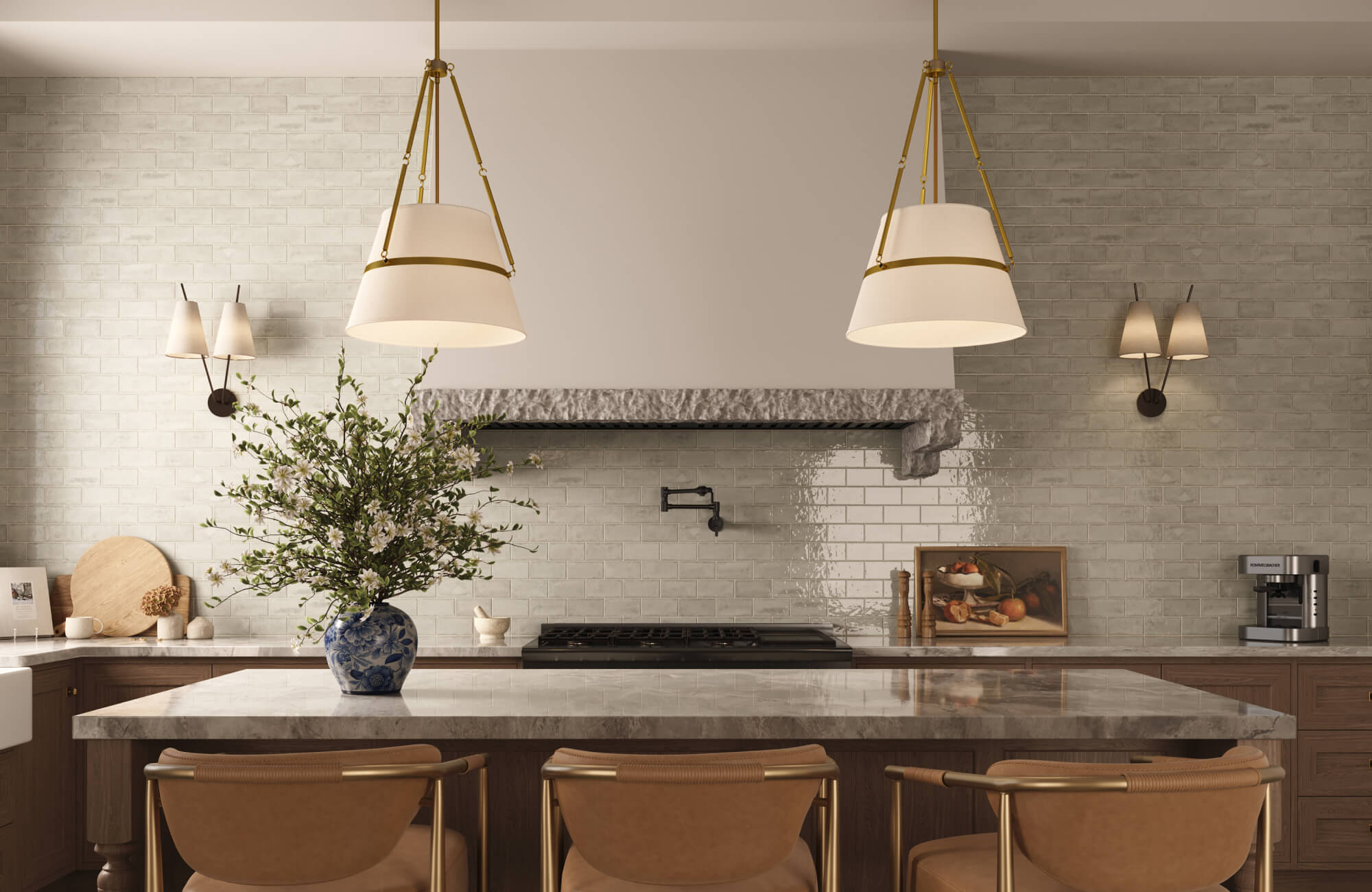
The 3x6 subway tile remains a popular choice for backsplashes because of its familiar size and adaptability across a range of kitchen layouts. It performs especially well in spaces where the backsplash is intended to support the overall design rather than act as a focal point, making it a reliable option for traditional and transitional kitchens with visually prominent cabinetry and countertops.
This suitability is illustrated in the photo featured above, where Edward Martin’s Graham 3x6 Glossy Ceramic Tile in Off White demonstrates how the classic size adds light reflection and surface texture without overpowering surrounding finishes.
Because of its smaller scale, the 3x6 format is particularly effective in kitchens with shorter backsplash heights or detailed cabinet profiles. In these situations, the size allows for clean alignment and minimal cutting while still introducing rhythm and visual interest along the wall.
Elongated Formats
Elongated subway tiles, such as 3x12 or 4x16, introduce a clear sense of movement across the backsplash. Their length naturally draws the eye along the wall, making them well-suited to long backsplash runs or kitchens with clean, linear layouts.
These formats are often chosen to create a more visually streamlined surface. With fewer grout lines, the backsplash reads as a continuous plane, which supports a modern aesthetic. Elongated tiles can also help minimize visual disruption around outlets and corners, contributing to a more refined and cohesive finish.
Square And Near Square Options
Square and near-square subway-adjacent tiles introduce a more structured feel to a backsplash. Rather than emphasizing movement, these proportions highlight symmetry and order, which can suit kitchens designed around balance and repetition.
These formats do require careful planning. When the tile size does not align cleanly with the backsplash dimensions, the result can be awkward cuts or a cluttered appearance. For this reason, square and near-square tiles are best suited to smaller sections or kitchens where the backsplash area is simple and uninterrupted.
Balancing Tile Size With Countertop And Cabinet Scale
A backsplash functions as part of a larger visual composition rather than a standalone element. Choosing a tile size that relates thoughtfully to the surrounding cabinetry and countertops helps the overall design feel cohesive and intentional.
Cabinet Door Proportions
Cabinet doors establish the primary visual rhythm in most kitchens. Large, flat cabinet panels pair more naturally with larger subway tiles that reflect their scale, while smaller doors or detailed paneling are often better suited to tiles with finer proportions. The goal is typically harmony rather than contrast. When the tile size aligns with the scale of the cabinetry, the backsplash feels like a natural extension of the kitchen rather than an added layer competing for attention.
Countertop Thickness And Edge Profiles
Countertops with a thick profile or pronounced edge detail carry noticeable visual weight. When paired with very small tiles, the backsplash can feel secondary or underpowered, whereas larger subway tiles are better able to stand alongside more substantial surfaces.
Slim countertops with minimal edge profiles allow for greater flexibility. In these cases, smaller or mid-sized tiles can introduce texture and interest without competing for attention. The goal is to balance visual weight so the countertop and backsplash feel equally considered and naturally aligned.
Upper Cabinet Height Variations
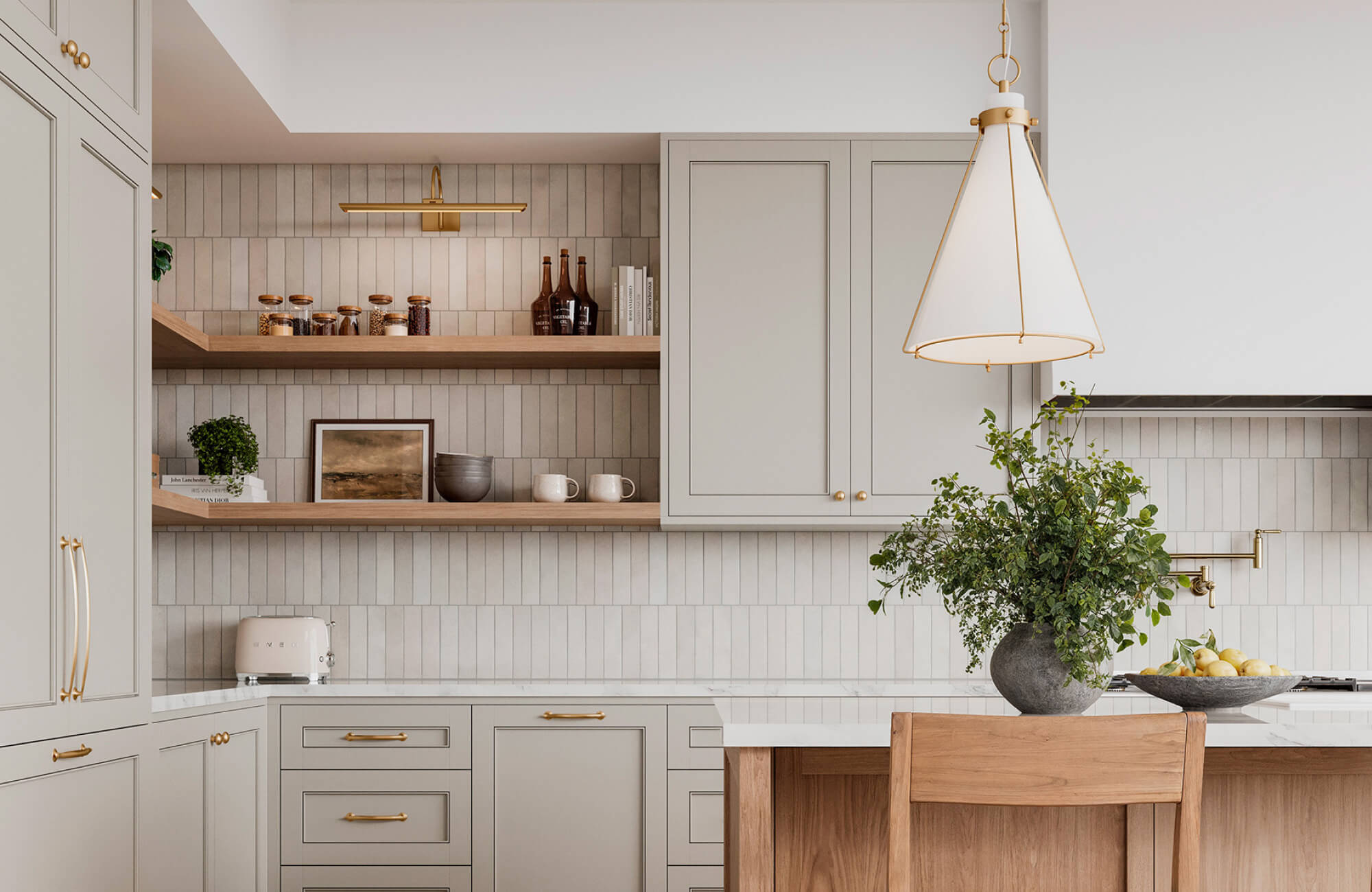
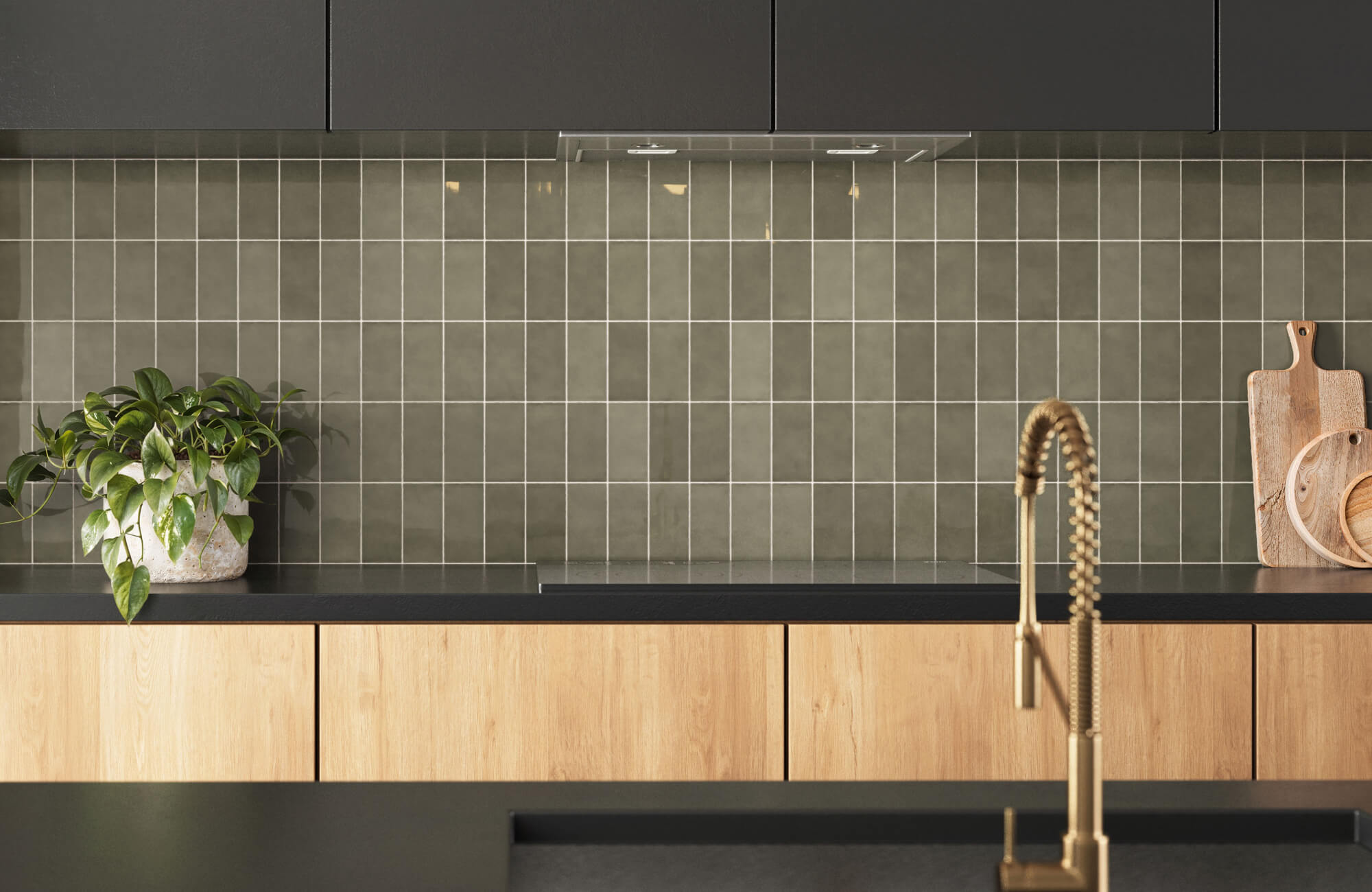
Backsplash height plays an important role in determining the most suitable tile size, particularly in relation to surrounding cabinetry. Short backsplash areas work best with tiles that fit cleanly and require minimal cutting, as larger tiles can feel cramped when too many partial pieces are needed and can disrupt the visual balance between cabinets and countertop.
This relationship comes through in the photo featured above, where Edward Martin’s Juliet 2.5x10 Matte Porcelain Tile in Pearl fits comfortably within the limited vertical space created by upper cabinets and open shelving, staying in proportion with the cabinetry and countertop so the backsplash feels balanced rather than crowded.
When cabinets extend to the ceiling or leave a more generous backsplash area, larger tiles have room to breathe and feel properly scaled. Selecting tile size with cabinet height in mind helps preserve balance among the backsplash, cabinets, and countertops, resulting in an installation that feels intentional and well planned.
Grout Lines And Installation Impact By Tile Size
Tile size affects more than just the appearance of a backsplash; it also influences installation and long-term performance. These practical considerations often become most noticeable after the project is complete.
Grout Line Frequency
Smaller tiles naturally create more grout lines, which adds visual texture but also increases the amount of cleaning required. When ease of maintenance is a priority, minimizing grout lines can make day-to-day upkeep more manageable. By comparison, larger tiles reduce the number of grout joints, leading to a cleaner overall appearance and less routine maintenance. This difference becomes especially noticeable behind ranges and sinks, where splashes and residue are more likely to collect.
Cutting And Outlet Alignment
Tile size plays a significant role in how easily installers can work around outlets, windows, and corners. Smaller tiles provide greater flexibility, as cuts tend to be less noticeable, while larger tiles require more precise planning to avoid uneven edges or narrow slivers that can draw attention. When possible, selecting a tile size that aligns well with outlet spacing helps minimize visual disruption. This thoughtful planning contributes to a cleaner, more polished finished appearance.
Installation Time And Cost Considerations
Smaller tiles typically require more time to install due to the added handling and alignment involved. Larger tiles can be installed more quickly, but they require careful layout planning to prevent mistakes that are more visible at a larger scale. Balancing installation efficiency with visual goals helps keep the project on track. Selecting a tile size that supports both your design preferences and installation expectations often leads to smoother execution and more satisfying results.
Matching Tile Size To Kitchen Design Style
Tile size plays a subtle yet meaningful role in supporting the overall design direction of a kitchen. When the tile size aligns with the chosen style, the backsplash feels cohesive and intentional rather than visually forced.
Traditional And Farmhouse Kitchens
Smaller or classic subway tile sizes often feel most at home in traditional and farmhouse kitchens. Their proportions reflect the craftsmanship and attention to detail that are central to these styles. Layout choices such as offset patterns add warmth and visual interest without overwhelming the space. In this setting, the backsplash quietly supports the overall design, reinforcing the kitchen’s character without drawing focus away from it.
Modern And Contemporary Kitchens
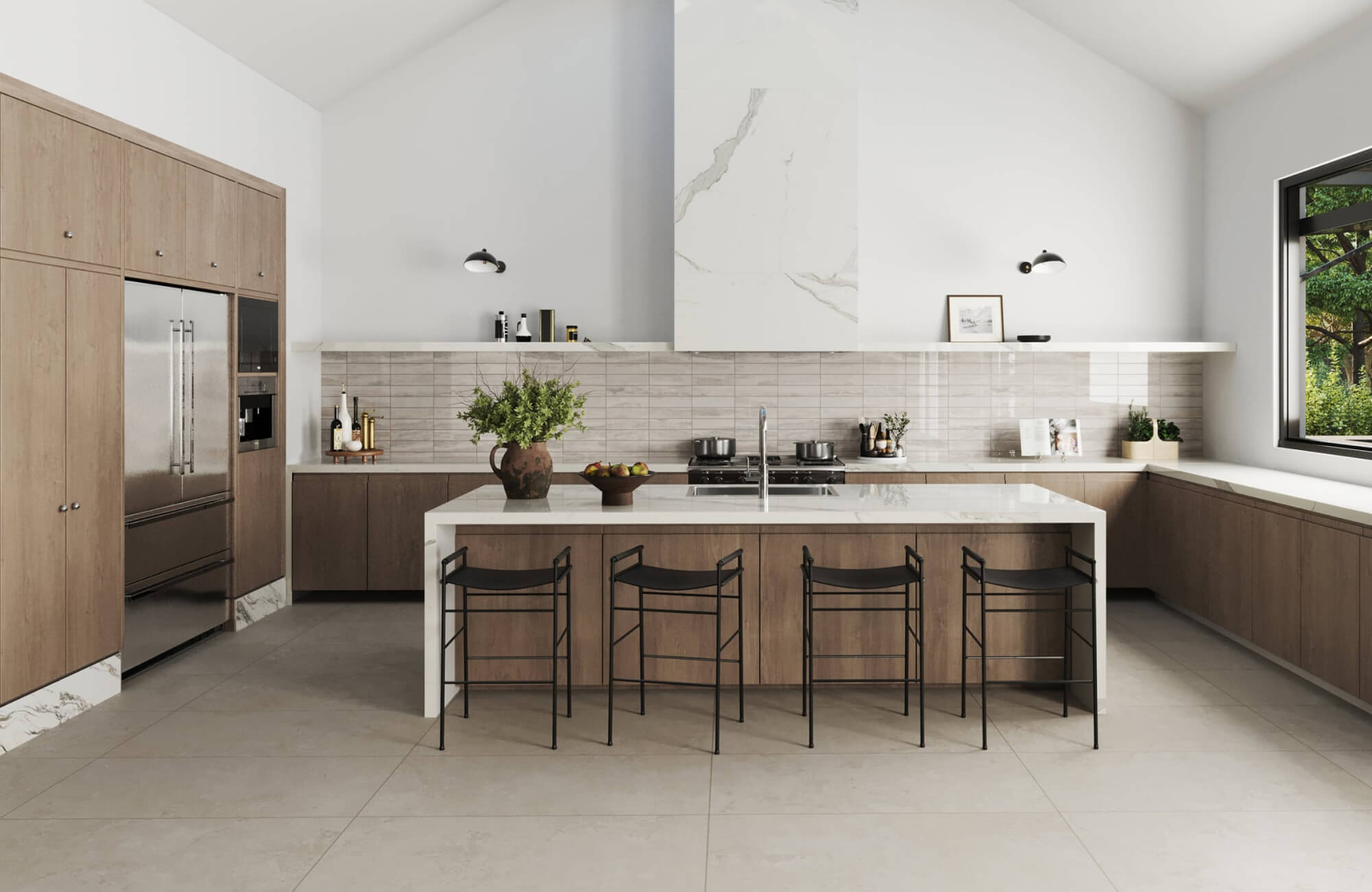
Modern kitchens often benefit from a more restrained approach. Larger or elongated subway tiles reinforce clean lines and visual simplicity, helping reduce visual noise so elements like cabinetry and lighting can take focus.
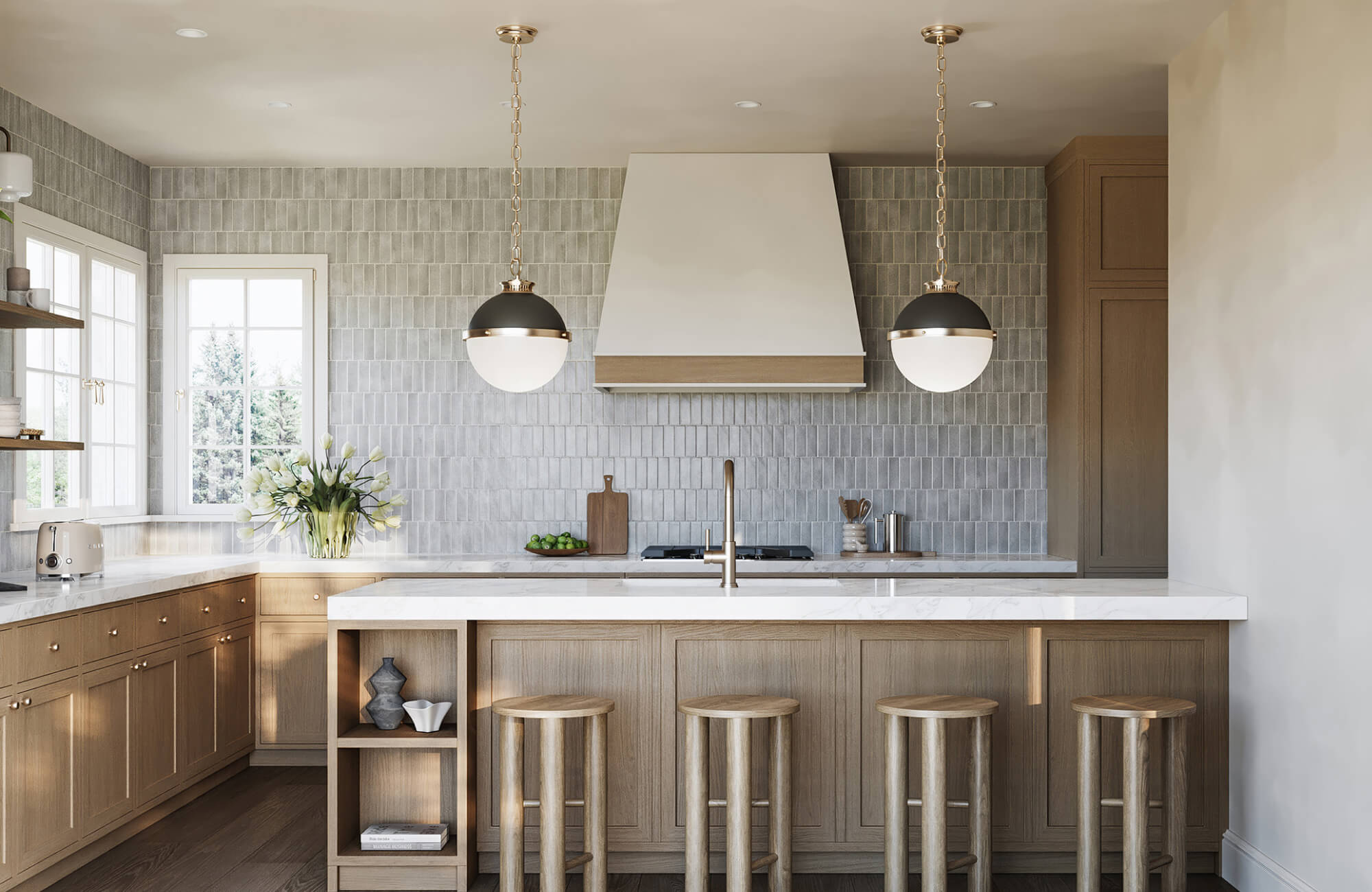
This relationship between tile size and design style is illustrated in the photo featured above, where Edward Martin’s Harley 3x12 Polished Porcelain Tile in Greige complements the modern architecture through its elongated proportions and understated finish, reinforcing the kitchen’s contemporary character rather than competing with it.
In these spaces, spacing and alignment become especially important. Precise installation enhances the crisp, intentional look that modern kitchens rely on, ensuring the backsplash feels refined rather than distracting.
Eclectic And Transitional Spaces
Eclectic and transitional kitchens blend a range of influences, so tile size works best when it acts as a connector rather than a focal point. Mid-sized subway tiles are often a strong choice because they balance traditional proportions with modern simplicity. Choosing a size that feels neutral allows the backsplash to adapt smoothly to a mix of materials and finishes. This approach helps the design feel cohesive without pulling the space too strongly in one stylistic direction.
Functionality And Daily Use Considerations
A backsplash should support the way the kitchen is used each day. Tile size plays a subtle yet meaningful role in long-term comfort, maintenance, and overall satisfaction.
Cooking Frequency And Splash Zones - H3
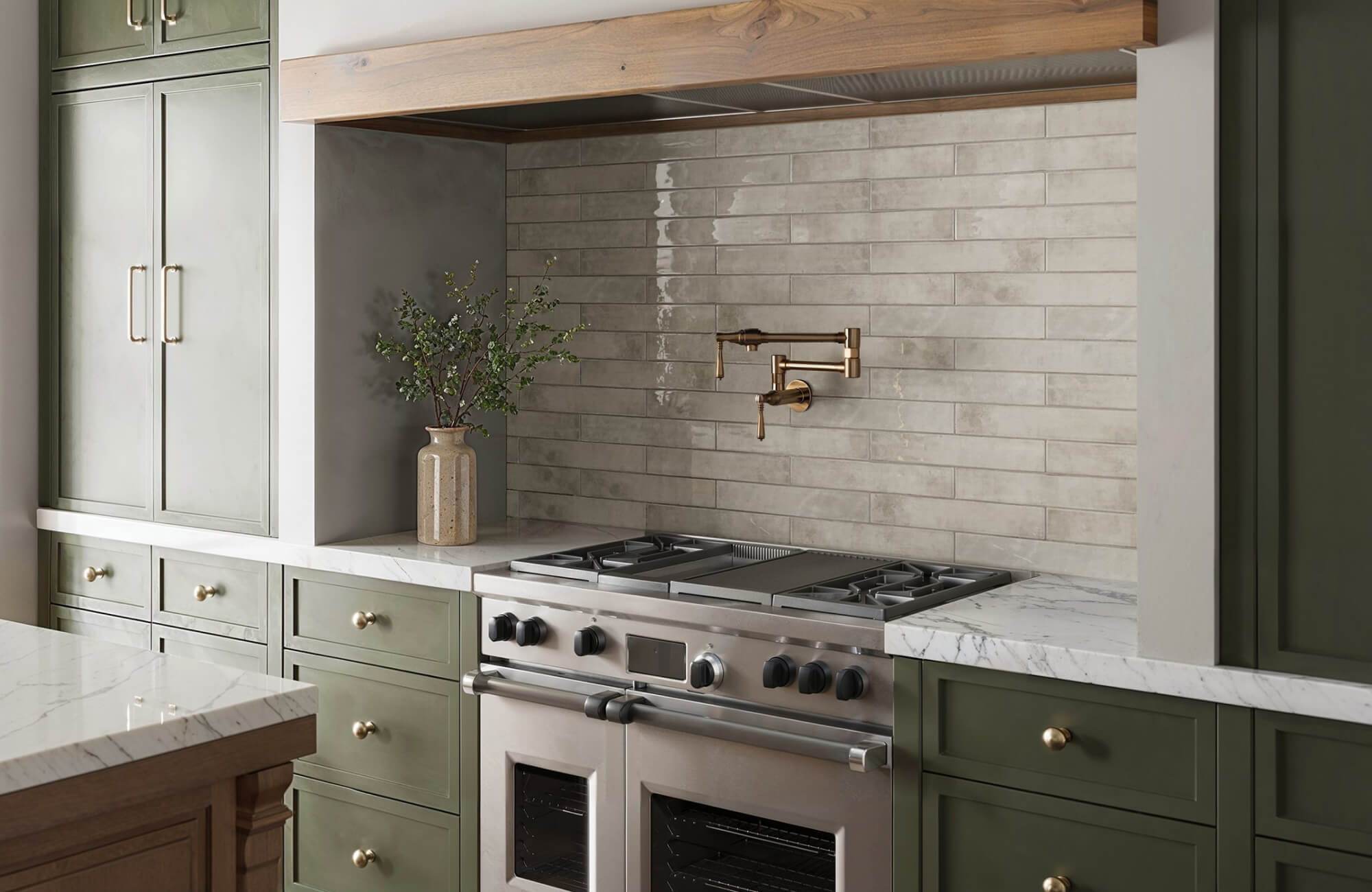
When cooking is a regular part of daily life, backsplash performance becomes especially important. Larger tiles with fewer grout lines are generally easier to wipe down and less prone to collecting residue, particularly in high-splash areas.
This practical advantage is evident in the photo displayed above, where Edward Martin’s Jaden 2.5x16 Glossy Ceramic Tile in Tender Gray is used behind the range, creating a streamlined surface that simplifies cleanup and holds up well to frequent cooking.
Smaller tiles can still work well in busy kitchens, but they typically require more frequent cleaning. Selecting a tile size that aligns with your cooking habits helps ensure the backsplash remains practical and easy to live with over time.
Long Term Maintenance Preferences
Maintenance expectations vary from one household to another. Some homeowners appreciate detailed surfaces and are comfortable with the extra care they require, while others prioritize simplicity and ease of upkeep. Tile size has a direct impact on how much attention a backsplash needs over time, so being realistic about maintenance preferences can help guide a more satisfying choice. Over the long term, this consideration often matters more than initial appearance.
Resale And Timeless Appeal
Tile size trends may shift over time, but proportion remains a consistent factor in good design. Sizes that feel well-balanced within the space tend to age more gracefully than extreme choices. Selecting a tile size that complements the kitchen as a whole, rather than following short-term trends, helps the backsplash remain relevant and appealing over the long term. This approach also helps the kitchen appeal to a wider range of future buyers.
Choosing The Right Subway Tile Size With Confidence
Choosing the right subway tile size for a kitchen backsplash is less about strict rules and more about understanding how scale, layout, and daily use come together in your space. The goal is for the tile to support the kitchen as a whole rather than draw unnecessary attention to itself. By taking proportions, surrounding elements, and maintenance expectations into account, you can make a choice that feels both practical and considered. When tile size aligns with the kitchen’s design and the way it is used, the backsplash feels like a natural, lasting part of the space rather than a choice you second-guess later.
If you would like guidance tailored to your kitchen, our design team is here to help. Contact us to explore design services and get personalized support in selecting the right tile size for your space.
Follow us on Instagram
@EDWARD.MARTIN
)
)
)
)
)
)
)
)
)
)
)
)
)
)
)
)