Subway tiles bring a clean, architectural look to outdoor spaces while offering the durability needed for areas exposed to sunlight, moisture, temperature shifts, and everyday foot fall. However, the size you choose has a direct effect on more than appearance. It influences grout line visibility, surface texture, maintenance needs, slip resistance, drainage, and how naturally the tiled area connects with the surrounding landscape or exterior architecture.
This guide explores how to choose the best subway tile size for patios, terraces, balconies, garden walkways, and other outdoor applications. You’ll learn when larger formats can create a smoother, more expansive look, when smaller subway tiles provide better definition and grip, and how material, layout, and installation details all contribute to long-term performance. With the right balance of scale, finish, and placement, subway tiles can make outdoor areas feel more cohesive, practical, and intentionally designed.

Darcy Outdoor Counter Stool in Cream pairs with Jameson 8 x 48 Matte Porcelain Tile in Latte and Lilah 6 x 6 Glossy Ceramic Tile in Opal to create a layered outdoor kitchen with warm flooring, soft seating texture, and a reflective green tile backdrop.
Patios
Patios function as outdoor living rooms, often carrying the heaviest mix of furniture, foot fall, dining activity, and weather exposure. Because of that, subway tile size should be chosen with both visual proportion and day-to-day performance in mind. Larger subway tiles, such as 4x12 or 4x16 inches, can give open patios a more streamlined appearance by reducing the number of grout joints across the surface. Fewer grout lines often make the space feel calmer and more expansive, which works especially well for modern patios, outdoor kitchens, and entertaining areas where a clean, uninterrupted finish is preferred.
Standard subway tile sizes, such as 3x6, 3x12, or 4x8 inches, can be a better fit when the patio needs more texture, pattern, or visual definition. A smaller format can be especially effective on vertical patio features, where the goal is to add surface interest without making the floor plane feel busy. Edward Martin's Natasha 2 x 6 Glossy Porcelain Tile in Oat illustrates this balance well: its slim rectangular shape creates a fine, repeated rhythm, while the soft oat coloring keeps the overall look warm and restrained. In an outdoor kitchen or built-in bar area, that combination can help distinguish the feature from surrounding paving, countertops, and landscaping while still feeling connected to the broader patio design.
Material selection is just as important as size. Porcelain subway tiles are often a strong choice for patios because they are dense, low-porosity, and better suited to moisture and temperature changes than many softer materials. For outdoor floors, prioritize tiles rated for exterior use with a textured or slip-resistant surface rather than a glossy wall tile finish. The best patio tile size is ultimately the one that fits the scale of the space, supports safe movement, and complements the surrounding architecture without making the surface feel too busy or too plain.

Ramsey 24 x 24 Matte Porcelain Tile in Chalk and Sloane 24 x 24 Matte Porcelain Tile in Pebble create a quiet, tonal foundation for the terrace, allowing the textured wall, woven seating, and surrounding greenery to define the relaxed outdoor setting.
Terraces
Terraces are elevated outdoor spaces, often extending from the home's upper levels or positioned above ground, designed to offer open-air areas for leisure and dining. When selecting the best subway tile size for this setting, it’s essential to balance aesthetics with functionality, while accounting for exposure to outdoor elements. Larger subway tiles, such as 4x12 or 4x16 inches, create a smooth, seamless surface that visually expands the area by minimizing grout lines, which can otherwise trap dirt. In contrast, smaller subway tiles, such as 3x6 or 2x4 inches, are ideal for defining seating or dining areas, introducing subtle design accents that enhance the space without overpowering it.
Elongated subway tiles can also be useful on terrace walls, planter surrounds, bar fronts, or other vertical surfaces where the tile is meant to guide the eye rather than dominate the setting. Edward Martin's Aurelia 2.5 x 11 Glossy Porcelain Subway Tile in Seafoam is a strong example of this approach. Its narrow, extended profile creates a sense of movement, while the soft seafoam glaze brings in a color reference that feels connected to open air, greenery, and outdoor light. In a terrace setting with neutral furniture or stone textures, this type of tile can add dimension and freshness without making the design feel overly decorative.
Additionally, it’s important to factor in drainage, as tile size directly impacts how efficiently water flows off the terrace—ensuring lasting durability and preventing potential water damage. A great tip to maintain cohesion is to align terrace tile patterns with the home’s architectural style. Larger subway tiles in neutral tones create visual continuity, while patterned layouts or varying tile sizes add definition to specific areas without disrupting the overall balance.

Ramsey 12 x 48 Grip Porcelain 2cm Paver Tile in Putty, Wren 12 x 24 Chiseled Porcelain Tile in Oat, and Wilder Exterior Wall Sconce In Textured Black work together to balance clean paving, textured wall surfaces, and architectural lighting around the courtyard water feature.
Balconies
Balconies extend your living space, providing a small yet inviting outdoor area to relax and enjoy the view. Choosing the right subway tile size for this space plays a key role in maximizing it without making it feel crowded. Smaller subway tiles, such as 3x6 or 4x8 inches, allow for intricate patterns that introduce character while fitting well within compact areas. A slightly larger option, like 4x12-inch tiles, can create a more elongated appearance by guiding the eye along the floor, subtly adding a sense of length. Additionally, laying tiles diagonally in narrow balconies can expand visual width, offering a simple yet effective way to make the area feel more open and inviting.
In compact outdoor areas, tile can also be used to define a focal point rather than covering every surface. Edward Martin's Miley 4.5 x 9.1 Glossy Porcelain Tile in Indigo demonstrates how a deeper color and glossy finish can bring depth to a balcony, courtyard, or small exterior feature. Its indigo surface has a layered, reflective quality that responds well to changing natural light, while the repeated linear pattern creates a sense of height and movement. Used around a water feature, planter wall, or accent surface, this type of tile can make a limited footprint feel more architectural without relying on heavy ornamentation.
Since balcony tiles face outdoor elements year-round, durability plays a crucial role in their selection. Textured subway tiles are especially beneficial for sunlit areas, as they minimize glare and enhance traction in wet conditions. By thoughtfully balancing aesthetics with resilience, you can create a balcony that complements the surrounding architecture while standing up to weather changes with long-lasting beauty.

Carter 24 x 48 Grip Porcelain 2cm Paver Tile in Fossil gives the lounge area a broad, grounded surface that contrasts naturally with the grass joints, planted borders, black pergola, and soft outdoor seating.
Garden Walkways
Garden walkways are more than just practical paths—they shape the flow of the landscape and add charm to outdoor spaces. Choosing the right subway tile size for these walkways helps create a durable and visually appealing route that complements the surrounding greenery. Smaller subway tiles, such as 3x6 or 4x8 inches, are ideal for detailed patterns like herringbone or brick, adding texture and character to the walkway. On the other hand, larger options like 6x12 inches reduce grout lines, offering a smoother, more expansive appearance while providing a stable walking surface.
However, it's important to note that while subway tiles can work for certain decorative elements in walkways, they may not be the best choice for full pathways. Their uniform, smooth shape contrasts with the irregular, organic appearance typically desired in garden settings. Instead, consider using subway tiles selectively—such as for borders, accents, or stepping paths—to subtly introduce structure without disrupting the natural flow of the garden. Edward Martin's Dax 6 x 24 Matte Porcelain Tile in Forest is a useful example of this more restrained approach. Its elongated format can reinforce direction along a path, while the matte forest color connects naturally with planting, grass joints, and shaded outdoor structures. Rather than competing with the landscape, a tile with this type of proportion and finish can help frame movement through the garden in a quiet, architectural way.
This approach ensures the walkway remains cohesive with the outdoor environment while benefiting from the durability subway tiles provide.

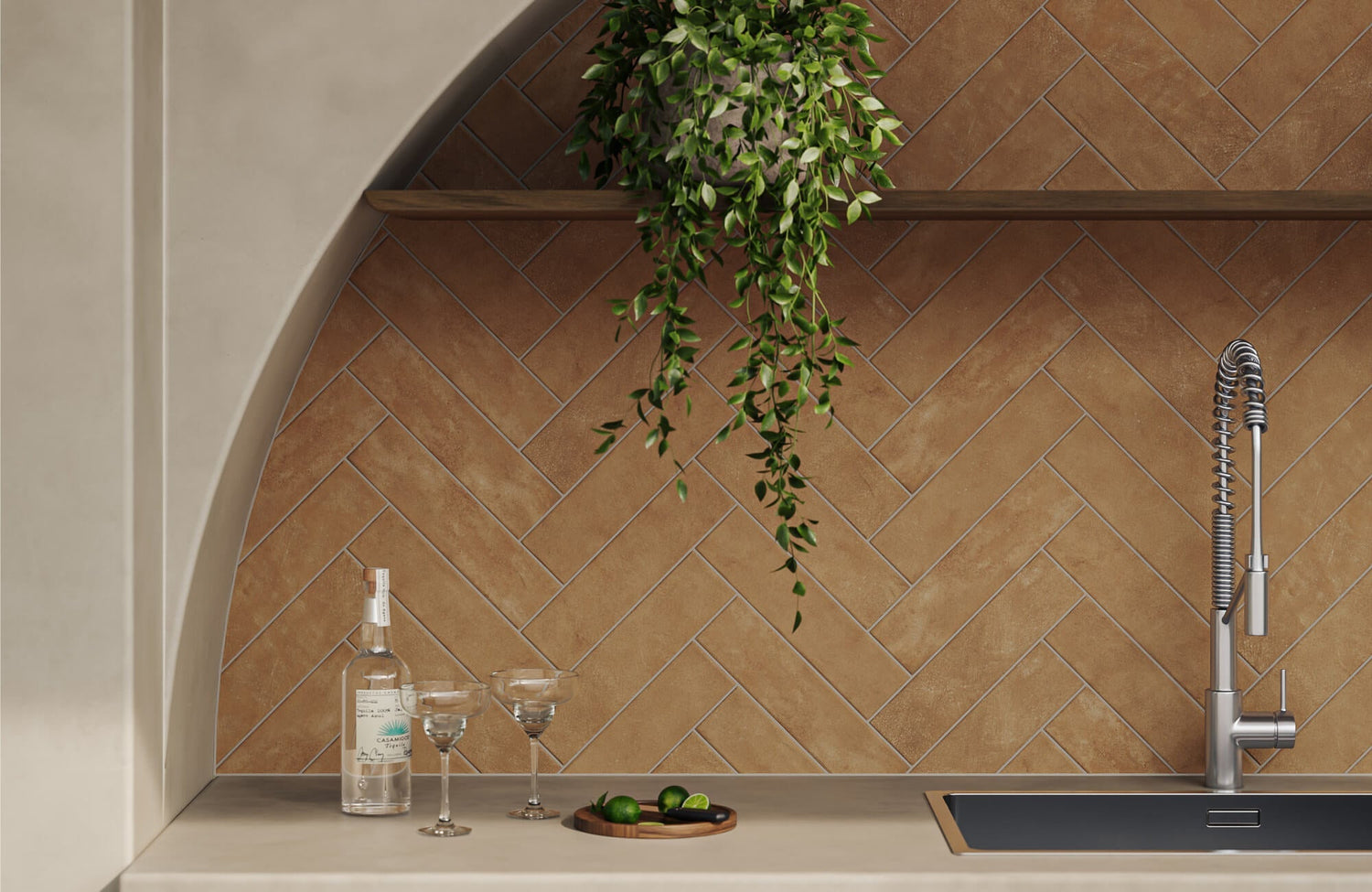
Juliet 2.5 x 10 Matte Porcelain Tile in Rust uses warm brown variation, a slim rectangular format, and visible grout rhythm to add earthy texture and structured movement to outdoor tile applications.
Subway Tile Size and Color Coordination
Color and tile size work together to shape how an outdoor surface is perceived. A subway tile may be modest in format, but its proportions, grout spacing, finish, and color can all affect whether a space feels open, structured, warm, minimal, or visually busy. In outdoor settings, where tile often sits alongside landscaping, furniture, exterior walls, decking, or stonework, this relationship becomes especially important. The goal is not simply to choose an attractive color, but to select a size and tone that support the scale and function of the space.
Using Color to Influence Scale
Larger subway tiles in soft neutrals, warm whites, pale grays, sand tones, or muted earth shades can help patios and terraces feel broader and more continuous. Because larger formats create fewer grout interruptions, they allow the eye to move more easily across the surface. This can be especially effective in open entertaining areas, where a calm, cohesive field of tile helps furniture, planting, and architectural details stand out without making the floor feel overly patterned.
Smaller subway tiles naturally introduce more rhythm because their repeated shape and grout lines become more visible. When paired with deeper tones, textured finishes, or contrasting grout, they can add definition to compact balconies, accent walls, stair risers, garden borders, or transitional areas. Edward Martin's Juliet 2.5 x 10 Matte Porcelain Tile in Rust shows how this can work in a warmer outdoor palette. Its elongated shape keeps the layout refined, while the rust, clay, and brown variations create an earthy rhythm that feels compatible with wood, stone, and surrounding greenery. The matte surface also helps soften the color, giving the tile a grounded quality rather than a high-shine decorative effect.
Creating Cohesion Between Outdoor Zones
In multi-functional outdoor spaces, size and color coordination can help connect separate areas while still allowing each zone to have its own identity. For example, a patio may use a larger subway tile in a neutral tone to create a clean foundation, while a nearby walkway or balcony uses a smaller size from the same color family for added texture and movement. This creates variation without visual disruption.
Grout color also plays an important role. A closely matched grout softens the layout and makes the surface appear more seamless, while a slightly contrasting grout highlights the subway tile shape and pattern. For outdoor applications, this choice should be guided by both design intent and maintenance expectations, since lighter grout may require more frequent cleaning in exposed or busy areas.
If you want to see how different subway tile sizes, colors, and layouts will affect your outdoor space, try our Augmented Reality (AR) Visualization Tool. It offers a practical way to preview options for patios, terraces, balconies, or walkways before committing to a final design direction.

Miley 4.5 x 9.1 Glossy Porcelain Tile in Water brings a soft blue vertical rhythm to the pool edge, while Bowden 24 x 24 Grip Porcelain 2cm Paver in Canvas creates a light, practical surface around the lounge area.
Installation Tips and Maintenance
A successful outdoor subway tile installation begins with the substrate. The surface should be structurally sound, clean, level, and properly sloped so water can move away from the tiled area rather than collecting beneath furniture or along grout joints. Outdoor tile assemblies are constantly exposed to expansion, contraction, moisture, and temperature changes, so preparation has a direct effect on how well the finished surface performs over time. Before installation, confirm that the selected subway tiles are approved for exterior use and appropriate for the specific application, especially if they will be installed on floors rather than vertical surfaces.
Using the right setting materials is equally important. Exterior-rated mortar helps maintain adhesion through changing weather conditions, while weather-resistant grout reduces the risk of moisture intrusion, staining, and premature deterioration. Tile spacers help maintain consistent grout joints, and a notched trowel ensures even mortar coverage behind each tile. This becomes especially noticeable with linear designs, where even small inconsistencies can interrupt the pattern. Edward Martin's Miley 4.5 x 9.1 Glossy Porcelain Tile in Water is a good example of why precision matters: its pale blue tone, reflective glaze, and repeated narrow lines draw attention to alignment, spacing, and grout consistency. In wet outdoor applications such as pool edges, spa surrounds, or water features, those installation details influence both the finished appearance and long-term performance.
Maintenance should be simple but consistent. Sweep or rinse outdoor subway tiles regularly to prevent grit, leaves, and mineral deposits from settling into grout lines. Mild soap and water are usually enough for routine cleaning, while harsh acidic cleaners should be avoided unless the tile and grout manufacturer specifically approves them. Grout may need periodic sealing depending on the product used, especially in busy areas or spaces exposed to frequent moisture. With proper installation and routine care, outdoor subway tiles can retain their color, structure, and polished appearance while continuing to support the practical demands of patios, terraces, balconies, and walkways.
Choosing Subway Tile Sizes That Bring Outdoor Spaces Together
The right subway tile size can bring structure, proportion, and long-term practicality to outdoor spaces. Larger formats can create a cleaner, more expansive look for patios and terraces, while smaller subway tiles can introduce texture, definition, and pattern in balconies, walkways, and accent areas. When size is considered alongside material, finish, grout, color, and installation conditions, the result is an outdoor design that feels cohesive rather than pieced together.
If you’re planning to upgrade your outdoor areas with subway tiles, we offer a wide selection to suit different design styles and functional needs. For additional guidance, contact Edward Martin to explore the tile sizes, finishes, and layouts that can best support your outdoor design vision.