Porcelain checkerboard tiles often appear in kitchens, bathrooms, and entryways where both style and durability matter. Their classic pattern immediately adds structure to a room, but many homeowners choose them for another reason: they handle moisture extremely well. Thanks to their dense composition and low water absorption, porcelain tiles can stand up to humidity, spills, and frequent cleaning without losing their strength or appearance. This makes them a reliable option for areas where water exposure is common. In this blog, we’ll take a closer look at why porcelain checkerboard tiles resist moisture so effectively and where they perform best throughout the home.

Why Are Porcelain Checkerboard Tiles Highly Water-Resistant?
Porcelain checkerboard tiles handle moisture well because of how they are made. Their dense structure and low water absorption allow them to perform reliably in spaces where spills, humidity, or water exposure are common. By looking at the materials and production process behind porcelain, it becomes easier to see why these tiles are such a dependable choice for kitchens, bathrooms, and other moisture-prone areas.
The Dense Composition of Porcelain Tiles
The water resistance of porcelain tiles begins with the materials used to make them. Manufacturers blend refined clay with minerals such as feldspar and quartz, creating a mixture that forms a dense and uniform tile body. This blend is carefully processed to remove impurities and ensure a consistent structure before the tiles are shaped and fired. Compared with many other ceramic materials, porcelain already starts with a tighter composition that naturally limits porosity. Because of this dense structure, porcelain tiles absorb very little moisture over time, which is a key reason they perform so well in areas exposed to water.
High-Temperature Firing and Vitrification
Another important factor is the firing process used to produce porcelain tiles. During manufacturing, tiles are fired at temperatures that often exceed 1200°C. At these temperatures, the raw materials fuse together and form a tightly bonded structure through a process known as vitrification. This stage greatly reduces the number of microscopic pores within the tile. With fewer pores, moisture has far fewer places to enter the surface. The result is a tile that can handle wet environments while maintaining its strength and stability.
How Porcelain Compares to Ceramic Tiles
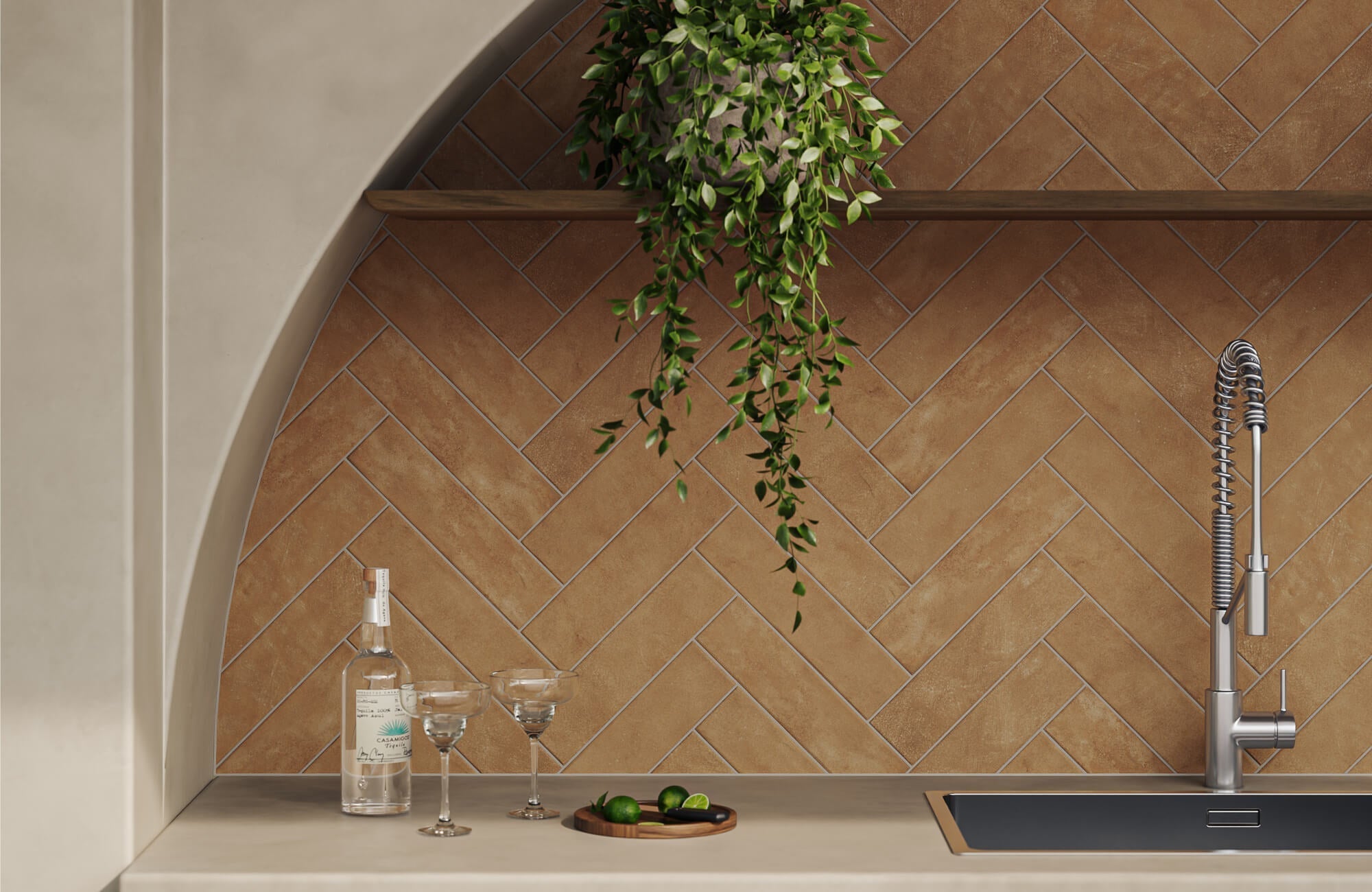
Porcelain tiles are often compared with ceramic tiles because both are made from clay-based materials. Ceramic tiles tend to use slightly coarser clay and are fired at lower temperatures, which leaves them a bit more porous than porcelain. Because of this, ceramic tiles are commonly used on walls or backsplashes where direct water exposure is less constant. A good example is our Ellie 5x5 Matte Ceramic Tile in Tan, shown in the image above, which works beautifully for vertical surfaces in kitchens and bathrooms. While ceramic tiles remain durable and stylish, porcelain tiles generally perform better in areas where moisture is more frequent.
Comparing Porcelain to Natural Stone
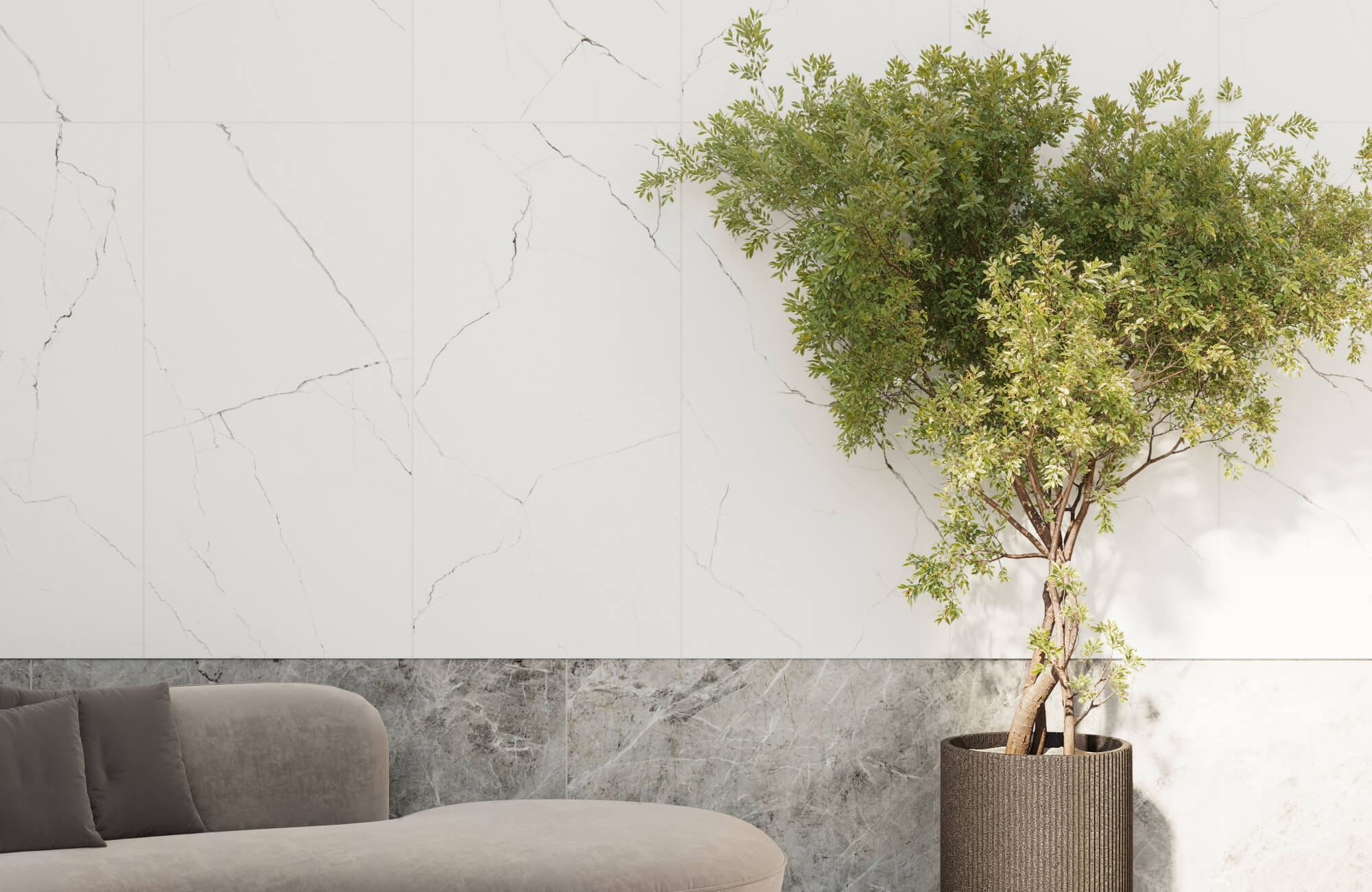
Natural stone tiles such as marble or granite bring beautiful texture and character to a space, but their performance in wet areas can vary. Many stone materials are naturally porous and require sealing to help prevent water penetration and staining. Porcelain tiles offer a simpler alternative because their dense structure already limits water absorption. This makes them easier to maintain in spaces like bathrooms, laundry rooms, and kitchens. For homeowners looking for a balance of durability and low maintenance, porcelain checkerboard tiles often provide a practical solution without sacrificing visual appeal.

Top Reasons to Use Porcelain Checkerboard Tiles in Your Home
Porcelain checkerboard tiles bring together classic design and everyday practicality. Their ability to handle moisture, resist stains, and maintain their appearance over time makes them a dependable option for many areas of the home. When paired with the timeless checkerboard pattern, porcelain tiles offer a balance of visual character and long-lasting performance.
A Design with Lasting Visual Appeal
Checkerboard patterns have been used in architecture and interiors for centuries. From Roman mosaics to historic European buildings, the alternating squares have remained a recognizable and enduring design element. This pattern naturally creates rhythm and balance across a surface, which helps a room feel structured and visually interesting. The contrast between lighter and darker tiles also adds subtle depth without requiring complex patterns. Because of this long design history, checkerboard floors continue to feel both classic and relevant in modern homes.
Practical Performance in Everyday Spaces
Porcelain tiles are known for their durability and ability to handle everyday wear. Their dense structure resists water absorption, stains, and surface damage, which makes them especially suitable for kitchens, bathrooms, and laundry rooms. Spills, humidity, and frequent cleaning are less likely to affect porcelain compared with many other materials. This durability allows homeowners to enjoy a bold floor pattern without worrying about excessive maintenance. As a result, porcelain checkerboard tiles work well in spaces where both style and practicality are important.
A Bold Statement with Classic Proportions
Tile size can also influence how checkerboard patterns appear in a room. Smaller tiles often create intricate patterns that work well in compact areas or vintage-inspired spaces. Larger formats, on the other hand, can produce a cleaner and more dramatic effect across open floors. A good example is our Palmer 12x12 Checkerboard Matte Porcelain Tile in White and Grey, shown in the image above, which creates a balanced yet eye-catching surface in kitchens and other moisture-prone areas. Its matte finish helps reduce glare while adding subtle traction, making it well-suited for spaces like bathrooms, kitchens, and laundry rooms. The classic white-and-grey combination also makes it easy to coordinate with a wide range of interior styles.
Flexible Design Possibilities
One reason homeowners continue to choose checkerboard tiles is their flexibility in design. The pattern can be created with strong black-and-white contrasts or softer color combinations that feel more relaxed. Different grout colors, layouts, and tile sizes can also influence how bold or subtle the finished floor appears. In open floor plans, checkerboard tiles can help visually connect spaces such as kitchens and dining areas. Because the pattern works with both traditional and modern interiors, it remains a reliable option for a wide variety of home styles.

The Best Places to Install Porcelain Checkerboard Tiles
Porcelain checkerboard tiles work especially well in spaces where moisture, spills, and daily use are common. Their dense structure helps resist water absorption, which makes them reliable in rooms that experience humidity or frequent cleaning. Because of this balance between durability and design, they are often used in several key areas throughout the home.
Bathrooms
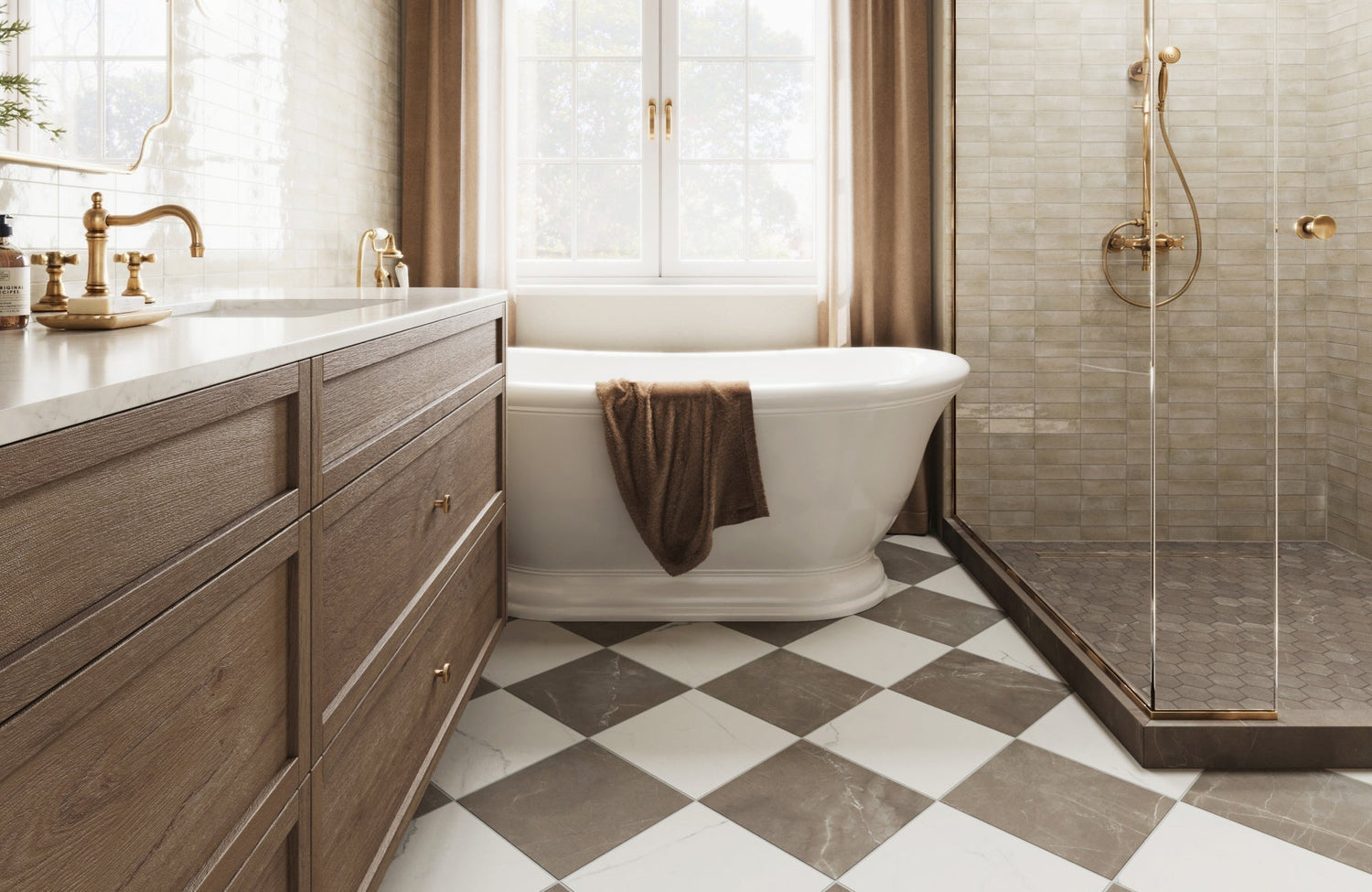
Bathrooms are one of the most common places to install porcelain checkerboard tiles because they handle humidity and water exposure so well. Their dense composition helps prevent moisture from penetrating the surface, which keeps the floor looking clean and stable over time. Many porcelain tiles also come in matte or textured finishes that improve traction, which is helpful in wet environments. A great example is our Leona 12x12 Checkerboard Matte Porcelain Tile in Marfil and Amani Bronze, shown in the image above. Its neutral checkerboard pattern adds timeless style while the slip-resistant matte finish makes it well-suited for bathroom floors. This combination allows homeowners to enjoy a decorative pattern while maintaining safety and practicality.
Kitchens, Laundry Rooms, and Entryways
Kitchens are another natural fit for porcelain checkerboard tiles because the surface can handle spills, splashes, and regular cleaning. The pattern also adds visual interest to a space that often relies on durable flooring materials. In laundry rooms, porcelain tiles perform equally well because they resist humidity and make cleanup simple when detergent or water spills occur. Entryways and mudrooms also benefit from porcelain’s durability since these areas experience frequent use throughout the day. The checkerboard pattern helps hide small traces of dirt while still creating a strong visual impression when someone enters the home. This mix of resilience and design flexibility makes porcelain checkerboard tiles suitable for several busy areas of the house.
Protecting Grout for Long-Term Performance
While porcelain tiles themselves resist water extremely well, grout lines can still allow moisture to penetrate if they are not properly maintained. Sealing grout helps create an extra barrier that reduces water absorption and prevents mold or mildew from forming between tiles. Reapplying sealant periodically helps maintain that protection over time. Regular cleaning with pH-neutral products also helps keep grout looking fresh without damaging the tile surface. When grout is properly sealed and maintained, the entire installation remains durable and easier to care for.
Visualizing Tile Layouts Before Installation
Planning a checkerboard layout can sometimes be difficult when trying to imagine how it will look in a finished space. To make this easier, Edward Martin offers an Augmented Reality (AR) tool that allows homeowners to preview different tile designs directly within their rooms. By using a smartphone or tablet, you can place tile patterns on your floors or walls and see how they interact with the surrounding space. This helps you experiment with color combinations, layouts, and tile sizes before making a final decision. Being able to visualize the design ahead of time often makes it easier to choose a pattern that fits the room confidently.

Transform Your Outdoor Spaces with Porcelain Checkerboard Tiles
Porcelain checkerboard tiles work just as well outdoors as they do inside the home. Their dense composition helps them resist moisture, temperature changes, and everyday wear, making them a dependable option for patios, porches, and poolside areas. With the right finish and installation, they can create outdoor surfaces that are both durable and visually striking.
Built for Outdoor Conditions
Outdoor areas often face constant exposure to weather, which makes material choice especially important. Porcelain tiles perform well in these conditions because their low water absorption helps prevent cracking during freeze-thaw cycles. Rain, humidity, and fluctuating temperatures are far less likely to affect porcelain compared with many natural materials. Unlike some stone surfaces that require sealing and frequent upkeep, porcelain tiles maintain their appearance with minimal maintenance. This durability makes them a practical option for homeowners who want outdoor surfaces that remain reliable year after year.
A Pattern That Enhances Outdoor Design
The checkerboard pattern brings structure and character to outdoor spaces while remaining surprisingly versatile. Depending on the color combination, the pattern can feel traditional, modern, or even slightly playful. Classic black-and-white layouts create a bold, timeless look, while softer tones offer a more relaxed atmosphere. Because the pattern naturally draws the eye, it works well in areas where homeowners want the flooring to become a design feature. Patios, courtyards, and covered porches can all benefit from the visual rhythm that checkerboard layouts introduce.
Safe and Long-Lasting Poolside Surfaces
Pool areas require materials that can handle water exposure without becoming slippery or worn over time. Many porcelain tiles are available with textured or matte finishes that improve traction, making them a safer option for wet environments. Their resistance to moisture also helps prevent staining and long-term surface damage. In addition, porcelain tiles resist fading when exposed to sunlight, which allows the pattern to maintain its color even after years outdoors. These qualities make porcelain checkerboard tiles a practical and attractive solution for pool decks and surrounding spaces.
Creating Comfortable Outdoor Living Areas
Porcelain checkerboard tiles can also help define outdoor living spaces in a way that feels intentional and welcoming. Pairing the pattern with outdoor furniture, lighting, and greenery can transform a simple patio into a comfortable gathering area. Neutral tile combinations often create a timeless foundation that works well with changing décor styles. Bolder color contrasts can introduce personality and create a focal point in the space. Whether used on a front porch or a large patio, checkerboard tiles can help outdoor areas feel just as thoughtfully designed as the interiors of the home.
A great example is our Palmer 12x12 Checkerboard Raw Porcelain Tile in White and Grey, shown in the image above. Inspired by the evolving character of modern city spaces, this tile pairs soft whites and cool greys in a classic checkerboard layout, enriched with a subtle concrete-look texture and rugged raw finish. The balanced palette introduces structure while still feeling warm and inviting in outdoor settings. Its precision-cut squares create clean alignment across the floor, making it a natural fit for patios, courtyards, and outdoor dining areas.

Why Porcelain Checkerboard Tiles Are Perfect for Commercial Spaces
Porcelain checkerboard tiles are a practical and visually engaging choice for many commercial interiors. Their structured pattern brings character to a space while the material itself handles the demands of daily use. Restaurants, cafés, boutiques, and hospitality venues often rely on porcelain tiles because they balance design appeal with long-term durability. The checkerboard layout naturally draws attention, helping businesses create memorable interiors that stand out to customers. At the same time, the pattern works across a wide range of themes, from vintage-inspired diners to modern retail environments.
Built to Handle Everyday Commercial Use
Commercial spaces experience constant activity throughout the day, which means flooring must be able to handle repeated wear. Porcelain tiles are known for their strength and dense composition, allowing them to maintain their appearance even under continuous use. Unlike softer materials that may scratch or wear down quickly, porcelain surfaces hold up well against furniture movement and daily cleaning. This durability reduces the need for frequent repairs or replacements over time. For business owners, this means investing in a floor that continues to perform while maintaining a polished look.
Easy Maintenance for Busy Environments
Another advantage of porcelain checkerboard tiles is how easy they are to maintain. Their low porosity helps prevent liquids from penetrating the surface, which makes spills easier to clean. In places like cafés, restaurants, or salons, this can make daily maintenance much more manageable. Routine cleaning with mild products is usually enough to keep the tiles looking fresh and presentable. Because the checkerboard pattern naturally hides small marks and dust, floors often maintain a clean appearance between cleanings. This combination of durability and simple upkeep is one reason many commercial designers continue to choose porcelain tiles.
Safety in Busy Areas
Safety is an important consideration in any commercial setting, especially in areas where spills or moisture are common. Porcelain tiles are available in finishes that improve traction, helping reduce the risk of slips in entryways, kitchens, or service areas. Matte or textured surfaces provide additional grip while still maintaining the visual appeal of the checkerboard pattern. This allows businesses to create stylish interiors without compromising on safety. Choosing the right finish ensures that both customers and staff can move comfortably throughout the space.
A Pattern That Strengthens Brand Identity
The checkerboard pattern can also play a role in shaping the visual identity of a business. Its bold geometry naturally attracts attention and can help define the atmosphere of a space. For example, retro diners often use black-and-white checkerboard floors to reinforce their nostalgic aesthetic. In contrast, boutiques or cafés may choose softer color combinations to create a more refined and contemporary feel. Because the pattern works with many design styles, it allows businesses to align flooring with their brand personality. This flexibility helps create spaces that feel intentional, memorable, and welcoming to visitors.
Why Porcelain Checkerboard Tiles Are a Timeless Choice
Porcelain checkerboard tiles continue to stand out because they combine a classic pattern with reliable performance. Their low water absorption and durable surface make them well-suited for spaces that experience moisture, regular cleaning, or everyday use. At the same time, the checkerboard layout brings visual rhythm and character to a room, whether it appears in a kitchen, bathroom, entryway, or patio. With the right color combination and finish, these tiles can adapt easily to both traditional and modern interiors while maintaining their long-lasting appeal.
If you're considering porcelain checkerboard tiles and want help choosing the right layout, color pairing, or finish, our team is here to assist. Through Edward Martin’s Personalized Design Consultation, you can explore tile options, refine your design ideas, and plan a layout that fits your space. Our design specialists will guide you through the selection process so every detail works together seamlessly. This approach helps ensure your finished space feels both practical and thoughtfully designed.