Herringbone flooring has long captured attention for its distinct rhythm and refined style, yet its true value becomes even more impressive when you explore how well it performs in busy spaces. Whether you are navigating a busy household or managing a commercial setting, the durability of this pattern extends far beyond aesthetics. Its geometry, paired with the right materials and installation techniques, creates a flooring system that withstands daily demands while maintaining its signature sophistication.

Understanding How Herringbone Geometry Influences Tile Wear
Understanding how herringbone geometry affects tile wear reveals why this pattern performs so reliably over time. Its angled layout naturally disrupts the straight pathways that usage usually follows, redirecting pressure across multiple tile edges rather than allowing it to build along a single line. As movement shifts from angle to angle, force spreads more evenly, preventing the concentrated stress that often leads to cracks, surface fatigue, or premature deterioration. This continuous redirection helps the floor maintain a stable, refined appearance, even in areas where activity is constant.
Moreover, the structure of a herringbone installation enhances durability through its increased joint frequency and interlocking design. Smaller tiles create more grout lines, which act as quiet shock absorbers that relieve pressure before it reaches the tile surface. As a result, the floor responds more flexibly to everyday movement without compromising its strength. At the same time, the angular arrangement forms a locked framework that keeps tiles from drifting out of alignment, even when the subfloor experiences subtle movement. Together, these characteristics allow herringbone to remain visually crisp, structurally secure, and exceptionally long-lasting.

Tile Materials That Influence Long-Term Strength
Although the herringbone layout enhances stability on its own, the material you choose ultimately determines how well the pattern withstands years of wear. Porcelain, wood, and natural stone each offer distinct performance qualities, and understanding these differences helps you select the right option for your space.
Porcelain
Porcelain remains the top choice when you need a herringbone floor that can endure heavy use without showing early signs of stress. Its exceptionally dense composition and high firing temperature create a tile that is harder and more resistant to impact than most alternatives. Because of this density, porcelain is non-porous, which prevents moisture-related weakening and makes it ideal for kitchens, bathrooms, entryways, and commercial environments where conditions can fluctuate throughout the day.
As you walk across a porcelain herringbone floor, the material’s inherent strength pairs with the pattern’s force-dispersing angles, giving you a surface that resists chipping, warping, and long-term wear. Even in areas subjected to rolling loads or repeated usage, porcelain maintains its crisp edges and consistent finish, making it the most reliable option when both durability and design precision matter.
Wood
Wood brings undeniable warmth and authenticity to a herringbone layout, but it also comes with notable disadvantages in busy or moisture-prone spaces. Natural hardwood is vulnerable to scratching, denting, and surface wear, especially under constant use or when exposed to grit and debris. Additionally, wood expands and contracts with temperature and humidity changes, which can lead to gaps, cupping, or warping over time. These limitations mean that while wood offers beautiful visual texture, it requires significantly more maintenance and is not ideal for busy rooms, kitchens, bathrooms, or commercial settings.
Because of these challenges, many turn to wood look porcelain tiles, which replicate the richness and grain of real timber while eliminating its performance drawbacks. In spaces like the entryway shown in the image above, a realistic option such as our Jameson 8x48 Matte Porcelain Tile in Camel offers the inviting warmth of light natural oak while providing superior durability. This tile captures the soft, natural tones of wood, making it an ideal choice for busy areas where style and resilience need to coexist. By choosing wood look porcelain, you gain the charm of hardwood with the long-lasting performance required for a herringbone layout that withstands daily wear.
Natural Stone
Natural stone options like marble, travertine, and limestone bring unmatched character to a herringbone design, but their softer composition requires more attentive care. These stones naturally vary in density and hardness, meaning they can be more vulnerable to etching, scratching, and subtle wear over time. Still, when used thoughtfully, they offer a luxurious appearance that elevates the entire space.
Sealing plays a crucial role in maintaining the stone’s longevity. A properly sealed surface resists moisture penetration and reduces the risk of staining or surface dulling, especially in the intricate angles of a herringbone layout. With consistent sealing and gentle maintenance, natural stone can retain its beauty while performing well in areas where aesthetic impact matters as much as durability.

Installation Quality That Defines Tile Longevity
Installation quality plays a decisive role in how well a herringbone floor performs over its lifetime. Because the pattern depends on tightly coordinated angles and numerous small pieces, every step from preparing the subfloor to setting the final tile must be executed with precision. A level, properly supported foundation prevents tiles from tipping or cracking under pressure, while crack-isolation membranes protect the surface from subfloor movement that might otherwise disrupt the layout. When these structural elements are handled correctly, the herringbone pattern maintains its crisp alignment and resists the fractures that often originate from unseen irregularities beneath the tile.
Just as important is the type of mortar used and the accuracy of the layout itself. High-quality mortars such as modified thinset or medium-bed formulations offer superior adhesion and flexibility, ensuring that each tile bonds securely and remains stable even under fluctuating temperatures or constant use. Meanwhile, precise layout lines guide the entire installation, preventing gradual drift that can compromise both appearance and durability. Each tile interlocks with the next, forming a cohesive system that distributes stress evenly across the floor. When these factors come together, you gain not only long-lasting strength but also a polished, well-executed design that endures for years.
Because of these technical demands, relying on professional installation can make a significant difference in long-term durability. Experienced installers understand how to correct subfloor imperfections, calculate layout starting points, and maintain tight tolerances that keep the herringbone pattern symmetrical and stable. They also know how to select the right mortar, trowel size, and setting techniques for the specific tile material you choose. With expert hands guiding the process, the floor gains a level of precision and structural reliability that is difficult to achieve through DIY methods, ensuring your herringbone installation performs beautifully for decades.

Surface Finishes and Treatments That Maximize Tile Durability
The finish applied to your tile and any protective treatments added afterward significantly influence how well a herringbone floor resists daily wear. Although the pattern itself helps disperse pressure, the surface layer determines how gracefully it handles scratches, stains, and abrasion.
Matte vs. Polished Tile
Matte tiles generally offer better surface toughness and are more forgiving in busy areas. Their low sheen naturally hides micro-scratches and scuffs, helping your floor maintain a uniform appearance even with constant use. Matte finishes also provide improved slip resistance, which makes them a dependable choice for kitchens, entryways, and bathrooms where safety matters. A refined option is seen in the image above, featuring our Chantel 12x15 Matte Porcelain Herringbone Mosaic Tile in Dolomite, which elevates the design with its subtle texture and soft white tone, blending practicality with understated elegance.
Polished tiles, while visually striking, can show wear more quickly. Scratches stand out against the reflective surface, and constant use may dull the shine over time. Although they can still function well in certain spaces, polished finishes require more mindful placement if long-term durability is a priority.
Texture
Textured surfaces such as brushed, tumbled, or lightly ridged finishes are naturally effective at disguising micro-scratches. Their irregular feel and varied appearance draw the eye away from small imperfections. This makes them an excellent match for herringbone patterns, which already create visual movement through their angled layout.
As you move across a textured floor, the variations soften wear patterns and help the surface age gracefully. Even in busy conditions, the tile continues to look consistent and intentional, maintaining the character that makes herringbone so appealing.
Protective Sealants for Stone and Unglazed Tile
Unglazed tile and natural stone benefit greatly from sealing, which adds a barrier against moisture, stains, and surface abrasion. A high-quality sealant penetrates the material and reinforces its ability to handle daily stress. This is particularly important in the small joints and complex angles of a herringbone arrangement, where debris and liquids can settle more easily.
Routine resealing also enhances durability while simplifying long-term maintenance. With a properly sealed surface, cleaning becomes easier, and the tile retains its original finish far longer, even under demanding conditions.

Performance in Homes and Commercial Spaces
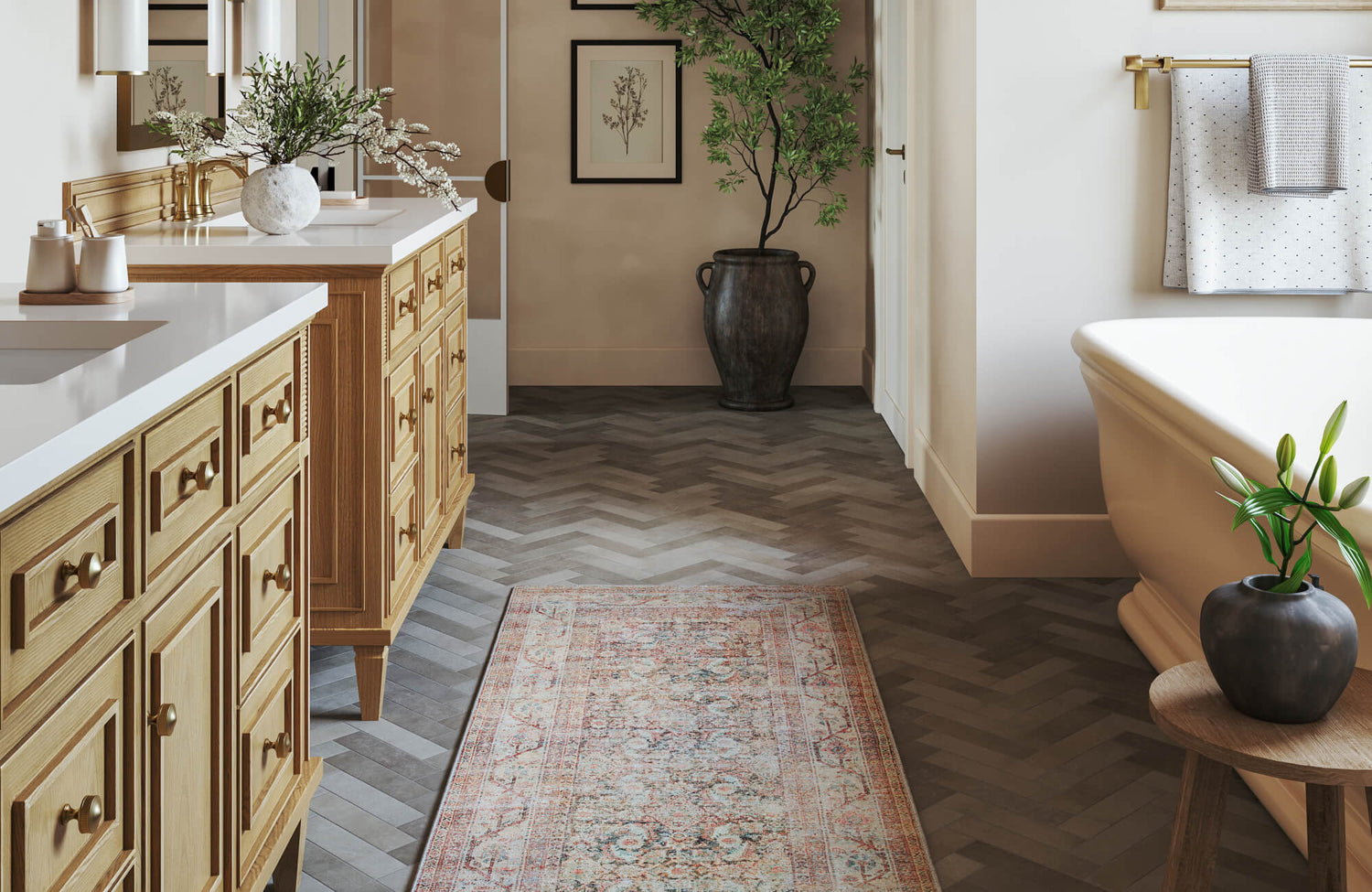
Herringbone flooring performs uniquely across different environments, adapting its strengths to the demands of each space. In homes, its angled geometry helps evenly disperse pressure, preventing the directional wear that often appears on straight-lay floors. Porcelain herringbone, in particular, thrives in busy areas like kitchens, hallways, and mudrooms, where spills, grit, and constant use are part of daily life. In spaces like the entryway shown in the picture above, a versatile option such as our Juliet 2.5x10 Matte Porcelain Tile in Iron offers a black and deep gray tone paired with the durability needed to withstand frequent use. Its hardness and low porosity also help the pattern remain crisp and stable, while routine cleaning and occasional grout maintenance keep the surface looking polished for many years.
In commercial settings, the same structural advantages become even more valuable. Retail stores, hospitality venues, and office environments expose flooring to heavier loads and more aggressive cleaning, yet herringbone maintains its integrity when installed with durable materials such as porcelain and paired with epoxy grout. The pattern’s interlocking angles also help prevent tile drift and disguise wear paths, making it a practical and visually appealing choice for busy zones. Although longevity varies by material, porcelain consistently delivers decades of performance, wood offers warmth but requires careful placement and protective maintenance, and natural stone offers lasting elegance when well-maintained. Together, these factors demonstrate how herringbone can achieve long-term success in both residential and commercial applications when thoughtful material selection and maintenance practices support its geometric strength.
Maximizing the Long-Term Durability of Herringbone Flooring
Herringbone flooring proves highly durable in busy areas when every component works in harmony, and its long-term success depends on making thoughtful choices from the start. By selecting the right tile material for your environment, ensuring precise installation with proper subfloor preparation and high-quality mortars, and maintaining the surface through regular cleaning and appropriate sealing, you create a flooring system that performs beautifully despite constant use. With this combination of smart material selection, skilled workmanship, and consistent care, herringbone not only withstands the demands of daily life but also retains the timeless appeal that makes it a standout choice for both homes and commercial spaces.
To help you make confident design decisions, you can take advantage of our personalized design services, which guide you through material selection, pattern suitability, and the overall aesthetic direction of your space. Additionally, our augmented reality (AR) tool allows you to visualize how different herringbone tiles will look in your space before installation begins, ensuring the final result aligns perfectly with your style and functional needs. Together, these resources support a seamless planning process that enhances both the beauty and durability of your herringbone flooring.