A beautifully styled kitchen island with stools can transform a modern layout into a balanced centerpiece where design, comfort, and functionality converge with effortless refinement. As materials, proportions, and silhouettes interact across the space, the island becomes a focal point that anchors the room’s architectural rhythm while accommodating everyday living. Thoughtfully chosen stools also introduce sculptural form and tactile warmth, enriching the island’s presence without overwhelming its streamlined geometry. When spatial planning, ergonomic precision, and cohesive finishes are harmonized, the seating arrangement elevates both the practicality and visual clarity of the kitchen. Through this seamless interplay, a modern kitchen island with stools becomes an expressive statement of contemporary design and intentional craftsmanship.

Spatial Planning and Ergonomic Precision
A successful modern kitchen island with stools begins with spatial planning that anticipates movement, comfort, and functional flow, allowing each zone to operate without disruption. Through precise measurements and proportional alignment, the island becomes an integrated centerpiece that supports both everyday tasks and elevated design intent.
Determining Proper Height Alignment
Establishing proper height alignment begins with identifying the island’s working height, which naturally dictates the stool dimensions that will allow users to sit comfortably. With counter-height islands sitting at 36 inches, stools between 24 and 26 inches maintain an ergonomic angle that supports neutral posture across the hips and spine. At the same time, bar-height islands at 42 inches benefit from stools in the 28–30-inch range, creating a balanced relationship that avoids shoulder elevation or knee compression. This proportional pairing not only enhances comfort but also ensures the seating line feels visually continuous within the room. Because spatial harmony plays such a large role in modern aesthetics, maintaining that consistent sightline helps the island feel architecturally anchored. When height alignment is calibrated with this level of care, the seating arrangement supports both functional efficiency and contemporary visual clarity.
Calculating Optimal Stool Spacing
Proper stool spacing begins with allocating 24–30 inches of linear room per seat, giving each user adequate elbow clearance without creating unnecessary visual density. This spacing allows movement to feel unforced, especially in open-plan kitchens where multiple activity zones overlap throughout the day. As stools are distributed evenly across the island, the proportional rhythm reinforces the clean geometry that defines modern kitchen layouts. The balance created by equal spacing also enhances user experience, preventing crowding that would otherwise disrupt the natural flow of conversation or dining. Because modern design thrives on visual calm, these measured intervals keep the island composed and orderly. With spacing thoughtfully established, the seating zone becomes both inviting and structurally harmonious.
Preserving Circulation Pathways
Circulation pathways benefit from maintaining 36–48 inches of clearance behind stools, allowing users to move fluidly, whether the seats are occupied or not. This clearance supports natural flow patterns around appliances, cabinetry, and adjacent work areas, which helps maintain uninterrupted function in busy households. As movement feels less constrained, the kitchen’s overall rhythm becomes more intuitive and enjoyable to navigate. By preventing congestion, this spatial buffer contributes to a sense of openness that aligns with modern design priorities. The added breathing room also enhances safety, reducing the likelihood of collisions or awkward maneuvering. With circulation thoughtfully preserved, the island integrates seamlessly into the home’s architectural flow.

Choosing Stools That Reinforce a Modern Design Language
Stool selection acts as an opportunity to reinforce the kitchen's stylistic identity, allowing form, line, and materiality to work together in harmony. By choosing silhouettes and finishes that echo the surrounding architecture, the seating becomes a natural extension of the modern layout.
Evaluating Structural Silhouettes
Modern stool silhouettes often rely on clean lines and purposeful simplicity, allowing the island’s structural geometry to remain the focal point. For instance, slim legs and angular frames reduce visual weight, creating a sense of openness that complements the clarity of contemporary cabinetry. Low-profile backs, on the other hand, preserve sightlines across the room, especially in open-concept environments where boundaries feel more fluid. As these silhouettes echo surrounding architectural forms, they also reinforce the kitchen’s cohesive design language. Because structural restraint supports both functionality and elegance, the stools contribute to a space that feels thoughtfully refined. When the silhouette aligns with modern principles, the seating naturally blends into the room’s overall composition.
Prioritizing Modern Materials
Material selection plays a central role in defining the character of modern stools, as powder-coated metals, molded polypropylene, white oak, and brushed stainless steel each contribute distinct aesthetic qualities. These materials provide durability while maintaining the understated sophistication associated with contemporary design. Matte finishes also soften reflections and integrate seamlessly with the restrained palettes common in modern kitchens. As these materials echo tones found in cabinetry, hardware, or appliances, they subtly unify the room without appearing overly coordinated. Their tactile qualities enrich the spatial experience, adding depth to an otherwise minimalist composition. When materials are chosen with intention, the stools elevate both the functionality and visual language of the kitchen.
Assessing Comfort-Forward Features
Comfort-driven features bring subtle but significant value to modern kitchen island seating, ensuring functionality remains as strong as aesthetics. Contoured seats, for example, help distribute weight more evenly, supporting proper alignment during extended sitting while making the seating area feel naturally inviting. Integrated footrests further enhance posture by easing lower back tension, allowing the body to rest comfortably without strain.
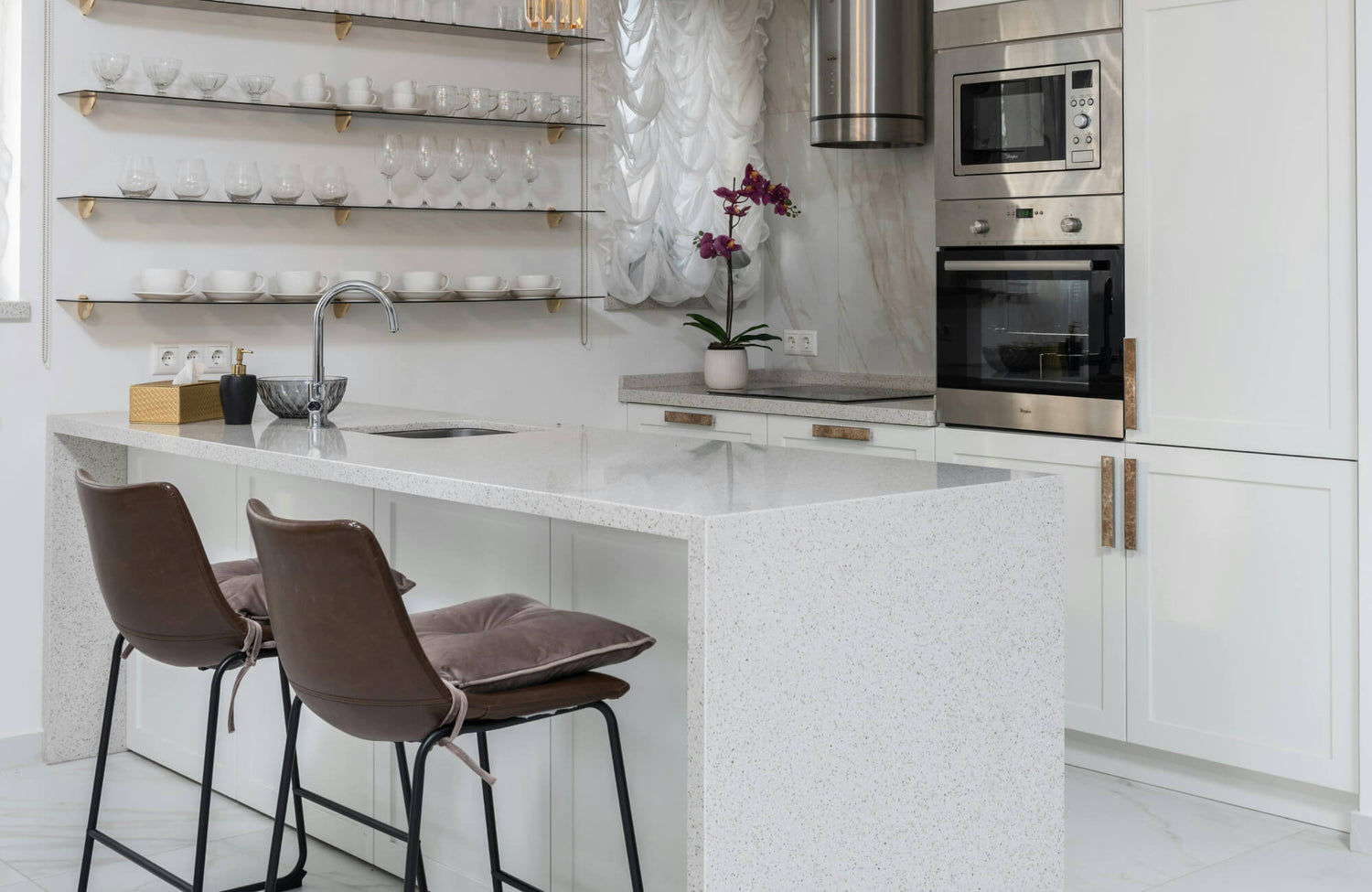
This commitment to comfort is reflected beautifully in the Bower Counter Stool in Brown, as shown in the photo above, whose plush foam-filled seat, gently curved arms, and supportive backrest create an experience that feels tailored to the user. Its abrasion-resistant faux leather, cantilevered base, and corrosion-resistant powder-coated structure also ensure that comfort is matched by long-term durability, even in busy kitchens. Through this blend of ergonomics and refined design, the stools become versatile pieces that elevate daily living while maintaining a distinctly modern sensibility.

Coordinating Materials and Finishes for Cohesive Aesthetic Harmony
Coordinating finishes ensures the stools feel visually integrated with the island and surrounding elements, creating a refined balance that modern kitchens rely on. When materials complement each other naturally, the entire space reads with a sense of intentional unity.
Aligning Stools With Island Surfaces
Harmonizing stools with the island begins by identifying shared tones, textures, or structural elements that can create a quiet but deliberate dialogue between the two. This refined interplay mirrors the qualities of our Joel Counter Stool in Black, whose matte-black frame, gently curved seat, and understated profile blend effortlessly into a range of contemporary island finishes. As featured in the photo above, its soft, cushioned seat and smooth engineered-wood structure also introduce subtle texture while maintaining the visual clarity that modern kitchens rely on. Moreover, the stool’s dark palette ties naturally into rich cabinetry, brass fixtures, and tonal stone, demonstrating how strategic coordination strengthens the entire island arrangement. When stools are selected with this level of material and tonal awareness, the seating becomes an integrated architectural feature that enhances the kitchen’s cohesive aesthetic harmony.
Integrating Metallic Accents
Metallic accents offer an opportunity to create small but meaningful visual connections throughout the kitchen. Finishes such as satin bronze, matte black, or brushed nickel echo hardware, lighting, and appliance trims, strengthening the room’s overall cohesion. These subtle metallic elements introduce gentle reflectivity, adding depth without overwhelming the minimalist composition. By dispersing these finishes with restraint, the space gains sophistication through quiet visual continuity. Their strategic placement also enhances the island’s composition, making the seating zone feel more deliberate and refined. When metallic accents align across multiple design elements, the kitchen’s aesthetic becomes more unified and balanced.
Balancing Warm and Cool Tones
Balancing warm and cool tones brings dimension to a modern kitchen, preventing the space from skewing too stark or too heavy. Warm woods, in particular, introduce natural texture and comfort, offsetting the crisp precision of stone or steel. Cooler tones, meanwhile, maintain the modern clarity that defines contemporary aesthetics. As these tonal ranges interact, they create a sense of equilibrium that feels both grounded and fresh. This balance also shapes the kitchen’s overall ambiance, influencing whether the space reads as cozy, airy, or tailored. When warm and cool tones are calibrated with intention, the island becomes a visually compelling centerpiece.

Enhancing Functionality Through Durable and User-Centric Features
Functional considerations ensure that the stools perform reliably as part of a high-use environment while supporting the modern kitchen’s flexible lifestyle. By integrating durability with comfort and adaptability, the seating area becomes genuinely practical without compromising design integrity.
Selecting High-Performance Materials
High-performance materials anchor the seating in long-term usability, making them particularly valuable in active kitchens. Powder-coated metals, for instance, resist chipping and corrosion, maintaining a clean, uniform appearance even with daily wear. Engineered leathers and performance fabrics also offer stain resistance while retaining their visual richness. These surfaces hold up under frequent cleaning, ensuring the stools remain fresh and presentable over time. Their stability and resilience support the island’s multipurpose function, from casual meals to extended work sessions. With robust materials in place, the seating maintains both aesthetic integrity and consistent performance.
Improving Mobility and Accessibility
Enhancing mobility ensures that the stools adapt naturally to the kitchen’s dynamic use patterns, supporting a wide range of activities. Swivel bases, in particular, allow for effortless entry and exit, minimizing disruption during food preparation or social interaction. Lightweight construction also enables stools to be repositioned without strain, making them responsive to shifting household needs. Glides or pads further protect flooring while maintaining smooth movement across hard surfaces. By simplifying motion, these features help maintain the kitchen’s natural flow and structural clarity. When accessibility is prioritized, the seating becomes more inclusive and user-friendly.
Considering Multi-User Requirements
Accommodating diverse users strengthens the island’s versatility as a central gathering point. In particular, ergonomic backrests support proper alignment for people of different ages and body types, reducing fatigue during extended sitting. Adjustable height mechanisms also allow each user to find a comfortable position relative to the countertop. Reinforced frames withstand heavy use, as well, ensuring long-term durability in busy environments, while wider seat proportions provide comfort without disrupting the clean modern silhouette. Through this attention to varied needs, the seating becomes both functional and universally welcoming.

Styling and Accessorizing the Kitchen Island for Visual Impact
Layered styling elements enrich the island’s presence within a modern kitchen, adding polish while preserving the clarity of contemporary design. As décor, lighting, and texture come together, the seating zone gains definition and a sense of curated sophistication.
Using Lighting to Frame the Seating Zone
Lighting plays an essential role in shaping how the island and stools are perceived, guiding attention toward the seating area. For example, pendant fixtures positioned with even spacing reinforce the island’s linear rhythm, creating a balanced composition overhead. Warm LED temperatures also soften the crispness of modern materials, bringing a sense of warmth without sacrificing clarity. In addition, fixture finishes that echo stool materials strengthen visual continuity and reinforce the kitchen’s design hierarchy. By orchestrating these lighting elements, the seating zone becomes an intentional focal point.
Curating Minimal Yet Impactful Décor
Minimal décor supports the island’s modern identity by introducing visual interest through selective, intentional layering. Sculptural vessels or ceramic pieces then create artful focal accents that elevate the composition without overwhelming it. Low-profile trays further contribute to this clarity, organizing everyday items while preserving an open surface. Natural materials such as branches or stone add gentle contrast, bringing organic texture to the island’s sleek finishes. When décor colors subtly echo the tones of the stools, the seating area feels more cohesive and visually anchored. Together, these restrained yet thoughtful elements give the island a polished, contemporary presence.
Balancing Texture and Visual Weight
Balancing texture brings richness to the island composition, especially in kitchens where clean lines and soft tonal layering define the overall look. In the picture displayed above, our Genevieve Counter Stool in Light Oak—with its sculpted wood frame, gently contoured woven seat, and light, airy profile—works seamlessly with light oak, brushed brass hardware, and a subtly veined marble surface to establish a refined interplay of matte and warm finishes.
Its tactile depth also introduces texture without disrupting the island’s clean geometry, while maintaining visual balance so the island feels grounded yet lifted. By integrating textures that complement one another naturally, the seating enhances both the tonal warmth and the architectural calm of the kitchen. With texture thoughtfully calibrated in this way, the entire seating zone becomes visually compelling, cohesive, and gracefully modern.
Elevating the Modern Kitchen Through Intentional Island Styling
When every detail, from stool silhouette to circulation flow, is calibrated with care, the kitchen island becomes a refined example of modern design working in perfect harmony. The thoughtful integration of materials, textures, and proportion allows the island to support both functional demands and aesthetic clarity with equal sophistication. As lighting, décor, and ergonomic considerations come together, the seating zone also evolves into a purposeful gathering place that enhances the kitchen’s everyday rhythm. Ultimately, the result is a space that feels elevated, cohesive, and deeply connected to the lifestyle it serves.
For homeowners seeking a tailored, design-driven approach, Edward Martin’s personalized design services offer the expertise needed to bring these ideas to life—simply contact us to begin your project with confidence and clarity!