Wood look tile brings the warmth of natural timber into spaces that demand the enduring strength of porcelain, creating a surface where beauty and performance coexist effortlessly. As homeowners and designers seek materials that balance aesthetics with safety, questions about slip resistance become essential in understanding how these surfaces behave under moisture. The refined textures, specialized finishes, and engineered friction values behind today’s wood look tiles also reveal a carefully crafted interplay between artistry and technical precision. By exploring the science, finishes, environmental factors, installation techniques, and long-term maintenance considerations, this article sheds light on the true slip-resistance capabilities of wood look tile in wet conditions.

Slip-Resistance Behavior of Wood Look Tile in Wet Conditions
Wood look tile maintains dependable traction when exposed to moisture, yet its performance ultimately hinges on how friction values and surface engineering work together under wet conditions. As these factors intersect, they create a predictable slip-response that helps you evaluate how safely the tile performs in moisture-prone environments.
Understanding Dynamic Coefficient of Friction (DCOF) Values
The Dynamic Coefficient of Friction provides a quantifiable benchmark for slip resistance, offering clarity on how a tile behaves when water is introduced. As manufacturers test tiles to achieve the ANSI A326.3 requirement of ≥0.42, they create a reliable foundation for specifying flooring in kitchens, bathrooms, and entryways. Because wood look porcelain often incorporates micro-textured grain patterns, it also naturally elevates DCOF performance by increasing contact points underfoot. These subtle ridges interrupt the water film that typically reduces traction, allowing the tile to maintain a more stable grip.
A strong example of this balance between design realism and dependable friction is Edward Martin’s Preston 8x48 Matte Porcelain Tile in Chestnut, as displayed in the photo above, whose matte surface and refined grain pattern work together to enhance traction while preserving the warmth of natural hardwood. With these qualities in place, tiles like this Preston offer a measured predictability that makes DCOF an indispensable tool for selecting safe, high-performance wood look tile for wet environments.
Moisture Interaction and Surface Tension Effects
Water interacts with hard surfaces through a thin film created by surface tension, which can diminish traction if the material lacks interruptive texture. Because porcelain absorbs almost no moisture, the water remains on the surface where its behavior can be anticipated and managed. As micro-textures on wood look tile break this surface tension, they also allow shoes or bare feet to connect more directly with the tile beneath. This subtle exchange between texture and moisture helps maintain grip even when water is present. Moreover, the tile’s stable composition prevents any swelling or softening that might otherwise alter its slip profile. Through this consistent interaction, you gain flooring that performs predictably across both wet and dry conditions.

Influence of Finish Type and Surface Texture on Traction
The finish applied to wood look tile significantly shapes how the surface responds to moisture, allowing different levels of grip depending on how smooth or textured the tile is. As these finish characteristics come together, they create a clear hierarchy of slip resistance that helps determine the best option for each setting.
Matte, Honed, and Textured Finishes
Matte and honed finishes maintain gentle micro-abrasions that naturally enhance friction without compromising aesthetic refinement. With their ability to distribute traction consistently, these surfaces offer dependable footing in kitchens, mudrooms, and bathrooms where moisture is common. Textured wood looking tiles further deepen this effect by replicating raised wood grain, giving the surface more physical complexity for water to move around. As the texture redirects moisture away from key foot-contact areas, the tile feels more grounded underfoot.
A tile that exemplifies this harmony between visual warmth and slip-resistant performance is Edward Martin’s Jameson 8x48 Matte Porcelain Tile in Camel (shown in the picture above), whose soft matte finish and nuanced grain structure create both tactile stability and inviting natural character. With this tile illustrating how design and function can reinforce one another, you can confidently choose finishes that elevate safety while preserving a beautifully organic aesthetic.
Polished and Glossy Surfaces
Polished porcelain, with its reflective clarity and smooth tactile profile, offers visual sophistication but inevitably sacrifices a degree of traction. Because the polishing process removes natural micro-roughness, water can spread evenly across the surface, forming an uninterrupted film that reduces stability. This continuous sheen may also be ideal for dry interior spaces, yet it becomes challenging in areas prone to splashes or condensation. While the surface remains durable and resistant to staining, its slip performance in wet conditions may not meet safety expectations. As a result, polished wood look tile is better suited for formal living areas, accent walls, or decorative installations. When moisture is expected, finishes with more texture and less reflectivity should be considered.
Exterior Grip or Structured Finishes
Exterior grip surfaces such as R11 or R12 finishes offer a highly engineered approach to traction, making them ideal for spaces exposed to rain, humidity, and outdoor contaminants. These finishes incorporate deeper, structured patterns that physically channel water away from the primary walking surface. As moisture moves through these microscopic paths, the foot also maintains closer contact with the tile, creating a more grounded feeling even in challenging weather. Their frost-resistant porcelain bodies enhance reliability by preventing freeze–thaw damage, which can otherwise degrade texture. In high-exposure zones like pool decks or patios, this stability becomes essential for both function and safety. Over time, the enduring grip of these tiles supports confident movement through every season.
As these finish characteristics come together, they create a clear hierarchy of slip resistance that helps determine the best option for each setting, and tools like Edward Martin’s Augmented Reality (AR) make it easier to visualize these finish variations directly in your space before making a final decision.

Environmental Factors Affecting Slip Resistance
Different environments impose distinct demands on wood look tile, as moisture levels, cleaning patterns, and exposure conditions each influence slip performance. When these environmental variables are understood together, they guide more informed decisions about where specific tile types will perform most effectively.
Indoor Wet-Area Performance
Indoor wet areas present predictable moisture exposure, allowing matte or textured wood look porcelain to demonstrate consistent traction. These surfaces handle splashes and condensation effectively because their micro-texture prevents moisture from settling into a continuous film. As you move between wet and dry zones, the tile also offers a steady sense of control that reduces slipping concerns.
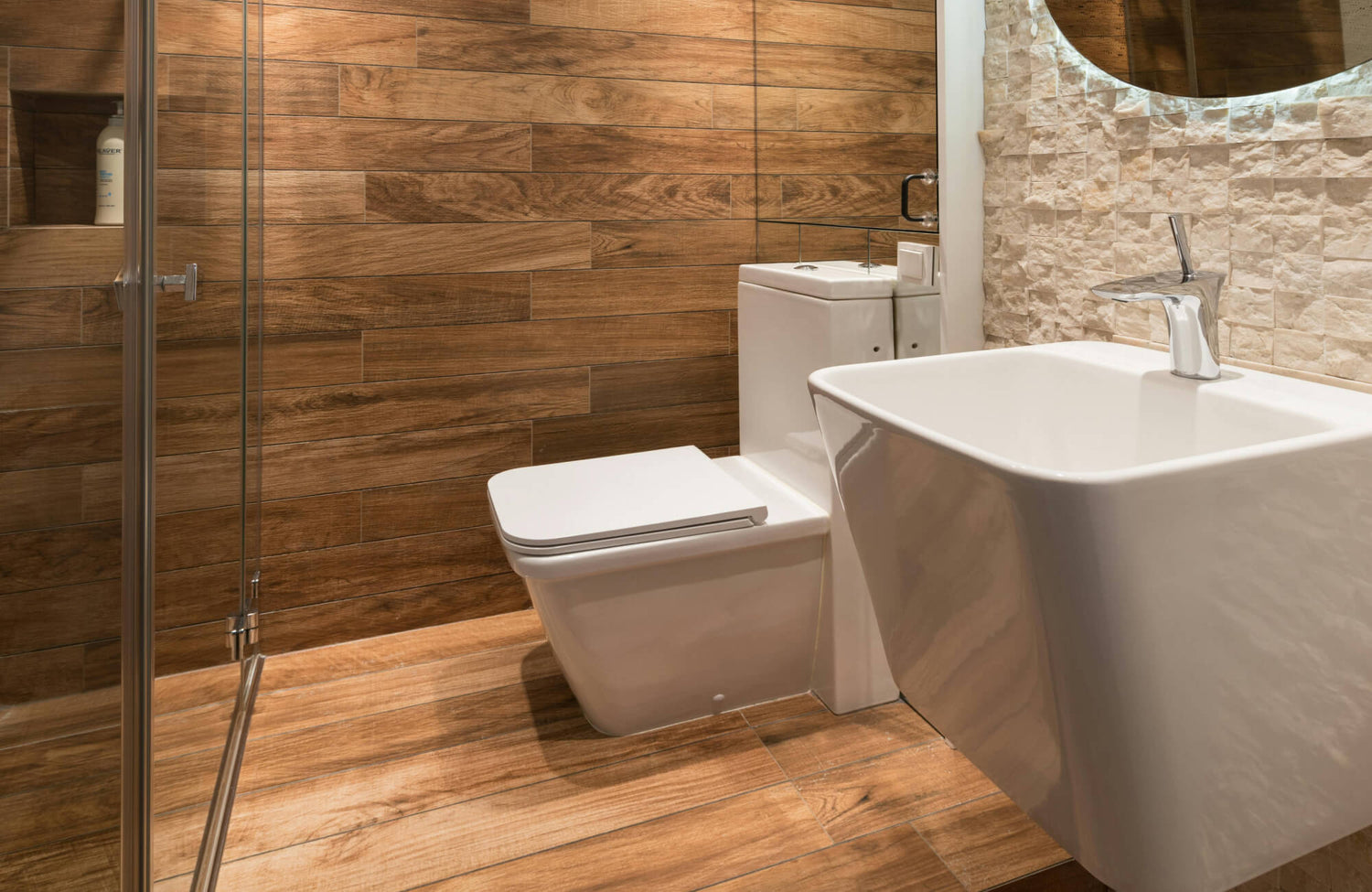
Since porcelain does not warp or soften, its slip-resistance profile remains unchanged despite repeated moisture cycles. Proper ventilation further enhances performance by reducing lingering humidity. A fitting example of how matte finishes thrive in these environments is our Zayne 12x36 Matte Ceramic Tile in Slat, as featured in the photo above, whose subtle texturing and elongated profile reinforce stability while bringing a refined architectural presence to bathrooms and laundry spaces.
Outdoor Exposure to Rain, Humidity, and Organic Debris
Outdoor settings expose flooring to more aggressive moisture patterns, making structured, outdoor-rated surfaces essential for safety. Rain, dew, and seasonal humidity create conditions that favor the development of algae and fine organic debris, both of which affect traction far more than water alone. Because exterior wood looking porcelain is engineered with deeper micro-texture, it also retains friction even when moisture is persistent. This built-in resilience ensures that the tile remains functional across changing weather patterns. Moreover, frost-resistant porcelain prevents ice-induced surface deterioration, preserving long-term grip. In climates with regular precipitation, these features collectively sustain reliable outdoor slip resistance.
Commercial Busy Considerations
Commercial environments demand flooring that withstands heavy foot movement, frequent cleaning, and unexpected moisture exposure without compromising safety. Textured wood look porcelain meets these needs by offering both durability and predictable traction in high-use areas. As cleaning agents and spill events interact with the floor, the tile’s structured surface also mitigates slipperiness that might otherwise develop. Moreover, its resistance to wear ensures that friction does not diminish over time. These combined qualities help reduce liability risks while maintaining an upscale aesthetic consistent with modern design standards. For restaurants, retail spaces, and hospitality venues, this balance of safety and style makes wood look porcelain a long-term asset.

Installation Techniques That Influence Real-World Slip Resistance
The installation process plays an essential role in shaping how effectively wood look tile performs in wet conditions, as grout spacing, layout orientation, and drainage design all influence underfoot stability. When these installation choices work together, they help transform slip resistance from a basic specification into a functional, lived experience. For the most reliable results, professional installation ensures these details are executed with precision.
Grout Joint Width and Interruption of Surface Water
Grout joints introduce subtle interruptions across the tile surface, helping to break up water films that can otherwise reduce traction. When wood looking tile is installed with a modest 3–5 mm joint, the spacing contributes to a more textured walking experience without disrupting the overall plank-like appearance. These joints also assist with drainage, guiding water toward natural low points in the floor. Moreover, cementitious and epoxy grouts maintain a consistent texture, supporting a reliable grip over time. This interplay between grout and tile surface gradually creates a more stable environment for foot movement. As this synergy develops, the flooring becomes safer and more comfortable in spaces where moisture is frequent.
Layout Patterns and Traction Distribution
Tile layout patterns shape not only the visual identity of a space but also its functional traction profile. Patterns like herringbone or chevron introduce angled intersections that encourage the foot to engage multiple points of contact, enhancing stability. These angles disrupt linear slip paths, giving the floor a more dynamic relationship with water movement. As moisture flows along grout intersections, it disperses more evenly, reducing slippery accumulation. This fluid interaction between geometry and water promotes a balanced walking experience. Over time, the combined effect of pattern and micro-texture enhances both safety and aesthetic refinement.
Proper Slope and Drainage in Wet Rooms
Effective drainage design ensures that water does not linger on the tile surface long enough to create slipping hazards. By incorporating gentle slopes, installers guide moisture toward strategically positioned drains, helping the floor dry more quickly. Waterproofing membranes beneath the tile further stabilize the installation by preventing moisture migration that could disrupt adhesion. As water moves predictably along the sloped plane, the tile maintains a consistently grippable surface. This smooth flow of moisture also supports hygiene by reducing areas where bacteria or soap films could accumulate. With all these elements working cohesively, wet rooms deliver a safer and more controlled flooring environment.

Maintenance, Cleaning, and Long-Term Slip Performance
Maintenance directly influences the long-term slip resistance of wood looking tile, as residues and surface buildup often have a greater impact on traction than moisture itself. When cleaning practices align with the tile's material characteristics, the surface retains its original performance with remarkable consistency. Following the manufacturer’s care guidelines further ensures that slip resistance remains stable over time.
Impact of Cleaners and Residue Buildup
Cleaning products can leave behind thin films that subtly reduce traction, especially if they contain soaps, oils, or gloss-enhancing additives. To prevent this buildup, neutral-pH tile cleaners dissolve grime effectively without depositing unwanted residues. As the surface remains free of buildup, the tile’s natural micro-texture continues to function effectively. Regular rinsing further preserves traction by preventing leftover cleaners from accumulating over time. This routine care also supports predictable friction levels even in frequently used wet areas. Ultimately, proper cleaning ensures that the tile’s slip-resistant properties perform exactly as intended.
Outdoor Maintenance and Organic Growth Management
Outdoor tile installations are particularly susceptible to organic buildup, which can significantly affect slip performance if left unaddressed. Algae, moss, pollen, and fine dirt may coat the surface, diminishing the effectiveness of the tile’s structured texture. To restore friction, periodic pressure washing clears these contaminants from microscopic grooves, while non-corrosive outdoor cleaners help prevent regrowth without compromising the porcelain’s durable finish. Since wood looking porcelain does not absorb moisture, organic material remains on the surface where it can be removed efficiently. With consistent maintenance, outdoor tiles retain their intended slip resistance throughout the year.
Durability and Preservation of Slip-Resistant Texture
Porcelain wood looking tile retains its engineered texture throughout its lifespan because its surface is fired at extreme temperatures that lock in micro-detail. As daily use moves across the tile, this durable surface also resists flattening or polishing, helping preserve its traction profile. Unlike natural wood or softer composites, porcelain does not require refinishing to restore grip. Its color, texture, and density remain stable even in high-use environments, ensuring reliable performance. This structural integrity ensures that slip resistance does not deteriorate as the material ages. Over decades, the tile continues offering a safe, predictable footing in both wet and dry conditions.
Timeless Performance and Confidence in Wet Environments
Wood looking tile ultimately brings together beauty, durability, and safety in a way that makes it uniquely suited for moisture-prone spaces. Its slip-resistant textures, engineered finishes, and reliable friction values work in harmony to deliver flooring that feels elegant yet dependable under varying conditions. With proper installation and routine care, its traction profile endures long after other materials begin to show wear or instability. These qualities make wood looking tile a lasting investment for homes and commercial spaces seeking both aesthetic refinement and long-term confidence in wet environments.
For those seeking added assurance in selecting the right finish or texture, Edward Martin’s tile sample request service allows you to experience the material firsthand and feel its slip-resistant surface before making a final decision!