Open-concept living spaces don’t give you the luxury of styling one area in isolation, everything is visible, and even small details can shift how the entire room feels. Decorative pillows might seem like a finishing touch, but they play a bigger role in tying zones together, softening transitions, and keeping the space from feeling disconnected. The challenge is finding the right mix of color, scale, and texture without making the setup feel crowded or overly planned. In this blog, we’ll walk through how to choose pillows that actually work across your space, so you can build a setup that feels cohesive, comfortable, and easy to live with from day one.

How Open-Concept Layouts Change the Way You Style Pillows
In an open-concept space, pillows don’t just sit on one sofa; they’re part of a much bigger visual picture. Since everything is visible at once, small choices can either tie the space together or make it feel slightly off. Styling here is less about one spot and more about how everything connects across the room.
Why Everything Feels More Connected in One View
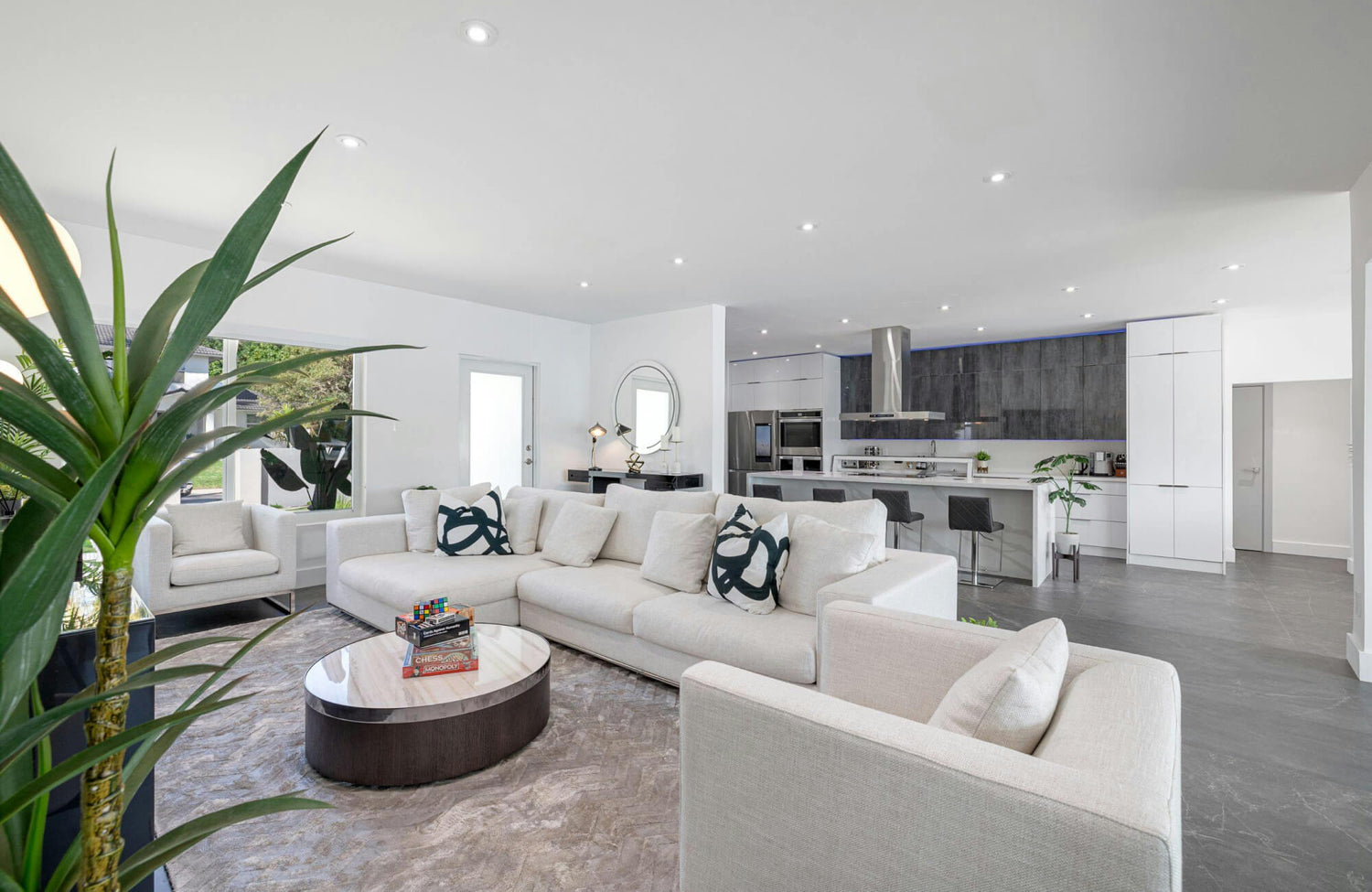
In a closed room, you can get away with styling pillows based on that one space alone. In an open layout, though, your living area, dining space, and even parts of the kitchen are all within view at the same time. That means pillows can’t feel like they belong to just one corner; they need to make sense with everything around them. Even small differences in color or style can stand out more than expected when there are no walls breaking things up. You start to notice when something feels slightly out of place, even if you can’t immediately explain why. That’s why pillow choices in open spaces tend to feel more intentional, because they’re always part of a bigger visual flow.
Avoiding a Disjointed Look Across Zones
One of the easiest ways an open space starts to feel off is when each area looks like it was styled separately. You might have a nice setup in the living area, but if it doesn’t relate to what’s happening in the dining or nearby spaces, the whole room can feel disconnected. Pillows can help bridge that gap by repeating certain colors, tones, or textures that already exist elsewhere. It doesn’t mean everything has to match exactly, but there should be some overlap that makes the transition feel smoother. Without that connection, each zone starts to compete instead of working together. Keeping things slightly aligned helps the space feel more put together without making it look overly styled.
Letting Pillows Support the Whole Space, Not Just One Sofa
It’s easy to treat pillows as something that only needs to look good on the sofa they’re placed on. In an open layout, though, they end up influencing how the entire space feels, not just that one seat. A bold color or heavy pattern might look great up close, but from across the room, it could throw off the balance if it doesn’t connect with anything else. Softer, more grounded choices tend to work better because they support what’s already there instead of competing with it. You’re not trying to make the pillows the main feature, just part of a larger setup that feels consistent. When they’re doing that job well, you don’t really notice them on their own, but the whole space feels more pulled together.
Reading the Room as One Continuous Layout
In open-concept spaces, it helps to step back and look at everything as one continuous area instead of separate sections. What you do in one spot naturally affects how the rest of the room feels, especially when there are no clear boundaries. Pillows become part of that overall composition, not just an isolated detail. It’s useful to think about how your eye moves across the space and whether anything feels too abrupt or disconnected. Small adjustments, like shifting tones or simplifying patterns, can make a big difference when everything is viewed together. When you approach the space this way, styling feels less like decorating individual zones and more like shaping one cohesive environment.

Choosing Pillow Colors That Work Across the Entire Space
Color choices matter more in an open layout because everything is visible at once, not just one seating area. Pillows can either help tie different zones together or make them feel slightly disconnected if they don’t relate to what’s around them. The goal isn’t to match everything perfectly, but to create enough consistency so the space feels balanced from one end to the other.
Pulling Colors From Furniture, Rugs, and Finishes
One of the easiest ways to get pillow colors right is to look at what’s already in the space. Things like rugs, wood tones, upholstery, and even smaller decor pieces already carry a palette you can work from. Instead of introducing completely new colors, it usually feels more natural to echo what’s already there. This helps the pillows blend in without feeling random or out of place. Even subtle tones, like a soft beige from a rug or a muted green from a plant, can be enough to build around. When colors are pulled this way, everything starts to feel more connected without needing to overthink it.
Repeating Key Tones Without Overmatching
Repeating colors across the space helps create flow, but doing it too literally can make things feel stiff or overly coordinated. Instead of using the exact same shade everywhere, it works better to vary it slightly so it feels more natural. For example, if there’s a warm brown in the furniture, pillows can carry that tone in lighter or darker versions. This keeps the connection without making everything look identical. It also gives the space a bit more depth, since the colors don’t feel flat. When repetition is handled this way, the room feels consistent without looking like it was planned too rigidly.
Using Neutrals to Bridge Different Areas
Neutrals do a lot of quiet work in open spaces, especially when different zones have slightly different color directions. Pillows in tones like cream, beige, gray, or soft taupe can help smooth out those transitions without drawing too much attention. They act as a kind of buffer between bolder elements, making everything feel easier on the eyes. This is especially helpful when the living area connects to a dining or kitchen space with different finishes. Instead of trying to match everything, neutrals help everything sit together more comfortably. They don’t stand out, but they keep the whole space from feeling disconnected.
That’s where pieces like our Brielle Down Pillow in Natural / Brown come in, with its soft beige base and deeper brown stitched edge working as a subtle connector between lighter upholstery and darker wood tones. You can see that balance more clearly in how it sits against the light seating above, where the edge detail adds just enough contrast without pulling too much attention. Instead of standing out on its own, it helps link those lighter and darker elements in a way that feels natural. In an open layout, that kind of quiet connection is usually what keeps everything feeling cohesive without forcing it.
Introducing Contrast Without Breaking Flow
A bit of contrast can make the space feel more interesting, but it has to be handled carefully in an open layout. If a pillow stands out too much without connecting to anything else, it can feel isolated instead of intentional. A better approach is to introduce contrast in a way that still ties back to the overall palette. For example, a darker pillow can work well if there are similar tones somewhere else in the room, even if it’s subtle. This keeps the contrast from feeling random or out of place. When done right, it adds depth without disrupting the flow of the space.
Knowing When to Keep the Palette Restrained
It’s easy to keep adding colors, especially when everything looks good on its own, but open spaces usually benefit from a bit of restraint. Too many different tones can make the room feel scattered, even if each piece works individually. Keeping the palette focused makes it easier for everything to feel connected at a glance. This doesn’t mean limiting yourself too much, just being selective about what actually adds to the space. Sometimes pulling back a color or simplifying the mix makes everything feel more balanced. When the palette is controlled, the space feels calmer and more put-together without needing extra effort.

Mixing Patterns Without Making the Space Feel Overdone
Patterns can add personality to an open space, but they also show up more clearly when everything is visible at once. It’s less about how each pattern looks on its own and more about how they sit together across the room. The goal is to layer enough interest so the space feels styled, but not so much that it starts to feel crowded or hard to read.
Pairing Large and Small Patterns Thoughtfully
Mixing patterns usually works best when there’s a clear difference in scale between them. Larger patterns tend to feel more relaxed and easier to take in, while smaller ones add detail without pulling too much attention all at once. When everything sits at the same scale, it can start to feel repetitive, and over time, a bit overwhelming to look at. Letting one pattern lead while the others stay more subtle gives the space a clearer sense of direction. It also makes it easier to move your eye across the room without everything competing at the same level. When the scale feels balanced, the mix looks intentional instead of something that just happened to be placed together.
Keeping Patterns Within One Design Direction
Even when you’re mixing different prints, it helps if they feel like they belong to the same overall style. For example, structured patterns tend to sit better with other clean, geometric designs than with something overly ornate or traditional. It’s not about limiting your choices too much, but more about keeping a consistent feel so nothing looks out of place. When patterns follow a similar direction, the space feels more pulled together without needing everything to match exactly. It also gives you more flexibility later on, since you’re not locked into one very specific look. Keeping that direction clear is what prevents the space from feeling scattered.
Using Solid Pillows to Balance Busier Prints
Once you start layering patterns, it doesn’t take much for things to feel a bit full. You might not notice it right away, but after a while, everything can start blending together and losing definition. That’s where solid pillows come in; they help break things up and give your eyes a place to settle. Without that pause, even well-chosen patterns can feel a little too packed, especially in an open layout. Solids don’t have to feel plain either; they can still bring in texture or subtle variation to keep things interesting. When used properly, they keep the setup feeling balanced without taking away from the overall look.
Spacing Patterns So the Eye Can Rest
It’s not just about what patterns you use, but how they’re spread out across the seating area. When everything is placed too closely together, even simple patterns can start to feel heavy and a bit overwhelming. Leaving a bit of space between patterned pillows helps everything breathe and feel easier to take in. This becomes even more noticeable in open layouts where there’s no wall to visually contain one section from another. You want your eye to move naturally across the space instead of getting stuck in one busy area. A little spacing makes the whole setup feel more relaxed without losing the detail you’re trying to add.
Recognizing When the Space Already Has Enough Detail
Sometimes the room already has enough going on before pillows are even added. Rugs, artwork, and even the furniture itself can carry a lot of visual weight without you realizing it at first. Adding more patterns on top of that can push the space too far, even if each piece looks good on its own. It helps to step back and look at the whole setup instead of focusing on one area at a time. If things already feel layered, simpler pillow choices usually work better and feel more natural. Knowing when to stop is what keeps the space from feeling overdone while still looking styled.

Choosing Pillow Sizes and Quantities That Fit the Layout
In an open-concept space, pillow size and quantity affect more than just comfort; they change how open or crowded the entire area feels. Since everything is visible at once, even a few extra pillows can shift the balance without you realizing it.
Scaling Pillows for Large Sofas and Sectionals
Larger sofas and sectionals naturally need pillows that match their scale; they can feel a bit undersized or lost. Smaller pillows on a big sectional tend to look scattered instead of intentional, especially when viewed from across the room. Going with slightly larger sizes helps the setup feel more grounded and proportionate to the furniture. It also makes the seating look more inviting, since the pillows actually feel usable instead of just decorative. You don’t need a lot, just enough to match the size of the piece without overloading it.
At the same time, it helps to vary sizes slightly instead of keeping everything identical. A mix of larger and medium pillows can add depth without making things feel too styled or rigid. This keeps the setup from looking flat while still staying easy to use day to day. You’ll notice that when the scale feels right, the whole seating area looks more balanced without needing extra effort. It’s less about hitting a specific number and more about how everything sits together visually.
Avoiding Overcrowding in Open Spaces
It’s easy to keep adding pillows, especially when each one looks good on its own. The problem usually shows up when you step back and realize the seating starts to feel a bit full. In open layouts, that fullness becomes more noticeable because there’s nothing breaking up the view. Too many pillows can make the space feel slightly closed in, even if the room itself is large. Keeping things a bit lighter helps maintain that open feel.
You also don’t want a setup where people have to move pillows around just to sit down. That’s usually a sign there’s more than you actually need. A smaller, more intentional arrangement tends to feel more natural and easier to live with. It also keeps the space from looking overly styled or staged. When you pull back just enough, everything feels more relaxed without losing the overall look.
Letting Negative Space Keep the Area Airy
Negative space is one of those things you don’t really notice until it’s gone, and once everything is filled, the space can start to feel heavier than it actually is. When every seat is covered with pillows, even if they look good, it creates a kind of visual clutter that makes the whole setup feel tighter. Leaving a few areas open gives your eyes a place to settle, which makes the entire space feel calmer and easier to take in. This matters even more in open layouts, where everything is visible at once, and nothing is really hidden from view. Instead of trying to fill every spot, it helps to step back and let certain sections stay clear so the arrangement can breathe a bit. In the end, those small gaps are what keep the space feeling open without taking anything away from the design.
Balancing Comfort With Visual Simplicity
Pillows should still feel comfortable to use, not just look good when no one’s sitting down. If they’re too stiff, too small, or placed in a way that gets in the way, people will naturally move them aside instead of using them. At the same time, adding too many in the name of comfort can make the seating feel crowded, especially in a space where everything is already connected. The balance usually comes from choosing a few that actually feel good to lean on while keeping the layout clean enough that it doesn’t feel overloaded. You want the setup to work without needing constant adjustment every time someone sits down. When comfort and simplicity are both there, the space ends up feeling more natural and easier to live in without trying too hard.

Keeping Your Pillow Setup Flexible Over Time
Open-concept spaces don’t really stay the same for long, and that’s usually a good thing. You move things around, add new pieces, or even start using certain areas differently as time goes on. Because everything is connected, those changes don’t stay in one spot; they affect how the whole space feels. Pillows are one of the easiest ways to keep up with that without having to rethink everything from scratch.
Swapping Pillows Instead of Redesigning the Space
One of the biggest advantages of pillows is how easy they are to change compared to almost anything else in the room. You don’t have to move furniture, redo layouts, or commit to anything permanent just to update the look. Sometimes the space just starts to feel a bit off, even if you can’t point out exactly why, and that’s usually where swapping pillows makes a difference. Changing a few covers or tones can shift the whole feel without disrupting what already works. It’s a small adjustment, but it can make the space feel more current or more aligned with everything else you’ve added.
Over time, this becomes something you rely on more than you expect. You might bring in a new rug, change a coffee table, or rearrange seating, and the pillows can adjust with those changes without much effort. Because they’re not fixed, you don’t feel stuck with one look for too long. It also takes the pressure off trying to get everything perfect the first time. When you treat pillows as something you can rotate or update, the whole space feels more flexible and easier to maintain.
Choosing Styles That Work With Future Changes
It helps to think a bit ahead when choosing pillow styles, especially in a space that’s likely to evolve. If everything is built around a very specific look, it can feel off pretty quickly once something changes. More grounded tones, softer patterns, and natural textures tend to hold up better because they can shift with different setups. You’re not locking yourself into one direction, which gives you more room to adjust things later on. This makes it easier to move pillows around or reuse them in different areas without them feeling out of place.
You’ll usually notice that more flexible styles don’t call too much attention to themselves, but they still feel intentional. They support the space instead of defining it completely, which is what makes them easier to keep over time. As the room changes, they continue to make sense without needing to be replaced. That kind of flexibility is what keeps the space feeling consistent, even when everything else shifts around it. It’s a quieter approach, but it tends to last longer.
Adjusting With Seasons or Small Updates
Pillows are one of the few things you can change without it feeling like you’re “redoing” the space. Sometimes the room just starts to feel a bit stale, even if nothing is technically wrong, and that’s usually when small swaps start to matter. You don’t need a full seasonal setup or anything heavy; just slight changes in tone or fabric can shift the feel more than you expect. A lighter fabric can make things feel more open, while something a bit thicker can make it feel more settled. Because everything is visible in an open layout, even small changes carry across the whole space.
What makes this work is that it doesn’t interrupt your setup. You’re not moving furniture or changing how the room functions; you’re just adjusting the feel of it. It also gives you room to experiment a bit without overcommitting. Some combinations will work better than others, and that’s fine. Over time, you start to figure out what actually fits your space instead of guessing. That kind of flexibility makes the space feel more personal without making it harder to maintain.
Building a Setup That Still Feels Right Long-Term
A lot of setups look good at first, but start to feel off after a while, especially if they’re built around one specific look. What tends to last is something that doesn’t try too hard to be one thing. Pillows that sit somewhere in the middle, not too bold, not too plain, usually hold up better because they can shift with the space. You’re not locked into a specific style, so small changes around them don’t throw everything off. That’s what keeps the setup from feeling outdated too quickly.
It also comes down to how the space feels when you’re actually using it. If you’re constantly moving pillows just to sit down or fixing them to make things look right again, it’s probably not working as well as it should. A good setup settles into the space instead of needing attention all the time. You stop noticing it, and that’s usually a good sign. When everything feels natural without effort, that’s when it actually lasts.
Pulling It All Together for a Space That Actually Feels Right
When you step back and look at it as a whole, choosing decorative pillows for an open-concept space really comes down to balance. You’re not just styling one sofa, you’re shaping how the entire room feels from one end to the other. Small decisions like color, scale, spacing, and texture carry further than you expect, especially when everything is visible at once. That’s why it helps to keep things connected without forcing them to match, and layered without making the space feel crowded. Once everything starts working together, the room feels more natural, not overly styled, just comfortable and easy to live in.
If you’re still figuring out what works best for your space, it helps to get a second set of eyes on it. Edward Martin’s personalized design consultation can walk you through layout, color direction, and pillow combinations that actually fit how your space is used day to day. Whether you’re starting from scratch or just refining what you already have, having that guidance makes the process a lot smoother and more intentional. You end up with a setup that not only looks right but also feels right every time you walk into the room.