Have you ever invested in beautiful outdoor furniture, only to realize it doesn’t quite fit the way you imagined? Perhaps the dining chairs feel too tight when pulled out, or the lounge setup overwhelms the space instead of elevating it. These subtle miscalculations can turn a promising patio design into a frustrating compromise, especially when working with premium pieces that deserve to be showcased with intention.
Measuring your patio properly is not just a technical step, it is the foundation of a well-designed outdoor living space. When done thoughtfully, it allows you to plan with clarity, ensuring every element, from walkways to seating arrangements, works in harmony. Whether you are creating a refined dining setting or a relaxed lounge retreat, understanding exactly what will fit transforms your patio into a seamless extension of your home.

Gathering The Right Tools And Taking Accurate Base Measurements
Before any layout decisions can take shape, the process begins with understanding the true dimensions of your patio. Accurate measurements establish the framework upon which every design choice will depend. With a clear foundation in place, you can move forward with confidence, knowing your space is defined by precision rather than assumption.
Drawing A Rough Perimeter Sketch
Starting with a reliable tape measure, preferably one that extends beyond standard indoor lengths, is indispensable. For larger patios, a laser distance measurer can offer added convenience and accuracy. Measuring each side of the patio, including any irregular angles or curves, allows you to move beyond assumptions and work with exact figures. It is important to measure more than once, ensuring consistency and eliminating small discrepancies that can lead to larger design issues later.
Once your measurements are gathered, translating them into a simple sketch provides clarity. This does not need to be a technical drawing; a hand-drawn outline that reflects the shape and proportions of your patio is sufficient. The goal is to create a visual reference that allows you to see the space as a whole rather than as isolated dimensions.
By labeling each side with its corresponding measurement, you begin to form a scaled understanding of how furniture will sit within the space. This sketch becomes a working tool throughout the planning process, helping you visualize arrangements and anticipate spatial relationships.
Accounting For Architectural Obstacles
No patio exists as a completely open plane. Architectural elements such as columns, built-in planters, steps, railings, or changes in elevation all influence how furniture can be positioned. These features must be measured and included in your sketch to avoid costly miscalculations.
Even subtle details like wall-mounted lighting fixtures or drainage slopes can affect placement decisions. By documenting these elements early, you ensure that your layout respects the existing structure rather than working against it. This level of attention is what separates a well-composed outdoor space from one that feels forced or impractical.

Mapping Out Invisible Walkways And Essential Clearance Zones
Once the physical boundaries of your patio are established, the focus shifts from static dimensions to how the space will be experienced in motion. Thoughtful circulation ensures that every area feels accessible and comfortable, regardless of how it is furnished. By planning these invisible pathways early, you create a layout that supports both function and flow.
The Thirty Six Inch Rule For Main Paths
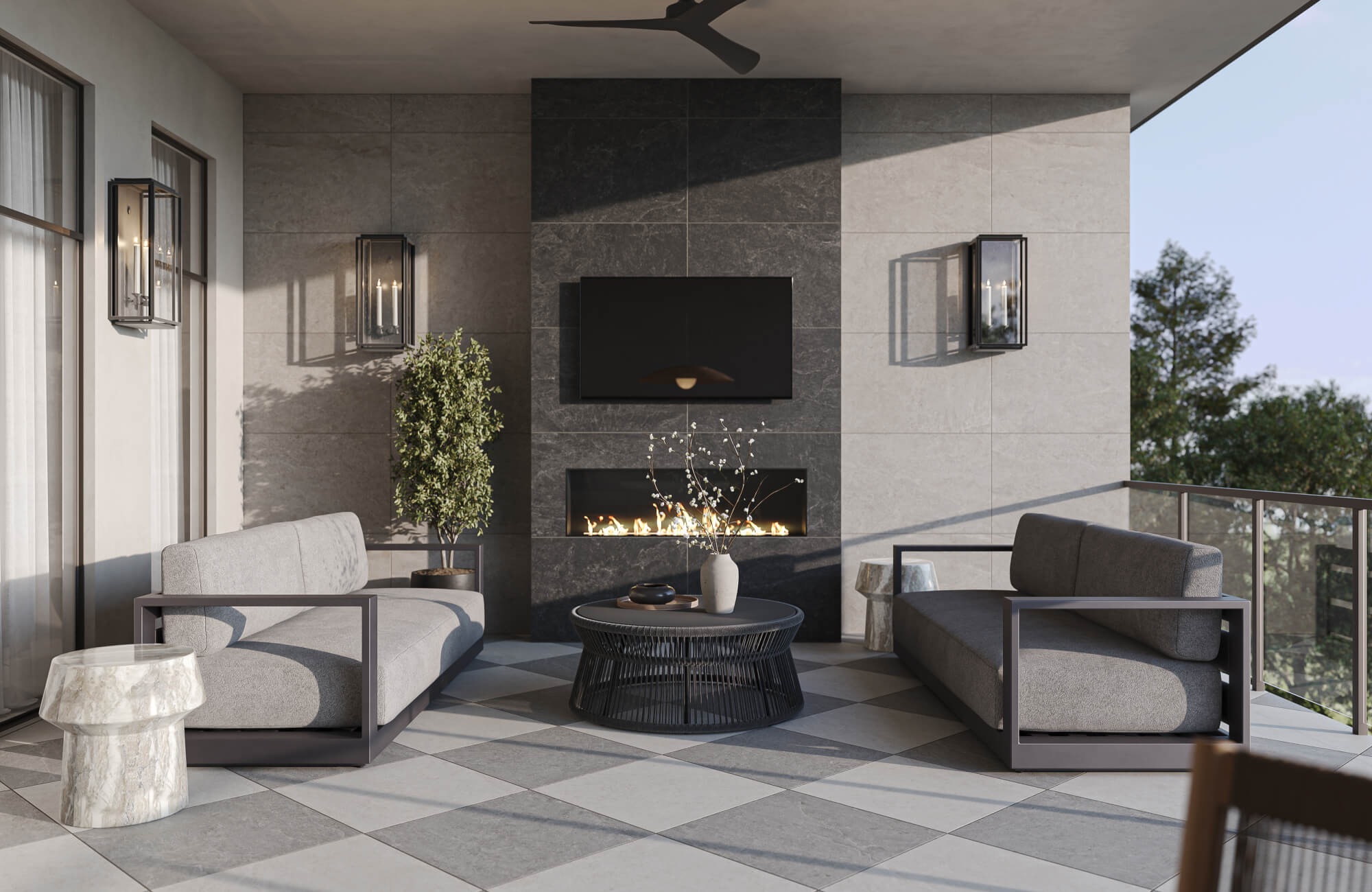
A widely accepted guideline in spatial planning is maintaining at least thirty-six inches of clearance for primary walkways. This measurement allows for comfortable movement without the need to turn sideways or adjust posture, especially when paired with structured surfaces like Edward Martin’s Ramsey 24x24 Grip Porcelain 2cm Paver Tile in Putty, as seen in the image above, which reinforces both durability and visual continuity across busy areas.
On patios designed for entertaining, this rule becomes even more critical. Guests should be able to circulate freely, whether moving from a dining area to a lounge space or simply navigating around seating arrangements. Respecting this clearance ensures that the space feels open and welcoming rather than restrictive.
Leaving Breathing Room Around Exterior Doors
Doors that connect indoor and outdoor spaces require additional consideration. These entry points act as transitions, and they must remain unobstructed to maintain both functionality and visual flow.
Allowing sufficient space for doors to fully open, along with extra clearance for people entering and exiting, prevents congestion. This breathing room also enhances the sense of openness, reinforcing the connection between interior and exterior living areas.

Segmenting Your Patio Into Functional Lifestyle Zones
With movement patterns defined, the patio can now be shaped into purposeful areas that reflect how you live and entertain. Dividing the space into distinct zones introduces structure while maintaining a cohesive overall design. This approach allows each section to serve its role without competing for attention.
Determining Dining Versus Lounging Priorities
The balance between dining and lounging areas depends largely on how you intend to use the space. For those who frequently host gatherings, a generously sized dining area may take precedence. Alternatively, if relaxation and conversation are the primary goals, a lounge-focused layout may be more appropriate.
Understanding these priorities allows you to allocate space accordingly. It ensures that each zone feels purposeful rather than secondary, preventing the common mistake of overcrowding one area while neglecting another.
Using Outdoor Rugs To Define Boundaries
Outdoor rugs serve an essential role in visually organizing a patio. Beyond their aesthetic appeal, they act as anchors that define the boundaries of each zone, much like Edward Martin’s Marroway Indoor/Outdoor Rug in Brown / Black, 7'10" x 10'9", shown in the image above, which subtly grounds the seating area while introducing layered texture.
A well-sized rug beneath a dining table or seating arrangement creates a sense of cohesion, grounding the furniture and enhancing the overall composition. When selecting rugs, scale is crucial, as the rug should be large enough to accommodate all key furniture pieces within a zone, reinforcing its identity without feeling disconnected from the surrounding space.

Calculating The Exact Space Needed For Outdoor Dining Sets
As zones begin to take form, the dining area demands a more detailed level of planning due to its dynamic use. Unlike static seating, dining arrangements require additional space for movement and interaction. Understanding these spatial requirements ensures that comfort is never compromised.
Factoring In The Chair Push Out Zone
One of the most commonly overlooked aspects of patio planning is the space needed for chairs to be pulled out. Each chair requires additional clearance behind it, typically around twenty-four to thirty inches, to allow for comfortable seating and movement.
Without this allowance, the dining area can feel cramped, making it difficult for guests to sit down or stand up with ease. Accounting for this push-out zone ensures that the dining experience remains effortless and enjoyable.
Sizing The Table For Your Guest Count
The size of your dining table should reflect both your typical and occasional hosting needs. A table that comfortably accommodates your usual number of guests while allowing for some flexibility is ideal, as seen with Edward Martin’s Mysa Round Dining Table, 60", featured in the image above, which offers a balanced footprint for intimate gatherings without overwhelming the space.
Round tables can encourage conversation and work well in more compact spaces, while rectangular tables often suit larger patios and formal dining arrangements. By aligning the table size with your spatial measurements and lifestyle needs, you create a dining area that feels both functional and refined.

Sizing Deep Seating Lounge Furniture And Fire Pit Configurations
Beyond dining, lounge areas introduce larger, more relaxed furnishings that define the atmosphere of the patio. These pieces often anchor the design, making their scale and placement especially important. Careful sizing ensures that the space remains inviting without feeling crowded or unbalanced.
The Footprint Of A Luxury Outdoor Sectional
Deep seating sectionals are designed for comfort, often featuring generous proportions. While this adds to their appeal, it also means they occupy a significant footprint.
Measuring the full dimensions of the sectional, including any chaise extensions or corner units, is essential. Additionally, allowing space around the seating for side tables or circulation ensures that the arrangement feels balanced rather than crowded.
Safe Clearances For Gas And Wood Fire Pits
Fire pits introduce both ambiance and functional warmth, but they also require careful placement. Maintaining safe distances between the fire pit and surrounding furniture is crucial for both comfort and safety, particularly when anchoring larger layouts with pieces like Edward Martin’s Maris Teak Rectangular Dining Table, 96" x 42", as seen in the image above, which demonstrates how scale and spacing work together in open-air settings.
Adequate clearance prevents heat exposure from becoming uncomfortable while also allowing for easy movement around the feature. This thoughtful spacing enhances the usability of the lounge area, making it a central gathering point rather than a restrictive element.

Testing Your Furniture Layout With A Physical Mockup
After refining measurements and layouts on paper, translating those plans into a real-world preview offers valuable perspective. A physical mockup allows you to experience the space as it will function day to day. This final step helps confirm that every element works together seamlessly before any permanent decisions are made.
The Painters Tape Layout Method
Using painter’s tape to outline the dimensions of furniture directly on your patio surface is a simple yet effective technique. By marking the exact footprint of each piece, you can see how they relate to one another and to the overall space.
Walking through these outlined areas provides a realistic sense of scale and movement. It allows you to identify potential issues, such as tight walkways or awkward placements, before they become permanent.
Using Cardboard Boxes To Gauge Vertical Volume
While floor outlines help with horizontal planning, they do not convey the vertical presence of furniture. Cardboard boxes can be used to approximate the height and bulk of key pieces, offering a more complete understanding of how the space will feel.
Stacking boxes to match the dimensions of sofas, tables, or fire pits allows you to assess sightlines and visual balance. This added layer of testing ensures that your patio not only functions well but also maintains a harmonious aesthetic. For those seeking a more tailored approach, Edward Martin’s design services offer professional guidance that refines these early layouts into fully realized outdoor environments, ensuring every detail aligns with both spatial requirements and design intent.
If questions arise during planning or if you prefer expert input from the outset, you can contact Edward Martin to explore how your patio can be thoughtfully measured, planned, and transformed into a cohesive outdoor living space.
Designing A Flawless Outdoor Retreat
Measuring your patio and determining what furniture will fit is a process that demands both precision and thoughtful consideration. It is not merely about filling a space, but about shaping an environment that reflects your lifestyle and design sensibilities.
By taking accurate measurements, accounting for movement and clearances, and testing your layout before making final decisions, you create a patio that feels intentional and refined. Each piece of furniture finds its place naturally, contributing to a cohesive and inviting outdoor retreat. In the end, the difference between a well-designed patio and one that falls short often lies in the details. When every dimension is considered and every placement is purposeful, your outdoor space becomes more than just an extension of your home. It becomes a destination in itself, where comfort, functionality, and elevated design come together seamlessly.