Selecting the right black bathroom vanity involves balancing structural performance, material durability, and design cohesion to ensure the space remains both functional and visually compelling. As each component, from substrates to lighting, works together, the bathroom adopts a refined modern identity that feels intentional rather than improvised. By prioritizing moisture-resistant construction, ergonomic planning, and coordinated finishes, you can create a vanity setup that supports daily routines with ease. The integration of advanced storage engineering and thoughtful lighting also ensures the vanity enhances clarity and comfort across all bathroom sizes. Ultimately, these considerations shape a modern bathroom environment where every detail reinforces the strength and sophistication of a black vanity centerpiece.

Structural Configuration and Mounting Style
Choosing the right structural configuration ensures the black bathroom vanity integrates seamlessly into the modern layout, allowing each architectural element to work in concert with the room’s overall flow. As these choices influence both movement and visual clarity, the mounting style becomes a foundational decision that informs the bathroom’s spatial rhythm.
Wall-Mounted (Floating) Vanity Engineering
A floating vanity introduces visual lightness, allowing the eye to travel beneath the cabinet and perceive the bathroom as more open and continuous. This elevated profile gains strength from reinforced blocking, which stabilizes the cabinet and supports the combined load of hardware and stone surfaces. As the design hovers above the floor, moisture can also dissipate more efficiently, supporting better long-term maintenance in high-humidity conditions. Integrated under-vanity LEDs enhance this effect, softening shadows and creating a gentle glow that underscores the minimalist form. Because every component works together to produce a clean and uninterrupted line, the result supports a distinctly contemporary aesthetic. Together, these engineered details allow floating vanities to deliver both visual minimalism and long-term structural stability in modern bathroom environments.
Freestanding Vanity Architecture
A freestanding vanity offers flexibility as its structural independence accommodates existing plumbing layouts, allowing remodels to proceed without major alterations. Its greater internal volume naturally invites more complex storage configurations, supporting deeper drawers and expanded compartments. As the base meets the floor, recessed toe-kicks also provide ergonomic comfort while preserving the streamlined geometry associated with modern design. This grounded appearance contrasts gently with the airiness of floating forms, creating an alternative expression of contemporary refinement.
A design like Edward Martin’s Gemma 55" Single Vanity in Satin Black Veneer with Carrara Marble Top (displayed in the photo above) exemplifies this balance, pairing a substantial furniture-like silhouette with the elevated elegance of natural stone. As a result, freestanding vanities offer a refined blend of functionality and design presence that suits both contemporary and transitional bathroom layouts.
Size, Proportion, and Circulation Efficiency
Proportion plays a pivotal role in ensuring the vanity aligns with the room’s architectural rhythm, allowing adjacent fixtures to coexist without visual competition. By matching the vanity’s width to tile grids or window centers, the layout gains a sense of deliberate structure that guides the viewer’s eye naturally across the space. Depth also matters, as shallow profiles help preserve circulation in narrow pathways while deeper configurations suit expansive rooms. In addition, height adjustments can enhance ergonomic comfort, especially when sink types or faucet styles influence reach and posture. When the vanity’s dimensions harmonize with the mirror scale and wall height, the ensemble feels balanced rather than forced. This harmony of proportion ensures the vanity enhances the room’s architectural flow rather than interrupting it.

Material Composition, Finish Quality, and Moisture Resistance
The material composition of a black vanity directly influences its durability under constant humidity cycles, making substrate selection essential for long-term performance. As finishes must complement these materials, the combination of structure and coating determines how well the vanity preserves its modern aesthetic over time.
Substrate Engineering for Humidity Control
Plywood built with marine-grade adhesives forms a stable foundation, resisting delamination even as temperature and humidity shift throughout the day. High-density fiberboard then adds precision and uniformity, creating a refined base that helps black finishes appear smoother and more consistent. Moisture-resistant MDF extends this stability by maintaining its shape when ventilation fluctuates, allowing contemporary silhouettes to remain crisp. Solid hardwood, though inherently strong, also performs best when kiln-dried and sealed, tempering its natural response to steam and heat. When these materials work in concert, the vanity’s core stays balanced despite environmental changes. This thoughtful pairing of substrates ultimately elevates long-term durability, ensuring reliable performance in moisture-intensive spaces.
Finish Systems and Color Stability
UV-cured coatings establish the depth of the black finish by resisting fading and maintaining clarity even under strong lighting. Soft-touch matte treatments build on this stability, dispersing fingerprints and reducing oil visibility to create a more refined tactile surface. Thermofoil, while a more economical option, also performs reliably when its edges are meticulously sealed, preventing moisture from infiltrating or lifting the film. Polyurethane layers further reinforce the finish against everyday abrasions, adding dependable resilience for busy spaces. Satin coatings then introduce a gentle sheen that lightens the visual weight of black without disrupting its modern simplicity. Together, these finishing methods ensure long-lasting color integrity, tactile refinement, and surface durability consistent with contemporary design expectations.
Hardware and Joinery for Structural Longevity
Dovetail joinery strengthens each drawer by distributing load through interlocking components, ensuring durability even with constant daily use. For instance, corrosion-resistant metals such as stainless steel and zinc alloys keep hardware stable and clear despite frequent exposure to moisture. Soft-close hinges then protect both the finish and the internal frame by preventing the repeated impacts that accelerate wear. In addition, metal-reinforced drawer bases counteract sagging, maintaining reliable storage capacity as heavier items accumulate. Edge banding further safeguards the substrate by preventing moisture intrusion and preserving the vanity’s core structure over time. Together, these hardware and joinery elements create a system that remains mechanically sound, visually consistent, and dependable for long-term use.

Storage Engineering and Functional Interior Layout
Functional interior layouts enhance the practicality of black vanities, transforming them from simple storage units into efficient grooming stations. By merging engineering precision with thoughtful organization, these systems enable daily routines to unfold with ease and consistency.
Drawer System Optimization
Full-extension glides allow drawers to open completely, revealing the entire storage cavity so items never get lost in dim, inaccessible corners. With the full depth now accessible, deep compartments can then support tall bottles and styling tools, creating structured zones that keep the countertop clear. Internal dividers refine that organization further, ensuring smaller essentials stay neatly contained through daily routines. Reinforced bases also prevent bowing under weight, preserving the drawer’s strength and long-term reliability.
This thoughtful approach is exemplified in designs like the Elodie 48" Single Vanity in Black Onyx with 3 cm White Zeus Quartz Top, as shown in the picture above, where multiple drawers work together to maximize storage while maintaining a streamlined, modern façade. With such attention to layout and usability, the vanity becomes a highly organized, efficient workstation that supports everyday living with ease.
Plumbing-Smart Storage Architecture
Drawers with U-shaped cutouts wrap neatly around plumbing fixtures, preserving storage that would otherwise be lost. Modular configurations, on the other hand, adapt seamlessly to both wall-mounted and freestanding systems, providing flexibility for any bathroom layout. At the same time, vertical pull-outs make efficient use of space for tall, narrow items, complementing broader drawers, and additional trays or tiered inserts keep frequently used accessories organized without crowding the main compartments. Careful spacing also ensures that plumbing remains accessible for maintenance without major disassembly, so the system balances storage efficiency with serviceability, creating a streamlined, user-friendly design.
Integrated Power, Lighting, and Smart Features
Built-in electrical outlets keep grooming appliances ready to use without cluttering the countertop. USB ports extend this convenience to small electronics, supporting modern digital habits. Motion-activated LEDs also illuminate drawer interiors, offering visibility when ambient lighting is low. Additionally, heat-resistant compartments allow hair tools to cool safely inside the vanity without posing a hazard. These integrations maintain the vanity’s minimalist exterior by eliminating loose cords or countertop devices while supporting modern routines without compromising its clean, contemporary silhouette.

Countertop Pairings, Sink Configurations, and Hardware Compatibility
The pairing of countertops, sinks, and hardware directly shapes the vanity’s usability while reinforcing the sophisticated aesthetic associated with modern bathrooms. When these components work together cohesively, the vanity becomes a visually anchored and highly functional centerpiece.
Countertop Materials for Modern Black Vanities
Quartz delivers a clean contrast to black cabinetry while offering exceptional stain and crack resistance, while sintered stone enhances this resilience with near-zero porosity, making it particularly suitable for wet zones. Solid-surface materials also create seamless edges that unify the vanity’s silhouette, emphasizing modern simplicity. On the other hand, natural stone, including marble, introduces organic veining and tonal variation that add depth and a sense of timeless luxury. Lighter colors brighten the space further by offsetting the visual depth of the black base. A design like our Josephine 48" Single Vanity in Satin Drifted Black Veneer with Carrara Marble Top, as featured in the photo above, exemplifies how a natural stone surface can enrich contrast, accentuate craftsmanship, and elevate the vanity’s modern architectural presence.
Sink Types and Ergonomic Integration
Undermount sinks streamline cleaning by eliminating edges where debris can collect, maintaining a crisp, uncluttered appearance, while integrated sink-countertop units reinforce minimalism by blending surfaces into one continuous form. Vessel sinks then introduce sculptural interest, creating a sense of vertical balance when paired with lower counter heights, whereas semi-recessed sinks strike a compromise between artistic shape and everyday ergonomics. By coordinating sink depth with faucet projection, designers minimize splashing and maximize comfort, ensuring that each choice contributes to a balanced interface that feels as functional as it is visually refined.
Coordinated Hardware and Fixture Finishes
Brushed nickel introduces a soft metallic counterpoint to black cabinetry, adding gentle luminosity to the design, while matte black hardware preserves a unified, monochromatic palette that supports minimalist aesthetics. In addition, aged brass layers in warmth and tonal richness, deepening the vanity’s visual character, and linear pulls emphasize clean geometry, subtly reinforcing the space’s horizontal and vertical rhythms. High-performance coatings also ensure that these finishes withstand moisture and resist discoloration or corrosion, allowing their visual impact to endure. When thoughtfully harmonized throughout the room, hardware choices unify the overall design, reinforcing the vanity’s role as a compelling focal point.

Lighting Strategy, Spatial Integration, and Cohesive Design
Proper lighting and spatial coordination ensure that a black vanity remains visually clear and well-balanced within the modern bathroom environment. When these elements work harmoniously, the vanity becomes a grounded focal point that elevates the entire room.
Layered Lighting for Dark Vanity Surfaces
Vertical sconces reduce shadows by providing even illumination across the user’s face, supporting grooming accuracy, while backlit mirrors introduce ambient halos that soften the depth of the black cabinetry. At the same time, high-CRI LEDs maintain accurate color perception, a crucial factor in makeup application and daily preparation. Perimeter cove lighting also adds a gentle atmospheric glow that enhances visual comfort, while under-vanity LEDs extend the floating effect or add dimension to grounded designs. This layered approach ensures the vanity remains visually clear and aesthetically striking within modern lighting schemes.
Spatial Balance and Architectural Alignment
Positioning the vanity to benefit from natural light reduces dependence on artificial brightness and enhances visual clarity. For instance, aligning the vanity with key architectural features, such as centered windows, tile lines, or wall niches, creates an intentional sense of structure. Sufficient clearance around the vanity also ensures comfortable movement through the room without interruption.
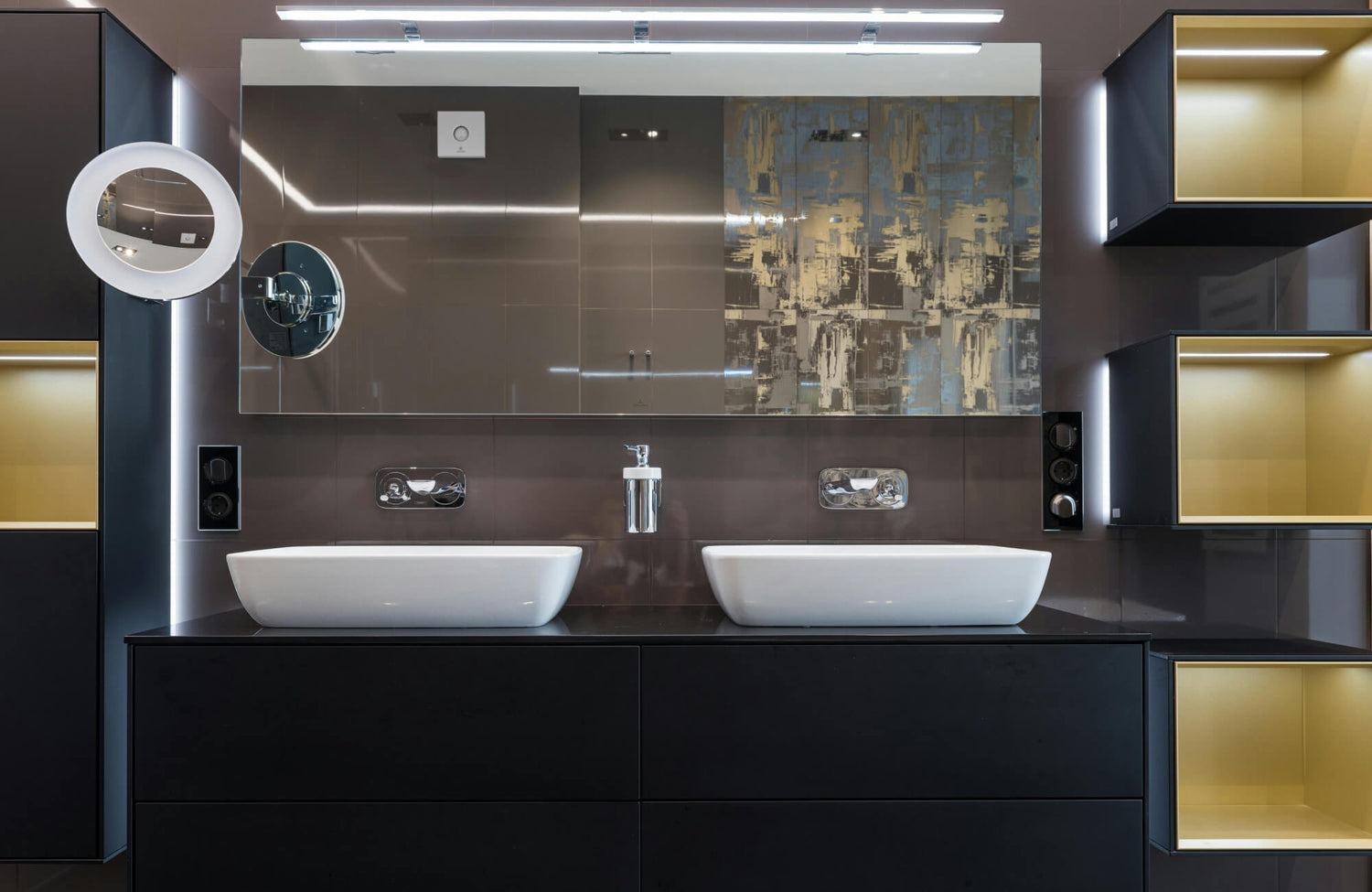
Proportional relationships between the vanity and mirrors further help maintain equilibrium across vertical and horizontal planes. A double-vanity design like the Maxine 72" Double Vanity in Black Wash Oak Veneer with Carrara Marble Top demonstrates this balance beautifully. As displayed in the photo above, its width, mirror alignment, and symmetrical faucet placement create a grounded focal point that reinforces the room’s architectural rhythm. Through this mindful alignment, the vanity anchors the room with clarity and architectural intention.
Material Coordination for Unified Aesthetics
Large format tiles contribute visual continuity by minimizing grout lines and reinforcing the vanity’s linear forms. Meanwhile, frameless shower enclosures maintain open sightlines, ensuring the dark vanity does not visually overwhelm the space. Textured surfaces, such as stone look porcelain or microcement, also introduce depth that complements the vanity without competing for attention. Coordinated metals across faucets, pulls, and fixtures, then unify the palette, making every detail feel intentional. When these materials align, the bathroom takes on a consistently modern identity. When materials work cohesively, the vanity becomes an integral element that strengthens the bathroom’s unified modern character.
Refining Your Modern Bathroom Design Vision
Selecting the right black bathroom vanity involves balancing structural performance, material durability, and design cohesion to ensure the space remains both functional and visually compelling. By prioritizing moisture-resistant construction, ergonomic planning, and coordinated finishes, you can create a vanity setup that supports daily routines with ease. The integration of advanced storage engineering and thoughtful lighting also ensures the vanity enhances clarity and comfort across all bathroom sizes. Ultimately, these considerations shape a modern bathroom environment where every detail reinforces the strength and sophistication of a black vanity centerpiece.
For those seeking expert guidance, Edward Martin’s design services provide tailored support that brings these ideas to life with precision and artistry. Contact us to begin crafting a modern bathroom that reflects your vision from concept to completion!