Decorative sculptures have the ability to change how a room feels, not just how it looks. Because they bring form, texture, height, and material presence into a space, they can turn a simple tabletop, shelf, entry console, or empty corner into a more intentional design moment.
More importantly, sculptures give interiors a sense of artistry and personal expression that flat decor alone often cannot achieve. Whether abstract, figurative, organic, collected, or architectural, the right sculptural piece can guide the eye, balance furniture, create shadow, and make a room feel layered, curated, and deeply considered.

Displayed on the bookshelf, the Drayton Marble Sculpture Set introduces sculptural form and layered material contrast, adding depth, visual interest, and an elevated artistic touch to the space
Creating Visual Focal Points With Sculptural Forms
Decorative sculptures can guide the eye and give a room a clear point of interest. Through form, scale, and placement, they help interiors feel intentionally composed rather than filled with accessories that simply occupy empty surfaces.
Using Sculptures To Anchor A Room
A well-chosen sculpture can act as a visual anchor by giving the room a strong central element around which the surrounding furniture and decor can relate. In an entryway, a substantial piece on a console can immediately establish the tone of the space, while a sculpture placed on a mantel, sideboard, or pedestal can help organize the visual hierarchy of a living room or dining area. The key is to select a piece with enough scale and silhouette to hold attention from a distance.
Scale should be considered in relation to the furniture and architectural setting. A small object may get lost on a long console or under a tall ceiling, while an oversized piece can overwhelm a narrow surface or compact room. Look for proportion, contrast, and negative space when styling sculpture, allowing the object to feel important without crowding nearby lamps, artwork, mirrors, or tabletop decor. A strong sculptural anchor should feel deliberate, balanced, and visually integrated with the room’s composition.
Directing The Eye Through Shape And Height
Sculptural form can influence how the eye travels through a room. Vertical sculptures draw attention upward and can emphasize ceiling height, tall windows, or vertical millwork, while low, horizontal forms create visual weight on coffee tables, shelves, or consoles. Curved sculptures can soften rectilinear furniture, angular objects can add structure, and asymmetrical forms can introduce movement in spaces that otherwise feel too predictable.
Height variation is especially useful in layered interior styling. A tall sculpture may work well beside stacked books or a table lamp, while a lower rounded form can ground a tabletop vignette without blocking sightlines. When used thoughtfully, sculptural objects create a visual rhythm that leads the eye from one element to another. This allows the room to feel dynamic while still maintaining a controlled, professional composition.
Highlighting Architectural Features
Sculptures can help emphasize architectural features by giving niches, alcoves, built-ins, fireplaces, and stair landings a clearer purpose. A recessed wall niche can become a gallery-like display area when it holds a single sculptural object, while built-in shelving can feel more dimensional when books and storage are balanced with organic or abstract forms. In these settings, the sculpture does more than decorate the surface; it activates the architecture around it.
Placement should take advantage of framing elements such as millwork, wall color, lighting, and surrounding finishes. A sculpture displayed against a contrasting wall can stand out more clearly, while one placed within softly lit shelving can feel integrated and intimate. Accent lighting, picture lights, or recessed downlights can further define the object’s silhouette and shadow. When the placement feels connected to the architecture, the sculpture appears less like an added accessory and more like a considered part of the design.

Ashwell Marble Sculpture introduces a bold geometric silhouette and natural stone veining, creating a sophisticated focal point that adds dimension, texture, and artistic character to shelves, consoles, or tabletops
Adding Texture And Material Contrast
Sculptures introduce tactile surfaces that can make interiors feel richer, more layered, and more visually complete. By choosing materials such as stone, ceramic, metal, wood, glass, or resin, you can create contrast against upholstery, case goods, wall finishes, and architectural elements.
Stone And Marble For Natural Weight
Stone and marble sculptures bring a sense of permanence to an interior because they carry visual weight, mineral variation, and a naturally substantial presence. Their veining, tonal movement, and carved surfaces can make a room feel more grounded, especially when placed on a console, pedestal, bookshelf, or coffee table. Unlike lightweight decorative accessories, stone pieces often read as architectural objects, which helps them add structure to softer rooms.
These sculptures work particularly well in spaces with wood, linen, plaster, leather, or woven textiles because the density of stone creates a strong but refined contrast. A marble object on a warm wood sideboard can highlight both materials, while a limestone or travertine sculpture near linen upholstery can reinforce a calm, organic palette. For best results, use stone pieces where their mass feels intentional, not crowded, and allow enough negative space around them so the natural veining and silhouette remain visible.
Ceramic And Terracotta For Handmade Warmth
Ceramic, clay, and terracotta sculptures add warmth through irregular forms, softened edges, and hand-finished surfaces. These materials often show subtle variations in glaze, firing, texture, and color, which gives them an artisanal quality that feels personal rather than overly polished. In interiors with clean-lined furniture, a ceramic or terracotta sculpture can soften the arrangement and introduce a more human, crafted element.
They are especially effective on shelves, sideboards, dining consoles, and accent tables where a hand-formed look can break up straight lines and smooth finishes. A matte ceramic sculpture can feel quiet and contemporary, while terracotta brings an earthier, warmer tone that pairs well with plaster walls, natural wood, woven rugs, and neutral upholstery. When styling these pieces, consider grouping them with books, vessels, or low lighting to emphasize their tactile character without making the surface feel cluttered.
Metal For Reflective Definition
Metal sculptures bring definition, contrast, and a sharper edge to interior styling. Brass and bronze can introduce warmth and a subtle glow, while iron, steel, or blackened metal can create a more graphic and grounded presence. Polished metal reflects light and adds brightness, while aged or patinated finishes create shadow, depth, and a more collected appearance.
This makes metal sculptures especially useful in modern, transitional, and glamorous interiors where a room needs more visual structure. A brass sculpture can connect with warm lighting, cabinet hardware, or a gilded mirror, while a dark iron piece can add contrast against pale walls, stone surfaces, or cream upholstery. Because metal can easily become visually dominant, it is often most effective when used as a focused accent rather than repeated too heavily throughout the room.
Wood And Woven Forms For Organic Texture
Wood and woven sculptural forms introduce natural tactility through grain, carving, fiber, and handcrafted construction. Carved wood pieces can bring warmth and movement to a room, while rattan, cane, or woven sculptures create a lighter, more breathable texture. These materials are especially helpful in interiors that feel too polished, cool, or hard-edged because they add softness without relying on pattern or strong color.
They also pair well with neutral palettes, boucle seating, stone surfaces, linen textiles, and earthy interiors where organic materials are already part of the design language. A carved wood sculpture on a console can echo flooring or furniture tones, while a woven object can connect to baskets, shades, rugs, or natural fiber accents. To keep the look refined, choose sculptural forms with clear silhouettes and avoid over-layering too many woven pieces in one vignette.

Drayton Marble Sculpture Set introduces vertical variation and sculptural form that helps create a balanced composition among the books and shelving, complemented by Plateau Wallpaper in Taupe II, 52" x 132" which adds subtle pattern and visual rhythm
Improving Balance Scale And Proportion
Sculptures can help correct visual imbalance by filling negative space, varying height, and adjusting the perceived weight of a room. When used thoughtfully, sculptural decor supports proportion across furniture, walls, and surfaces, making the overall composition feel more intentional and visually resolved.
Balancing Large Furniture Pieces
Large furniture pieces such as sofas, beds, consoles, credenzas, and dining tables can dominate a room if they are not balanced by smaller but visually meaningful elements. Decorative sculptures help offset that mass by adding shape, height, and dimensional contrast near or around these larger forms. For example, a sculptural object on a console behind a sofa can prevent the seating area from feeling too horizontal, while a substantial piece on a dining sideboard can help balance the length and weight of a large table.
The goal is not to compete with the furniture but to create a more complete visual hierarchy. A low, rounded sculpture can soften the strong lines of a rectangular coffee table, while a taller vertical form can balance the breadth of a wide console or headboard. In design terms, sculptures can act as counterweights, giving the eye another point of interest so that large furniture does not feel flat, heavy, or visually unfinished.
Filling Empty Corners Without Clutter
Empty corners can make a room feel unresolved, but they do not always need another chair, cabinet, floor lamp, or plant. Pedestal sculptures, floor sculptures, and tall decorative objects can activate these areas without adding bulky storage or unnecessary furniture. This is especially useful in entryways, stair landings, living rooms, and dining rooms where an empty corner needs presence but not additional function.
A pedestal sculpture can create a gallery-like moment, while a tall sculptural vessel or abstract floor piece can add height and form without blocking circulation. These pieces are particularly effective in corners where a plant would not receive enough light or where a lamp would feel redundant. To keep the arrangement refined, allow breathing room around the sculpture and avoid surrounding it with too many small accessories, which can weaken its impact.
Adjusting Shelf And Tabletop Composition
Sculptural objects are valuable in shelf and tabletop styling because they break up repetition. Rows of books, framed photos, vases, or storage boxes can feel static when everything has a similar height or shape. Adding a sculpture introduces a different silhouette, creating contrast in profile, material, and dimensionality. This helps the vignette feel curated rather than simply arranged.
For a more dynamic composition, vary height, width, and form across the surface. A tall narrow sculpture can add vertical movement to a bookshelf, while a compact, rounded piece can ground a coffee table or side table. Also, balance sculptural decor with books, trays, vessels, or lamps to create layered groupings with negative space between objects. This approach keeps shelves and tabletops visually interesting while still feeling orderly and intentional.

Westby Marble Sculpture expresses personal style through its artistic circular form, natural veining, and distinctive cutout, adding curated character to consoles, shelves, or tabletops
Expressing Personal Style And Artistic Identity
Decorative sculptures allow interiors to feel more personal, expressive, and intentionally curated. Beyond filling a surface, they can communicate taste, artistic preference, cultural influence, and the emotional tone you want the space to convey.
Abstract Sculptures For Modern Expression
Abstract sculptures bring movement and interpretation to an interior without relying on a literal subject. Their forms may be curved, fragmented, geometric, fluid, or asymmetrical, allowing each viewer to read them differently. This makes them especially effective in contemporary, minimalist, and gallery-inspired spaces, where the goal is often to create visual interest through shape, proportion, and negative space rather than ornament.
Because abstract pieces do not have to represent a recognizable figure or object, they can adapt to many design schemes. A smooth white abstract form can soften a clean-lined console, while a dark angular sculpture can add contrast to a pale room. When selecting an abstract sculpture, consider how its silhouette interacts with nearby furniture, artwork, and lighting so it feels intentional rather than visually random.
Figurative Sculptures For Classical Influence
Figurative sculptures, including busts, human forms, hands, faces, and body-inspired silhouettes, can introduce historical reference and narrative depth into a room. These pieces often carry associations with classical art, museum collections, and traditional interiors, making them useful when a space needs elegance, symbolism, or a stronger sense of heritage. Even a small figurative object can give a shelf, mantel, or pedestal a more collected and thoughtful presence.
They work especially well in traditional, transitional, and eclectic rooms where old and new elements are intentionally layered. A classical bust can contrast beautifully with modern furniture, while a simplified figure can bring softness to a contemporary setting. To avoid making the room feel overly formal, pair figurative sculptures with relaxed materials such as linen, wood, ceramic, or aged metal so the composition feels balanced and livable.
Nature-Inspired Sculptures For Organic Calm
Nature-inspired sculptures create a quieter connection to the outdoors through forms that reference branches, shells, animals, stones, leaves, or botanical shapes. These pieces can make a room feel calmer and more grounded because they echo familiar organic forms without necessarily using bright color or busy pattern. Their appeal often comes from irregular edges, flowing lines, and natural textures that soften the built environment.
They are particularly effective in coastal, rustic, biophilic, and earth-toned interiors. A shell-like sculpture can support a coastal palette without becoming overly themed, while a stone or branch-inspired object can reinforce a room with wood furniture, woven rugs, clay vessels, or linen upholstery. For a refined effect, choose nature-inspired pieces that suggest the natural world through form and material rather than relying on overly literal decoration.
Collected Pieces For A Curated Look
Collected sculptures, such as travel finds, artisan-made objects, vintage pieces, and limited-edition works, can make interiors feel more layered and personal. These objects often carry a story, whether they come from a meaningful trip, a local maker, an antique market, or a favorite artist. Because of that personal connection, they can make a room feel less showroom-like and more reflective of the people who live there.
The most successful collected displays are edited rather than crowded. A few meaningful pieces placed with intention will usually feel stronger than many unrelated objects grouped together. Consider giving each sculpture enough negative space so its shape, material, and story can be appreciated. When combined with books, textiles, lighting, and furniture that support the same mood, collected sculptures help create an interior that feels thoughtful, distinctive, and genuinely lived in.

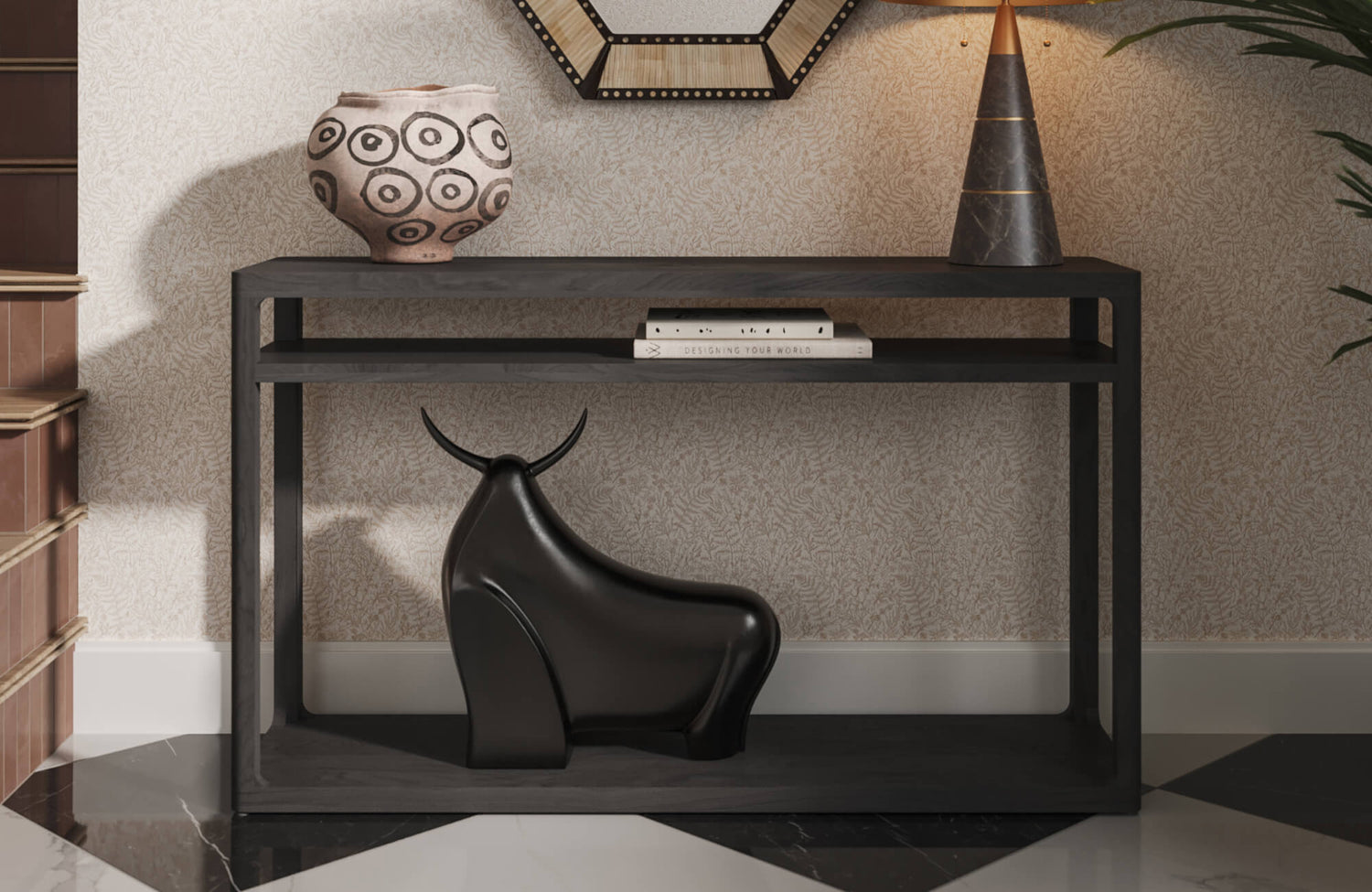
Morton Bull and the Westby Marble Sculpture add sculptural contrast and artistic depth to this contemporary entryway
Styling Sculptures In Different Rooms
The best sculpture placement depends on the room’s function, furniture layout, and the way people move through the space. When chosen with proportion and purpose in mind, sculptures can add polish without interrupting comfort, circulation, or everyday use.
Entryways
An entryway sculpture can introduce the space’s design tone before guests move into the main living areas. A single strong piece on a console, pedestal, or entry table often feels more refined than several small accessories because it gives the arrival zone a clear focal point. In compact foyers, choose a sculpture with a distinctive silhouette but a modest footprint, while larger entry halls can support taller or more substantial forms that hold attention from a distance.
The surrounding styling should also remain edited so the sculpture does not compete with keys, trays, mirrors, lamps, or floral arrangements. A pedestal sculpture can create a gallery-inspired moment, while a console sculpture can pair well with a mirror or artwork above it. For a polished effect, leave enough negative space around the piece so the entry feels intentional rather than crowded.
Living Rooms
In living rooms, sculptures can add dimension to coffee tables, side tables, mantels, consoles, and built-ins. Since these areas are often used for both display and daily living, sculptural objects should enhance the room without taking over functional surfaces. A low sculpture can ground a coffee table arrangement, while a taller piece on a mantel or shelf can break up horizontal lines and draw the eye upward.
Pairing sculptures with books, trays, vessels, or small lamps can further create a layered vignette, but balance is essential. Coffee tables should still leave room for drinks, remotes, and personal items, while built-ins should include open space between objects to avoid a cluttered look. Materials can also support the room’s mood, such as stone for weight, ceramic for softness, metal for definition, or wood for warmth.
Bedrooms benefit from sculptures that add refinement without creating visual noise. Smaller pieces on dressers, nightstands, floating shelves, or window ledges can make the room feel more considered while preserving a restful atmosphere. Soft materials, rounded forms, matte finishes, and muted tones are especially effective because they contribute dimension without feeling too sharp, glossy, or visually active. Placement should support calm and ease of use. A sculpture on a dresser can serve as a quiet focal point, while a small object on a nightstand should leave space for lighting, books, and personal essentials. In bedrooms with layered bedding and textiles, sculptural accents can provide contrast through shape and material while still maintaining the relaxed mood needed for rest. Sculptures can make offices and libraries feel more thoughtful, collected, and less purely utilitarian. Abstract pieces can introduce creativity and movement, historical forms can suggest a scholarly tone, and collected objects can bring personal meaning to bookshelves, desks, or credenzas. In workspaces, sculpture should support focus rather than distract from it, so pieces with strong form but controlled scale often work best. Bookshelves and library walls are especially suitable for sculptural styling because objects can interrupt rows of books and create visual rhythm. A small bronze, carved wood form, ceramic object, or travel piece can make a shelf feel curated rather than merely filled. On desks, however, restraint matters; one well-placed sculpture or paperweight-style object can add character without reducing usable workspace. Decorative sculptures enhance interior design by adding three-dimensional form, tactile materiality, visual balance, and artistic identity to a room. They can create focal points, soften large furniture pieces, bring contrast to smooth surfaces, and introduce personality through abstract, figurative, organic, or collected forms. In addition, their interaction with surrounding architecture gives interiors a sense of depth that flat accessories cannot fully provide. When chosen with attention to placement, proportion, material, and mood, sculptures do more than fill empty areas; they create meaningful design moments that make a space feel expressive, polished, and thoughtfully complete. With that in mind, selecting the right decorative sculpture can help you complete a room with greater confidence and intention. For product questions, styling guidance, or help choosing a piece that complements your space, contact us and find the right accent for your interior!Bedrooms
Offices And Libraries
Decorative Sculptures Make Interiors Feel More Layered And Intentional