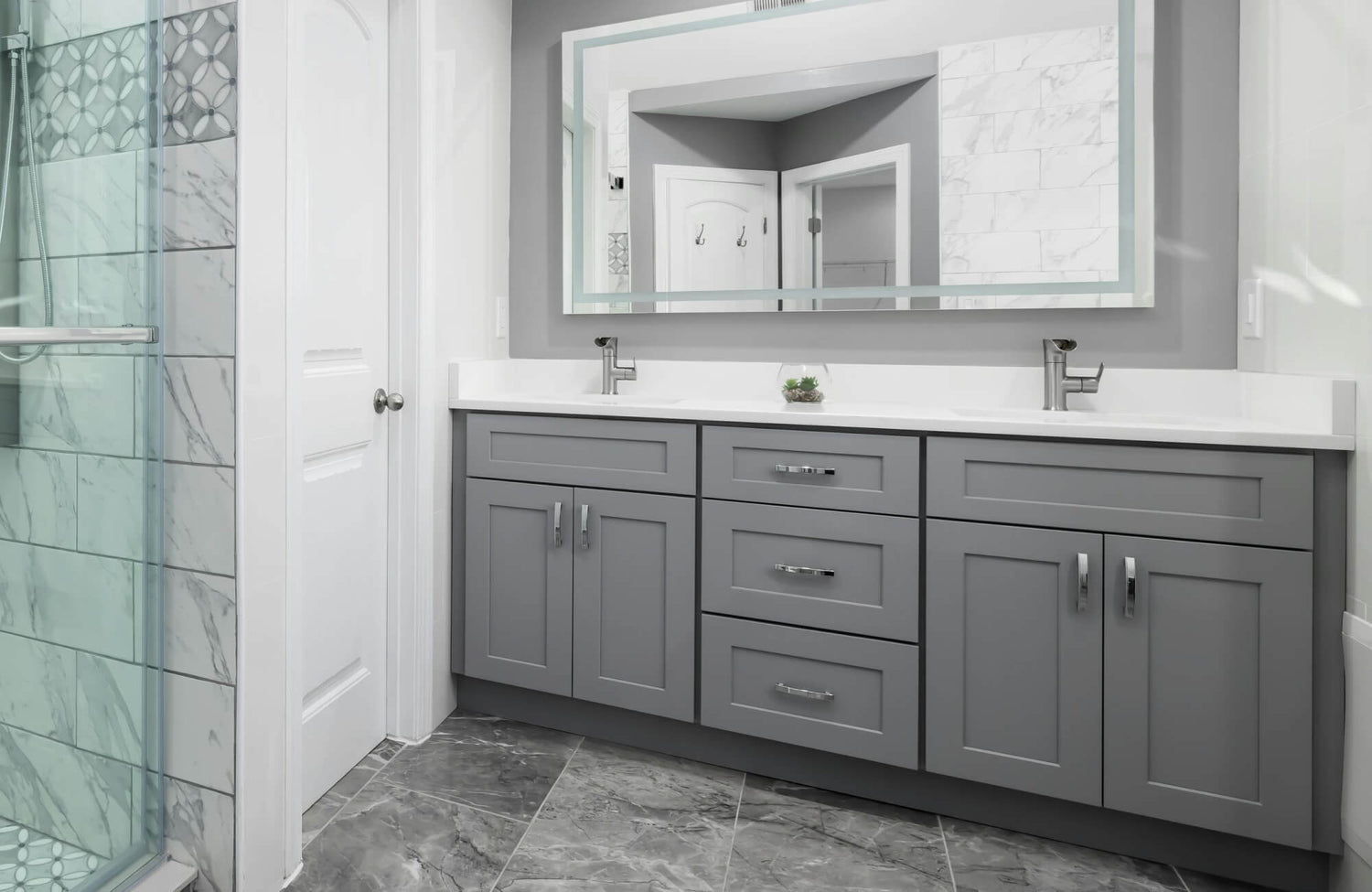
For years, gray has been the reigning choice in bathroom vanity design, celebrated for its ability to blend seamlessly with nearly any style or palette. Its quiet sophistication and unmatched adaptability have made it a reliable foundation, whether you prefer sleek modern lines or a more traditional aesthetic. Yet, as trends evolve and personal expression becomes central to design, many are exploring whether other vanity colors can match or even surpass gray’s versatility.
From the warmth of natural wood to the bold sophistication of black, and from the crisp freshness of white to the playful charm of pastels, each alternative offers its own personality and potential. By understanding the unique strengths of these shades, you can discover how different colors transform a bathroom and decide which one best reflects your taste and lifestyle.

Natural Wood
Although gray offers neutrality, wood vanities bring something different: soul, warmth, and a connection to nature. Whether light and breezy or dark and moody, wood has its own form of versatility that makes it a powerful alternative.
Light Oak
When you choose light woods such as oak or birch, your bathroom immediately feels brighter and more open. These pale tones carry a soft, understated presence that enhances minimalist or Scandinavian-inspired designs. The grain adds just enough texture to keep the space interesting, but never overwhelms, creating a calm and inviting atmosphere.
Light wood also reflects natural and artificial light beautifully, which makes it especially valuable in smaller bathrooms. A perfect example is our Elodie 60" Double Vanity in Light Natural Oak with 3 cm White Zeus Quartz Top, displayed in the photo above. Its light brown finish brings warmth while keeping the overall look clean and refreshing. If you want to give your space an airy, coastal feel, a light oak vanity like this can act as the perfect centerpiece, softening the edges of a modern bathroom while maintaining a versatile aesthetic.
Walnut
On the other end of the spectrum, walnut and mahogany bring drama and richness that instantly elevate your bathroom. Their deeper tones introduce a sense of gravitas, grounding the space with a look that feels both luxurious and timeless. For instance, our Demi 36" Single Vanity in Mid Century Walnut with 3 cm White Zeus Quartz Top showcases the depth and elegance of this classic wood tone, making it an excellent choice if you want your vanity to become a true focal point.
In addition, pairing a walnut vanity with marble countertops and brass hardware adds another layer of refinement. The contrast between the dark wood and lighter stone creates visual tension that feels deliberate and elegant. In larger bathrooms, especially darker woods can fill the space with warmth and sophistication without feeling heavy.
Grain and Finish
What makes wood vanities unique isn’t only the color; it’s the grain and finish that define their personality. Linear, straight grains, for instance, often give off a contemporary or modern impression, making them perfect for streamlined spaces. In contrast, cathedral or swirling grains evoke a handcrafted quality that feels more traditional and rooted in history.
Finishes also change the story your vanity tells. A matte or open-pore finish emphasizes the tactile qualities of natural wood, letting you literally feel the texture. Meanwhile, lacquered or polished surfaces add sheen and protection, shifting the vanity toward a more formal or refined look. With so many combinations, wood allows you to tailor your vanity to your exact vision.
Evolution of Patina
Perhaps the most captivating aspect of wood is that it changes with time. Unlike manufactured finishes that stay the same year after year, real wood evolves, darkens, and develops a patina that feels authentic and personal. This natural process gives your vanity a lived-in quality, one that reflects not just the passage of time but also the life within your space.
That evolution adds emotional value. A vanity that starts sleek and polished gradually gains depth and character, becoming more than a functional fixture; it becomes a piece of your story. This organic transformation is what sets wood apart from other materials, making it a choice that continues to give long after installation.

Navy or Deep Blue
As one of the strongest contenders to gray, navy vanities strike a balance between boldness and versatility. Their deep, saturated tones create striking contrast against lighter backdrops like white tile, marble, or even soft neutrals, instantly elevating a bathroom’s visual depth. Paired with metallic accents, navy reveals different moods: brass warms and softens it for a cozy elegance, while chrome sharpens it into a sleek, modern statement. This adaptability allows navy to bring drama without overwhelming the room, proving that a color so rich can also be remarkably flexible.
What keeps navy relevant is its ability to be both timeless and contemporary. Rooted in classic design traditions, it conveys calmness and sophistication while still feeling current and trend-aware. Whether expressed through paneled cabinetry that nods to heritage design or through minimalist, handleless forms that emphasize modern lines, navy adapts to the style you want to achieve. Moreover, the finish deepens its versatility—matte for subtle softness or glossy for upscale drama—while its compatibility with materials like wood, marble, and concrete ensures it feels intentional in any setting. This combination of elegance, adaptability, and staying power confirms navy as more than just a fleeting trend; it stands as a serious rival to gray’s long-held dominance.

Black Vanities
Black offers a bold alternative to gray, bringing instant depth and luxury to a bathroom. Its strength lies in its ability to adapt across different design styles, shifting from industrial edge to refined glamour with ease. In minimalist or industrial settings, a black vanity serves as a strong anchor, enhancing raw materials like concrete, stone, or exposed brick and giving the space a deliberate architectural presence. Yet the same vanity takes on a very different role when paired with polished gold or crystal accents, transforming into a statement of elegance and high style. This versatility shows how black can provide more than a stark contrast. It can also bridge moods and aesthetics, making it a compelling choice for those who want a bathroom that feels both striking and adaptable.
However, balance is crucial when working with such an intense color. Black requires thoughtful pairing to prevent it from overwhelming the room, and lighter countertops like marble or quartz introduce much-needed brightness. Lighting plays an equally important role, ensuring the vanity remains dramatic but not oppressive. Scale also influences how black is perceived: a floating design lightens its visual weight in compact bathrooms, while a double sink vanity in a larger space becomes a commanding focal point that grounds the entire design. Texture and sheen further refine its character—matte finishes bring quiet strength and modern subtlety, while glossy lacquer amplifies drama and luxury. Even natural variations like wood grain or stone veining soften black’s boldness, giving it depth and nuance. Together, these choices prove that black is not just daring but also remarkably adaptable, offering sophistication that rivals and even surpasses gray in the right setting.
For those who love the drama of black but want timeless elegance at the same time, our Gemma 55" Single Vanity in Satin Black Veneer with Carrara Marble Top is an excellent example. As seen in the image above, its satin black veneer grounds the room with confidence, while the white Carrara marble introduces brightness and refinement. This pairing captures the essence of balance, proving that a dark vanity can feel powerful yet inviting when styled with thoughtful contrasts.

White Vanities
White is often considered the ultimate neutral, offering cleanliness and brightness that can transform a bathroom into a fresh and open space. Its simplicity creates a true blank canvas, allowing bold wall colors, patterned tiles, or statement fixtures to shine without visual conflict. This quality makes white particularly effective in eclectic or contemporary designs where expressive details take the spotlight. By stepping back and amplifying surrounding elements, a white vanity offers freedom and flexibility, enabling you to refresh your bathroom’s look without replacing the centerpiece.
However, the clarity of white can also be its challenge. Without the right balance, it risks feeling sterile, but introducing warm elements like wood counters or textured accessories helps soften the effect. Maintenance is another consideration, as white surfaces reveal smudges and splashes more easily than darker tones, requiring more upkeep for a consistently polished look. Just as importantly, not all whites are equal: crisp cool tones maximize brightness but can appear harsh, while creamy whites bring softness that suits traditional or rustic styles. Choosing the right undertone ensures your vanity feels tailored and inviting, giving white a unique versatility that, while different from gray, is no less impactful.
A piece like our Bridgette 36" Single Vanity in Bright White with 3 cm White Zeus Quartz Top, featured in the picture above, captures this balance beautifully. Its crisp white finish enhances brightness while the quartz top introduces subtle refinement, making it easy to pair with metallic accents, patterned floors, or soft natural tones. With a design that adapts to both modern and classic settings, it exemplifies how a white vanity can be simple yet striking.

Soft Pastels
Pastel vanities may be less conventional, but their growing popularity in eclectic, mid-century, and contemporary designs proves their appeal. Colors like blush, mint, and powder blue evoke a nostalgic charm that feels both vintage and fresh, striking a balance between whimsy and sophistication. A beautiful example is our Bridgette 72" Double Vanity in Smokey Celadon with 3 cm White Zeus Quartz Top shown in the photo above, where a muted pastel green finish feels calm yet elevated. Their soft saturation also adds character without overwhelming the space, making bathrooms feel light, airy, and approachable.
What makes pastels especially effective is their calming energy. These gentle tones reflect light softly, creating an inviting atmosphere that works beautifully in family or guest bathrooms where comfort matters most. Their versatility also comes alive when contrasted with unexpected materials; aged brass adds refinement, raw wood grounds the color, and even industrial finishes like concrete highlight the softness of the palette. This thoughtful layering ensures that pastel vanities feel intentional rather than overly youthful, transforming them into lasting design statements that celebrate individuality and charm.
Embracing a Spectrum of Style Possibilities
Gray may remain the most balanced and timeless option, but the growing popularity of alternatives proves that versatility is not its exclusive domain. Wood introduces natural warmth, navy adds depth and elegance, black creates dramatic sophistication, white delivers crisp clarity, and pastels bring lighthearted individuality. Rather than focusing on replacing gray, the real opportunity lies in choosing a color that aligns with how you want your bathroom to feel and function. In embracing this spectrum, you move beyond convention and craft a space that is both stylish and deeply personal.
Exploring these different colors opens the door to bathrooms that feel more personal and expressive, reflecting your unique taste. If you would like to learn more or have specific questions about vanities and finishes, you can easily connect with us through our Contact Us page. It’s a simple way to take your inspiration and turn it into the next step toward a space that feels truly your own.