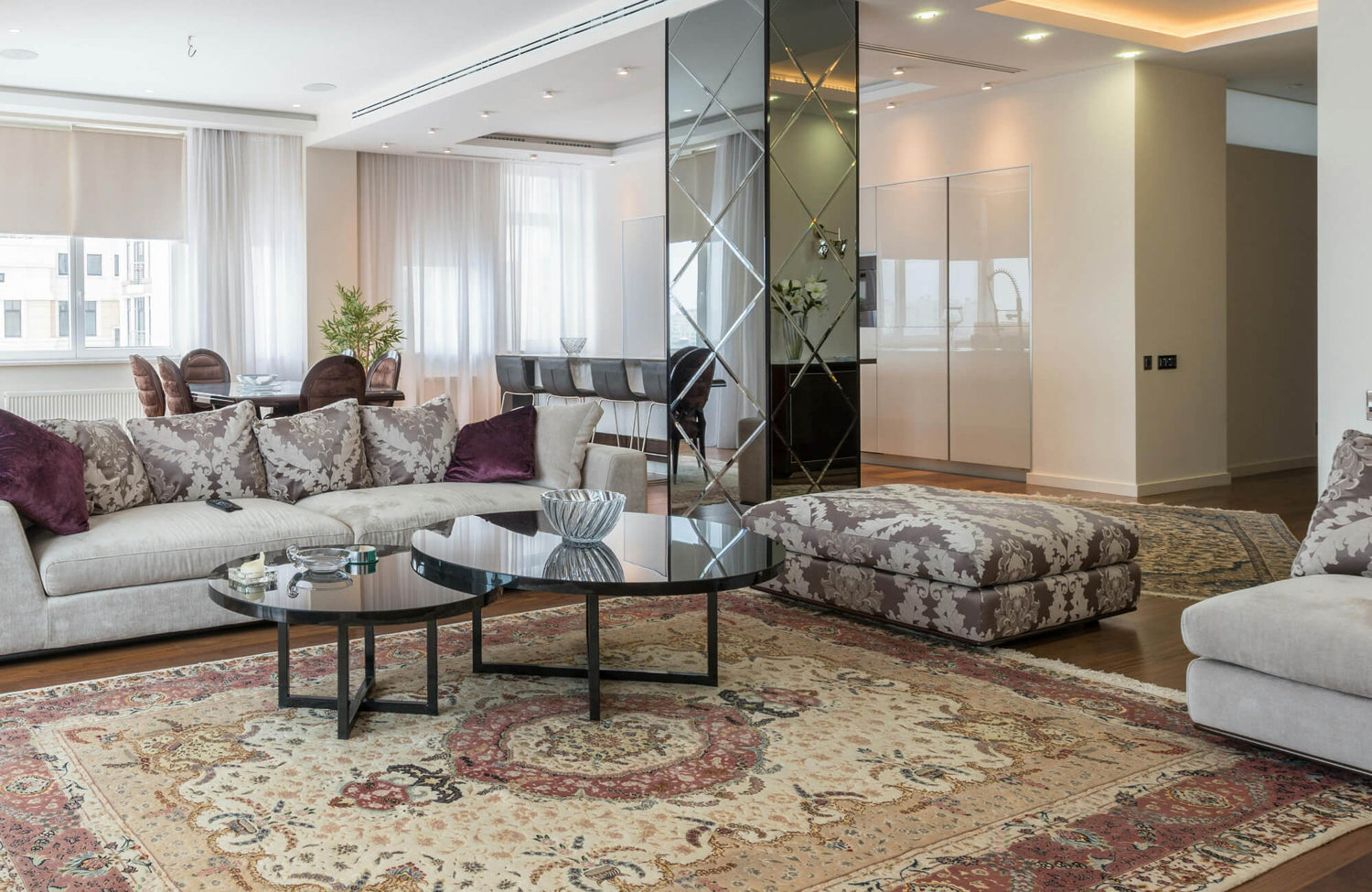
A 9x12 rug is more than just a floor covering; it is the foundation of a room’s design, setting the stage for comfort, style, and functionality. The choice of material, whether the timeless warmth of wool, the organic texture of jute, the everyday practicality of cotton, or the resilient innovation of synthetics, shapes how the rug performs and how the space feels. Each fiber carries its own story, from wool’s luxurious softness and durability to jute’s sustainable charm and natural character. Cotton lends lightweight versatility and vibrant color, while synthetic rugs offer unmatched durability and low-maintenance care for modern living. By exploring these rug material options in 9x12 sizes, homeowners and designers can select a piece that harmonizes beauty with performance, ensuring both aesthetic impact and lasting value.

Wool Rugs
Wool rugs are renowned for their ability to combine lasting resilience with a naturally luxurious texture. Because of their unique fiber structure, they remain one of the most reliable options for large 9x12 floor coverings.
Fiber Structure and Durability
Wool fibers, formed from keratin proteins, are naturally crimped, which gives them elasticity and allows the pile to recover after compression. As a result, wool rugs maintain their thickness and avoid flattening, even in areas exposed to heavy movement. The overlapping scales on each strand lock together during weaving, increasing abrasion resistance while also contributing to strength. This structural integrity ensures the rug’s appearance remains intact through years of use. At the same time, the natural softness of the fibers creates a comfortable surface underfoot.
A perfect example of this enduring performance, as displayed in the picture above, is Edward Martin’s Leticia Wool Blend Rug in Ash, which showcases wool’s resilience while adding timeless elegance to modern interiors. With proper care, a wool 9x12 rug like this can provide reliable service for decades, making it both a functional and aesthetic investment.
Resistance to Moisture and Stains
The presence of natural lanolin oils creates a protective barrier that repels water and reduces the likelihood of permanent stains. Because of this, spills often remain on the surface, giving homeowners time to clean before absorption occurs. Wool also holds dust and allergens at the fiber surface, preventing them from circulating in the air and improving indoor air quality. Although not completely waterproof, wool still outperforms untreated natural fibers when exposed to moisture. Its dense construction further helps by keeping dirt at the top of the pile, making vacuuming more effective. For households where both style and resilience matter, wool provides a practical yet refined solution.
Thermal and Acoustic Benefits
The density of wool allows it to act as an effective insulator, helping regulate indoor temperatures across different seasons. During winter, wool retains warmth, while in summer it releases excess heat, contributing to year-round comfort. Just as importantly, its loft absorbs sound, reducing echo in open-plan rooms or high-ceilinged interiors. A 9x12 wool rug, therefore, transforms not only the appearance but also the acoustic balance of a space. This dual benefit supports energy efficiency by lowering heating and cooling demands. As a result, wool rugs serve as both decorative and performance-driven elements in interior design.

Jute Rugs
Jute rugs are valued for their authentic texture and sustainable qualities. Because they are made from renewable plant fibers, they align perfectly with eco-conscious interior design.
Botanical Origins and Weaving Qualities
Jute comes from the stalks of the Corchorus plant, producing long fibers with a natural golden sheen. When these fibers are spun into yarns, they create the lustrous material often called the “golden fiber.” Woven into rugs, jute also develops textures such as boucle, herringbone, or braided weaves, each highlighting its raw beauty. The irregularities within the weave give the rug character, resulting in an organic aesthetic that feels grounded and natural. Unlike smoother fibers like cotton, jute retains a slightly coarse texture, which reinforces its rustic charm. This makes jute especially appealing for interiors that emphasize simplicity, warmth, and organic design.
Sustainability and Biodegradability
Jute grows rapidly with minimal use of pesticides or fertilizers, which makes it one of the most sustainable rug materials available. Because of its short growth cycle, jute offers an efficient and renewable fiber source. At the end of its use, jute decomposes naturally, leaving no synthetic trace behind. This life cycle supports design choices that minimize environmental impact. In addition, its neutral shades make it easy to pair with Scandinavian, coastal, or minimalist décor schemes. For households that prioritize sustainability while also valuing style, a jute 9x12 rug represents an eco-friendly and aesthetically versatile choice.
Limitations in Busy or Damp Spaces
Although sustainable, jute lacks the durability of wool or synthetic alternatives. Its coarse fibers are more vulnerable to fraying and can shed when exposed to frequent household activity. In addition, jute has high hygroscopic properties, meaning it absorbs moisture quickly and can become discolored or weakened. This moisture absorption also creates the risk of mildew in humid conditions. For this reason, jute rugs are best reserved for low-use and dry spaces such as bedrooms or quiet sitting areas. When placed correctly, they provide organic charm without the risk of premature wear.

Cotton Rugs
Cotton rugs are loved for their affordability and casual versatility. Because they are soft, colorful, and easy to maintain, they remain a go-to option for households seeking comfort without high cost.
Softness and Dye Absorption
As a cellulose-based fiber, cotton offers a smooth texture that feels soft underfoot. Its absorbent structure takes in dyes readily, resulting in rugs with rich, saturated colors. This makes cotton especially appealing for interiors where bold patterns or seasonal updates are desired. In contrast to jute’s muted tones, cotton provides both vibrant hues and subtle neutrals, allowing for broader design flexibility. The fiber’s breathable qualities also make it comfortable in warm climates. For those seeking affordable rugs with dynamic color options, cotton delivers both style and comfort.
Flatweave Construction and Reversibility
Many cotton rugs are woven using flatweave techniques such as kilim or dhurrie patterns. This creates lightweight rugs with a reversible design, allowing either side to be used depending on wear. Because they have no pile, these rugs resist matting and are less prone to fiber crushing. In addition, their thin profile makes them easy to roll up, transport, or layer beneath heavier rugs. As a result, cotton rugs adapt well to flexible living spaces where furniture layouts change frequently. This versatility ensures they remain practical while also supporting varied design needs.
Maintenance and Cleaning Benefits
One of cotton’s greatest advantages lies in its easy care. Smaller cotton rugs can often be machine-washed, while larger ones are suitable for professional cleaning. The fiber’s smooth surface releases dirt and dust readily, reducing the effort needed for upkeep. While cotton does not have wool’s natural stain resistance, cleaning is still straightforward and inexpensive. The trade-off, however, is reduced abrasion resistance, meaning cotton wears more quickly under constant household use. For this reason, cotton 9x12 rugs are most effective in bedrooms, playrooms, or relaxed seating areas where easy care is valued over long-term endurance.

Synthetic Rugs
Synthetic rugs are engineered to deliver outstanding resilience at an affordable cost. Because of their stain resistance, UV stability, and low-maintenance care, they are widely used in both busy households and outdoor-adjacent interiors.
Polypropylene
Polypropylene is manufactured using solution-dyed fibers, which means color is built directly into the fiber during extrusion. This process ensures excellent fade resistance when exposed to sunlight and cleaning chemicals. The non-porous nature of polypropylene also prevents moisture absorption, which protects against mold and mildew. As a result, these rugs are well-suited for basements, patios, and other high-moisture environments. While less soft than nylon or polyester, polypropylene compensates with durability and affordability.
An excellent example is the Broderick Polypropylene Pile Rug in Cream / Denim, which combines polypropylene’s resilience with a versatile palette ideal for both casual and refined interiors. For households needing expansive 9x12 coverage without heavy maintenance, it provides a dependable option.
Nylon
Nylon stands out as the most durable synthetic fiber due to its abrasion resistance and elasticity. Its structure allows the pile to spring back after pressure, preventing permanent indentations from furniture. When solution-dyed, nylon also resists staining, which extends its lifespan in high-use areas. Because of these qualities, nylon is commonly specified for hallways, offices, and family rooms. Although its cost is higher than other synthetics, the investment is offset by its longevity. For homeowners prioritizing performance in busy zones, nylon rugs remain a top choice.
A great example of nylon’s strength in action is Edward Martin’s Davies Wool & Nylon Rug in Wheat / Dune. By blending wool’s natural softness with nylon’s resilience, this rug delivers both comfort and lasting performance. The combination ensures a luxurious underfoot feel while maintaining the durability needed for everyday living, making it ideal for spaces where style and strength must go hand in hand.
Polyester
Polyester rugs strike a balance between comfort and practicality. Their hydrophobic properties prevent water-based spills from soaking in, while additional treatments repel oil-based stains. These qualities make polyester particularly convenient in dining rooms or children’s play areas. In addition, polyester excels at holding vibrant colors, enabling striking printed designs.
As shown in the photo above, the Georgette Polyester Pile Rug in Spice / Indigo exemplifies this advantage with its bold tones and intricate patterns that highlight polyester’s exceptional dye absorption. Although less resilient than nylon, it delivers softness that makes it appealing in casual settings. For those seeking affordable rugs that resist stains while offering design variety, polyester presents an excellent solution.

Choosing the Right Rug Material for a 9x12 Space
The ideal rug material depends on how a space is used, the level of activity it experiences, and the desired style. By considering these factors, homeowners can select a rug that balances practicality with long-term value.
Wool
Wool rugs combine luxury, durability, and natural insulation, making them a lasting investment for master bedrooms or formal living rooms. Their ability to regulate temperature and reduce noise adds comfort across large spaces. With proper maintenance, wool can last decades, justifying its higher price point. Its stain resistance further reduces maintenance challenges, making it suitable for everyday living.
Blending wool with cotton can further enhance these qualities, adding softness, breathability, and a lighter hand feel without sacrificing resilience. A perfect example, as featured in the photo above, is our Micah Wool Blend Rug in Natural / Graphite, which combines the strength of wool with the versatility of cotton to create a rug that balances refined sophistication with everyday practicality. This thoughtful mix ensures comfort underfoot while maintaining long-lasting performance, making it an adaptable choice for both formal and relaxed interiors. For those seeking timeless elegance with an added touch of versatility, wool blends like Micah present an ideal solution.
Jute
Jute rugs bring sustainability and organic appeal into interior spaces. Their earthy tones pair seamlessly with minimalist or coastal design schemes, highlighting natural textures. Because they are biodegradable, they also offer a responsible alternative to synthetic flooring options. However, their durability is limited, making them better suited to quiet, low-use spaces. When placed appropriately, jute enriches interiors with authenticity and ecological integrity. For eco-conscious homeowners, a jute 9x12 rug embodies both style and sustainability.
Cotton
Cotton rugs provide a cost-effective option for households seeking comfort with design flexibility. Their ability to absorb dye allows for vibrant and varied color palettes that enliven casual spaces. Flatweave structures also add portability and reversibility, extending the rug’s usefulness over time. While less resistant to heavy wear, cotton remains easy to clean and maintain. This makes it especially attractive to families with children or pets who need practical solutions. For adaptable, budget-friendly interiors, cotton rugs offer both function and charm.
Synthetic
Synthetic rugs deliver affordable resilience in areas where spills, stains, and constant household activity are unavoidable. Polypropylene offers moisture and UV resistance, nylon withstands heavy abrasion, and polyester provides softness with stain protection. Together, these qualities make synthetics versatile for both indoor and outdoor use. Their technical advantages also simplify upkeep, reducing the time and effort needed for cleaning. In addition, their lower price point makes them accessible without sacrificing performance.
Some designs even combine multiple synthetic fibers to maximize performance and aesthetic appeal. For example, the Charlise Polypropylene & Polyester Pile Rug in Cream / Fog blends polypropylene’s durability with polyester’s color vibrancy and softness, resulting in a balanced rug ideal for busy households. This type of hybrid construction ensures reliability, practicality, and enduring value while offering a refined, contemporary look.
Finding the Perfect 9x12 Rug Material
Choosing the right 9x12 rug material is ultimately about aligning lifestyle needs with design aspirations. Wool brings enduring luxury, jute offers sustainable texture, cotton provides casual versatility, and synthetics deliver practical durability for busy households. Each fiber transforms a space in its own way, blending aesthetics with performance to create harmony underfoot. With the right material, a 9x12 rug becomes not just a furnishing but a statement of comfort, style, and lasting value.
To make the selection process even more seamless, Edward Martin’s design services provide expert guidance in curating rugs that perfectly match your interior vision. Whether you’re refreshing a single room or reimagining your entire home, our team ensures every 9x12 rug enhances both function and style. Explore our collections to discover the material that best reflects your aesthetic, and feel free to contact us for personalized assistance. With the right support, your 9x12 rug becomes not just a furnishing but a statement of comfort, style, and lasting value!