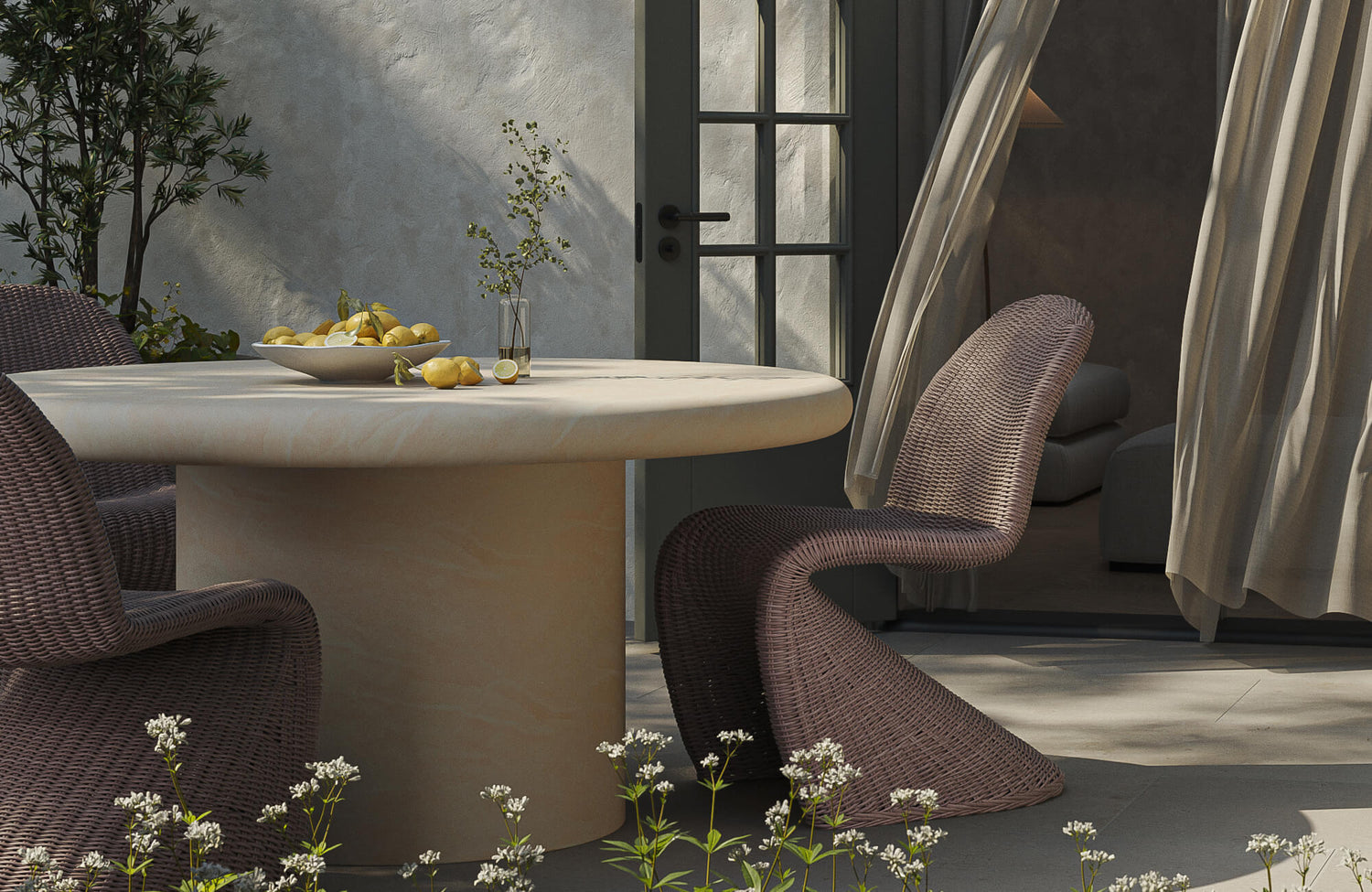
Modern patios have evolved into sophisticated outdoor living environments where furniture is expected to perform with the same level of refinement as interior pieces. Within these curated spaces, outdoor coffee tables introduce spatial balance, material contrast, and architectural continuity that shape how the entire patio functions and feels. From sculptural GFRC silhouettes to precision-crafted teak and powder-coated aluminum designs, today’s modern outdoor coffee tables are engineered to withstand environmental exposure while maintaining a distinctly elevated aesthetic. As luxury outdoor living continues prioritizing seamless indoor-outdoor transitions, the right outdoor coffee table becomes both a functional centerpiece and a defining visual element within the patio landscape.

The sculptural concrete form of Lina Outdoor Coffee Table in Cream introduces spatial balance and organic texture that naturally complements contemporary patio layouts
Why Outdoor Coffee Tables Shape Modern Patio Design
Modern outdoor coffee tables contribute far more than surface utility, as they help establish proportional structure, improve spatial organization, and strengthen the visual rhythm of contemporary patio layouts. Their placement, geometry, and material composition influence how outdoor seating areas circulate, connect, and interact with surrounding architectural features.
Establishing Spatial Cohesion In Contemporary Patio Layouts
Outdoor coffee tables act as visual anchors that unify sectional seating, lounge chairs, and surrounding hardscape elements into a more cohesive arrangement. Without a properly scaled centerpiece, expansive outdoor furniture groupings can feel disconnected, particularly in open-concept patios designed around minimalist architecture.
Low-profile rectangular coffee tables reinforce linear sightlines commonly found in modern landscape design, allowing furniture compositions to feel more structured and intentional. At the same time, balanced table placement helps regulate circulation paths, preventing lounge areas from appearing overcrowded or visually fragmented. This spatial consistency creates a patio environment that feels architecturally integrated rather than simply furnished.
Supporting Functional Outdoor Living Environments
As patios increasingly function as fully equipped outdoor living rooms, coffee tables play a central role in improving usability without disrupting visual clarity. Their surfaces accommodate entertaining essentials such as serving trays, lanterns, beverage placement, and decorative accessories while maintaining easy accessibility from multiple seating angles.
Larger contemporary designs often incorporate modular proportions or expansive slab-style tops that support group entertaining more efficiently than smaller accent tables. In high-end patio configurations, these broader surfaces also help reduce visual clutter by consolidating functional objects within a single focal area. This balance between utility and restrained design allows outdoor lounge spaces to remain both practical and visually composed.
Reinforcing Indoor-Outdoor Architectural Continuity
Contemporary residential design frequently emphasizes uninterrupted transitions between interior and exterior environments, particularly in homes with retractable glass walls and open-plan layouts. Outdoor coffee tables strengthen this continuity by incorporating finishes and materials that visually echo adjacent interior surfaces, cabinetry, or flooring selections.
Teak hardwood, matte black aluminum, and travertine-inspired sintered stone are commonly specified because they complement both modern outdoor architecture and refined interior palettes. Beyond aesthetics, consistent material language helps exterior lounge areas feel intentionally connected to the home rather than treated as secondary extensions. This integration creates a more immersive outdoor living experience where architecture, furniture, and landscape operate as a unified composition.

The Vetra Coffee Table pairs corrosion-resistant powder-coated aluminum with a streamlined mid-century silhouette suited for durable modern outdoor spaces
Best Materials For Durable Outdoor Coffee Tables
Material selection determines how well an outdoor coffee table withstands environmental exposure while preserving structural integrity and surface appearance over time. Modern outdoor furniture manufacturers increasingly rely on advanced fabrication materials engineered to resist ultraviolet radiation, moisture infiltration, thermal fluctuation, and long-term exterior wear.
Powder-Coated Aluminum For Lightweight Structural Durability
Powder-coated aluminum remains one of the most widely specified materials for contemporary outdoor coffee tables because it combines corrosion resistance with exceptional structural efficiency. Unlike untreated ferrous metals, aluminum naturally resists oxidation, making it particularly suitable for humid climates, coastal patios, and poolside environments exposed to salt air.
Thermoset powder coatings further improve performance by creating a hardened exterior layer that minimizes fading, surface abrasion, and finish deterioration caused by prolonged UV exposure. Its lightweight composition also allows manufacturers to fabricate slimmer frame profiles that align with minimalist outdoor furniture aesthetics without compromising stability. This combination of durability, reduced maintenance, and architectural precision makes powder-coated aluminum a defining material in luxury outdoor patio furniture.
Teak Hardwood And Natural Surface Weathering
Teak remains one of the most valued hardwoods in premium outdoor furniture manufacturing because of its dense grain structure, high oil content, and natural dimensional stability. These characteristics help protect the material against moisture absorption, insect intrusion, and seasonal expansion caused by fluctuating humidity levels.
Over time, untreated teak gradually develops a silver-gray patina that softens its appearance while preserving the wood’s structural integrity, making it particularly appealing in organic modern patio designs. Many contemporary teak outdoor coffee tables also incorporate kiln-dried lumber and precision joinery systems that improve long-term durability while maintaining refined craftsmanship. This evolving surface character introduces warmth and texture that balance the cleaner geometry often associated with contemporary outdoor spaces.
Sintered Stone And GFRC For Architectural Outdoor Applications
Sintered stone and glass fiber reinforced concrete (GFRC) have become increasingly prominent in modern outdoor coffee table design because they deliver both structural resilience and sculptural visual impact. Sintered stone is manufactured through extreme heat and pressure processes that compress natural minerals into ultra-dense slabs resistant to scratching, thermal shock, staining, and UV degradation.
Meanwhile, GFRC improves upon traditional concrete by incorporating alkali-resistant glass fibers that increase tensile strength while reducing overall weight and minimizing cracking potential. These advanced materials also allow for monolithic silhouettes, cantilevered forms, and thinner tabletop profiles that would be difficult to achieve with conventional stone or concrete construction. Their refined textures and architectural presence make them especially effective in minimalist patios, rooftop terraces, and contemporary poolside lounge environments.

The softened geometry and solid teak construction of Maris Teak Coffee Table create balanced proportions and relaxed circulation within contemporary patios
Choosing The Right Outdoor Coffee Table Shape And Proportion
The geometry and scale of an outdoor coffee table directly affect patio circulation, seating ergonomics, and overall visual balance. Selecting the appropriate dimensions requires evaluating furniture orientation, available square footage, and the architectural rhythm established by surrounding landscape elements.
Rectangular And Linear Coffee Tables For Sectional Layouts
Rectangular outdoor coffee tables work especially well within elongated patio configurations featuring modular sectionals or linear seating systems. Their extended proportions reinforce horizontal architectural lines while providing generous surface area for entertaining accessories, decorative styling, and shared functionality.
In narrow patios and rooftop terraces, linear table forms improve spatial efficiency by aligning naturally with surrounding furniture footprints and circulation pathways. Many contemporary outdoor furniture collections intentionally use low-profile rectangular silhouettes to maintain uninterrupted sightlines and strengthen minimalist design language. This alignment between furniture geometry and patio architecture helps create lounge environments that feel structured, open, and visually balanced.
Rounded Silhouettes For Softer Circulation Flow
Round outdoor coffee tables introduce a softer visual rhythm that contrasts effectively against angular seating arrangements and rectilinear hardscape materials. Their curved perimeter improves circulation by eliminating sharp corners, allowing movement through compact outdoor seating areas to feel more fluid and less constrained.
This geometry is especially beneficial in smaller patios where maintaining openness and flexibility is essential for comfort and usability. Round tables also pair naturally with swivel lounge chairs and curved modular seating because they preserve more consistent reach distances from multiple angles. The result is a patio arrangement that feels more inviting and organically connected without losing the sophistication associated with contemporary outdoor design.
Ergonomic Clearance And Visual Proportioning
Proper outdoor coffee table sizing extends beyond aesthetics, as proportional balance directly influences comfort, accessibility, and circulation efficiency. Industry-standard spacing recommendations generally position the tabletop approximately one to two inches below adjacent seat cushions to maintain ergonomic usability during entertaining and everyday lounging.
Adequate perimeter clearance also prevents outdoor seating arrangements from feeling visually compressed while allowing guests to navigate comfortably around the furniture grouping. In larger patio layouts, oversized coffee tables can help anchor expansive sectionals, whereas undersized surfaces may appear disconnected within the broader composition. These proportional relationships ensure the coffee table functions as an integrated architectural element rather than an isolated furnishing piece.

Our Vela Coffee Table combines woven olefin rope, honed granite, and curved aluminum detailing to bring layered organic modern texture to outdoor lounge spaces
Modern Outdoor Coffee Table Styles For Contemporary Patios
Modern outdoor coffee table design continues to evolve through increasingly sophisticated combinations of materiality, fabrication techniques, and architectural detailing. Each stylistic direction introduces a distinct visual atmosphere that shapes how contemporary patios feel, function, and interact with their surrounding environment.
Minimalist Outdoor Coffee Tables With Monolithic Geometry
Minimalist outdoor coffee tables emphasize restrained detailing, uninterrupted silhouettes, and carefully balanced proportions that align with contemporary architectural principles. Thin-edge tabletops, concealed joinery, and matte neutral finishes contribute to a visually calm environment where the emphasis remains on spatial clarity rather than ornamentation.
Powder-coated aluminum, smooth concrete finishes, and monolithic slab constructions are commonly used because they reinforce clean geometric forms without adding unnecessary visual complexity. These streamlined profiles also help preserve open sightlines across patios designed around expansive glazing and modern landscape architecture. The result is an outdoor lounge setting that feels refined, disciplined, and intentionally curated.
Organic Modern Coffee Tables With Layered Material Texture
Organic modern outdoor coffee tables soften contemporary architecture through the introduction of tactile materials, muted tonal variation, and subtly rounded geometry. Natural teak surfaces, travertine-inspired stone finishes, and softly curved edges create visual warmth that balances the sharper lines typically found in modern patios.
Designers frequently pair these tables with textured upholstery, layered greenery, and earthy color palettes to establish a more relaxed outdoor atmosphere without sacrificing sophistication. Sintered stone surfaces that replicate natural limestone or travertine have become especially popular because they combine organic aesthetics with high-performance outdoor durability. This layered materiality creates patio environments that feel simultaneously polished, comfortable, and architecturally grounded.
Industrial Contemporary Designs With Structural Expression
Industrial contemporary outdoor coffee tables emphasize exposed structure, robust materiality, and architectural mass that give modern patios a more grounded visual presence. Concrete-inspired surfaces, blackened metal frames, and visible fabrication details contribute to a stronger sense of structural honesty within the furniture design. GFRC construction is frequently used because it replicates the appearance of solid cast concrete while reducing overall weight and improving resistance to cracking.
These heavier visual forms work particularly well in urban patios, modern desert landscapes, and industrial-inspired residential architecture, where raw textures complement surrounding materials. Through their bold composition and substantial scale, industrial contemporary coffee tables create focal points that anchor expansive outdoor lounge arrangements.

Our Leone Outdoor Coffee Table in Grey combines sealed GFRC construction with moisture-resistant durability and architectural detailing for high-performance outdoor living
Advanced Features That Improve Outdoor Coffee Table Performance
Premium outdoor coffee tables distinguish themselves through engineering innovations and performance-oriented detailing designed specifically for long-term exterior exposure. These advanced features improve structural stability, reduce maintenance requirements, and preserve material integrity across varying climate conditions.
UV-Stabilized Finishes And Surface Protection
Constant ultraviolet exposure can gradually degrade outdoor furniture finishes, causing fading, chalking, and surface brittleness if protective technologies are insufficient. High-performance outdoor coffee tables often incorporate UV-stabilized powder coatings, fade-resistant pigmentation systems, and specialized sealants that improve long-term color retention.
Solution-dyed synthetic materials are also frequently used because their pigmentation extends throughout the entire material composition rather than remaining limited to the outer surface layer. This deeper color saturation minimizes visible fading even in patios exposed to prolonged direct sunlight and fluctuating temperatures. As a result, contemporary outdoor coffee tables maintain a more consistent appearance while requiring less frequent refinishing or restoration.
Moisture Resistance And Environmental Drainage Design
Outdoor furniture must continuously accommodate rain exposure, humidity fluctuations, and condensation without compromising structural integrity or surface performance. Slatted tabletops, elevated support frames, and ventilated undersides improve airflow while allowing water to drain more efficiently after storms or routine cleaning. These moisture-management strategies also help minimize mildew formation, wood swelling, corrosion development, and freeze-thaw cracking in colder climates.
Non-porous materials such as sintered stone further improve weather resistance by limiting water absorption and reducing long-term maintenance demands. Through these integrated drainage and ventilation systems, premium outdoor coffee tables achieve greater durability in demanding exterior environments.
Reinforced Construction And Long-Term Structural Stability
Modern outdoor coffee tables increasingly incorporate reinforced fabrication techniques that improve load distribution, minimize flexing, and maintain stability across years of exterior use. Welded aluminum joinery, internal steel reinforcement systems, and thick-gauge frame construction also help prevent structural fatigue caused by fluctuating temperatures and repeated environmental stress.
Hardwood outdoor coffee tables often utilize mortise-and-tenon joinery because it provides stronger load-bearing performance while preserving refined craftsmanship. Adjustable leveling glides are also commonly integrated to stabilize furniture placement on uneven patio surfaces such as natural stone pavers or textured concrete decking. These structural advancements allow contemporary outdoor coffee tables to retain both their visual precision and functional reliability in high-use outdoor living spaces.
Elevating Outdoor Living With Modern Coffee Tables
The best outdoor coffee tables for modern patios combine architectural sophistication, advanced material engineering, and carefully balanced proportions that enhance both functionality and visual cohesion. Whether crafted from powder-coated aluminum, kiln-dried teak, sintered stone, or GFRC, these tables are designed to withstand environmental exposure while maintaining the refined aesthetics associated with contemporary outdoor living. Their geometry, surface texture, and structural detailing contribute to patio layouts that feel more intentional, comfortable, and seamlessly connected to surrounding architecture. As outdoor spaces continue evolving into fully integrated extensions of the home, thoughtfully designed coffee tables remain essential in creating patios that feel enduring, elevated, and architecturally complete.
For more personalized guidance, Edward Martin’s design services can help curate outdoor coffee tables and patio furnishings that align seamlessly with your architectural style and outdoor layout. Contact us to explore modern outdoor living solutions tailored for refined, high-performance patio spaces!