A bedroom should feel like the quietest part of the space, and wall art plays a larger role in that feeling than many people realize. Beyond filling empty walls, the right artwork can soften the room’s mood, guide the eye, and create a sense of calm through color, subject matter, texture, scale, and personal meaning. When chosen with intention, bedroom wall art can make the space feel more restful without requiring a full redesign.

Minimalist botanical wall art creates a soothing atmosphere in this contemporary bedroom
Nature-Inspired Wall Art For Restful Bedroom Energy
Nature-inspired wall art is one of the most effective choices for creating a peaceful bedroom because it visually connects the room to calm outdoor settings. Images of misty mountains, quiet beaches, open fields, shaded forests, and still lakes can make the bedroom feel more expansive and restorative, especially when the rest of the space is designed for rest.
Botanical prints can also bring a softer sense of calm through leaf studies, watercolor florals, pressed plant artwork, and delicate branch illustrations. These pieces add organic detail without overwhelming the wall, making them especially useful in bedrooms with neutral bedding, wood furniture, woven textures, or linen accents. To keep the mood relaxing, choose muted greens, faded blues, warm neutrals, and gentle earth tones instead of bright, high-saturation colors, as seen in the Follow the Wind Wall Art, whose wispy botanical forms and softened blue-gray palette bring subtle texture and a serene, airy quality to the room.
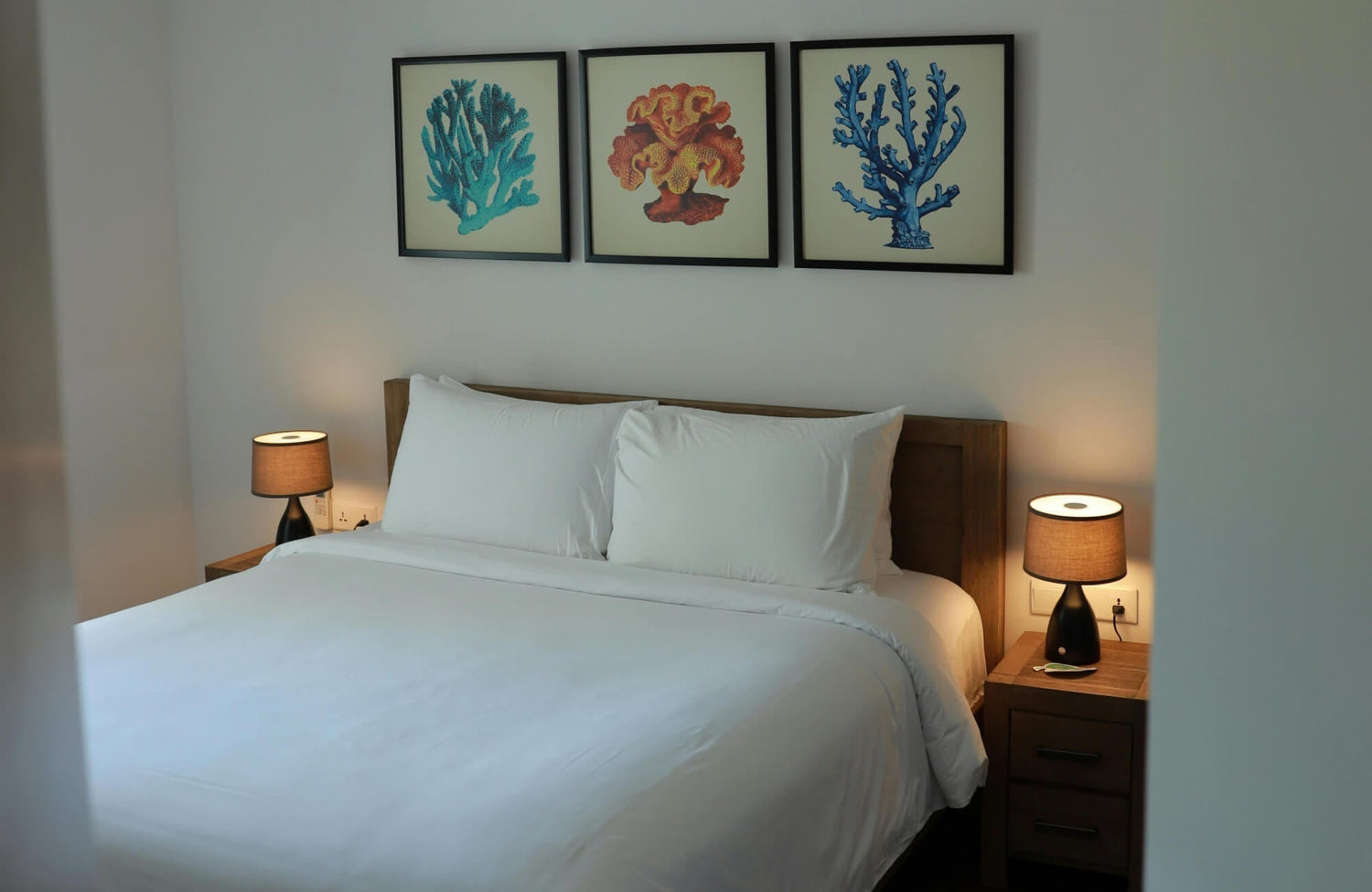
For a more soothing result, look for artwork with low-contrast compositions, muted skies, soft horizon lines, and simple framing. Coastal imagery, calm lake scenes, and abstract organic patterns can work beautifully above the bed, beside a reading nook, or over a dresser where they create a quiet focal point. Pairing these pieces with natural wood, white, beige, or slim matte frames helps the artwork feel integrated into the room rather than visually separate from it.

Silent Orchard Wall Art brings a relaxing atmosphere to any bedroom
Color Palettes In Wall Art That Support Relaxation
The colors within wall art can strongly influence how restful a bedroom feels, often setting the emotional tone before furniture or decor details are even noticed. Soft blues, sage greens, seafoam, muted gray, cream, taupe, and warm beige are especially effective because they feel gentle on the eyes and easy to live with over time. These hues can make the room feel calmer, lighter, and more balanced, especially when they echo colors already found in the bedding, rugs, curtains, or upholstery.
Low-contrast artwork is often better suited for relaxing bedrooms than pieces with sharp color blocking or intense saturation. Tonal gradients, faded washes, watercolor effects, and gentle transitions between similar shades help the eye move slowly across the piece instead of creating visual tension. For example, a soft blue and gray abstract print can support a cool, peaceful mood, while beige, clay, and taupe artwork can make the bedroom feel warmer and more cocooning.
To create a cohesive look, choose wall art that complements the room’s existing materials rather than competing with them. Bedrooms with light wood furniture and linen bedding pair well with sage, cream, and warm neutral artwork, while spaces with darker wood or layered textiles can benefit from deeper muted tones like smoky blue, olive, or clay. Keeping the palette restrained also allows the artwork to add depth and personality while still preserving the quiet, restorative atmosphere a bedroom should provide. For a piece that reflects this balance, Edward Martin’s Silent Orchard Wall Art, seen in the image above, uses layered woven panels, tonal striping, fine wave details, and softly fringed edges to bring warm neutral texture and earthy sophistication to a restful bedroom.

Greyward Vale Wall Art brings tranquility to bedroom interiors
Abstract Wall Art That Encourages A Quiet Mind
Abstract wall art can create a relaxing bedroom when it relies on restrained color, soft movement, and balanced forms rather than bold contrast or visual intensity. Unlike literal artwork, abstract pieces do not demand a specific interpretation, which can make them feel especially calming in a space meant for rest. Fluid brushstrokes, curved lines, blurred shapes, and gentle tonal washes allow the eye to move slowly across the wall, adding interest without making the room feel busy.
Simple line art and tonal block compositions can also work well in bedrooms with modern, minimalist, or Scandinavian-inspired interiors. A single oversized abstract piece above the bed can create a quiet focal point, while a pair of softly coordinated prints can add symmetry and visual order. Textured canvas artwork, plaster-like finishes, or layered neutral brushwork can also bring depth to the room without relying on strong color, making them useful for spaces that need warmth but not extra visual noise. This approach is reflected in the photo above with the Greyward Vale Wall Art, where a softly woven surface and gradual shift from pale neutrals to deeper earthy tones create a calm, horizon-like effect that adds depth without disrupting the room’s restful mood.
To keep abstract wall art restful, avoid jagged forms, harsh angles, high-saturation color clashes, or chaotic compositions that make the bedroom feel visually restless. Instead, look for pieces with soft edges, muted palettes, open spacing, and a clear sense of balance. When paired with neutral bedding, warm lighting, natural wood, or woven accents, abstract art can make the bedroom feel polished, serene, and thoughtfully composed.

Wall art above the bed creates a calming focal point with a personal, intimate feel
Personal And Sentimental Art That Feels Comforting
A relaxing bedroom should feel emotionally familiar, not just visually beautiful, and personal wall art can help create that sense of comfort. Softly edited travel photography, family portraits, couple photos, framed handwritten notes, or a single meaningful quote can make the room feel more intimate and lived-in. These pieces work best when they reflect calm memories or personal meaning rather than highly energetic moments, allowing the bedroom to feel peaceful instead of visually or emotionally busy.
To keep sentimental artwork polished, presentation matters as much as the image itself. Muted editing, black-and-white finishes, warm sepia tones, or softly faded colors can help personal photos blend into the room’s palette without feeling too casual. Matching frames, generous matting, and consistent sizing can also give family photos or travel prints a more refined, gallery-like appearance, making them feel intentional rather than randomly placed.
At the same time, text-based artwork should be used with restraint so the bedroom remains calm and uncluttered. One meaningful quote, lyric, handwritten note, or personal phrase can feel comforting when paired with simple typography and a quiet frame, but too many words on the wall can become distracting. By choosing only the most meaningful pieces and giving them enough space, personal art can make the bedroom feel warm, grounded, and emotionally soothing while still supporting a clean and relaxing design.

Contemporary bedroom uses layered neutral tones and geometric wall art to create a calm, balanced atmosphere
Wall Art Styles For Different Bedroom Aesthetics
Relaxing wall art should not only feel calming on its own; it should also make sense within the bedroom’s overall design style.
Modern
A modern bedroom may benefit from oversized abstract art, simple line drawings, or tonal geometric pieces that add structure without clutter.
Coastal
A coastal bedroom often feels more restful with soft seascapes, shell studies, pale blue washes, sandy neutrals, or breezy landscape photography that reinforces an airy, open atmosphere.
Japandi, Minimalist, and Organic Modern
For Japandi, minimalist, and organic modern bedrooms, wall art should feel quiet, balanced, and intentional. Ink brush prints, textured neutral canvases, handmade paper artwork, botanical silhouettes, or simple nature-inspired pieces can support the clean lines and natural materials common in these interiors.
Farmhouse and Traditional
Farmhouse and traditional bedrooms may feel more comforting with vintage landscapes, framed florals, antique-style sketches, muted still life paintings, or softly aged prints that bring warmth without making the room feel overly decorative.
Transitional
Transitional bedrooms can be especially flexible because they blend classic and contemporary elements. In these spaces, relaxing wall art might include abstract landscapes, softly colored photography, paired framed prints, or refined botanical artwork that feels polished but not too formal. Edward Martin’s Quiet Study Wall Art fits this style well, with its off-white foundation, layered floral rosettes, geometric medallions, warm neutral shades, and hints of cool blue-gray that bring a sophisticated sense of calm to the room.
Rather than choosing artwork only by color or subject, also consider how the style of the piece relates to the room’s furniture, bedding, lighting, and architectural details. This helps the artwork feel connected to the entire bedroom, creating a calmer and more cohesive atmosphere.

Oversized wall art creates an inviting retreat in this serene bedroom
Scale And Placement For A Balanced Bedroom Layout
Even calming artwork can feel distracting if it is poorly sized, crowded, or placed too high on the wall. In a bedroom, scale and placement should help the eye move comfortably around the space rather than making the walls feel heavy or uneven. A well-sized piece can create a quiet focal point, while poorly proportioned art can make the room feel unfinished, cramped, or visually off balance.
For artwork above the bed, one oversized piece often feels calmer than several small prints competing for attention. A helpful guideline is to choose art that is around two-thirds the width of the headboard, so it feels connected to the bed without overpowering it. The piece should also be centered above the furniture and hung low enough to feel visually anchored, leaving enough breathing room between the frame and the ceiling.
Symmetry can also make a bedroom feel more composed, especially when using pairs of framed prints above nightstands, dressers, or a bench. Consistent spacing between pieces, matching frame sizes, and aligned edges help create order, which supports a more restful atmosphere. Negative space is just as important, so avoid filling every empty wall; allowing blank areas around the artwork keeps the bedroom feeling open, intentional, and easier to relax in.

Meadowline Wall Art features layered woven detailing, soft fringe accents, and a warm neutral palette that brings subtle texture and artisanal character to relaxing bedroom interiors
Materials And Frames That Enhance A Relaxing Atmosphere
The material and framing style of wall art can influence how soft, warm, or refined the bedroom feels. Although the artwork itself sets the visual mood, the way it is finished and displayed affects how naturally it blends with the surrounding furniture, lighting, and textiles. In a relaxing bedroom, materials should feel gentle and grounded rather than glossy, heavy, or overly decorative.
Natural wood frames are especially useful for adding warmth, whether the bedroom leans coastal, rustic, organic modern, Japandi, or transitional. Oak, walnut, pine, and light wood finishes can make artwork feel more connected to bedside tables, dressers, flooring, or woven accents. Canvas art, linen-backed pieces, woven wall hangings, and plaster-like textures can also soften the room by introducing tactile depth without relying on bold color or busy patterns.
For a calmer effect, choose matte or low-glare finishes that do not reflect too much light from lamps, windows, or overhead fixtures. Slim metal frames in brass, champagne, black, or silver can work well in more modern bedrooms, especially when the profile is simple and understated. The goal is to choose frames and materials that support the room’s existing palette and textures, allowing the wall art to feel integrated, balanced, and quietly polished.
Creating A Restful Bedroom Through Thoughtful Wall Art
The most relaxing wall art for bedroom interiors is artwork that supports calm visually and emotionally, from soft landscapes and botanical prints to muted abstract pieces, personal photography, and tactile materials. Rather than choosing art only to fill a blank wall, focus on pieces that bring gentle color, balanced scale, quiet movement, and a sense of personal comfort into the room. In addition, consider how each piece interacts with the bed, lighting, furniture, and textiles so the overall design feels cohesive instead of cluttered. Ultimately, the best bedroom wall art creates a space that feels soothing at first glance, meaningful over time, and restful enough to help the room become a true retreat at the end of the day.
To bring that restful vision to life, our team can help you choose wall art that complements your bedroom’s mood, layout, and existing decor. Whether you are styling above the bed, refreshing a quiet corner, or completing a full bedroom update, you can contact us for support in creating a calm, cohesive space that feels thoughtfully finished!