Modern bathroom design has evolved far beyond basic overhead illumination, placing lighting at the center of both functionality and visual impact. Today’s bathrooms rely on layered, purpose-driven lighting systems that enhance usability, support wellness, and elevate architectural details. From precision task lighting to ambient and accent lighting strategies, the right bathroom lighting plan strikes a balance between performance and atmosphere. Advances in LED technology, smart controls, and moisture-rated fixtures now allow designers to create highly customized lighting environments.
This article explores innovative bathroom light ideas, examining technical specifications, placement strategies, and design applications that define contemporary bathrooms. Each section focuses on a distinct lighting approach that contributes to a cohesive, high-performance modern bathroom design.

Layered Lighting as the Structural Framework of Modern Bathrooms
A cohesive lighting strategy begins with layering, where ambient, task, and accent lighting function together rather than in isolation. Ambient lighting establishes the visual baseline of the space, often delivered through recessed or flush-mounted modern bathroom light fixtures that distribute light evenly across ceilings and walls.
In more design-forward interiors, a decorative overhead fixture such as Edward Martin’s Therese Pendant in Vintage Brass (displayed in the photo above) can serve this role when paired with the appropriate lamping, while also introducing warmth, material contrast, and a sense of vertical emphasis. This foundational layer ensures overall visibility while preventing harsh contrast between lit and shadowed areas, allowing the room to feel grounded and visually balanced.
As the eye moves through the bathroom, task lighting naturally takes precedence in functional zones, while accent lighting subtly guides attention toward architectural details. Wall-mounted fixtures like the Therese Wall Sconce in Vintage Brass also reinforce this layered approach by providing soft, directional illumination at eye level, with light quality refined through lamping choice and placement. When layered correctly, lighting transitions feel natural rather than abrupt, allowing the bathroom to shift effortlessly between practical use and a more relaxed atmosphere.
In well-designed bathrooms, layered lighting also improves perceived spatial clarity, making even compact layouts feel more open and intentional. By combining bathroom light fixtures at varying heights and intensities, from sculptural pendants to refined sconces, designers create visual depth that enhances both comfort and architectural cohesion while reinforcing a cohesive modern bathroom design.

Bathroom Vanity Lights and the Role of Facial Illumination
At the vanity, lighting must transition from general illumination to precise task performance, where accuracy and comfort are paramount. Bathroom vanity lights are specifically engineered to provide consistent, shadow-free facial lighting, which is essential for grooming and daily routines.
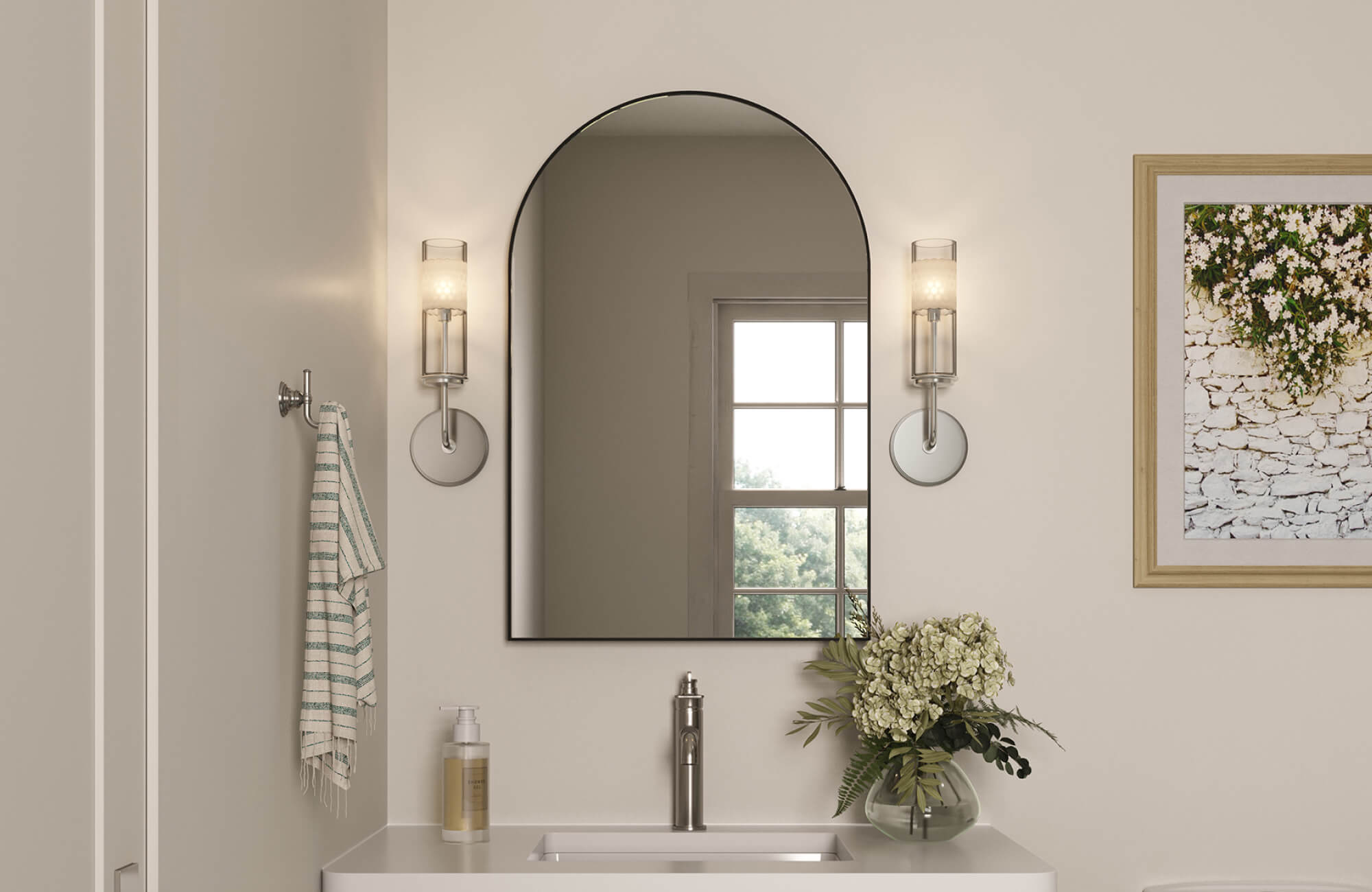
Vertical placement on either side of the mirror is widely favored because it evenly distributes light across the face, eliminating the directional shadows created by overhead fixtures. Fixtures such as the Sally 6" 1 Light Wall/Vanity Light in Aged Gold with Opal Glass, as shown in the photo above, reflect this approach through their streamlined proportions and wall-mounted orientation, supporting balanced illumination at eye level without introducing visual heaviness.
In contrast, linear vanity lighting mounted above the mirror can also perform effectively when paired with appropriate lensing and output levels. To support visual comfort and accuracy, bathroom vanity lights are typically specified to accommodate controlled light distribution and high color-rendering performance, based on the selection of bulbs. When properly positioned, fixtures like the Sally vanity light help reduce eye strain and improve visibility without overwhelming the space. This balance between performance and subtlety allows vanity lighting to support daily tasks while reinforcing the clean, composed aesthetic that defines modern bathroom design.

Vanity Mirror with Lights as a Seamless Design Solution
As bathroom design continues to prioritize clean lines and visual continuity, the vanity mirror with lights has emerged as a highly integrated solution. By combining reflective surfaces with built-in illumination, these mirrors reduce visual clutter while maintaining strong task lighting performance.
Perimeter-lit and edge-lit designs, for example, distribute light evenly, creating a soft halo effect that minimizes glare and eye strain. Because the light source is integrated directly into the mirror, the transition between lighting and architecture feels seamless rather than layered on. A vanity mirror with lights also simplifies fixture coordination, allowing the mirror itself to become the primary lighting element at the vanity. This approach is especially effective in modern bathrooms where restraint, efficiency, and visual clarity define the overall design language.

LED Bathroom Mirror Technology in Modern Design
The rise of the LED mirror has transformed modern bathroom lighting by seamlessly combining advanced technology with refined aesthetics. These mirrors typically rely on low-voltage LED systems paired with integrated diffusers to deliver smooth, even illumination across the reflective surface. Many designs also incorporate adjustable color temperatures, allowing users to shift from warmer ambient light in the evening to cooler, task-oriented lighting for morning routines. This adaptability supports both functional performance and visual comfort throughout the day.
Mirrors such as our Jenny 37" LED Vanity Mirror in White illustrate how LED bathroom mirror technology elevates everyday use through thoughtful integration. Encased in a white acrylic diffuser, this mirror delivers consistent illumination while maintaining a clean, architectural profile that complements modern interiors. Its integrated LED system also offers five selectable color temperatures, paired with touch dimming and built-in anti-fog functionality for added convenience.
Beyond basic illumination, features like these position the LED bathroom mirror as both a smart design element and a focal point, uniting lighting performance with minimalist elegance in contemporary bathroom design.

Bathroom Sconces and Vertical Light Balance
While mirrors provide horizontal illumination, bathroom sconces introduce an essential vertical lighting component that enhances spatial balance. Positioned at eye level, sconces project light laterally, filling in shadows that overhead lighting alone cannot resolve and creating a more even distribution across the face and surrounding surfaces. This vertical distribution of light also contributes to a more flattering and comfortable visual environment, particularly around the vanity. Fixtures such as our Enola Wall Sconce in Aged Brass, as featured in the picture above, exemplify how a refined wall-mounted profile can deliver balanced illumination while adding a subtle architectural presence along the wall plane.
In modern bathroom design, sconces are often selected for their sculptural qualities as much as their performance, reinforcing the relationship between lighting and architecture. Bathroom sconces also help frame mirrors and vanities, establishing symmetry and a clear visual rhythm that anchors the space. When integrated with bathroom vanity lights and modern bathroom light fixtures, designs like the Enola wall sconce support a layered composition that feels intentional, cohesive, and visually composed rather than repetitive.

Accent Lighting as a Tool for Depth and Material Expression
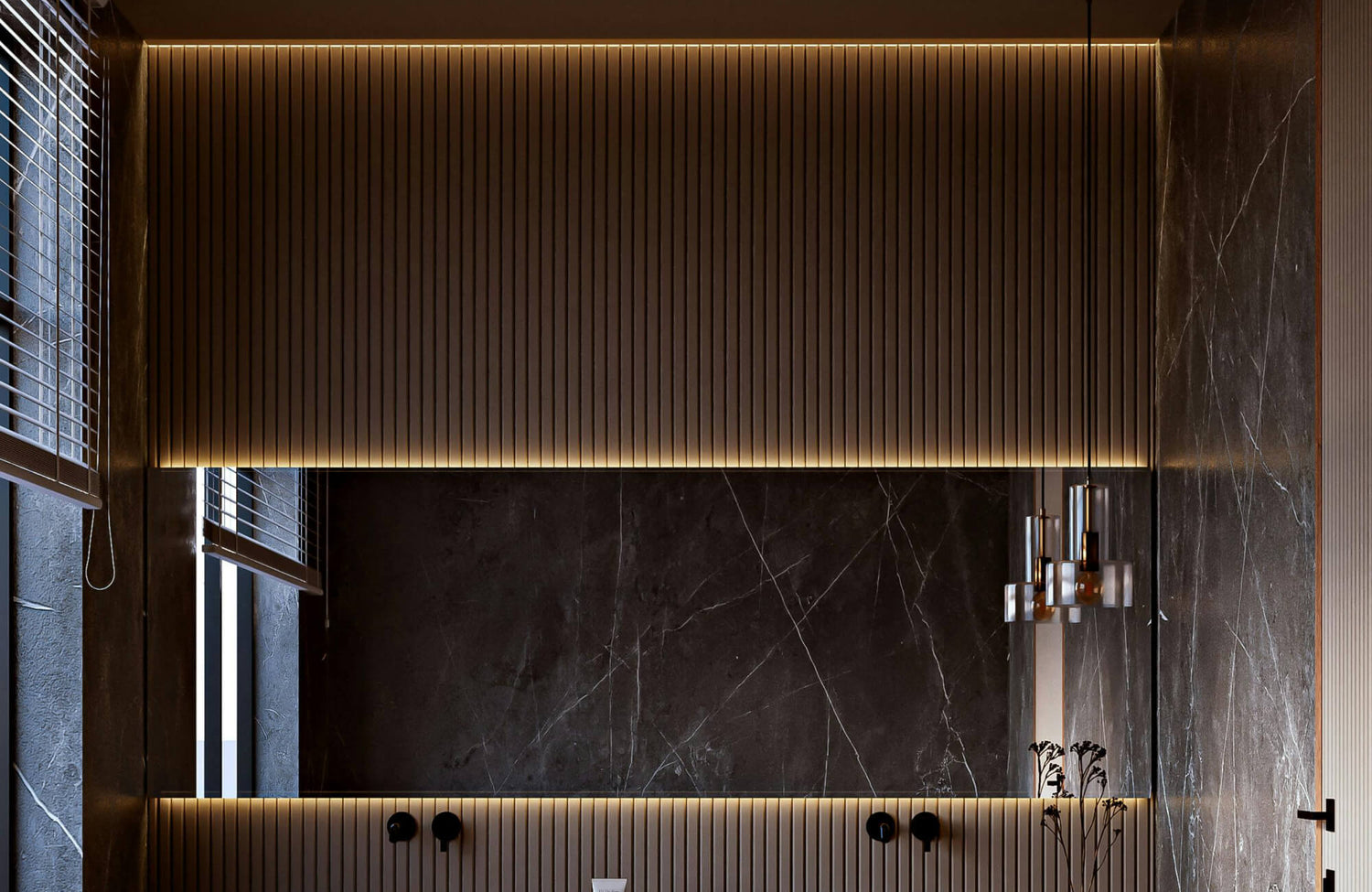
Accent lighting plays a quieter but equally important role by shaping how materials and surfaces are perceived. Subtle LED strips integrated beneath floating vanities or behind mirrors introduce depth without drawing overt attention to the light source itself. This indirect glow also softens transitions between surfaces and enhances the tactile qualities of stone, tile, or wood finishes.
Rather than competing with primary bathroom light fixtures, accent lighting supports them by adding dimension and visual warmth. In modern bathroom design, accent lighting often guides the eye across textures and architectural details that might otherwise go unnoticed. This layered illumination enriches the space, allowing materials to read with greater clarity and visual richness.

Smart Controls and Energy Efficiency in Bathroom Lighting Systems
As modern bathrooms become increasingly responsive to user needs, lighting systems now incorporate smart controls that enhance both convenience and efficiency. For instance, dimmable drivers allow light levels to adjust throughout the day, supporting everything from high-visibility tasks to low-light relaxation. Motion sensors further streamline daily use by activating lighting only when needed, reducing unnecessary energy consumption.
LED-based bathroom light fixtures naturally complement these systems due to their long lifespan and high energy efficiency. Smart lighting controls also allow multiple bathroom light fixtures to work together as a unified system rather than as isolated elements. This integration improves usability while reinforcing sustainable, future-ready modern bathroom design.

Wet-Area Lighting and Performance Requirements
Lighting in showers and wet zones shapes both the function and the mood of a bathroom, influencing how the space feels as much as how it performs. Because these areas are exposed to humidity and direct water, fixtures must be wet-rated to ensure safety and lasting reliability, but their role goes beyond protection. Recessed downlights also preserve the ceiling’s clean lines, while integrated LED accents in niches and architectural recesses cast a gentle, spa-like glow that softens the space.
In addition, diffused illumination reduces harsh shadows and glare, creating an environment that feels inviting and comfortable rather than purely utilitarian. When carefully coordinated with the surrounding bathroom lighting, these wet-zone fixtures blur the line between functional necessity and design intention, allowing showers and tubs to feel like natural extensions of the overall modern aesthetic rather than isolated zones.
Lighting as a Defining Element of Modern Bathrooms
Bathroom lighting is no longer an afterthought—it is a defining element of modern bathroom design. Through layered illumination, precision vanity lighting, integrated LEDs, and smart control systems, lighting shapes both function and atmosphere. Technical considerations such as color temperature, CRI, IP ratings, and beam control also ensure performance meets the demands of daily use. By applying these bathroom light ideas strategically, designers and homeowners can create modern bathrooms that are efficient, elegant, and visually compelling.
Edward Martin’s design services specialize in translating these lighting principles into tailored, cohesive solutions. Contact us to start creating a modern bathroom that is both functional and refined.