Selecting the right flooring influences not only your home’s overall style but also its functionality, upkeep, and long-term value. For many homeowners, the decision often comes down to the warmth of traditional wood versus the practical advantages of wood look tile. While both can create a beautiful foundation, their costs can differ significantly once materials, installation, maintenance, and lifespan are considered.
In most cases, wood look tiles are cheaper than hardwood flooring over time, especially in areas where moisture resistance, durability, and low maintenance are priorities. Hardwood may still appeal to those who value natural materials and classic resale appeal, but porcelain and ceramic wood look tiles often provide a more budget-conscious way to achieve a similar visual effect.
This article compares wood look tiles and traditional wood flooring across upfront costs, hidden expenses, maintenance, durability, and design flexibility to help you choose the best option for your budget, lifestyle, and space.

Jameson 8x48 Matte Porcelain Tile in Latte brings a natural wood-inspired foundation to the kitchen, helping the space feel elevated while keeping the flooring selection aligned with practical budget planning
Breaking Down Upfront Costs
Understanding the initial costs of wood look tiles and traditional wood flooring is essential for homeowners and industry professionals planning a budget. Several factors influence pricing, from material selection to quality and design preferences.
Material Costs
Material costs are one of the biggest differences between wood look tiles and hardwood flooring. Hardwood prices vary widely depending on the species. Domestic options such as oak, maple, and hickory typically range from $4 to $15 per square foot, while exotic woods like Brazilian cherry and teak often start at $12 per square foot or more. These premium woods are valued for their distinctive grain and durability, but their higher price point can make them less practical for budget-conscious projects.
Wood look tiles usually offer a more affordable alternative, with many ceramic and porcelain options ranging from $2 to $11 per square foot. These tiles are also designed to replicate the look of natural wood while offering the added performance benefits of tile. Porcelain options may cost slightly more than ceramic, but they are often preferred for areas that need stronger resistance to moisture and daily wear.
Tile size, thickness, finish, and overall quality can also affect pricing. Large-format planks may create a more seamless and contemporary look, while textured or higher-grade finishes can enhance realism. Similarly, hardwood planks with fewer imperfections, wider dimensions, or specialty finishes usually cost more. Comparing these details helps homeowners choose a product that fits both their design goals and budget.
Installation Costs
Installation costs depend on flooring type, layout complexity, and the level of expertise required. A proper installation is important for both materials because it affects the finished appearance, surface stability, and long-term performance of the floor.
Wood look tile installation requires careful preparation, including subfloor leveling, tile cutting, spacing, and grout application. Labor typically ranges from $5 to $15 per square foot, with more intricate layouts costing more. Although tile installation can be detailed, the finished surface is highly durable and well suited for spaces that need long-term performance.
Hardwood flooring installation typically ranges from $6 to $25 per square foot, depending on whether the planks are nailed, glued, or floated. Straightforward installations may be more manageable, but specialty patterns such as herringbone, chevron, or parquet require more time and precision, which can increase labor costs.
DIY installation may appeal to experienced homeowners, but both materials require skill to achieve a polished result. Wood look tiles demand accurate leveling, cutting, and grouting, while hardwood often requires specialized tools and careful acclimation. For most projects, professional installation helps ensure the flooring looks refined and performs well over time.
Hidden Costs
Beyond materials and labor, hidden costs can affect the overall flooring budget. These may include underlayment, adhesives, grout, trim, transition pieces, and removal of existing flooring. Accounting for these expenses early helps prevent budget surprises once the project begins.
For wood look tiles, underlayment materials such as cork or rubber can range from $0.50 to $3 per square foot, while adhesives and grout may add another $1 to $2 per square foot. Hardwood flooring may require foam or felt underlayment, usually priced between $0.25 and $2 per square foot, along with nails or adhesives that can add $1 to $3 per square foot depending on the installation method.
Finishing details also matter. Baseboards, trim, and transition strips can add $5 to $15 per linear foot, depending on the material and style. Removing old flooring and disposing of debris may cost another $50 to $200, depending on the scope of the project and local disposal requirements. When these expenses are included, homeowners can make a more accurate comparison between wood look tile and hardwood flooring.

This everyday cleaning moment reinforces how wood look tiles can support an active home, where long-term value depends as much on simple care as it does on the initial flooring choice
Long-Term Costs and Maintenance
Long-term flooring costs are shaped by how much care a material needs after installation. This is where porcelain and ceramic wood look tiles often become especially cost-effective. Routine sweeping and occasional mopping are usually enough to keep them looking clean, and they do not require sanding, staining, or refinishing over time. If one tile becomes damaged, it can often be replaced individually without reworking the entire floor.
On the contrary, hardwood flooring requires more ongoing care to preserve its surface. Over time, scratches, dents, fading, or general wear may call for sanding and refinishing, which adds to the total cost of ownership. Wood is also more sensitive to moisture and humidity changes, so spills, leaks, or fluctuating indoor conditions may lead to swelling, gaps, or warping if not properly managed.
The difference becomes more noticeable in busy households or moisture-prone rooms. Wood look tiles can handle frequent cleaning and everyday activity with minimal upkeep, while hardwood may benefit from protective rugs, furniture pads, sealants, or climate control. These added maintenance steps are not always expensive individually, but they can increase the overall time and cost required to keep hardwood in good condition.

Preston 8x48 Matte Porcelain Tile in Birch adds subtle movement through its plank variation, helping the open kitchen and dining area feel layered, balanced, and visually connected over time
Comparing Durability and Lifespan
Durability plays a major role in determining whether a floor remains cost-effective over time. Wood look tiles are made from porcelain or ceramic, giving them a hard, stable surface that performs well in active areas of the home. Their composition makes them especially useful in spaces exposed to frequent foot activity, spills, or changing conditions.
Solid wood flooring can also last for decades when properly maintained, but its longevity depends heavily on care, placement, and environmental control. Because it is a natural material, wood responds to moisture, sunlight, and humidity in ways that tile does not. This makes hardwood a strong choice for certain living spaces, while wood look tile may be better suited for rooms where performance and easy upkeep are bigger priorities.
Analyzing Wear and Tear Over Time
Over time, flooring materials show wear in different ways. Wood look tiles are designed to maintain their surface appearance even in busy rooms, making them a strong option for entryways, kitchens, and family spaces. Their hard surface helps preserve the look of the floor with minimal intervention.
On the other hand, hardwood develops character as it ages, which some homeowners appreciate. However, that natural patina can also include visible scratches, dents, scuffs, or a worn finish in high-use areas. Pets, children, furniture movement, and daily foot activity can all leave marks that may eventually require sanding or refinishing.
The right choice depends on how the space is used. Homes that prioritize low-maintenance durability may benefit more from wood look tile, while homeowners who appreciate the evolving character of natural wood may prefer hardwood in lower-moisture, lower-impact rooms.
Additional Considerations for Durability and Longevity
Environmental conditions also affect how long flooring retains its appearance. Porcelain wood look tiles are resistant to fading and temperature-related movement, making them suitable for sunlit spaces and rooms with radiant heating systems. They may feel cooler underfoot, but their stability makes them dependable across a wide range of environments.
Hardwood offers natural warmth and texture, but it is more responsive to humidity and temperature changes. In dry conditions, planks may contract and create gaps, while excess moisture can lead to swelling or warping. Sun exposure may also change the color of certain wood species over time, which can require rugs, window treatments, or protective finishes to manage.
Considering these factors helps homeowners choose flooring that suits both the room’s conditions and the level of maintenance they are comfortable with over the years.

Preston 8x48 Matte Porcelain Tile in White Oak gives the living room a soft, grounded foundation, allowing bold architectural features and expansive views to feel warm rather than stark
Aesthetic Considerations for Style and Design
Flooring sets the tone for the entire room, so appearance is an important part of the decision. Wood look tiles offer the warmth and texture associated with hardwood while allowing more flexibility in rooms where natural wood may not be ideal.
One advantage of wood look tile is the range of available colors, plank sizes, and surface finishes. Pale oak tones can make a room feel open and airy, while deeper shades add warmth and contrast. Matte finishes create a soft, contemporary look, while textured surfaces can give the floor more depth and a closer resemblance to natural grain.
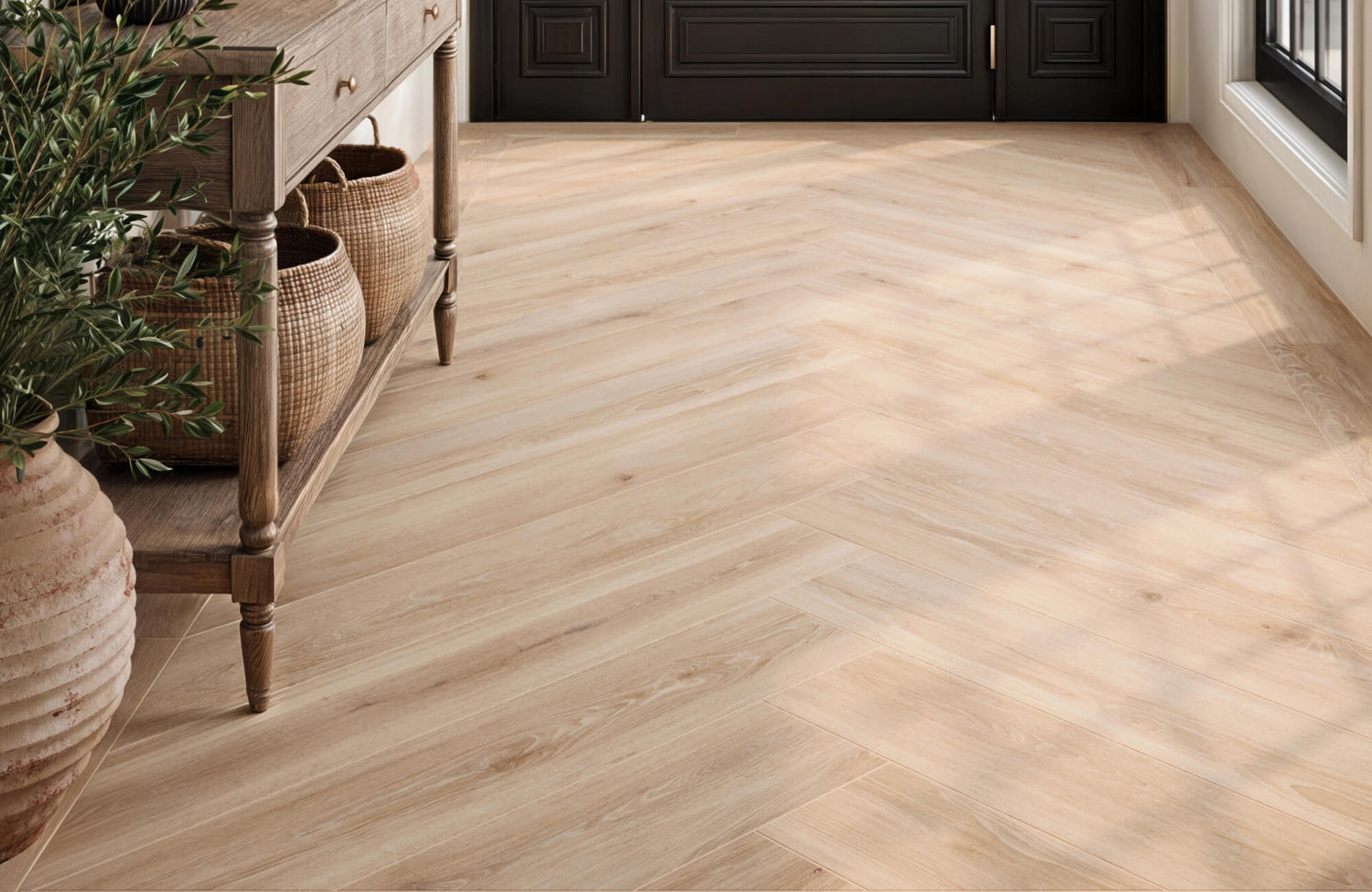
Layout also influences the final design. Straight plank installations create a clean and timeless look, while herringbone or chevron patterns can introduce movement and visual interest. These layout options allow homeowners to achieve anything from a simple wood-inspired foundation to a more decorative statement floor.
For a customized design, Edward Martin’s design professionals can help craft a layout tailored to your space. The augmented reality (AR) tool also makes it easier to preview different wood look tile options before making a final decision.
Choosing the Right Option for Your Needs
The best choice depends on where the flooring will be installed, how the room is used, and how much maintenance you are willing to manage. Wood look tiles are often the better fit for kitchens, bathrooms, laundry rooms, entryways, and other areas where spills, humidity, and frequent cleaning are common. Their durability and easy care make them especially practical for busy households.
Hardwood may be preferred in bedrooms, dining rooms, and formal living areas where natural warmth and traditional character are priorities. It can also appeal to homeowners who value the authenticity of real wood and are comfortable with the maintenance it requires.
For those focused on cost-effectiveness, wood look tile typically offers stronger long-term value because it combines a wood-inspired appearance with lower upkeep. For those who prioritize natural material and classic appeal, hardwood remains a worthwhile investment in the right setting.
Ultimately, the decision is not only about which material is cheaper. It is about which flooring performs best for the room, supports your lifestyle, and continues to meet your expectations over time.