With their iconic alternating square pattern, checkerboard tiles have long been a classic in interior design. Their versatility allows them to fit seamlessly into various traditional and modern styles. Given the enduring popularity of natural stone's luxurious appearance, many homeowners wonder if checkerboard tiles can effectively capture this look. In this article, we'll explore whether checkerboard tiles can emulate the aesthetics and texture of natural stone, looking into their benefits, limitations, and advancements in tile production.

The Allure of Checkerboard Tiles
Checkerboard tiles have a presence that’s hard to ignore. There’s something about the simple rhythm of alternating squares that instantly brings order, character, and visual movement to a room. Whether styled traditionally or reimagined in a modern setting, this pattern continues to feel relevant because it balances structure with personality.
A Timeless Pattern
The checkerboard pattern has been part of design history for centuries, appearing everywhere from Roman villas to grand Victorian entryways. Its alternating squares create a sense of symmetry that feels deliberate and grounded, which is likely why it has never truly gone out of style. Even as trends shift, the pattern adapts rather than fades. It carries a quiet sense of heritage without feeling dated. That blend of history and versatility is what keeps designers returning to it again and again.
When you pair that structured layout with stone-look textures, the result becomes even more compelling. The geometric precision of the checkerboard contrasts beautifully with the natural veining and subtle variation found in marble-inspired or limestone-look tiles. Instead of feeling rigid, the space gains depth and movement. Hallways feel more refined, kitchens gain visual interest underfoot, and entryways instantly feel elevated. The pattern remains classic, but the stone-inspired surface adds warmth and organic character that softens the overall look.
Versatile and Adaptable
One of the reasons checkerboard tiles remain so popular is their flexibility. In neutral tones paired with antique furniture or traditional millwork, they feel timeless and refined. Switch the palette to bold contrasts and cleaner lines, and suddenly the same pattern reads modern and graphic. That adaptability allows checkerboard floors to work in rustic farmhouses, minimalist apartments, and everything in between. It’s less about the pattern itself and more about how you style it.
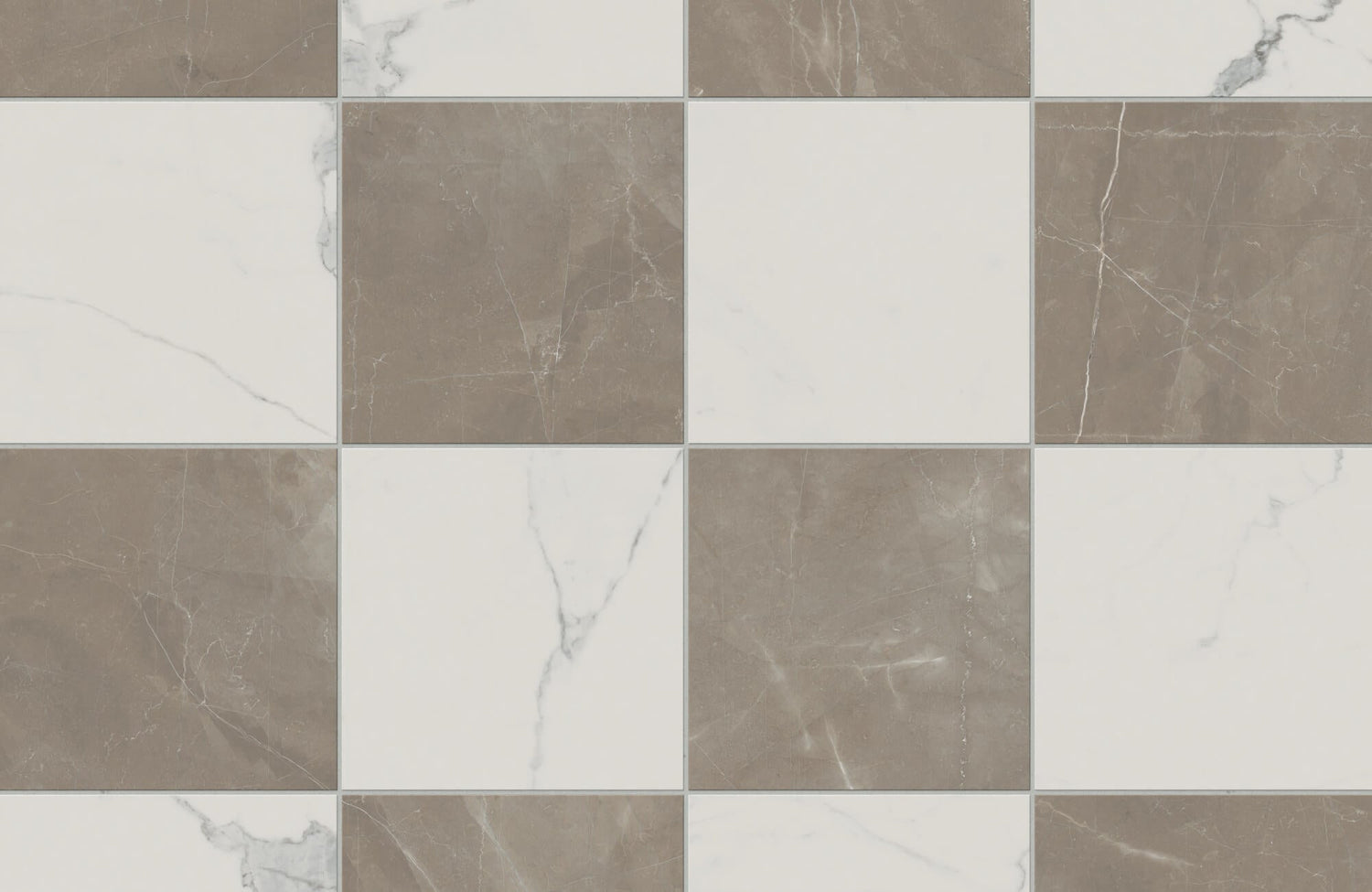
Scale and color also play a huge role in shaping the mood. Larger tiles can make a room feel more expansive and open, while smaller formats create a cozy, intimate effect. A monochromatic checkerboard in soft greys can feel understated and elegant, while high-contrast black and white makes a confident design statement. Our Palmer 12x12 Matte Porcelain Tile in Grey above is a great example of how subtle tones can soften the look without losing the pattern’s impact. Its matte finish reduces glare and allows the checkerboard effect to feel refined rather than dramatic, making it easy to integrate into a wide range of interiors.
As timeless as checkerboard tiles are on their own, combining them with stone-inspired surfaces opens up even more design possibilities. The structure of the pattern paired with the organic depth of stone creates a layered look that feels both classic and elevated.

The Beauty of Natural Stone
Natural stone has long held a special place in interior design, and it’s easy to see why. Every slab carries its own veining, color variation, and subtle texture, which means no two installations ever look exactly the same. That individuality brings a sense of authenticity and depth that manufactured materials often try to replicate. Beyond appearance, stone is also known for its durability, making it a trusted choice in frequently used areas of the home. From marble to granite, each type introduces a grounded, organic presence that softens even the most structured interiors.
Marble, in particular, stands out for its flowing veining and refined character. Its surface captures light in a way that feels soft and luminous, instantly elevating kitchens, bathrooms, and entryways. While natural marble does require sealing and consistent care to protect against moisture and staining, it remains resilient when properly maintained. Its ability to withstand heat and general wear makes it both beautiful and functional. That balance of performance and elegance is what has made marble a staple in design for centuries.
Of course, the beauty of natural stone often comes with higher costs and ongoing maintenance. Exotic varieties and rare colorways can significantly increase installation budgets, and upkeep requires attention over time. For homeowners who love the look but want something more practical, stone-inspired porcelain tiles offer a compelling alternative. They capture the veining and depth of marble while providing easier maintenance and greater resistance to moisture. The result is a surface that feels luxurious but fits more comfortably into everyday life.

The Growing Appeal of Stone Look Tiles
Tile manufacturing has come a long way, and today’s stone look options are far more convincing than many people expect. Through advanced digital printing and surface detailing, porcelain tiles can now replicate the veining, movement, and tonal variation found in natural marble, limestone, and even onyx. Among these, marble look tiles remain especially popular because they deliver that classic, high-end aesthetic without the higher price tag. They’re crafted to capture the elegance of real stone while offering a more approachable and predictable installation. What once required rare slabs and extensive upkeep can now be achieved with precision-made tile designed for everyday living.
Performance is another major reason these tiles continue to gain traction. Porcelain marble look tiles are dense and highly non-porous, which makes them particularly suitable for kitchens, bathrooms, and other moisture-prone areas. Unlike authentic marble, they don’t require regular sealing to protect against staining or water absorption. Stone look options inspired by limestone or onyx also offer their own distinct character, allowing homeowners to tailor the mood of a space without sacrificing durability. Still, marble-inspired designs tend to lead the way because of their familiar veining and refined appearance. They strike a balance between visual softness and architectural presence, which makes them easy to integrate into both traditional and modern interiors.
Stone look tiles bridge the gap between aesthetics and practicality in a way that feels approachable. They provide the visual richness of natural stone while simplifying long-term care and maintenance. When used in structured patterns like checkerboard, especially in marble-inspired finishes, they bring together geometry and organic movement in a compelling way. The pattern introduces order, while the veining adds softness and depth. This balance creates spaces that feel elevated yet comfortable enough for everyday life.

Checkerboard Tiles That Mimic Natural Stone
When you combine the structure of a checkerboard pattern with the depth of natural stone, something interesting happens. The geometry brings order, while the stone-inspired surface introduces movement and character. Together, they create a floor that feels both classic and layered rather than flat or overly graphic.
A Match Made in Heaven
Pairing a checkerboard layout with a marble look tile creates a striking balance between structure and softness. The alternating squares provide rhythm and symmetry, while marble-inspired veining adds natural variation that keeps the pattern from feeling rigid. In spaces like entryways, kitchens, or bathrooms, this combination instantly elevates the atmosphere without overpowering it. Instead of a sharp, high-contrast graphic effect, the stone detailing introduces subtle depth. That interplay between precision and organic movement is what gives marble look checkerboards their enduring appeal.
Choosing a specific marble style further refines the look. A Calacatta-inspired design, for example, introduces soft grey veining across a white base, which keeps the checkerboard elegant rather than dramatic. Our Leona 24x24 Matte Porcelain Tile in Calacatta above illustrates this beautifully, with delicate veining that enriches the pattern without dominating it. The matte finish softens light reflection, allowing the layout to feel welcoming and refined. Whether paired with neutral cabinetry or bolder accents, marble look checkerboards adapt easily while still serving as a thoughtful focal point.
Choosing the Right Tile
Choosing the right marble look tile for a checkerboard layout starts with paying close attention to tone and veining. If you’re drawn to a timeless feel, white tiles with soft grey movement echo classic Calacatta marble and keep the pattern elegant. On the other hand, deeper tones or stronger contrast can introduce a more dramatic, architectural presence. What matters most is variation that feels natural rather than printed or repetitive. Subtle shifts in veining from tile to tile help the checkerboard feel layered and authentic.
Finish plays a major role in shaping the overall mood of the space. A matte surface offers a quieter, more relaxed look and works beautifully in areas with plenty of natural light. Polished or honed finishes, meanwhile, highlight the veining and give the pattern sharper definition. Depending on your lighting and surrounding materials, one option may feel softer while another feels more refined. Thinking about how light moves across the floor throughout the day can guide that decision in a practical way.
Grout choice and installation quality also deserve careful thought. A grout color that closely matches the tile keeps the pattern seamless, while a slightly contrasting shade outlines each square more clearly. Precision during installation ensures the checkerboard reads intentional and balanced rather than slightly misaligned. When color, finish, and layout all work together, the floor feels composed and considered. That’s when a marble look checkerboard truly becomes the anchor of the room instead of just another design detail.

Inspiring Interior Designs
Checkerboard tiles with a marble look aren’t limited to one type of room or aesthetic. When thoughtfully placed, they can anchor a space, highlight architectural details, or introduce movement where a room feels flat. Whether on a backsplash, across a main living area, or extending outdoors, this pattern adapts beautifully while maintaining its classic presence.
Kitchen Backsplash
A marble look checkerboard backsplash instantly gives a kitchen personality without overwhelming it. The alternating pattern draws the eye upward, adding energy and structure behind ranges or sinks. In black-and-white combinations, it feels timeless and tailored, yet it can just as easily lean warm when paired with wood cabinetry. Polished finishes bounce light around the room, helping smaller kitchens feel brighter and more open. At the same time, porcelain or ceramic construction handles everyday splashes and cooking messes with ease. The balance of durability and visual impact makes it a practical focal point rather than just a decorative detail.
Bathroom Floor
On a bathroom floor, a marble look checkerboard creates a sense of depth and elegance that feels intentional from the moment you step in. Larger tiles can visually stretch a compact space, while smaller formats introduce texture and rhythm. The contrast between light and dark squares naturally defines the layout, giving the room a polished, curated feel. Because porcelain versions are water-resistant and less porous than natural stone, they simplify long-term care in moisture-prone areas. A matte or honed finish adds subtle slip resistance while keeping the look refined. Together, those elements make the bathroom feel both luxurious and livable.
Living Room Floor
In a living room, a checkerboard floor becomes a design statement that grounds the entire space. Our Chantel 24x24 Polished Porcelain Tile in Imperial above in Imperial brings marble-inspired veining into the pattern, adding depth that keeps the layout from feeling flat. Its polished surface reflects natural light, which can make the room feel more expansive and layered. The marble look detailing pairs comfortably with both traditional furnishings and modern silhouettes, allowing flexibility as your decor evolves. Beyond aesthetics, its durability supports everyday living without sacrificing elegance. It’s a bold move, yet one that feels enduring rather than trendy.
Outdoor Patio
Checkerboard layouts can transition beautifully to outdoor patios, especially when using slate or travertine-effect porcelain tiles. The stone-inspired finish blends naturally with greenery, wood furniture, and textured fabrics, helping the patio feel like an extension of the interior. Porcelain designed for outdoor use stands up to shifting weather conditions while maintaining its appearance. The alternating pattern introduces visual interest across larger patio surfaces, preventing the area from feeling monotonous. When carried from inside to outside, the checkerboard layout creates continuity that feels intentional and cohesive. It’s a way to bring classic structure into open-air spaces without losing warmth or character.
Where Classic Checkerboard Meets Natural Stone Elegance
Checkerboard tiles that mimic natural stone prove that you don’t have to choose between timeless character and everyday practicality. They carry the visual weight of marble or limestone while offering the durability and easier care of porcelain or ceramic. In kitchens, bathrooms, living rooms, or even patios, this pairing of pattern and stone-inspired texture feels intentional and elevated. When you thoughtfully select the right tone, finish, and scale, the design becomes more than decorative—it becomes the foundation that shapes the entire room.
If you’d like guidance in narrowing down the perfect combination, our Personalized Design Consultation makes the process simple and collaborative. Our team helps you refine your layout, choose finishes that complement your lighting, and ensure your checkerboard feels balanced rather than overwhelming. With expert insight and a clear design plan, you can move forward confidently and create a checkerboard floor that feels curated, cohesive, and built to last.