Few design choices have the staying power of black and white floor tile. Its bold contrast, clarity, and elegance have graced spaces from ancient Roman villas to modern kitchens and boutique cafés. More than just a surface, it has also become a design language that carries meaning across centuries, shaping how we perceive order, sophistication, and style.
As design trends come and go, black and white tile continues to evolve without losing its identity. It adapts to new materials, patterns, and technologies, yet always retains the timeless balance that makes it so compelling. This article explores the history, psychology, cultural influence, and practical applications of black and white floor tile to uncover why it remains one of the most enduring choices in interior design.

The Historic Influence of Black and White Tile
The enduring appeal of black and white tile can be traced back to ancient Rome and Greece, where marble floors in contrasting tones symbolized symmetry, order, and permanence. These early designs carried philosophical meaning as much as visual beauty, embodying ideals of logic and refinement that made the pattern more than a decorative choice. Centuries later, the Renaissance revived these classical elements, and by the Victorian era, industrial advances allowed the look to move beyond palaces and cathedrals into everyday homes. In this period, the tile became a marker of elegance and social aspiration, celebrated for its durability and architectural presence.
The 20th century confirmed the tile’s versatility as new design movements gave it fresh identities. Art Deco turned it into a medium for bold glamour and geometric drama, while the Bauhaus embraced its stark contrast for clarity and minimalist function. This ability to move seamlessly from ornate to modernist settings revealed black and white tile as more than a passing style. Instead, it secured its place as a timeless design language, adaptable to changing cultural values while consistently associated with sophistication and permanence.

The Psychology of Contrast in Tile Design
Black and white floor tile continues to resonate because of its powerful effect on perception and mood. The interplay of light and dark naturally appeals to the human desire for symmetry and balance, which makes patterned floors feel grounded and structured. Whether in a checkerboard layout or a more complex geometric design, the repeated rhythm organizes space and guides the eye, ensuring that even large or open areas feel cohesive and intentional. This ability to provide order while adding visual interest explains why the combination remains so enduring across design eras.
Equally important is the emotional impact of high contrast. Black and white creates drama without overwhelming a room, striking the rare balance of being bold yet neutral. The dark tones also provide grounding while the lighter tones open up the space, resulting in a design that feels both sophisticated and calming. At the same time, its adaptability as a neutral backdrop allows it to complement vibrant accents or muted palettes with ease. This dual role, as both a statement piece and a flexible foundation, makes black and white floor tile a timeless choice that can evolve alongside changing tastes and trends.
A perfect example of this can be seen in the image above, featuring our Leona 24x24 Checkerboard Matte Porcelain Tile in Calacatta and Nero Marquina. Its bold yet classic checkerboard pattern embodies the balance of contrast, grounding the room with deep black while opening it up with a white tone. This timeless pairing enhances both traditional and modern spaces, ensuring the design feels intentional, refined, and enduring.

Evolving Styles and Patterns Beyond Checkerboard
Black and white tile is far more adaptable than the classic checkerboard suggests. Contemporary design continues to evolve its use, transforming a traditional palette into a versatile design language that suits both modern and transitional spaces.
Geometric and Hexagon Patterns
Today, black and white floor tile takes on new life through patterns that go beyond simple squares. Hexagons, chevrons, and diamonds create dynamic arrangements that feel current yet still grounded in timeless contrast. When you use hexagonal tiles, for instance, the geometry allows for playful compositions that can mimic floral motifs or tessellated mosaics. Chevrons and diamonds, on the other hand, offer directional movement, subtly guiding your eye across the room.
These layouts can also be used to create optical illusions, making small rooms appear wider or adding visual energy to otherwise neutral spaces. By experimenting with shape rather than color, you keep the elegance of black and white while injecting a distinctly modern twist that feels both creative and enduring.
In the bathroom photo above, the hexagon format is arranged into a charming floral pattern that enlivens the floor without overwhelming the design. This look is achieved with our Quinn 12x12 Matte Porcelain 1x1 Hexagon Mosaic Tile in Black & White Flower, which transforms simple black and white into something more expressive. Its deep black accents anchor the space, while the crisp white background keeps the overall feel fresh, bright, and balanced.
Stripes, Borders, and Inlays
Beyond patterns, black and white floor tile functions as an architectural element, shaping how you experience the room itself. Borders and stripes can be laid into floors to mimic the look of rugs, creating defined seating or dining areas without adding textiles. In larger areas, this method prevents vast floor expanses from feeling empty, while in commercial spaces, it directs flow and establishes focal points.
Inlay patterns take this concept further by embedding intricate designs within a larger field of tile. A framed motif at the center of a hallway or foyer, for example, not only adds drama but also reinforces the geometry of the space. These applications highlight how black and white floor tile moves beyond decoration to act as a design tool that shapes function as much as style.
Mixing Finishes and Textures
Although pattern brings energy, finish and texture add subtlety. Modern black and white tile often combines matte and glossy surfaces, creating floors that shift appearance depending on the angle of light. This effect becomes especially clear when a glossy black tile is paired with a matte white tile, producing a sheen that adds depth without relying on additional colors.
You also see this palette interpreted through materials that contrast in feel, such as polished marble paired with concrete look porcelain or smooth ceramic mixed with textured encaustic. These combinations allow you to enjoy the simplicity of black and white floor tile while experiencing it in layered, tactile ways. This attention to surface detail keeps monochrome flooring from feeling flat, updating the look for contemporary interiors while maintaining its timeless character.

The Role of Materials and Technology
Advancements in tile production and sustainability help explain black and white floor tile’s ongoing appeal. Technology not only makes it more versatile and affordable but also ensures it remains relevant in today’s environmentally conscious design world.
Advances in Porcelain and Ceramic Production
Modern manufacturing has completely changed what black and white floor tile can achieve. With digital printing, tiles can now replicate the look of natural stone or intricate patterns with stunning accuracy. This means you can enjoy the luxury of marble veining or detailed motifs without the high cost or maintenance of natural materials. Rectified edges, another innovation, allow tiles to be cut with extreme precision so that grout lines nearly disappear. The result is a seamless, high-end look that feels elegant yet remains accessible.
The picture above highlights how these advances come together in practice. Our Leona 24x24 Checkerboard Polished Porcelain Tile in Calacatta and Nero Marquina brings the drama of natural marble into a timeless diamond layout. The luminous white tone evokes the refined veining of Calacatta, while the deep black tone recalls the richness of Nero Marquina. Polished to a reflective finish, the surface enhances the grandeur of the space, achieving the sophistication of real marble with the durability and ease of porcelain.
Sustainability and Eco-Friendly Options
As sustainability has become a priority in modern design, tile production has evolved to meet that demand. Many black and white floor tiles are now made with recycled content, reducing waste and reliance on new raw materials. Energy-efficient kilns and water-conserving production processes further minimize environmental impact, aligning with green building standards like LEED.
For you, this means style doesn’t have to come at the cost of conscience. Choosing black and white floor tile today allows you to enjoy a timeless aesthetic while also contributing to a more sustainable future. With certifications and eco-labels more widely available, you can specify tile confidently, knowing it supports both design and environmental goals.

Practical Applications in Today’s Interiors
The enduring relevance of black and white floor tile comes from how well it serves today’s real-world spaces. Its versatility allows you to bring both function and beauty into areas that demand durability, style, and adaptability.
Kitchens and Bathrooms
Few spaces showcase the practicality of black and white floor tile better than kitchens and bathrooms. In kitchens, the pattern immediately draws attention, whether through a bold checkered layout or a more subtle geometric variation. The high contrast also brings visual energy to the room, while the durable surface withstands spills, stains, and heavy daily use. Moreover, black and white tile pairs effortlessly with common kitchen elements like white cabinetry, natural stone countertops, or even brass and chrome hardware. As a result, adding a pop of color through décor or appliances becomes easy, since the monochrome palette provides a flexible backdrop.
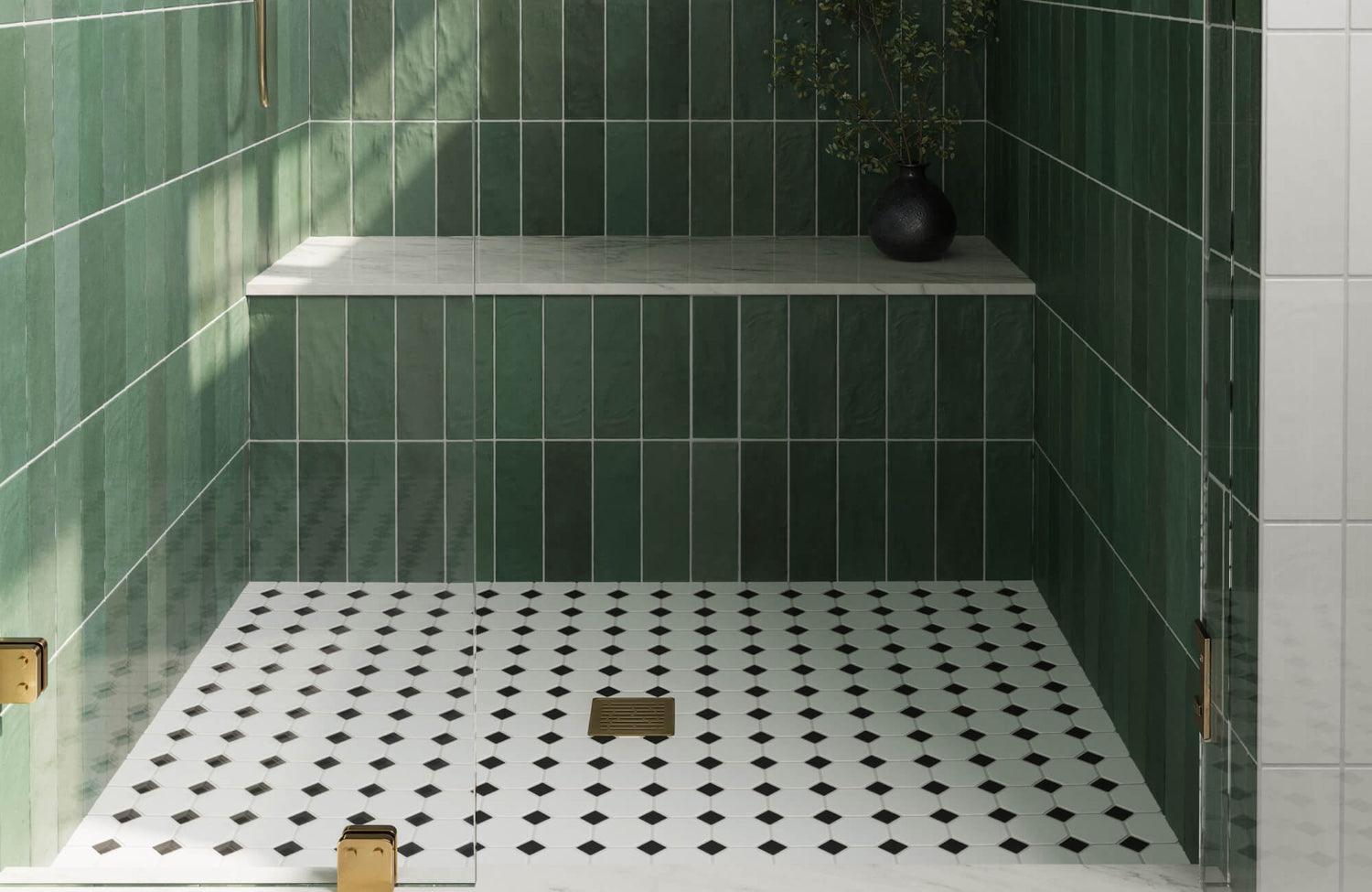
In bathrooms, the same qualities shine in a different way. The floor shown above features a pinwheel pattern that brings a fresh spin to traditional black and white tiling. This design is created using our Quinn 12x12 Matte Porcelain Pinwheel Mosaic Tile in Black & White, where crisp white squares are accented with deep black inserts to form a playful yet structured layout. The result is a look that feels both clean and timeless, offering slip resistance and visual interest while maintaining the durability porcelain is known for.
Transitional and Contemporary Spaces
Another reason black and white floor tile remains so relevant is its ability to bridge different design eras. In transitional areas, it anchors spaces that mix traditional details with modern updates. A foyer with a black and white border pattern, for instance, can honor the architectural history of the space while complementing contemporary furnishings. This balance allows you to create interiors that feel layered and intentional.
In more contemporary settings, the look evolves through scale and finish. A product like our Palmer 12x12 Checkerboard Matte Porcelain Tile in White and Nero demonstrates how a timeless palette can be reinterpreted for modern design. Its crisp white squares contrasted with deep black tones create a clean, structured rhythm, while the matte finish softens the look for a more subdued, gallery-like presence. By adjusting layout and material, this tile allows you to achieve a design that feels entirely fresh while remaining rooted in classic elegance.
Commercial and Hospitality Spaces
Black and white floor tile also proves its worth in commercial and hospitality settings. In restaurants and cafés, it delivers atmosphere while standing up to the constant wear of usage. Moreover, a bold mosaic entryway can set the tone for a boutique or hotel, creating a memorable first impression that feels both stylish and enduring. At the same time, beyond its visual appeal, the tile’s easy-to-clean surface and resistance to scratching or fading make it highly practical for high-visibility environments.
For business owners, this combination of durability and visual impact is invaluable. The flooring becomes both a branding element and a functional investment, ensuring that the space looks polished while remaining cost-effective over time. Whether used to highlight a dining area, anchor a retail floor, or enhance a hotel lobby, black and white floor tile consistently proves why it belongs in the most demanding of today’s interiors.
Why Black and White Floor Tile Stands the Test of Time
Black and white floor tile has endured because it is both timeless and adaptable. Its striking contrast creates balance and sophistication, while its flexibility allows it to move seamlessly from classical designs to contemporary interiors. Across history, it has proven that it can symbolize refinement, energize modern spaces, and withstand heavy daily use without losing its charm. As a result, it is not just surviving but thriving in today’s design world. Black and white tile does not fade into the background of passing trends—it defines what it means for a design element to be truly timeless.
If you are ready to bring this classic flooring into your own space, our design services can guide you in selecting the right tiles and finishes while shaping a look that feels both stylish and personal. To make the process even more seamless, you can view tiles in augmented reality (AR) and preview how different patterns will appear in your room before making a choice. With the combination of expert guidance and interactive tools, you can design with confidence, knowing that black and white floor tile will enhance your space for years to come.