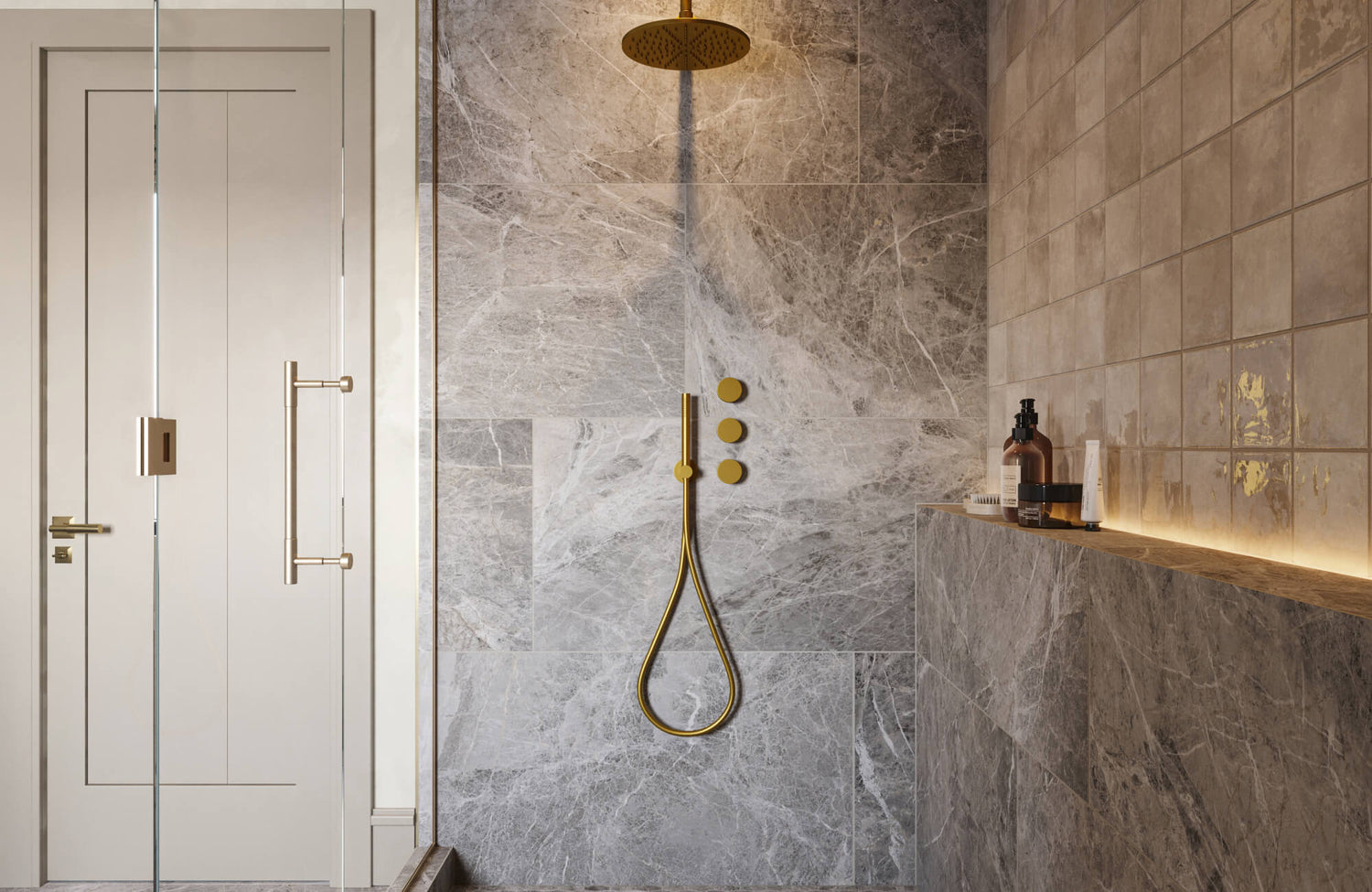
Fully tiled showers are gaining attention for their sleek look and lasting appeal. With every surface covered in tile, they bring a clean, cohesive style that instantly feels refined and custom. The mix of beauty and practicality makes them a favorite among homeowners looking to upgrade their bathrooms. In this guide, we’ll cover what makes fully tiled showers stand out, their key pros and cons, and simple design tips worth reading through until the end.

What Exactly Is a Fully Tiled Shower?
A fully tiled shower covers every surface with tile, including the walls, floor, and often recessed niches or benches. Unlike partial designs that use tile only in wet zones, this approach creates a seamless, cohesive look that functions as both protection and decoration.
What Makes a Shower “Fully Tiled”?
A fully tiled shower means that tile extends across all major surfaces rather than just around the shower pan or lower walls. The coverage usually includes walls from floor to ceiling, the shower floor, and often built-in features like benches or alcoves. This design creates a unified enclosure that is both functional and visually appealing. By eliminating breaks in material, the shower achieves a sleek, continuous finish. It’s a style choice as much as a practical one, offering durability along with a high-end look.
As seen above, our Dax 6x24 Matte Porcelain Tile in Rust brings bold character to the walls, while our Wyatt 2x2 Matte Porcelain Mosaic Tile in Espresso grounds the shower floor with warmth and texture. Together, they showcase how mixing complementary tones and formats can create a space that feels both striking and cohesive.
Common Tile Types for a Fully Tiled Shower
Homeowners have a wide range of tile materials to choose from when designing a fully tiled shower. Porcelain and ceramic tiles are popular for their durability and water resistance, making them practical for daily use. Natural stone options such as marble, slate, or travertine bring a more luxurious, textured feel. Glass tiles can be used sparingly for accent walls or niches, adding brightness and depth. Each material has its own strengths, allowing for both aesthetic variety and functional performance.
How Full Tiling Differs from Partial Designs
Partially tiled showers typically use tile only where water directly hits, such as the lower walls or shower floor, while upper sections are left painted or finished differently. Fully tiled designs remove this split, creating an uninterrupted surface that covers every angle of the shower. This makes the shower more water-resistant and visually cohesive compared to its partial counterpart. While partial tiling can feel more casual, full tiling often leans more upscale and polished. The continuous tile surface also opens up more design possibilities for patterns and finishes.

The Benefits of a Fully Tiled Shower
Fully tiling a shower brings both functional and aesthetic advantages. From the ability to customize with countless styles to the long-term durability of tile, this approach offers a combination of beauty and practicality that appeals to many homeowners.
Endless Design Options and Custom Layouts
One of the biggest strengths of a fully tiled shower is the freedom it gives in design. With endless tile options in color, size, texture, and pattern, homeowners can create a look that reflects their personal style. Whether it’s a clean, modern subway tile layout or an intricate mosaic feature wall, the flexibility is unmatched. Tiles also allow mixing finishes, like matte against glossy, to add depth and character. This level of customization helps transform a bathroom into a more personalized and stylish space.
Strength, Durability, and Water Resistance
Tile is known for its strength and longevity, making it a reliable choice for showers. Porcelain and ceramic, in particular, resist water absorption, scratches, and daily wear. When paired with proper installation and waterproofing, fully tiled showers are less prone to damage compared to other materials. This durability means fewer concerns about warping or mold growth over time. A tiled enclosure simply withstands the demands of daily use better than many alternatives.
Easy Cleaning and Long-Term Maintenance
With the right installation and sealing, tiled showers can be relatively simple to maintain. Smooth surfaces are easy to wipe down, and high-quality grout and sealants prevent water and stains from seeping in. This minimizes the buildup of soap scum or mildew, especially if cleaning is done regularly. Some homeowners also choose larger tiles, which reduce grout lines and make upkeep even easier. When properly cared for, tiled showers stay fresh and attractive for years.
Adds Value and a Luxurious Feel to Bathrooms
A fully tiled shower is often seen as a premium feature that boosts the overall appeal of a bathroom. Buyers and guests alike notice the polished, high-end finish that full tiling creates. Its cohesive look signals careful design and quality investment, which can increase property value. Beyond resale, it also elevates the everyday experience by making the shower feel more like a spa retreat. This combination of luxury and practicality makes full tiling a strong long-term choice.

Drawbacks to Consider Before Tiling Every Surface
While a fully tiled shower delivers plenty of benefits, it also comes with challenges that homeowners should consider. Costs, upkeep, and long-term care all play a role in deciding whether this investment is the right fit.
Higher Upfront Installation Costs
One of the main drawbacks is the higher cost of fully tiling a shower compared to partial or prefabricated options. More tiles mean more materials, as well as additional labor to cover every surface. Complex designs or intricate patterns can push expenses even higher. Professional installation is almost always required to ensure proper waterproofing and alignment, which adds to the total price. For budget-conscious homeowners, this upfront cost can be a major factor.
Grout and Seal Maintenance Over Time
Grout lines, even when sealed, require regular upkeep to stay clean and watertight. Over time, grout can stain, crack, or develop mildew if not properly cared for. Resealing is often necessary to keep tiles performing well in a wet environment. Without consistent maintenance, a fully tiled shower may start to lose its polished appearance. This ongoing effort is something homeowners need to plan for before committing.
Slippery Surfaces and Safety Precautions
Tiles can become slippery when wet, especially those with glossy finishes or large smooth surfaces. This increases the risk of slips and falls in a space where safety is critical. While textured or matte tiles help reduce the problem, they can be harder to clean. Smaller tiles on the shower floor are often used to add grip, but this still requires careful selection during design. Ignoring safety considerations may lead to a beautiful shower that’s less practical to use.
Complex Repairs and Long-Term Care Needs
When damage does occur, repairs in a fully tiled shower can be complicated. Replacing broken or chipped tiles requires careful matching, and discontinued patterns can make this nearly impossible. Waterproofing beneath the tiles must also remain intact, or repairs become more extensive. Over many years, normal wear can lead to uneven grout, loose tiles, or leaks that aren’t easy to fix. This complexity makes long-term maintenance more demanding than with simpler shower finishes.

Finding the Balance Between Style and Functionality
A fully tiled shower can bring both beauty and function, but it’s not a one-size-fits-all solution. Homeowners need to consider lifestyle, budget, and how much long-term upkeep they are comfortable with. What feels luxurious in one setting may feel excessive in another, so the decision should always reflect the specific needs of the space and the people using it.
For those who want a spa-like experience and don’t mind the investment, a fully tiled shower can be the perfect fit. The seamless coverage not only enhances style but also delivers durability and lasting value. In households where the bathroom serves as a retreat or design showcase, this option often feels well worth the cost. The balance tips in favor of full tiling when luxury and longevity take priority.
On the other hand, practicality may point toward alternatives such as prefabricated panels or partial tiling. These options often reduce installation costs and ongoing maintenance while still offering clean, attractive finishes. They’re especially useful for smaller bathrooms, secondary spaces, or rental properties where durability matters but budgets are tighter. Weighing both style aspirations and everyday function ensures the final choice supports comfort and convenience in the long run.

Practical Tips for Designing a Fully Tiled Shower
Making the most of a fully tiled shower comes down to smart material choices and consistent care. By focusing on the right tiles, proper sealing, and manageable cleaning habits, homeowners can enjoy a space that looks polished and performs well for years.
Selecting the Right Tile Size, Color, and Finish
Selecting the right tile is the first step in creating a shower that balances beauty and function. Porcelain and ceramic tiles are durable, water-resistant, and available in countless styles, making them practical for most bathrooms. Natural stone offers rich character but often requires more upkeep to protect against moisture. Large-format tiles can minimize grout lines and give a clean, modern appearance, while mosaics add texture and grip on the floor. Matching tile size and finish to your bathroom’s needs ensures both safety and design harmony.
Importance of Grout Quality and Waterproofing
Grout plays a major role in both the look and longevity of a fully tiled shower. Lighter grout colors can highlight tile patterns but show stains more easily, while darker grout provides contrast and hides wear. No matter the shade, sealing grout is essential to prevent water penetration and mildew growth. Resealing on a regular schedule helps maintain durability and appearance over time. Investing in quality grout and sealants upfront saves frustration and repairs later.
Smart Cleaning Habits to Keep Tiles Looking New
Consistent cleaning is key to keeping a tiled shower looking its best. Wiping down walls and floors after use helps prevent soap scum and hard water deposits from building up. Mild cleaners are often enough, but stronger solutions may be needed occasionally to tackle grout lines. A soft-bristle brush works well for scrubbing without damaging the tile surface. By building these habits into your routine, the shower stays fresh, hygienic, and easy to enjoy long-term.
Using Visualization Tools Before You Commit
Choosing the right tile can feel overwhelming, but our AR tool makes the process easier by letting you preview options directly in your space. You can see how different colors, textures, and patterns look on your shower walls or floor before making a final decision. This helps avoid costly mistakes and ensures your selections feel cohesive with the rest of the bathroom. With this tool, you gain confidence in your design choices while making the planning process more interactive and stress-free.
Is a Fully Tiled Shower Right for Your Bathroom?
A fully tiled shower can deliver unmatched style, durability, and value, but it also requires a higher commitment in terms of cost, installation, and upkeep. For some homeowners, the seamless look and spa-like feel make the investment worthwhile, while for others, practical alternatives may be a better fit. The decision ultimately depends on your lifestyle, budget, and how you want your bathroom to function in the long term.
If you’re weighing the benefits against the challenges and aren’t sure which direction to take, professional guidance can make the choice easier. Our design consultation service can help you evaluate tile options, finishes, and layouts that fit your goals and your space. With expert support, you can create a shower that not only looks stunning but also performs beautifully for years to come.