For years, oak bathroom vanities carried the reputation of being “stuck in the 1990s”, a symbol of older builds, outdated finishes, and an aesthetic many homeowners associated with their childhood homes. But today, oak is experiencing a resurgence that feels fresh, elevated, and unmistakably modern.
If you're considering an oak vanity but worry it might look dated, the truth is simple: it can look dated, but only if you choose the wrong version of oak. The modern reinterpretation of this classic wood proves that with the right finish, silhouette, and styling, oak can feel more luxurious and relevant than ever.
Before we explore what makes today’s oak cabinetry so on-trend, it helps to understand exactly what made 1990s oak feel tired in the first place.

First, Understand What Made 1990s Oak Look "Dated"
Before you can appreciate why oak is making such a strong comeback, it helps to look back at what gave it a dated reputation in the first place. The finishes, shapes, and hardware choices of the 1990s created a very specific aesthetic, one that doesn’t reflect what oak can offer today.
The Shiny “Golden Oak” Problem
The biggest offender was the unmistakable glossy, orange-yellow finish. This “golden oak” stain was used on everything from kitchen cabinets to stair rails to bathroom vanities, a stark contrast to the softer, modern tone seen above in Edward Martin’s Gwen 48" Single Vanity in Pebble Oak with a 3 cm White Zeus Quartz Top. The thick polyurethane coating created a plastic-like shine that amplified the warm, almost orange undertones.
The result? A heavy, overly warm, reflective wood tone that clashed with modern color palettes. Today’s oak renaissance rejects both the shine and the overly saturated stain. The new look is matte, understated, and more natural, showcasing the beauty of the grain rather than hiding it beneath glossy varnish.
The Ornate Raised-Panel Doors
Another signature of the 1990s was the raised-panel cabinet door, a curved, overly decorative profile that felt bulky and busy. This style added visual weight in smaller bathrooms and contrasted sharply with the clean lines that define modern interiors.
Raised-panel oak cabinets are strongly tied to a past design era; their silhouette alone can instantly make a room feel outdated, even if the wood itself is high quality.
The Polished Brass and Wood Knob Combo
To complete the look, most 90s vanities featured polished brass hardware or wooden knobs that matched the cabinet doors. The effect was a monochromatic, overly warm palette lacking contrast and sophistication.
Polished brass has made a comeback in recent years, but not in the bright, yellow-toned version used three decades ago. Today’s brass is brushed, antiqued, or unlacquered, subtle, warm, and refined.
Understanding these outdated features helps highlight why the new oak looks nothing like its 1990s counterpart.

Discover the "New Oak"
Once you understand what held old oak back, it becomes much easier to see why its modern revival feels so fresh. Today’s designers have reimagined oak with new finishes, cleaner lines, and refined craftsmanship that give it an entirely different personality.
The Rise of White Oak Over Red Oak
One of the biggest shifts in modern design is the widespread preference for white oak rather than red oak.
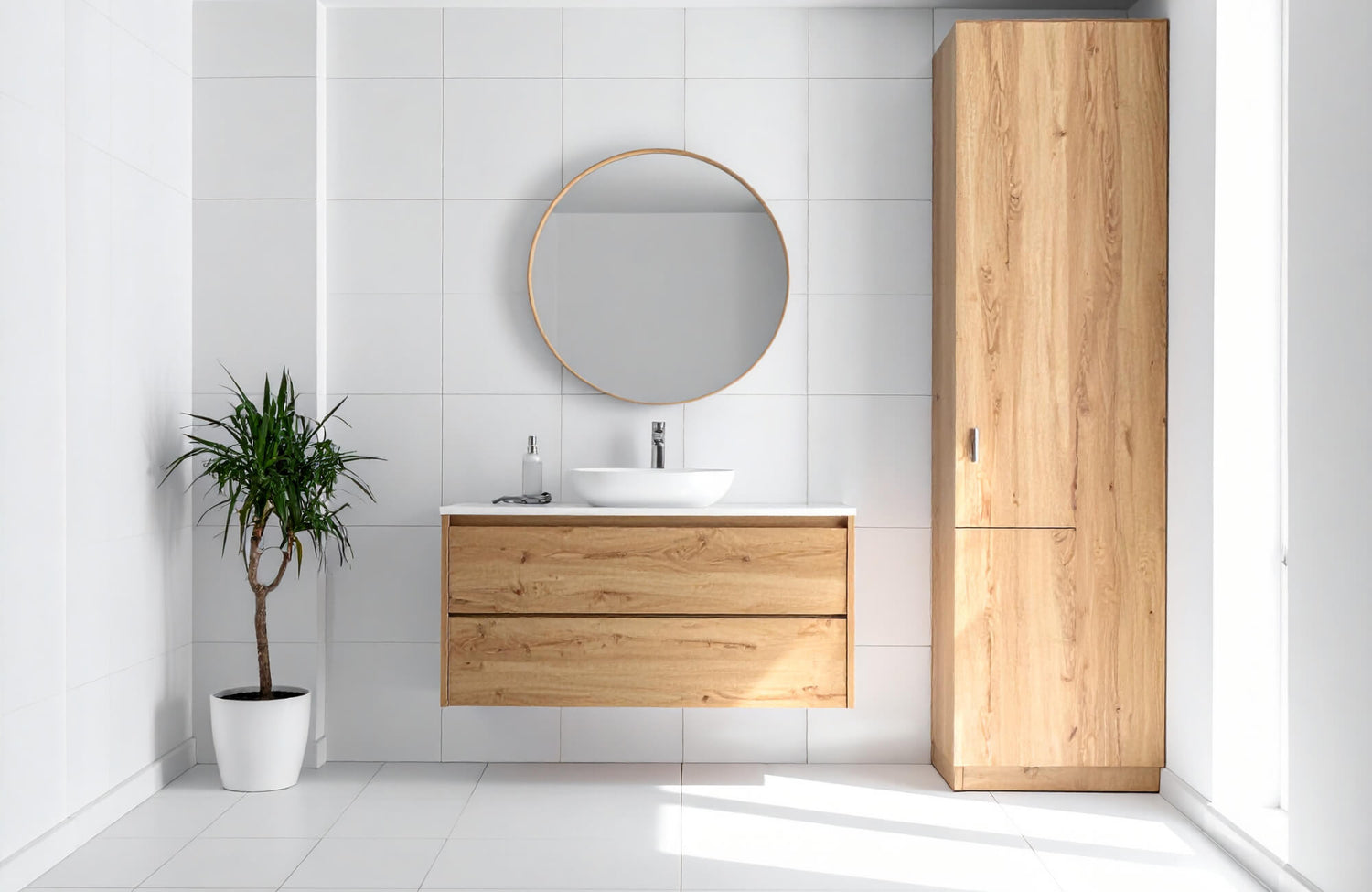
Red oak, common in the 90s, is known for its pronounced pink and orange undertones, which become even more yellow when paired with amber finishes. White oak, on the other hand, offers cooler, more neutral undertones, a tighter and more refined grain, and an overall higher-end appearance.
It also takes stain beautifully, especially matte finishes, allowing it to blend effortlessly with contemporary bathroom styles. This shift alone dramatically updates the look and feel of an oak vanity.
The New Finishes
Today’s oak finishes focus on subtlety, natural texture, and a more refined approach to showcasing the wood’s character, qualities reflected beautifully, as seen above in Edward Martin’s Abigail 72" Double Vanity in Light Natural Oak with a 3 cm White Zeus Quartz Top.
Natural matte finishes allow the raw beauty of the grain to come through without the artificial shine typical of older polyurethane coatings, creating an organic and modern look that pairs well with stone, tile, and clean-lined hardware.
Cerused or whitewashed treatments introduce light pigment into the grain, resulting in a soft, airy appearance that can lean coastal, Scandinavian, or simply contemporary depending on the setting. Neutral-toned stains, ranging from taupe and beige to gray-brown or natural wood hues, enhance oak without altering its inherent warmth.
These finishes add depth and sophistication while avoiding the orange tones that once made oak feel dated.
The New Silhouettes
While the raised-panel doors of the 1990s often felt heavy and overly traditional, modern oak vanities embrace clean lines and simplified forms. Flat-front, or slab, doors offer a minimal and sleek profile that is frequently seen in high-end contemporary bathrooms, especially in popular sizes like 48 inch vanities, creating a smooth visual plane that lets the wood grain take center stage.
Shaker doors remain a timeless option, but today’s versions rely on crisp frames and understated detailing, making them compatible with both modern and transitional spaces. Whether you’re outfitting a compact powder room or upgrading to a wider 48 inch vanity, these updated silhouettes transform oak into an intentional, elegant, and undeniably current design choice.

How to Style a Modern Oak Vanity
With the modern evolution of oak in mind, the next step is knowing how to bring that updated look to life in your own bathroom. The right pairings, countertops, hardware, tile, and color, can highlight the beauty of new oak and ensure your vanity feels intentional and current.
Pair with High-Contrast Countertops
Modern oak shines when paired with countertops that provide intentional contrast in tone or texture. Designs like Edward Martin’s Maxine 72" Double Vanity in Black Wash Oak Veneer with a Carrara Marble Top show how dramatic contrast can elevate the wood and give it a contemporary edge, as shown above. Materials such as white quartz with subtle veining create a crisp, clean look, while black or charcoal stone adds bold depth.
Warm gray quartzite offers a more organic, earthy feel, and marble-look surfaces bring elegant movement to the space. This sense of contrast instantly updates the oak and gives the vanity a distinctly contemporary edge.
Choose Modern Hardware and Fixtures
Hardware may seem like a small detail, but it has an outsized influence on the overall design.
Glossy brass and matching wood knobs tend to feel dated, so modern styles favor brushed brass or champagne bronze for a soft, elevated warmth, matte black for a strong graphic statement, brushed nickel for a subtle and timeless finish, or oil-rubbed bronze for homeowners leaning toward rustic modern or classic elegance.
Fixtures with clean, simple silhouettes, whether cylindrical, squared, or gently curved, help create a cohesive and modern look that complements the vanity’s natural wood tones.
Complement with the Right Tile and Wall Color
Tile and wall color can make or break the look of an oak vanity, so the goal is to choose finishes that enhance its warmth without overwhelming the space.
Classic options like white or cream subway tile work beautifully, while terrazzo adds a playful modern twist. Warm gray porcelain tile or stone-look surfaces with soft veining introduce an earthy, spa-like quality, and handmade ceramic tile adds texture and artisanal charm.
On the walls, warm whites, greige, soft taupe, muted greens, sage, and earthy tones like clay, sand, or light mushroom all pair effortlessly with oak. These palettes strike the right balance, creating an inviting, layered bathroom design that feels both modern and timeless.

Oak Is a Timeless Choice, Not a Dated Trend
After exploring how modern oak is built and styled, it’s clear that the material’s appeal goes far beyond trends. Its durability, versatility, and naturally elevated look make oak a smart long-term choice that continues to feel relevant year after year.
Why Oak Is a Smart Long-Term Investment
Oak is prized for its durability and longevity. It’s a hardwood that stands up to daily wear, moisture, and use better than many alternatives. When well-finished, it’s an investment that lasts decades, both structurally and stylistically.
Its Unmatched Versatility for Any Style
Whether your bathroom leans modern, traditional, Scandinavian, farmhouse, or transitional, oak can fit the aesthetic. Its grain provides warmth and interest, while today’s finishes allow it to adapt to virtually any design direction.
The Answer Is in the Details
A modern oak vanity won’t look dated when the right details come together with intention, something captured well as displayed above in Edward Martin’s Bridgette 72" Double Vanity in Light Natural Oak with a 3 cm White Zeus Quartz Top. The finish should be matte and natural to highlight the wood’s organic character, and the doors should feature clean, simple lines that feel current rather than ornate.
Hardware plays a major role as well, so choosing pieces that are thoughtfully selected and stylistically aligned with the rest of the space helps elevate the overall look. Pairing oak with well-chosen materials, such as contemporary countertops, modern tile, and complementary wall colors, ensures the vanity feels integrated and refined.
Taken together, these elements transform oak from a relic of the 90s into a contemporary, timeless design feature.
Embrace the New Era of Oak
Oak is not only back, it’s better than ever. Today’s designs celebrate the wood’s natural beauty through soft finishes, minimal silhouettes, and a modern approach to styling. If you’re considering an oak vanity, don’t let memories of shiny orange cabinets sway you. And if you’re unsure which style, finish, or size best fits your space, Edward Martin’s design consultation service can guide you with personalized recommendations tailored to your project.
For additional support, whether you have product questions or need help coordinating tile, rugs, or furniture selections, simply contact us to connect with a team member. You can also contact Edward Martin directly for expert assistance that helps you move forward with confidence.