Mirror shape plays a pivotal role in defining the aesthetic balance, spatial perception, and functional performance of a bathroom. Beyond its reflective purpose, a mirror acts as a visual anchor that influences lighting distribution, spatial geometry, and overall design cohesion. The shape of a bathroom mirror can subtly transform proportions, enhance architectural lines, and impact how both artificial and natural light interact with surfaces.
This article explores the influence of mirror shapes on spatial perception, lighting behavior, ergonomic design, style direction, and material coordination. By understanding these technical and aesthetic principles, designers and homeowners can make informed decisions that elevate both form and function within bathroom interiors.

Defining Spatial Perception Through Mirror Geometry
Mirror geometry has a direct impact on how we perceive a bathroom’s size, balance, and openness. When thoughtfully integrated into a layout, it creates harmony between architectural form, human perspective, and visual proportion.
Horizontal vs. Vertical Orientation
Horizontal mirrors guide the eye across the room, visually extending wall planes and giving smaller bathrooms a broader, more spacious appearance. This horizontal pull not only balances long vanities but also reinforces a sense of stability and order across the design. Vertical mirrors, in contrast, draw attention upward, subtly increasing the perceived ceiling height and enhancing vertical proportion in compact layouts. Moreover, the eye naturally follows the mirror’s direction, shaping how depth and height are understood within the space. When designers use both orientations strategically, the result is a rhythmic balance that feels naturally expansive. This interplay between direction and proportion transforms mirror placement into an art of spatial illusion.
Curved and Organic Forms
Curved mirrors, such as circular, oval, or capsule silhouettes, introduce gentle softness that counterbalances the rigid geometry of tiles and cabinetry. Their smooth outlines establish visual continuity, helping the space feel balanced and inviting. While curved forms bring symmetry and calm, organic-shaped mirrors introduce a freer, more sculptural quality that mimics natural contours. These asymmetrical silhouettes add depth and artistry, softening hard architectural lines without sacrificing sophistication.
As shown in the photo above, Edward Martin’s Shirley Large Mirror in Antique Brass Iron beautifully embodies this organic expression. Its freeform silhouette and warm brass frame introduce a sculptural softness that complements the structured teal tiles and wooden vanity. As light glides across its asymmetrical surface, it also enhances spatial rhythm and infuses the bathroom with a natural, effortless elegance that feels both modern and deeply tactile.
Together, curved and organic shapes foster visual flow, enhance light diffusion, and create a sense of human warmth within contemporary interiors.
Optical Expansion and Depth Perception
Mirror shape also governs how depth and spatial layering are perceived. Wider mirrors amplify reflected surfaces, making walls appear farther apart and spaces feel airier. When positioned opposite windows, they capture and redistribute daylight, brightening interiors and enhancing overall clarity. Additionally, paired mirrors on double vanities reinforce symmetry, guiding visual rhythm through balanced repetition. This symmetrical reflection not only extends the visual field but also instills a quiet architectural order. By merging light, geometry, and spatial rhythm, mirrors redefine the relationship between volume and openness within a room.

Enhancing Lighting Distribution and Reflection Dynamics
The relationship between mirror shape and lighting determines the quality, intensity, and character of illumination across the space. When well-coordinated, this interaction creates a lighting environment that feels natural, flattering, and immersive.
Directional Light Behavior
Rectangular mirrors act as broad reflective surfaces, distributing both ambient and task lighting evenly across the vanity. Their straight edges project light forward, reinforcing brightness without distorting reflection. Rounded and arched mirrors, however, soften this light dispersion, bending beams in subtle gradients that reduce glare and shadow. The gentle curvature also helps light transition smoothly between illuminated and shaded zones, creating visual comfort. This nuanced reflection makes facial lighting more natural, particularly under layered lighting schemes.
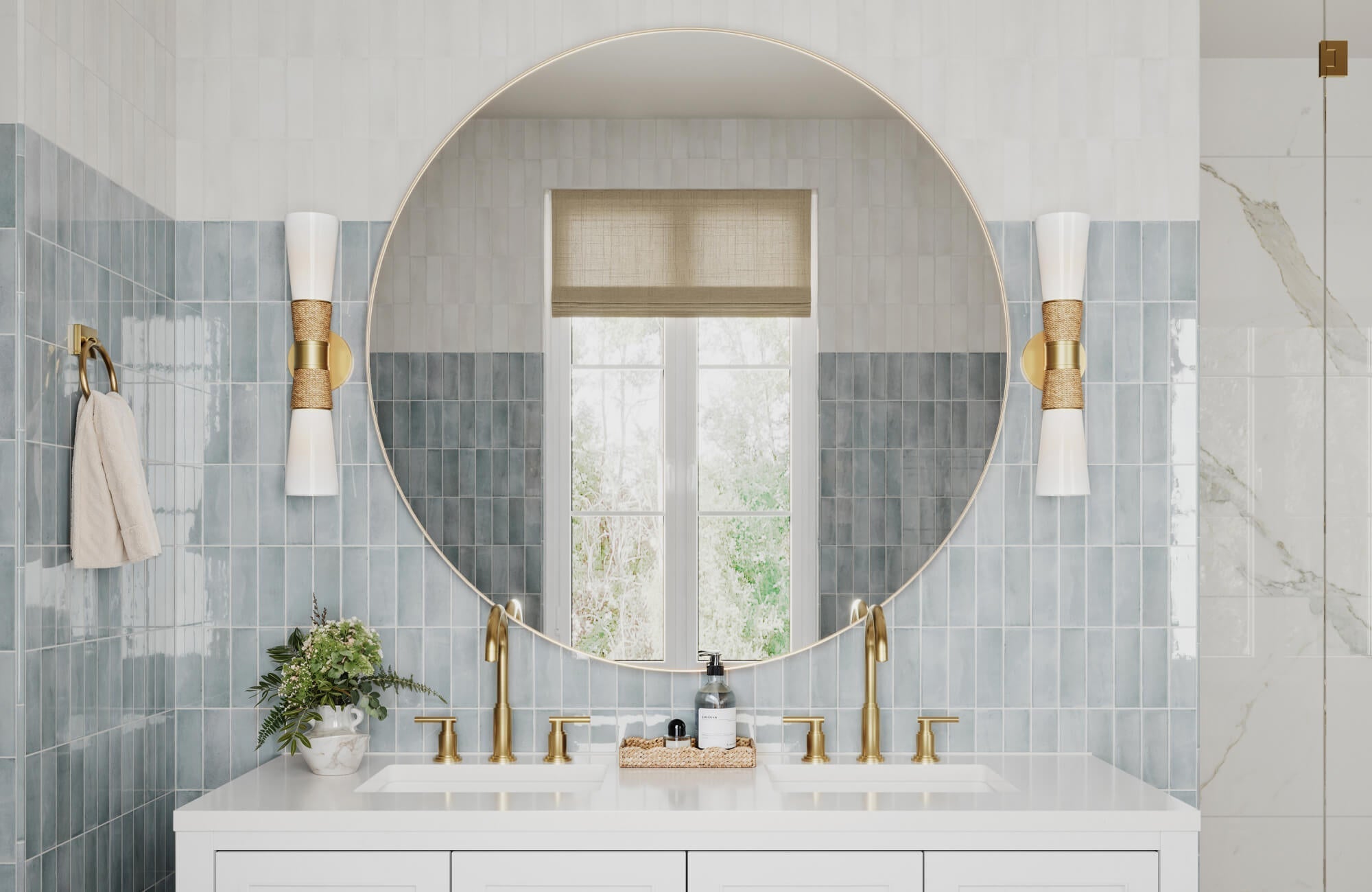
As displayed in the picture above, the Fitz Mirror in Antiqued Iron exemplifies this balance. Its round silhouette and slim, dark frame temper direct light reflection, diffusing illumination evenly across the space. It also enhances both brightness and warmth, allowing light to glide gracefully across the marble vanity and tiled backdrop, creating a soft, cohesive glow that feels timeless and refined.
Optimizing for Vanity Lighting
The right mirror shape harmonizes with the direction and placement of vanity lights, ensuring both utility and visual comfort. Linear mirrors, for instance, pair seamlessly with vertical sconces, creating even brightness across both sides of the face. Arched or capsule mirrors, on the other hand, complement overhead pendants, distributing light gracefully along their curved perimeter. This controlled reflection eliminates harsh shadows while maintaining color accuracy for grooming tasks. Designers also often analyze the mirror’s reflectance coefficient to balance illumination intensity with material finish. When geometry and lighting are aligned, the result is a balanced and flattering luminance that enhances both function and mood.
Interaction with Natural Light
Natural light introduces a dynamic quality that changes throughout the day, and the mirror shape determines how it is experienced. Tall, vertically oriented mirrors harness high-angle daylight from clerestories or skylights, brightening the upper portions of the room. Meanwhile, circular mirrors scatter incoming light in soft gradients, enriching the color depth of surrounding materials. The mirror’s curvature also subtly redirects sunlight, balancing shadow-heavy corners with diffused glow. This harmonious interaction reduces the need for artificial lighting during the day, improving energy efficiency while maintaining visual warmth. By thoughtfully pairing geometry with daylight entry, designers achieve both environmental and aesthetic optimization.

Supporting Functional Ergonomics and User Experience
Mirror shape directly influences how comfortably users interact with the vanity, affecting posture, reach, and visibility. When aligned with human-centered design principles, it creates a space that feels intuitive, accessible, and precisely tailored.
Anthropometric Alignment
The dimensions and placement of a mirror should correspond to the average human eye level and movement range. For example, rectangular mirrors that cover the upper torso region provide an uninterrupted view for grooming while promoting proper posture. Arched tops, on the other hand, extend visibility without requiring additional wall space, accommodating users of varied heights. This vertical reach also ensures that reflections remain clear regardless of stance or position. The goal is not merely visibility but ease of motion and visual accuracy. By grounding geometry in anthropometric data, designers achieve comfort that feels naturally effortless.
Inclusive and Universal Design
Vertically elongated or capsule-shaped mirrors support universal accessibility, providing continuous visibility for users whether standing or seated. Their curved edges guide reflection gently, reducing blind spots and visual strain. These forms also harmonize with multi-user households, ensuring inclusivity without aesthetic compromise. In ADA-compliant spaces, their extended height offers functional visibility for wheelchair users while maintaining elegant proportions. This approach merges design equity with refined styling, proving that accessibility and beauty can coexist. When geometry serves inclusivity, a bathroom becomes truly human-centered.
Task Comfort and Angle Considerations
Mirror angle and curvature determine how light interacts with the face and body during detailed tasks. Flat rectangular mirrors, in particular, ensure precision and clarity, crucial for makeup application or shaving, while selective concave zones can enhance magnification for accuracy without distorting overall reflection. These subtle adjustments reduce eye fatigue while optimizing task performance. The alignment between mirror angle, vanity height, and light direction also ensures comfort across different user heights. When technical precision meets ergonomic sensitivity, the result is both visually clear and physically comfortable.

Establishing Style Identity and Design Cohesion
Mirror shape defines a bathroom’s stylistic direction, uniting architecture, materials, and fixtures into a cohesive aesthetic. Its silhouette communicates design intent, whether refined minimalism, organic warmth, or classic luxury.
Style Reinforcement Through Form
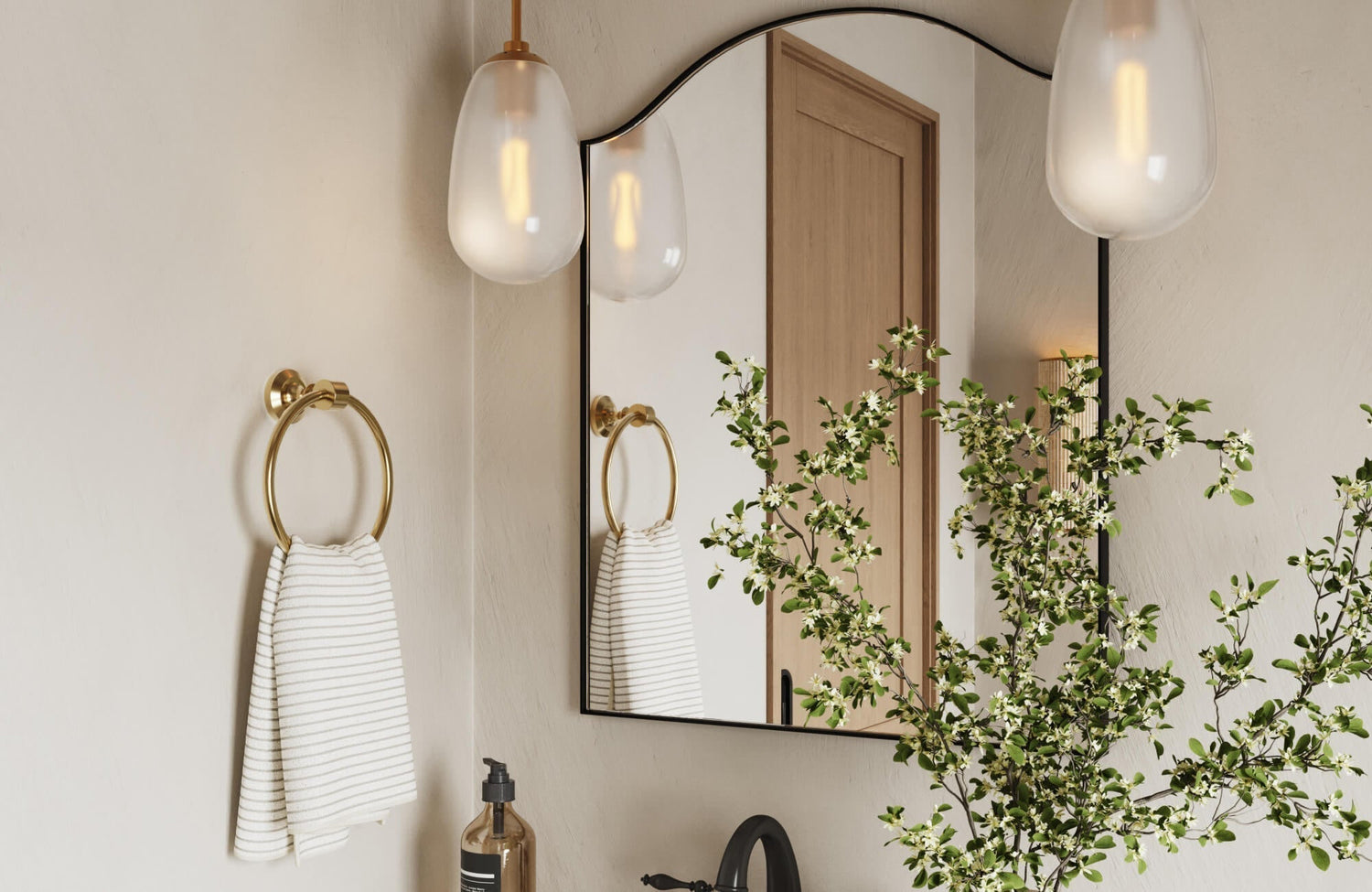
Rectangular mirrors reflect the spirit of modern architecture with their clean, linear edges that highlight structure and order. In contrast, rounded and capsule mirrors soften those sharp lines, bringing in a sense of fluidity and the calm balance often seen in nature-inspired interiors. Arched mirrors beautifully bridge these two worlds, offering a sculptural touch that feels both contemporary and timeless. Their gentle curves also create a rhythmic flow that echoes architectural details like doorways or niches. Each shape speaks its own design language, setting the mood and character of the space. In this way, the mirror transforms from a simple accessory into a defining statement of personal style.
Frame Material and Finish Harmony
The frame’s finish determines how the mirror integrates into the surrounding palette and influences its perceived weight. A brushed brass frame, for instance, introduces warmth that pairs beautifully with marble or travertine, while matte black delivers striking contrast in modern-industrial compositions. Meanwhile, polished nickel offers reflective sophistication that amplifies surrounding brightness. The frame’s thickness also affects proportion, guiding how dominant or subtle the mirror appears within the layout. By coordinating geometry with material tone, designers achieve a balance between texture, depth, and reflectivity. The result is visual unity that feels intentional and harmoniously resolved.
Creating a Focal Point
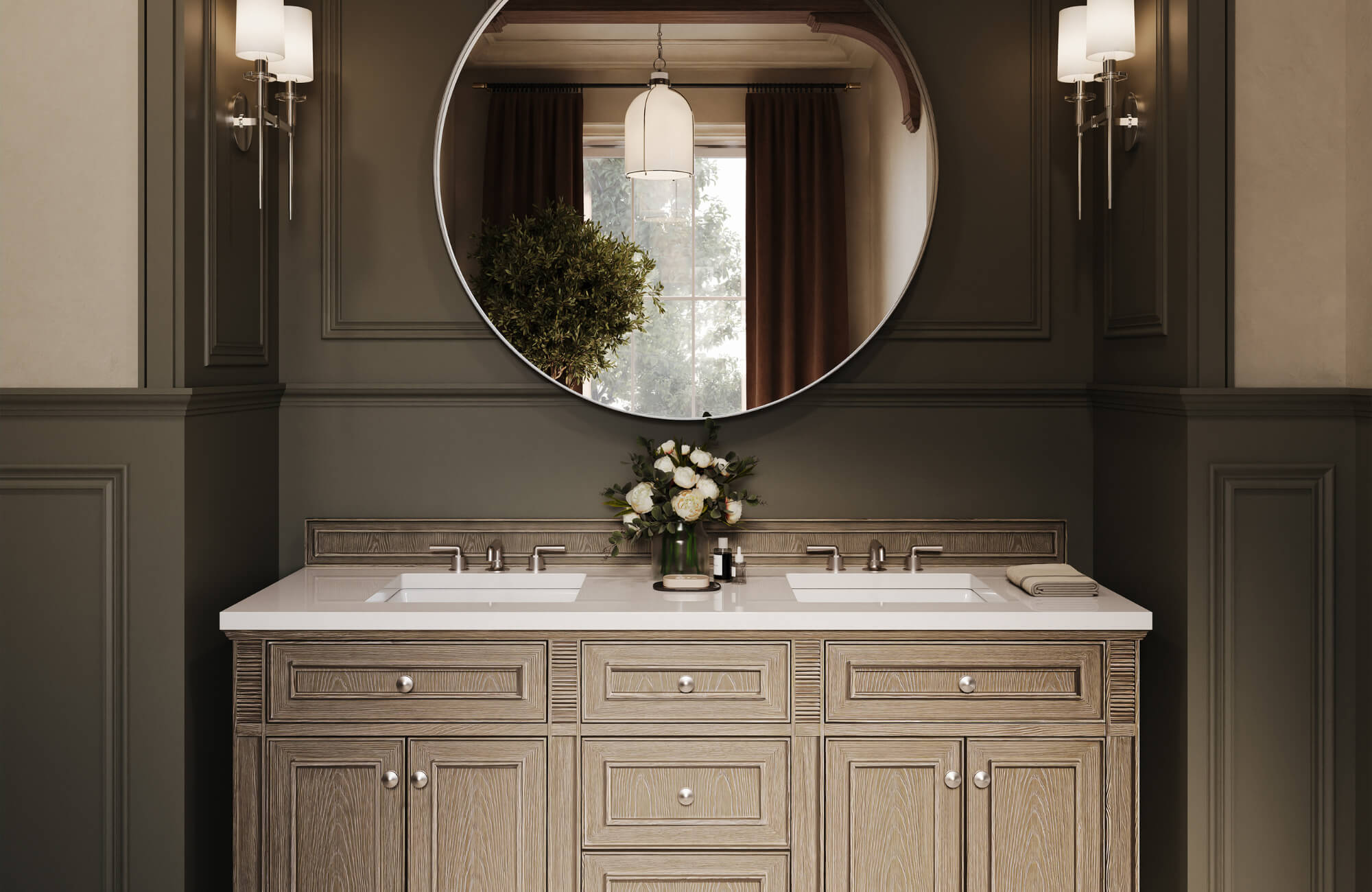
A mirror’s silhouette can anchor the entire design by drawing the eye toward the vanity area. An oversized round mirror becomes a sculptural centerpiece, adding drama and presence to minimalist spaces. In contrast, a long rectangular mirror spanning a double vanity enhances symmetry and rhythm. Arched mirrors above sculptural basins also introduce movement that feels fluid yet grounded. When proportion, lighting, and framing align, the mirror becomes an expressive architectural element rather than a background detail. Through scale and placement, designers transform mirrors into the visual heartbeat of the bathroom.

Optimizing Mirror Placement and Proportion for Visual Balance
Proportion and alignment are essential for achieving spatial harmony. When mirror geometry, scale, and positioning correspond with surrounding architecture, the entire bathroom feels more composed and visually unified.
Scale and Symmetry
A well-proportioned mirror reflects the logic of its setting, echoing the width of the vanity and the vertical rhythm of the walls. A mirror that spans roughly three-quarters of the vanity's width offers balanced margins and cohesive proportion. Oversized mirrors also expand the visual field but require calibrated lighting to prevent glare. Smaller mirrors, though compact, can serve as elegant accents when framed with precision. Designers often rely on classical ratios like the golden mean to achieve natural harmony. When proportions align intuitively, the result feels balanced without appearing contrived.
Alignment with Architectural Elements
Mirror alignment connects visual structure with architectural order. Centering mirrors along the luminaire axis ensures symmetrical illumination that flatters the face. Aligning edges with grout lines, window mullions, or shelving also maintains visual rhythm across surfaces. Even a slight misalignment can disrupt the room’s perceived balance, so designers treat mirror placement as a form of architectural calibration. The mirror’s positioning can visually correct minor asymmetries in layout, restoring balance without renovation.
Edward Martin’s Tristan Square Mirror in Polished Brass, as featured in the photo above, illustrates this precision beautifully. Its rounded-corner square silhouette aligns seamlessly with the linear tile grid and lighting fixtures, creating a unified architectural composition. The polished brass frame also acts as a visual bridge between the warm oak vanity and matte black accents, emphasizing proportion and symmetry while maintaining a refined, contemporary warmth. Through such alignment, visual continuity feels effortless, transforming structural precision into understated elegance.
Visual Weight and Depth Balance
The presence of a frame affects perceived weight and depth within the room. Heavy framed mirrors anchor the wall visually, often balanced by lighter wall tones or open shelving. Frameless mirrors, in contrast, merge into the background, enhancing minimalism and spatial fluidity. Reflective planes can also deepen perspective, particularly when paired with matte textures that absorb excess light. Moreover, the contrast between surface finishes adds dimensional richness without overwhelming the space. Achieving balance among these elements creates a sense of calm, structured refinement.

Integrating with Architectural and Material Contexts
A mirror’s shape achieves its full impact only when integrated harmoniously with the room’s materials and structural details. Its relationship with texture, tone, and architecture determines the overall cohesion of the design.
Material Reflection and Surface Interaction
Different materials respond distinctively to reflection, influencing how brightness and texture are perceived. For example, a crisp rectangular mirror enhances the polish of marble or glass surfaces, reinforcing their clarity and linearity. Curved mirrors, however, complement microcement or plaster walls by introducing visual softness that balances tactile roughness. The degree of gloss or matte finish on both the mirror and the wall also affects how light disperses across surfaces. Designers assess these interactions through reflective index analysis to control brightness and shadow distribution.
In the photo displayed above, our Esmeralda Wide Mirror in Iron Matte Black reflects the delicate sheen of the Claire 3x12 Glossy Ceramic Tile in Eggshell, creating a layered interplay between light and texture. The mirror’s dark, slender frame grounds the pale tonal palette, while the Delilah 72" Double Vanity in Seaside Oak with 3 cm White Zeus Quartz Top introduces natural warmth that balances the glossy surfaces. Together, these materials orchestrate a composition of refined contrast—where matte, gloss, and wood grain reflect light with subtle harmony, achieving a sophisticated equilibrium of tone and texture.
Complementing Tile Patterns and Architectural Lines
Mirror geometry can either reinforce or offset the rhythm established by tile patterns and architectural divisions. Angular mirrors mirror the grid of subway or stacked tiles, strengthening order and precision. Rounded silhouettes, by contrast, interrupt this rigidity, creating visual relief that introduces gentle motion. When aligned thoughtfully, these contrasts generate depth and prevent monotony. Even subtle curve introductions can also transform a strict layout into one that feels layered and dynamic. The result is a space that feels intentionally balanced between geometry and fluidity.
Balancing Texture, Tone, and Geometry
The harmony between form and finish determines how refined a bathroom feels. For instance, matte metal frames paired with curved mirrors evoke softness and warmth, while glossy finishes around angular mirrors project clarity and modernity. This interplay of tone and geometry also defines the emotional temperature of the room—either calm and organic or bold and structured. Designers carefully modulate these elements to maintain depth without clutter. Through consistent material logic, the mirror becomes seamlessly integrated into its architectural context. Such coherence transforms the bathroom into a cohesive, sensory-driven environment.
Reflections that Shape Design
Mirror shape serves as a silent architect in bathroom design, defining how space, light, and form coexist in harmony. Its geometry influences everything from illumination and visual proportion to the emotional tone of the room, making it essential in both functional and aesthetic planning. When aligned with proportion, lighting design, and material palette, it transforms a simple wall feature into a defining focal point of sophistication. Understanding the importance of mirror shape in bathroom design allows homeowners and designers to craft interiors that feel both expansive and intimate. In the end, the right mirror shape doesn’t just reflect—it completes the design narrative with enduring beauty and intentional grace.
For a fully tailored approach, explore Edward Martin’s design services to bring refined craftsmanship and spatial harmony into your bathroom project. Contact us today to begin designing a space that beautifully reflects your vision!