
)
)
)
)
)
)
)
)
How Do You Combine Mirrors With Wall Sconces Or Pendant Lights?
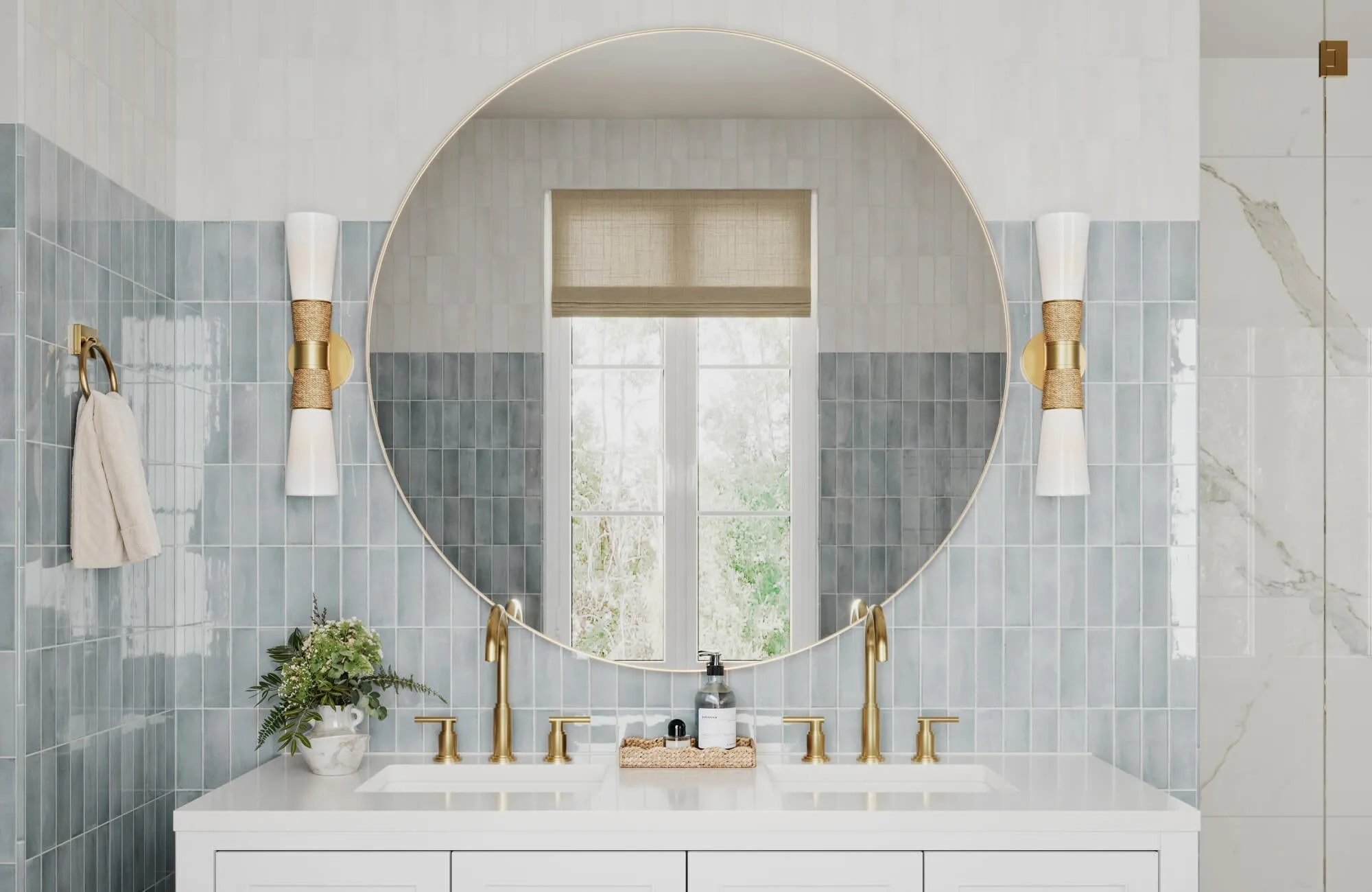
Lighting and reflection share a quiet but powerful partnership that defines how we experience a room. When mirrors meet the right sconces or pendants, they do more than brighten a wall—they shape atmosphere, enhance depth, and transform everyday routines into moments of beauty. Each combination of light and reflection also tells a story, revealing texture, form, and personality in ways that no single design element could achieve alone.
Whether you’re designing a serene bathroom retreat, a stylish dressing area, or a welcoming entryway, understanding how these elements interact is key. Through careful coordination of fixture type, placement, proportion, and style, you can achieve lighting that flatters, functions, and inspires. This article explores how to pair mirrors with sconces or pendant lights to create spaces that feel balanced, expressive, and beautifully illuminated.
Choosing the Right Fixture for the Mirror Type
Not all lights suit every mirror. The relationship between shape, scale, and fixture style defines how cohesive your space feels. When these elements align, light becomes part of the overall design narrative.
Round Mirrors
Round mirrors naturally invite softness and fluidity into a space. Their curved edges pair beautifully with fixtures that echo their organic form, such as globe sconces, orb-shaped shades, or vertically suspended pendants. These shapes also reinforce the mirror’s gentle outline, creating a sense of balance that feels intentional and serene. When paired with diffused glass or frosted shades, the light spreads evenly across the mirror’s surface, eliminating harsh reflections and ensuring flattering illumination.
If you prefer a more striking visual, consider positioning slim pendants on either side of the mirror. This approach not only adds vertical emphasis but also frames the mirror with elegance. The result is a composition that feels modern yet timeless, inviting both symmetry and sophistication into the space without overwhelming the mirror’s soft, rounded silhouette.
Rectangular and Square Mirrors
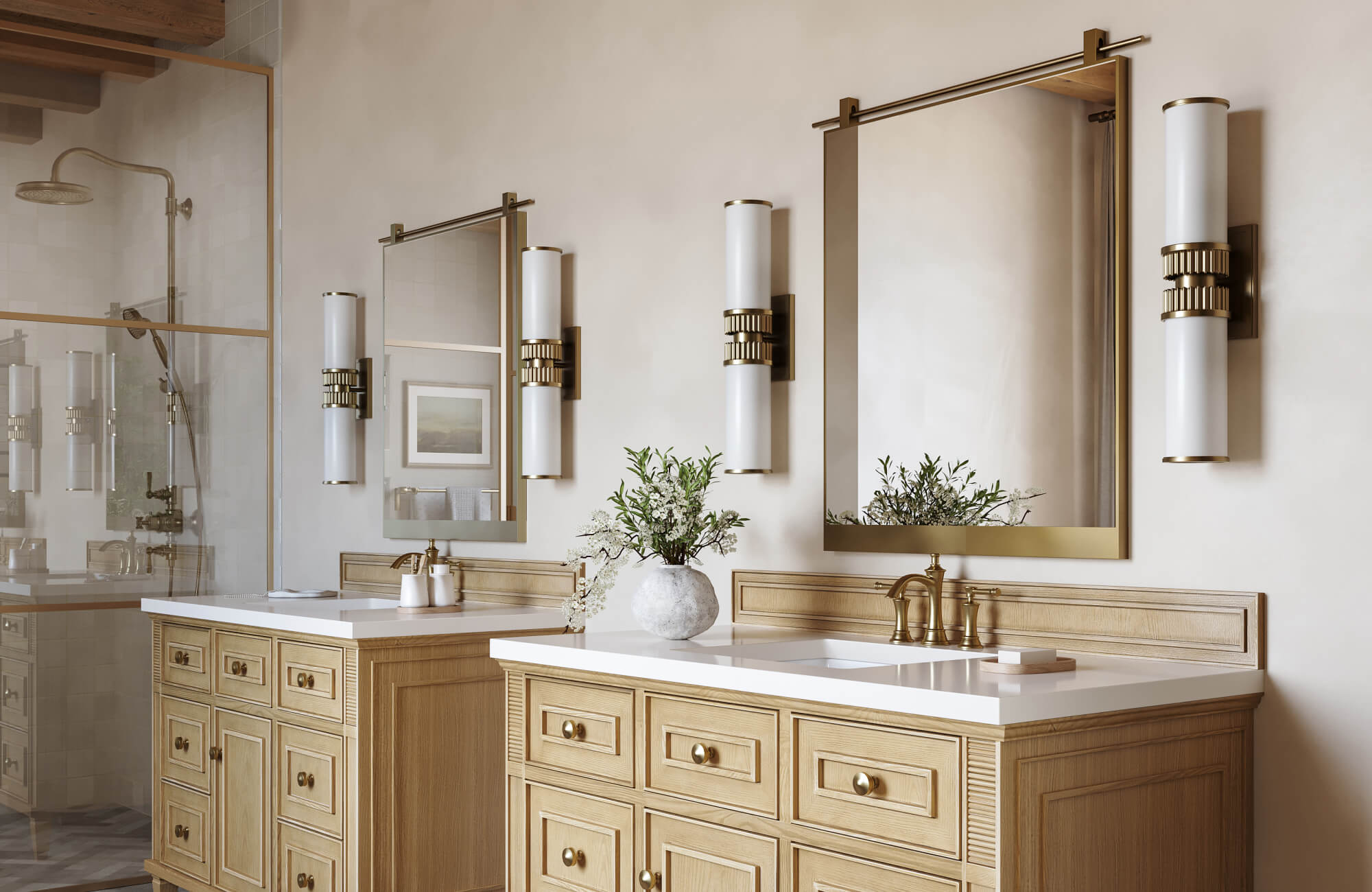
Rectangular and square mirrors emphasize structure, precision, and architectural order. They pair best with fixtures that echo their clean geometry, such as vertical sconces or linear light bars. This combination creates visual alignment and evenly distributed light, ensuring the entire reflection is illuminated without harsh shadows. For a cohesive and refined pairing, our Clancy Small Mirror in Antique Brass, shown in the image above, offers a timeless complement to structured lighting, with its clean lines and warm metallic finish enhancing the symmetry and sophistication of the setup.
To maintain proper scale, mount the fixtures so their midpoints sit around eye level, approximately 60 to 65 inches from the floor. Their height should remain proportionate to the mirror’s width, ideally one-third or less. This proportion also keeps the composition balanced, producing a polished and purposeful look that blends functionality with refined design.
Asymmetrical Mirrors
Asymmetrical mirrors bring a playful, artistic edge to a space, often becoming the focal point of the wall. Because their shape defies traditional symmetry, lighting must balance their irregular form without competing for attention. A single statement sconce on one side or a staggered pendant arrangement can create equilibrium through contrast, keeping the composition visually engaging yet harmonious.
To maintain flow, match the lighting’s tone or material with one of the mirror’s key features, whether that’s a metallic edge, a curved section, or a distinct contour. This subtle repetition connects the two elements, ensuring the design feels intentional rather than improvised. The goal is to complement the mirror’s individuality while maintaining functional, flattering light that enhances both the artful shape and the reflection.
Arched Mirrors
Arched mirrors offer a perfect blend of softness and structure, bridging the gap between round and rectangular designs. Their curved tops introduce architectural grace, making them ideal for pairing with fixtures that emphasize height or mimic the arch’s silhouette. Vertical sconces placed slightly lower than the mirror’s curve can also highlight its shape beautifully, framing it with light that guides the eye upward. For instance, our Clancy Arch Mirror in Antiqued Iron perfectly embodies this balance, combining graceful curves with a bold frame that pairs seamlessly with vertical or softly rounded lighting.
For a cohesive effect, consider sconces or pendants with subtle arcs, dome-shaped shades, or elongated stems that echo the mirror’s curvature. Soft, diffused light enhances the sense of serenity these mirrors bring, creating a gentle focal point that feels timeless and refined. The result is a balanced composition where lighting not only complements the mirror’s form but also enhances its sculptural presence.
Framed vs Frameless Mirror
The presence, or absence, of a frame dramatically influences how your lighting should interact with the mirror. Framed mirrors act as statement pieces, drawing attention through texture, color, or material. In this case, select fixtures that complement those details rather than compete with them. For instance, pairing aged brass sconces with a bronze frame creates harmony through tone and warmth, giving the overall design a layered, cohesive appeal.
Frameless mirrors, by contrast, embody minimalism and quiet sophistication. Their seamless edges blend into the wall, making them ideal for integrated or concealed lighting solutions. Backlit mirrors or floating LED strips also introduce a gentle halo effect, accentuating the mirror’s silhouette without adding visual clutter. This approach enhances depth and ambiance, making the mirror appear as though it glows from within, a subtle yet impactful way to merge form and light in perfect balance.
Placement and Proportion Strategies for Balanced Design
Correct mounting height and spacing determine whether your lighting feels flattering, functional, and cohesive. When thoughtfully positioned, sconces and pendants enhance both visibility and symmetry, creating a space that looks as polished as it feels.
Ideal Mounting Heights for Sconces
Mounting height directly affects how light interacts with your face and the surrounding space. As a general rule, sconces should be positioned so that the center of the light source sits between 60 and 66 inches from the finished floor, roughly at eye level. This placement allows the light to cast evenly across your features, reducing harsh shadows under the eyes or chin.
If your chosen sconces are taller or vertically oriented, you can adjust the height slightly to ensure the midpoint aligns with your eye line. This subtle correction maintains visual balance while preventing the fixture from appearing too high or too heavy above the mirror. When properly mounted, sconces don’t just light the space. They also anchor it, bridging the connection between the mirror, wall, and vanity for a cohesive design statement.
Pendant Positioning for Visual Harmony
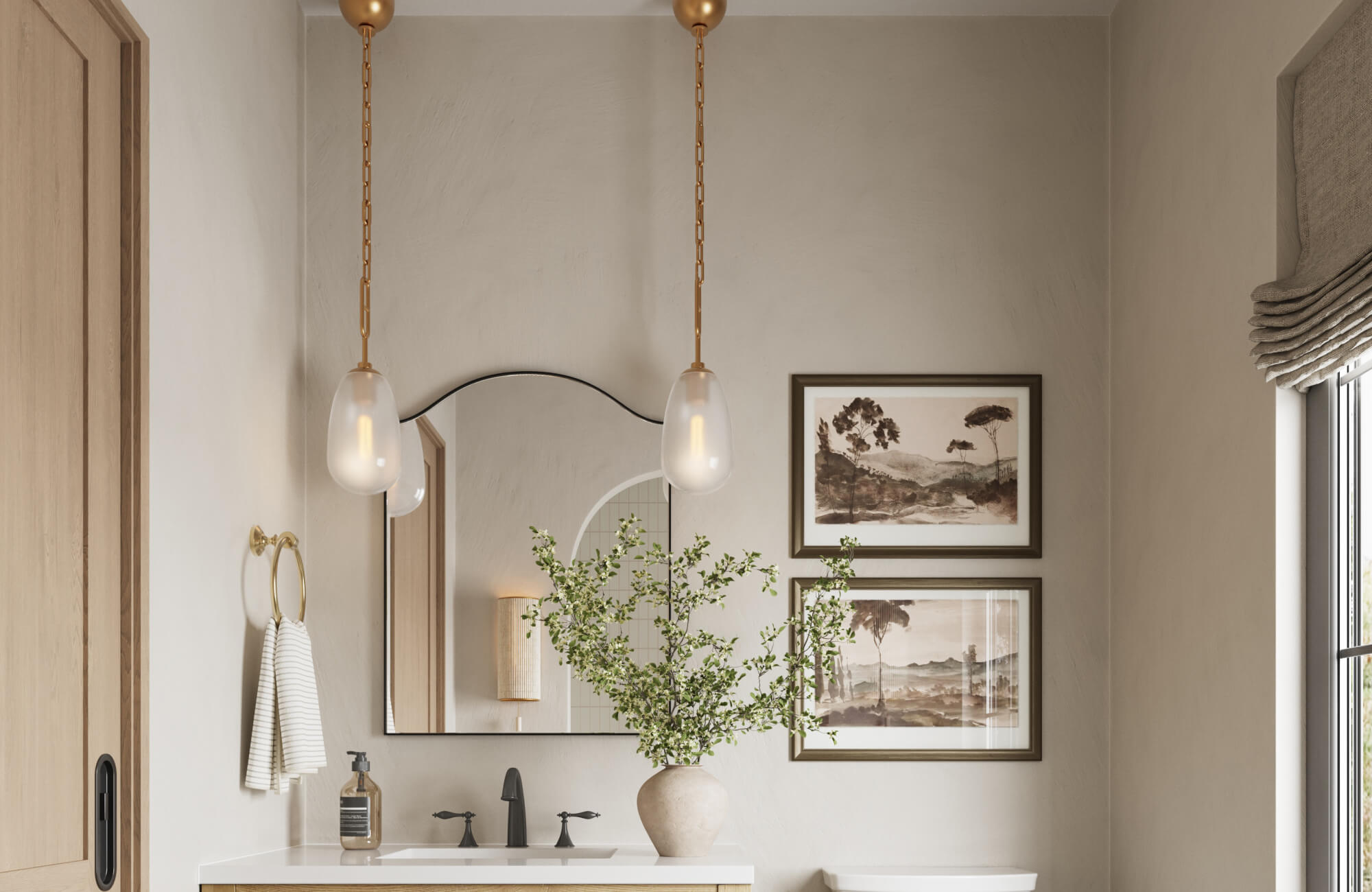
Pendants introduce sculptural elegance but require careful planning to complement a mirror setup. When hung beside or in front of a mirror, their lowest point should typically fall within the same 60–66 inch range used for sconces. This ensures the light lands evenly across the face without casting unwanted shadows or reflections. Maintaining this height consistency also creates a sense of rhythm, especially in bathrooms or dressing spaces where symmetry matters most. A piece like our Everdale Small Mirror in Gunmetal, seen in the photo above, pairs beautifully with pendant lighting, its sleek frame and muted metallic finish grounding the space while highlighting the soft glow of suspended fixtures.
Laterally, pendants should hang about 3 to 6 inches from the mirror’s edge, close enough to provide ample light but far enough to prevent glare from bouncing directly into the reflection. Aligning the fixtures with the center of the vanity or mirror keeps the arrangement visually centered, giving the entire wall a sense of grounded harmony. Whether you opt for a single pendant or a pair, thoughtful spacing ensures that the lighting feels intentional rather than improvised.
Designing for Double Vanities
Double vanities introduce both opportunity and complexity in lighting design. Each side deserves equal illumination to prevent uneven reflections, especially when two people use the space simultaneously. A classic and effective approach is to use three sconces; one mounted between the mirrors and one on each outer edge. This configuration delivers balanced light from both sides, reducing shadows and creating a flattering glow across each basin.
Alternatively, a long linear fixture that spans both mirrors can unify the composition, providing consistent light while minimizing clutter. Pendant pairs above each sink also work beautifully, offering vertical interest and emphasizing the rhythm of the double setup. Whatever the configuration, the key is symmetry both in form and illumination. When light is evenly distributed across the two mirrors, the space feels organized, intentional, and effortlessly balanced.
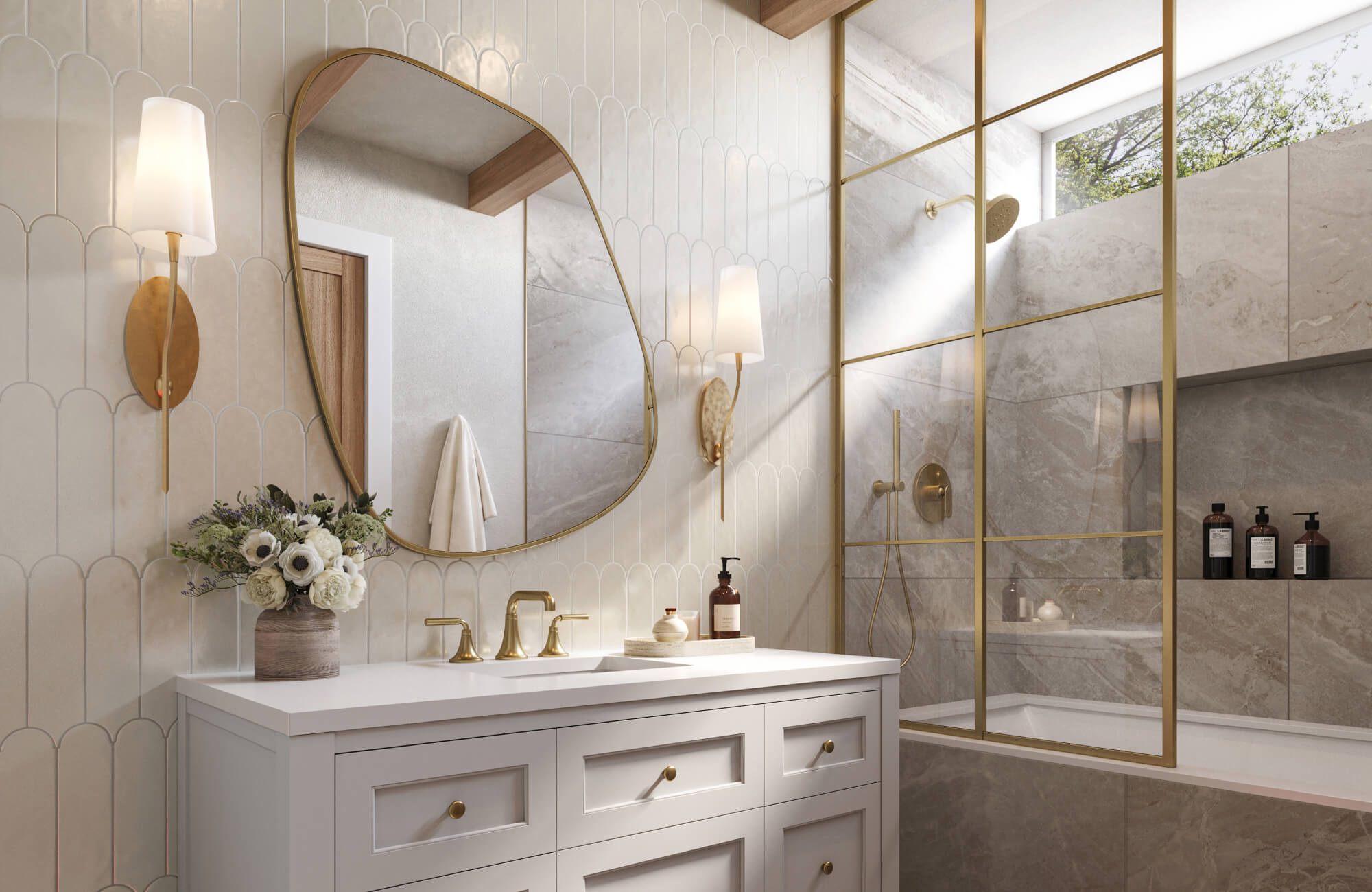
Coordinating Styles for a Cohesive Look
Mirrors and lighting should feel like they belong to the same visual story. When their styles complement rather than compete, the result is a space that feels unified, intentional, and complete.
Mixing Materials With Intention
Combining materials can elevate your design from ordinary to artful when done with purpose. Pairing contrasting finishes like a matte black mirror frame with aged brass sconces creates visual tension that feels sophisticated rather than mismatched. The secret lies in establishing a shared design thread, whether it’s a repeated tone, geometric form, or subtle texture that connects the two elements. In a space where brass details, white tile, and warm wood tones coexist, our Shirley Small Mirror in Antique Brass Iron, featured in the picture above, perfectly embodies this harmony. Its softly irregular shape and warm metallic frame complement the surrounding brass sconces, tying the materials together with a touch of organic elegance that feels intentional and refined.
Limiting your finishes to no more than two dominant tones throughout the space also ensures cohesion and prevents visual clutter. A third, more neutral texture, such as glass, marble, or natural stone, can then be layered in for contrast and depth. This delicate balance keeps the eye moving naturally, allowing the interplay between mirror and lighting to feel intentional, polished, and beautifully composed.
Matching Design Eras and Aesthetics
Every mirror and light fixture speaks a design language, and alignment between the two defines how coherent your space feels. A mid-century modern mirror, for instance, pairs effortlessly with streamlined sconces that feature clean lines or globe shades. Their simplicity reinforces the era’s signature balance of function and form. On the other hand, an organic modern space might call for asymmetrical mirrors and fixtures in natural finishes like wood, linen, or stone, where imperfection becomes part of the charm.
When you echo the silhouette of your lighting with the shape of your mirror, such as curved sconces flanking an oval mirror or crisp, vertical lights framing a rectangular one, you strengthen the visual rhythm of the design. This harmony doesn’t just make the elements look related. It also enhances the emotional tone of the room, transforming it into a cohesive reflection of your aesthetic sensibility.
Creating Continuity Across the Room
Design harmony shouldn’t stop at the vanity. To make the space feel connected, extend the materials, finishes, or shapes from your mirror and lighting choices into other areas of the room. You might repeat a brass tone in the faucet handles or drawer pulls, or mirror a rounded sconce shape in cabinet hardware or décor accessories. These subtle repetitions act as visual cues, guiding the eye naturally through the space.
This thoughtful consistency also helps unify elements that might otherwise feel disjointed, like varying wall textures or mixed materials. For example, our Tristan Square Mirror in Shiny Steel demonstrates how a sleek, modern finish can serve as a grounding detail, linking polished fixtures, cool-toned accents, and clean architectural lines across the room. By maintaining rhythm through repeated tones and forms, you also create a cohesive environment that feels effortless and intentional. Ultimately, this continuity transforms the mirror and lighting from isolated features into central components of a well-orchestrated whole.
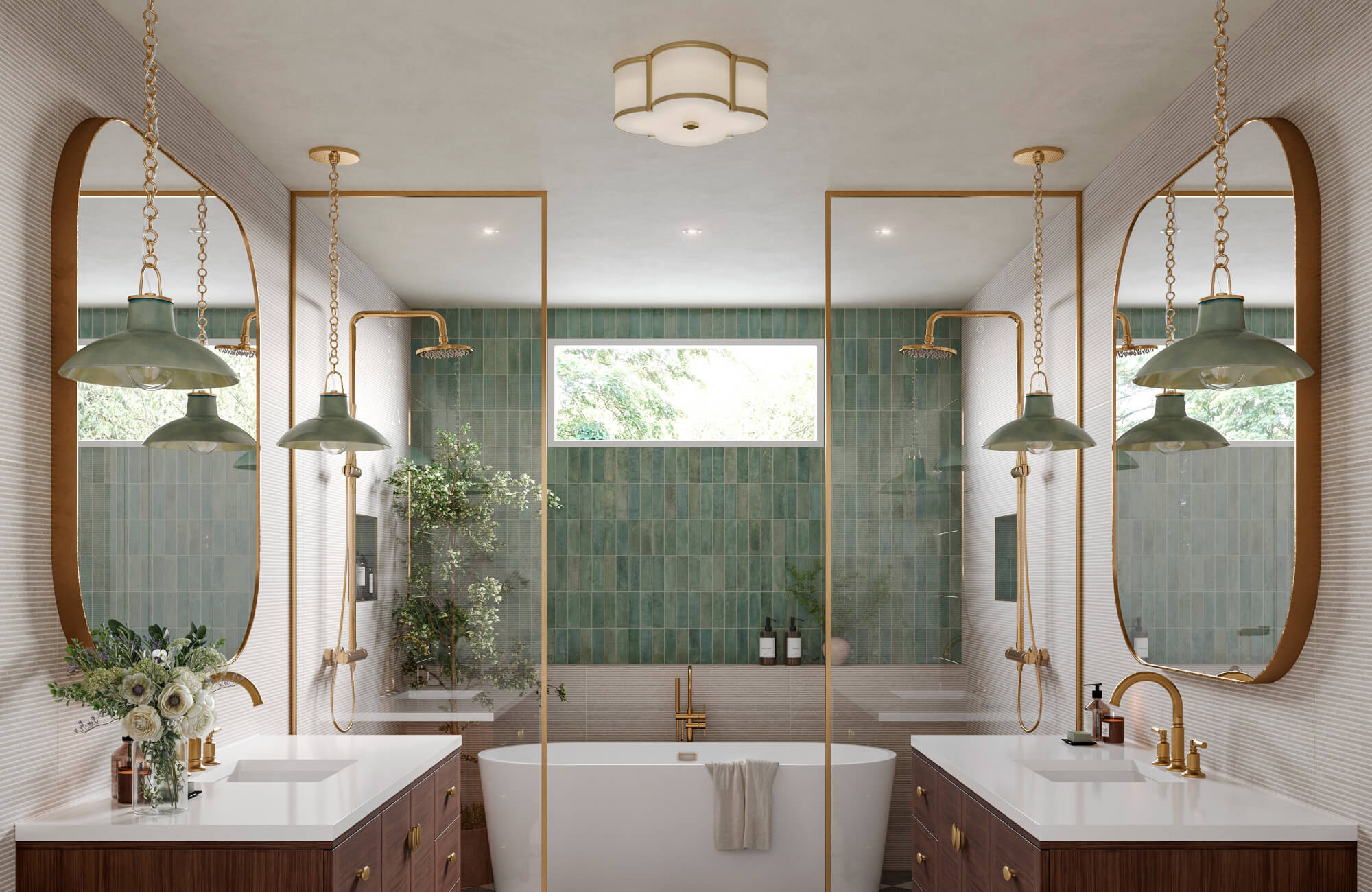
Enhancing Functionality Through Layered Lighting
Great lighting design blends aesthetics with purpose, and layering is the key to achieving that balance. By combining different light sources, each serving its own role, you create an environment that adapts seamlessly to every activity and mood. Task lighting ensures clarity for grooming, while ambient and decorative layers bring warmth and softness to the overall composition. Together, they eliminate harsh contrasts, enhance visibility, and create an atmosphere that feels as inviting as it is functional. This harmony between precision and ambiance also transforms everyday routines into experiences that feel thoughtfully designed and effortlessly comfortable.
Additionally, task lighting lays the groundwork for performance and practicality. Side-mounted sconces or integrated LED strips positioned at eye level provide even, shadow-free illumination, ensuring your reflection appears natural and true. When paired with ambient fixtures such as pendants, ceiling lights, or recessed sources, the effect becomes multidimensional. These upper layers soften the brightness of task lights, filling the space with balance and depth. The key is diffusion: frosted glass, fabric shades, or translucent materials prevent glare and reflection, allowing light to blend gently across the room. By merging form with function in this way, layered lighting not only elevates usability but also enhances the emotional tone of the space, wrapping it in comfort, sophistication, and a sense of intentional design.
Our Tristan Square Mirror in Polished Brass, displayed in the image above, exemplifies how lighting and reflection can work in tandem to heighten both form and function. Its crisp geometry and radiant brass frame capture surrounding light beautifully, amplifying the warmth of pendants or sconces while maintaining clarity and depth. When integrated into a layered lighting plan, the mirror becomes more than a reflective surface. It also acts as a conduit for illumination, dispersing soft, ambient light that enhances the room’s glow. The result is a perfectly balanced composition that feels as luxurious as it is livable.
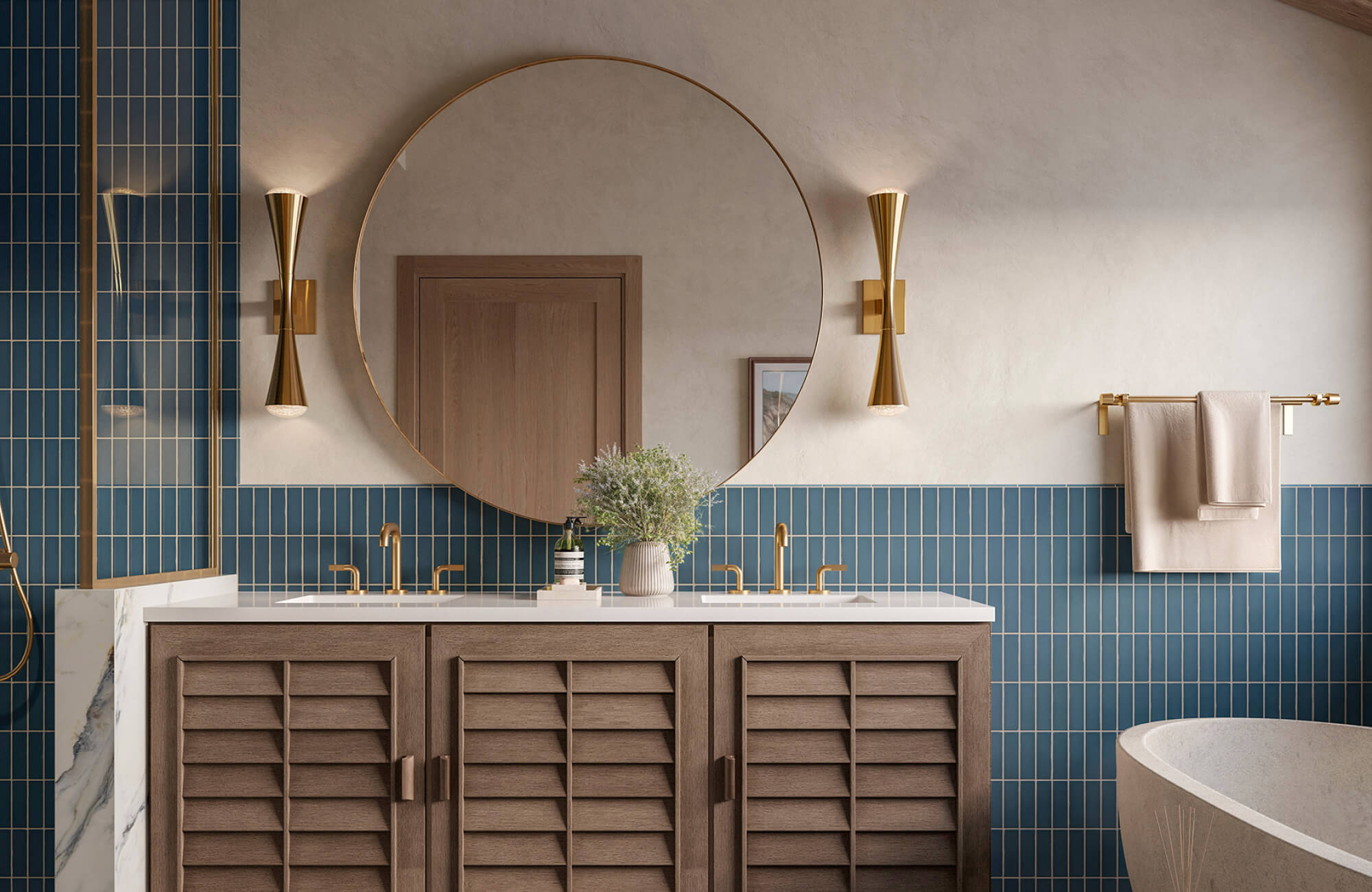
Addressing Architectural and Spatial Constraints
Perfect lighting design thrives on adaptability, especially in spaces that don’t follow ideal proportions. In small or narrow bathrooms, compact fixtures like mini sconces, shallow pendants, or mirrors with integrated lighting prevent crowding while keeping illumination balanced. A large mirror across a narrow wall can also double the perceived depth, reflecting both natural and artificial light to make the room feel brighter and more expansive. Adding a piece like our Tristan Round Mirror in Polished Brass, displayed above, introduces warmth and dimension, as its sleek metallic frame catches and disperses light beautifully, enhancing the sense of openness while anchoring the room with timeless elegance. These thoughtful choices allow light and reflection to work together, turning limited square footage into a space that feels open and intentional.
For rooms with high ceilings or asymmetrical layouts, flexibility is key. Adjustable pendants bring light down to the right height, while swing-arm sconces let you direct illumination exactly where it’s needed, no rewiring required. Even in rentals, plug-in sconces or adhesive LED bars offer functional, stylish lighting without permanent installation. With a little creativity, you can achieve balanced, purposeful light in any setting, proving that great design isn’t about perfection; it’s about making the most of the space you have.
Bringing Light and Reflection Into Harmony
When mirrors and lighting work together, the result is more than good illumination—it’s design with purpose. The right pairing enhances how you see yourself and your space, blending form, proportion, and tone into a seamless visual rhythm. By aligning light placement with mirror scale, coordinating finishes and materials, and adapting to each room’s unique architecture, you create a composition that feels intentional and complete. Ultimately, the true harmony between light and reflection lies not just in brightness but also in balance, where every glow, curve, and shimmer contributes to a space that reflects your vision in its best light.
If you’re ready to bring that balance into your own space, our team can help you find lighting and mirrors that work beautifully together. Whether you’re seeking design guidance, product recommendations, or expert assistance with your next project, you can reach out through our Contact Us page. Our specialists are here to help you create a space that shines; one where every reflection, fixture, and finish comes together in perfect harmony.
Follow us on Instagram
@EDWARD.MARTIN
)
)
)
)
)
)
)
)
)
)
)
)
)
)
)
)