
)
)
)
)
)
)
)
)
Why Is The Checkerboard Paver Trend Making A Comeback?
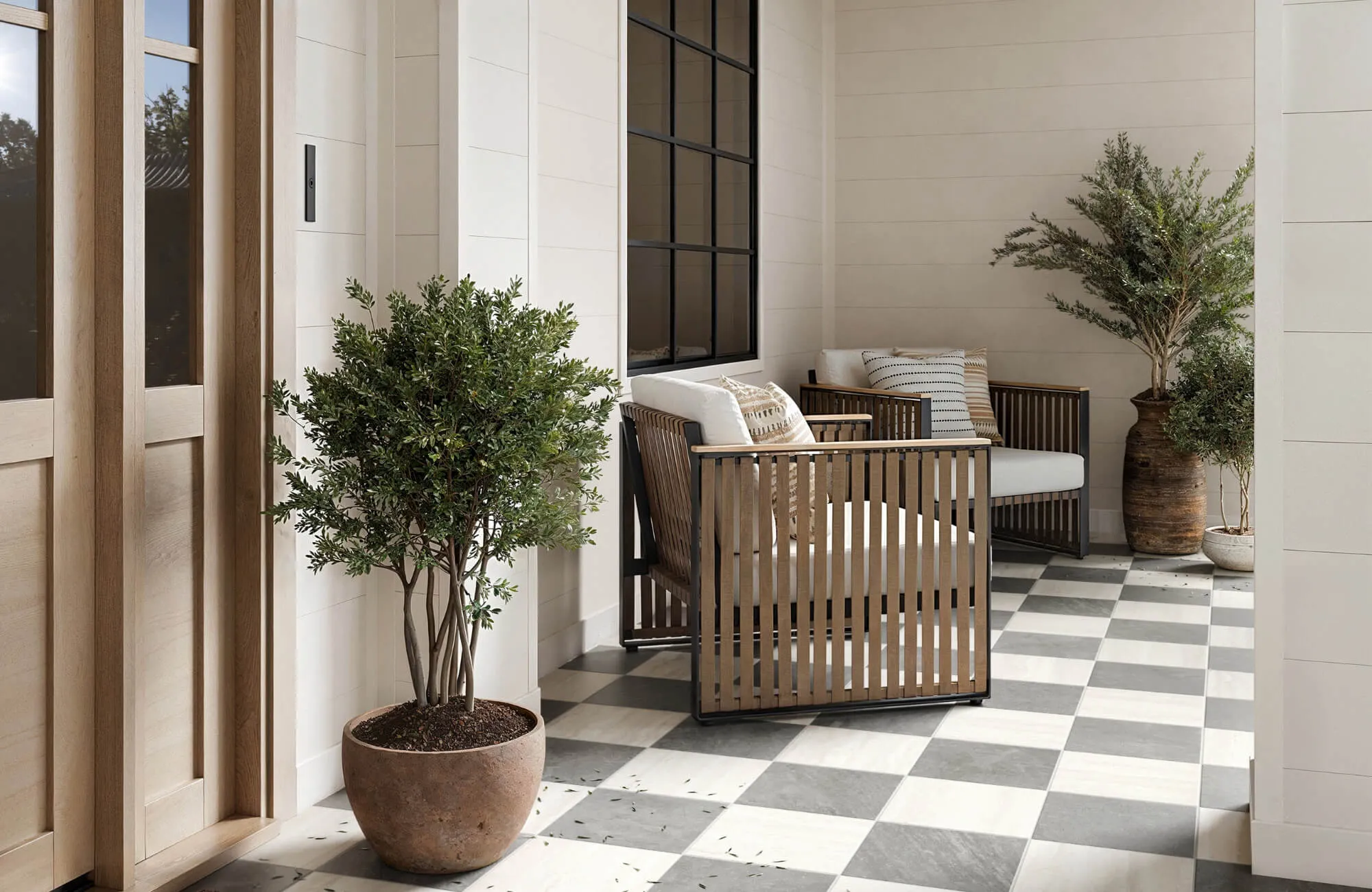
Checkerboard porcelain pavers are reclaiming their place in modern outdoor design, not as a passing trend, but as a refined solution that bridges classic styling with contemporary performance. Once reserved for formal European gardens and mid-century patios, this grid-based motif now finds new life in today’s multifunctional landscapes, prized for its clean geometry, visual contrast, and unexpected versatility.
What sets this revival apart is its alignment with current design priorities: curated outdoor zones, sustainable materials, and low-maintenance luxury. Whether alternating stone with turf or blending dual-tone pavers, the checkerboard pattern offers both structure and style across patios, pool decks, rooftop terraces, and more. In this article, we’ll explore what’s driving its renewed popularity, the materials and layout strategies that define it today, and how to bring this timeless pattern into your own space with lasting impact.
The Enduring Appeal of Classic Patterns
Timeless patterns have a way of resurfacing when design values shift toward authenticity, craftsmanship, and enduring appeal. As tastes evolve, the checkerboard motif stands out not just for its visual charm but also for its ability to connect historical refinement with today’s versatile outdoor spaces.
A Nod to Historical Elegance
Historically, the checkerboard pattern is rooted in Renaissance and Baroque architecture, where it symbolized symmetry, order, and refinement. It appeared frequently in palatial floors, cloisters, and formal gardens, often rendered in durable, high-contrast materials like black and white marble or limestone.
By the 17th century, French parterre gardens, such as those at Versailles, adopted checkerboard layouts using turf and gravel to emphasize axial geometry and visual control. These principles, grounded in classical design, continue to inform modern hardscaping. As a result, the enduring use of clean lines, tonal contrast, and repetition lends contemporary landscapes a cultivated, timeless appeal.
Versatility in Modern Design
While its roots are classical, the checkerboard layout remains relevant today, thanks to its remarkable adaptability. With material options ranging from porcelain tiles and concrete pavers to engineered stone, the pattern complements everything from minimalist patios to traditional garden paths. Moreover, it’s often used to define outdoor zones, such as dining areas or walkways, without the need for structural dividers.
In addition, modern innovations like large-format pavers and permeable systems have expanded the checkerboard’s practical application. Whether incorporated to improve drainage or to coordinate with specific color palettes, this format continues to blend classical influence with contemporary performance.
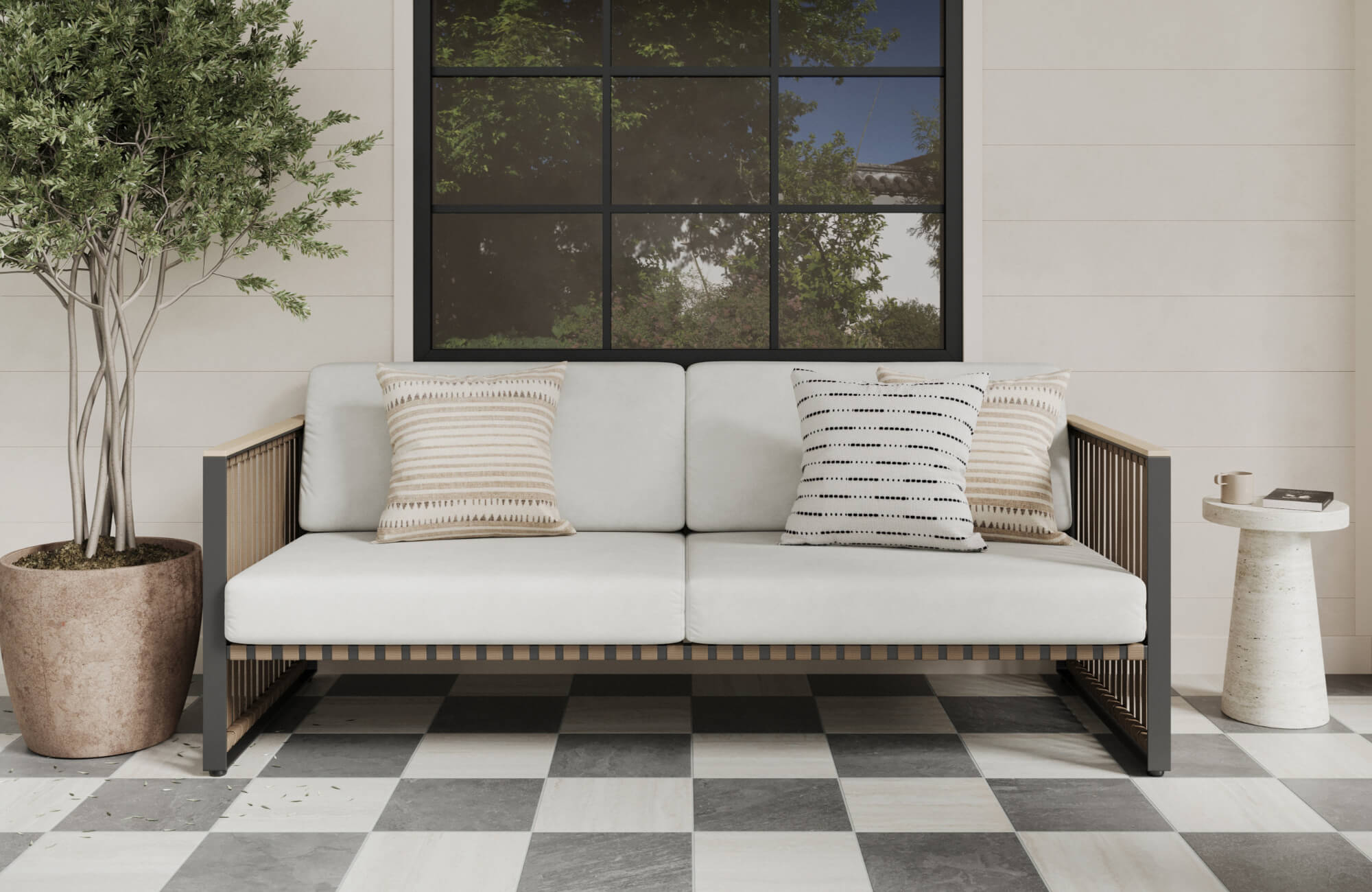
For instance, Edward Martin’s Bowden 24x24 Checkerboard Grip 2cm Porcelain Paver Tile in Charcoal & Oat, as shown in the photo above, exemplifies this adaptability. Its fine-grain texture and contrasting neutral tones bring a modern edge to the traditional checkerboard while offering the durability and slip resistance required for busy outdoor spaces. This pairing also works well in a range of environments, from shaded courtyards to sun-drenched patios, making it a practical yet design-forward choice for projects that demand both form and function.
Aesthetic Versatility and Design Adaptability
Beyond its classic appeal, the checkerboard paver layout offers a surprising level of design flexibility that suits a wide range of outdoor aesthetics. From modern minimalism to traditional charm, this pattern adapts effortlessly while adding structure and visual depth to any space.
Seamless Integration with Diverse Styles
Thanks to its clean geometry, the checkerboard layout fits naturally into a variety of design languages. In contemporary spaces, for example, large-format porcelain or matte concrete pavers in muted tones like charcoal and gray create sleek, understated surfaces. On the other hand, materials such as tumbled travertine, brick, or limestone evoke Mediterranean, Colonial, or transitional styles with warmth and texture.
The modular nature of checkerboard designs also allows for easy customization in scale, tone, and layout. Designers can fine-tune the pattern to complement architectural details or suit local environmental conditions. For instance, decomposed granite or gravel can replace turf in arid zones, while shellstone offers salt resistance for coastal applications. In this way, the checkerboard motif remains relevant and practical across a range of settings.
Creating Visual Interest and Defined Zones
Beyond stylistic compatibility, checkerboard paving excels in its ability to organize space. By alternating tones or textures, the pattern creates a visual rhythm that intuitively defines functional zones, such as dining areas, fire pits, or garden walkways, without the need for built partitions.
Moreover, subtle layout shifts like diagonal alignment or tonal gradation can introduce movement and visual hierarchy, enhancing the spatial experience. When used beneath pergolas or outdoor kitchens, checkerboard layouts also help anchor vertical elements, reinforcing balance and cohesion across the landscape.
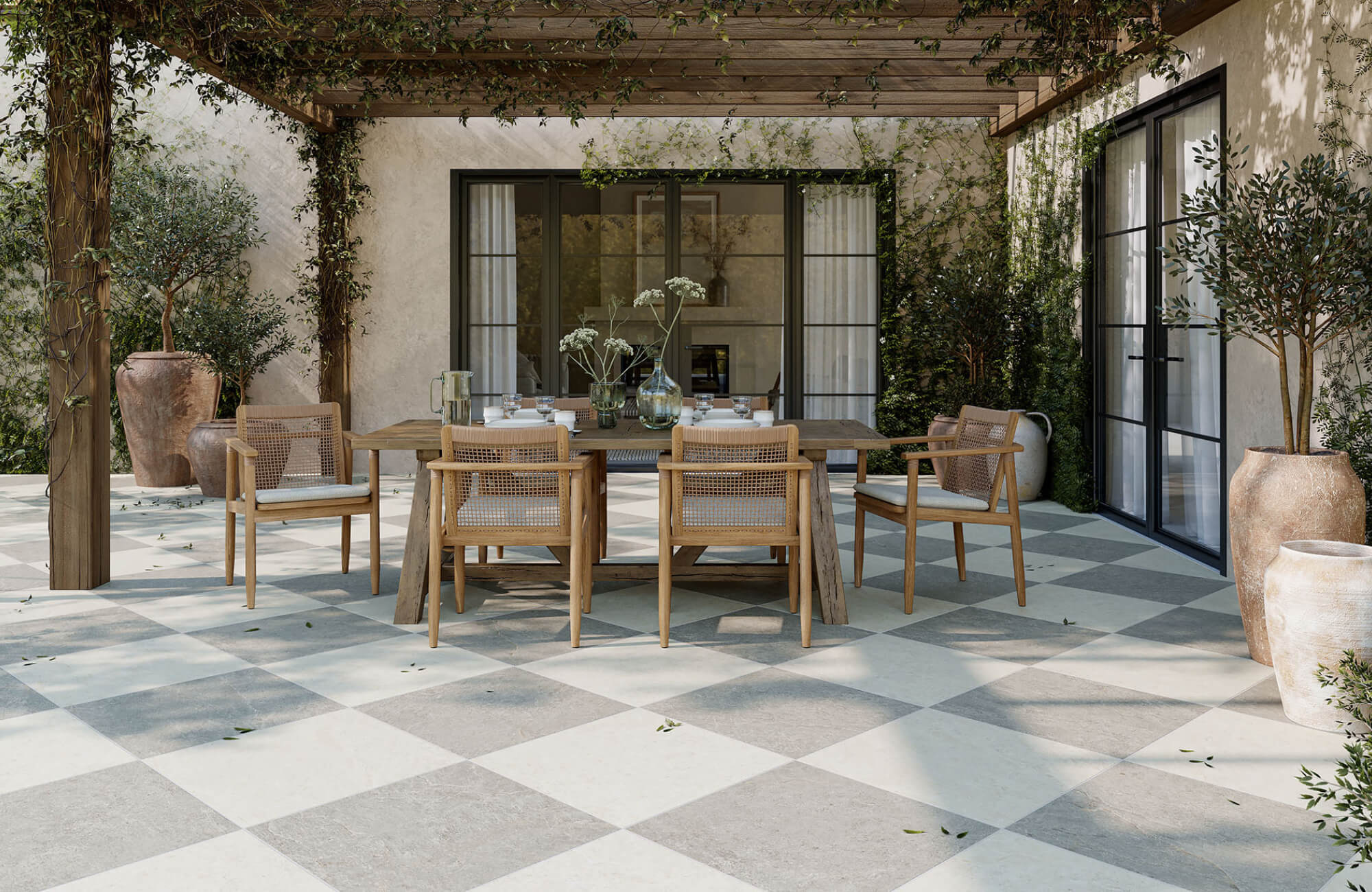
A perfect example of this design approach is Edward Martin’s Dawson 24x24 Checkerboard Grip 2cm Porcelain Paver Tile in Ash & Alabaster, as featured in the outdoor dining area picture above. Its soft contrast and large-format scale bring clarity to the space while seamlessly blending with the surrounding natural textures. This layout not only defines the dining zone under the pergola but also adds a refined architectural rhythm that enhances both the utility and atmosphere of the setting.
Practical Benefits for Outdoor Living Spaces
While checkerboard pavers are undoubtedly eye-catching, their growing popularity is tied to the practical benefits they bring to outdoor living spaces. From weather resistance to smart water management, this pattern delivers more than just curb appeal; it’s built for real-world performance.
Enhanced Durability and Longevity
As a starting point, segmented pavers, such as concrete, porcelain, or natural stone, provide greater durability than monolithic slabs. Their ability to flex with ground movement and withstand freeze-thaw cycles makes them less prone to cracking, particularly in climates with shifting soil or seasonal extremes.
In addition, checkerboard layouts that alternate materials like turf or gravel enhance load distribution and impact absorption, supporting both footfall and occasional vehicle use. Many of today’s pavers also feature surface treatments such as UV inhibitors, sealers, and anti-slip finishes, helping maintain both safety and appearance with minimal wear over time.
Low Maintenance Appeal
Equally important is the ease of upkeep. Checkerboard installations reduce the total exposed surface area of any one material, which translates to less staining, erosion, and general wear. Turf or ground cover between pavers also requires less irrigation and mowing than a full lawn, while gravel or decomposed granite eliminates the need for fertilization altogether.
Moreover, the modular nature of pavers allows for efficient spot repairs, and individual tiles can be replaced without affecting the entire layout. Systems incorporating polymeric sand joints or geotextile underlays also help deter weed growth and pest intrusion, further streamlining maintenance.
A standout example of this practical balance is Edward Martin’s Ramsey 24x24 Checkerboard Grip 2cm Porcelain Paver Tile in Ash & Chalk. The clean geometry and weathered cement-look finish elevate the aesthetic while minimizing upkeep, making it an ideal option for those who value both beauty and efficiency.
Improved Drainage and Permeability
Beyond structural and maintenance benefits, checkerboard layouts can significantly improve on-site water management. When paired with permeable elements, such as open-jointed pavers, gravel, or turf, the design allows rainwater to filter into the ground rather than run off the surface. This reduces erosion, supports local stormwater compliance, and helps recharge groundwater.
Furthermore, technical enhancements such as compacted aggregate bases and ASTM-rated geotextiles help stabilize subgrades while promoting infiltration. In urban environments, structural turf supports and open-grid systems also offer permeability without compromising load-bearing performance.
To help visualize these possibilities, Edward Martin offers an Augmented Reality (AR) Visualization Tool. By selecting “View in Your Space,” you can overlay your chosen tile onto your patio or garden in real time, making it easier to assess texture, tone, and layout. Once you’ve found the right fit, you can request samples delivered directly to your home, streamlining the process from concept to installation.
Sustainability and Eco-Friendly Considerations
As sustainability becomes a key driver in landscape choices, the checkerboard paver trend is evolving to meet both aesthetic and environmental goals. Thanks to innovative materials and eco-conscious design methods, this classic layout now contributes significantly to greener, smarter outdoor spaces.
The Rise of Permeable Paver Options
One effective entry point is the use of permeable pavers, which serve as a cornerstone of green infrastructure, particularly when integrated into checkerboard configurations. By alternating solid pavers with permeable materials such as gravel, turf, or open-grid systems, this layout promotes stormwater infiltration, helping reduce runoff, erosion, and localized flooding.
Moreover, these hybrid systems align with Low-Impact Development (LID) strategies and may contribute to LEED credits in categories like Sustainable Sites and Water Efficiency. Many permeable pavers meet ASTM C1781 standards for infiltration, while advanced systems like permeable interlocking concrete pavement (PICP) use aggregate sub-bases to filter and store water, a particularly effective solution in dense urban or suburban settings.
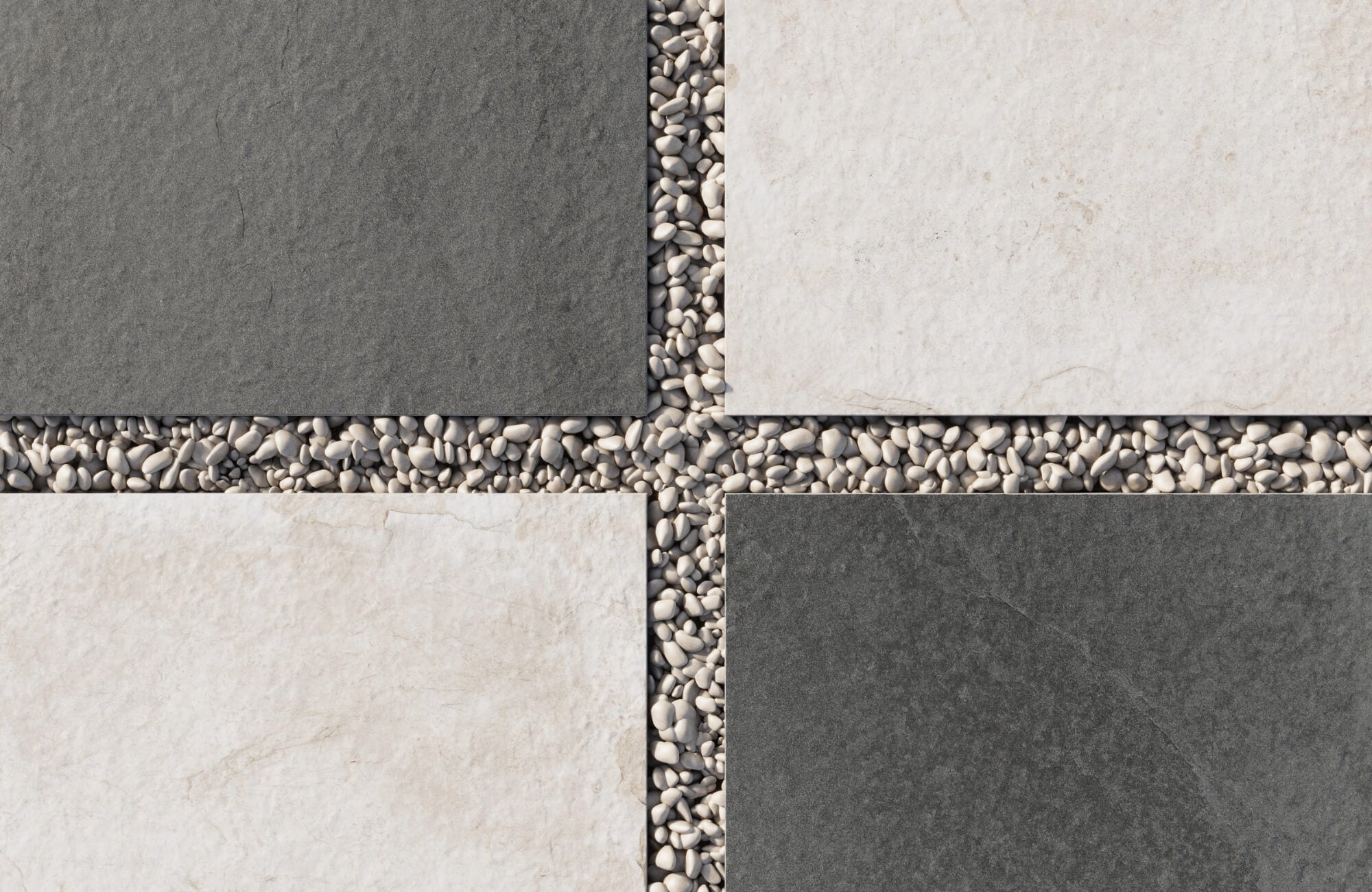
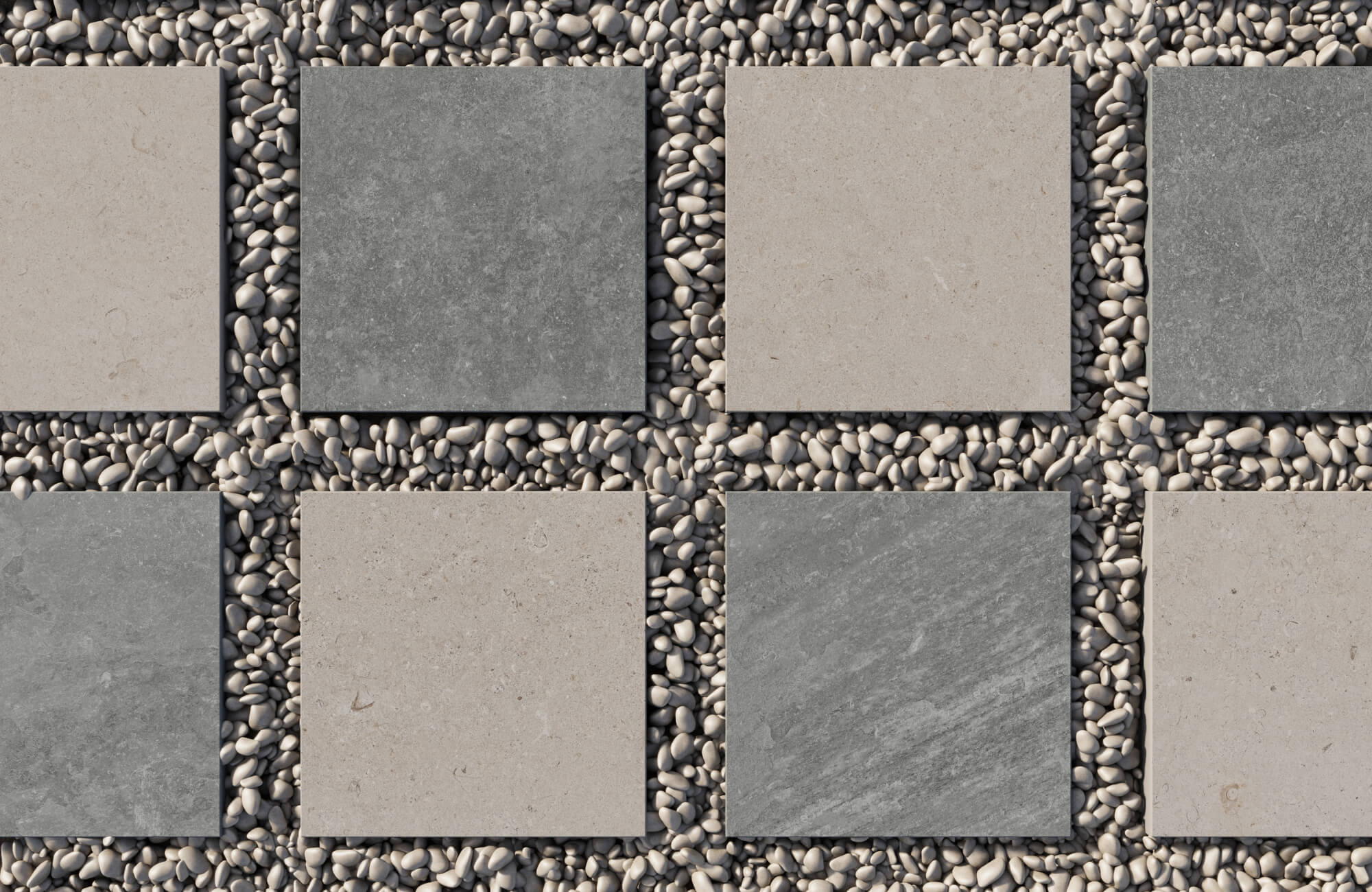
A compelling example of this approach is Edward Martin’s Wren 12x12 Checkerboard Grip 2cm Porcelain Paver Tile in Charcoal & Dune, paired with pebble joints, as shown in the photo above. This combination, with its fine-grain surface and intentional spacing filled with river rock, not only enhances visual interest but also significantly improves drainage performance. As a result, it’s a smart and stylish option for patios, walkways, and other outdoor areas where sustainability is a priority.
Recycled and Locally Sourced Materials
In addition to permeability, thoughtful material selection is a key factor in boosting the sustainability of checkerboard paving. Using pavers that incorporate recycled content, such as fly ash or ground glass, reduces dependence on virgin resources while diverting industrial waste from landfills. Likewise, reclaimed brick or stone can conserve embodied energy and introduce a layer of historical character.
Sourcing locally quarried stone or regionally manufactured pavers also cuts down on transportation emissions and supports nearby economies. Responsibly harvested natural stones like granite, bluestone, and limestone offer long-lasting performance with minimal chemical processing, making them ideal for low-maintenance and environmentally conscious builds.
Finally, sustainable practices extend to installation. Using biodegradable joint stabilizers, certified aggregates, and dry-lay construction over permeable bases not only reduces environmental impact but also enhances recyclability. Together, these considerations ensure that a checkerboard design doesn’t just look refined, it performs responsibly, too.
Cost-Effectiveness and Value Addition
Despite their upscale look, checkerboard pavers can be surprisingly budget-friendly, both in the long run and at the point of installation. With thoughtful planning and smart material choices, this eye-catching pattern offers real value without stretching your budget.
Long-Term Investment Value
For starters, checkerboard hardscapes can significantly boost a property’s curb appeal and resale potential. Their balanced geometry and rich material contrast create an upscale aesthetic that enhances the overall impression of outdoor spaces. According to the National Association of Realtors (NAR), well-designed landscaping features like patios and walkways can recoup more than 80% of their cost at resale, particularly when they support functional outdoor living.
Beyond looks, paver-based systems also deliver practical advantages. Compared to poured concrete or turf, materials like porcelain, stone, and concrete are more resilient to cracking and settling. If damage does occur, individual pavers can be replaced without disrupting the entire surface, resulting in lower repair costs and less downtime. Additionally, when paired with permeable infill, checkerboard layouts help mitigate water runoff and erosion, protecting the surrounding landscape and reducing maintenance over time.
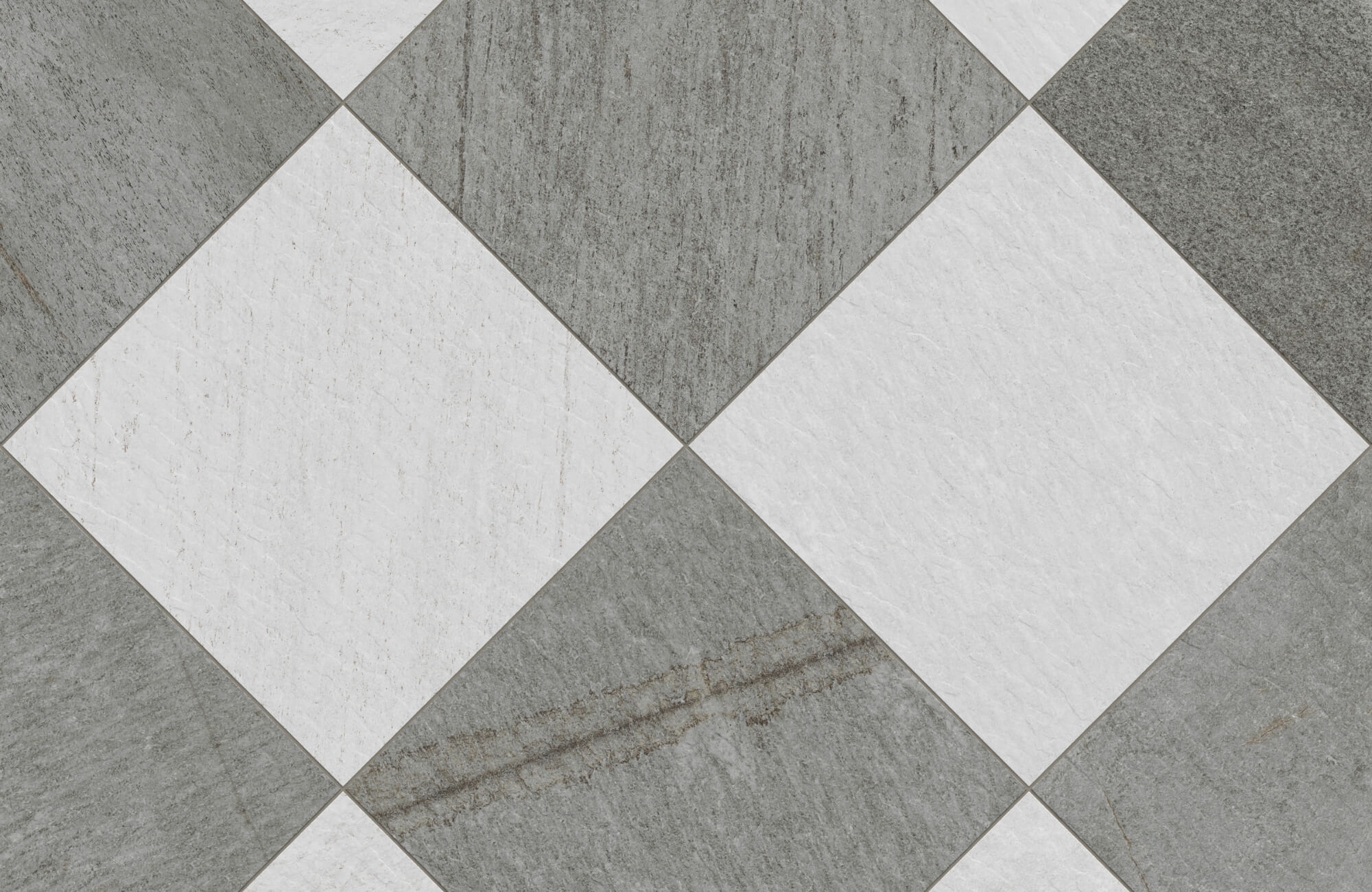
A prime example is Edward Martin’s Carter 24x24 Checkerboard Grip 2cm Porcelain Paver Tile in Fossil & Ash, as shown in the photo above. Its subtle stone texture and durable porcelain construction offer a timeless look backed by long-term performance, making it a smart choice for those seeking to maximize both design impact and property value.
DIY Potential and Installation Savings
Equally compelling is the accessibility of checkerboard pavers for DIY installations. Unlike mortared stone or stamped concrete, modular systems can be laid in phases with basic tools, making them a great option for tackling garden paths, entryways, or patio extensions on their own. However, for larger projects or those requiring precise grading and drainage, it’s always best to consult a professional to ensure structural integrity.
In terms of materials, alternating pavers with cost-effective infills, such as artificial turf, decorative gravel, or mulch, can reduce the total number of pavers needed. This not only cuts costs but also adds design flexibility. Standard tile sizes (e.g., 12”x12” or 24”x24”) make planning more straightforward, while installation kits and edge restraints from some manufacturers further simplify the process. For those who are budget-conscious, sourcing surplus or reclaimed pavers from local suppliers can offer additional savings without compromising quality.
Taken together, these factors make checkerboard pavers a well-rounded investment, offering visual impact, practical function, and flexibility for a range of project scales and budgets.
Timeless Geometry, Modern Performance
Far from a passing trend, the checkerboard paver pattern has reemerged as a smart, design-forward choice for today’s outdoor environments. Its crisp geometry adds structure and order to a variety of landscape styles, while modern materials and installation techniques enhance its functional appeal.
Whether you’re refreshing a compact patio or planning a full-scale backyard renovation, this classic layout delivers lasting style, performance, and value. For curated design tips, material recommendations, and inspiration tailored to your project, explore the expert resources available through Edward Martin!
Follow us on Instagram
@EDWARD.MARTIN
)
)
)
)
)
)
)
)
)
)
)
)
)
)
)
)