A modern bathroom is no longer merely a place of routine—it is a sanctuary of design, innovation, and self-expression. Within this evolving space, contemporary bathroom vanities have emerged as the centerpiece of transformation, seamlessly merging aesthetic refinement with intelligent functionality. Their sculptural forms, sustainable materials, and integrated technology also elevate the ordinary into an experience of timeless sophistication. Every detail, from floating silhouettes to smart storage, reflects a commitment to comfort, precision, and architectural balance. As modern interior design embraces wellness and innovation, these vanities stand at the forefront of redefining what it means to live beautifully.

The Evolution of Bathroom Vanity Design
Bathroom vanity design has evolved from a decorative tradition to a refined modern engineering, emphasizing form, proportion, and performance. Each innovation reflects the growing harmony between architecture, materials, and functionality.
From Ornamentation to Minimalism
Modern vanities have moved away from ornate flourishes, embracing clean lines and balanced proportions that celebrate simplicity. This shift toward minimalist expression introduces subtle hardware and seamless cabinetry, allowing the design to feel effortless and uninterrupted. As each surface flows into the next, the space reveals a quiet sense of architectural precision. The minimalist approach doesn’t feel empty—it feels intentional, where material texture and proportion quietly take the lead. Smooth planes and recessed detailing also guide the eye gently across the room, reinforcing the calm that comes from order and clarity. In this harmony of restraint and refinement, the vanity becomes more than furniture—it becomes an extension of the space itself, radiating quiet sophistication.
The Rise of Material Engineering
Innovations in engineered quartz-based surfaces, porcelain slabs, and high-pressure laminates have redefined how vanities perform in high-moisture environments. These materials are durable, non-porous, and resistant to stains, ensuring longevity and hygiene without sacrificing elegance. Advanced surface treatments now also replicate natural stone or wood grain with remarkable precision, marrying beauty with resilience. Moreover, seamless countertop integration eliminates edges where moisture can collect, reinforcing both function and design integrity. Textural contrasts—matte beside polished—add tactile depth while maintaining a cohesive look.
Exemplifying this material innovation, Edward Martin’s Gabriella 60" Single Vanity in Light Natural Oak with 3 cm White Zeus Quartz Top, as displayed in the picture above, combines modern lines with natural textures through its white oak veneer and quartz-based sinktop that repels stains and mildew. Its moisture-resistant finish, brushed aluminum laminate drawer bottoms, and integrated power outlet also demonstrate how contemporary engineering enhances both functionality and refined design.
Integration with Architectural Elements
Today’s bathroom vanities are no longer standalone pieces—they’ve evolved into architectural extensions that blend seamlessly with their surroundings. Through precise millwork, countertops, mirrors, and walls align in a perfect visual rhythm, creating a sense of harmony throughout the space. This meticulous alignment is also enhanced by concealed plumbing and recessed lighting, which maintain clean geometry and uphold the purity of the design. In addition, integrated wall panels and floating shelves continue this visual flow, reinforcing a unified architectural story. At the heart of it all, the vanity grounds the composition, balancing symmetry with open, breathing space. Together, these elements form a cohesive whole, transforming the vanity into the defining statement of the modern bathroom.

Space Optimization and Floating Vanity Systems
Space-conscious living has influenced a new generation of floating bathroom vanities that blend lightness with functionality. Their suspended design opens the floor plan, expanding both physical and visual space.
The Illusion of Space
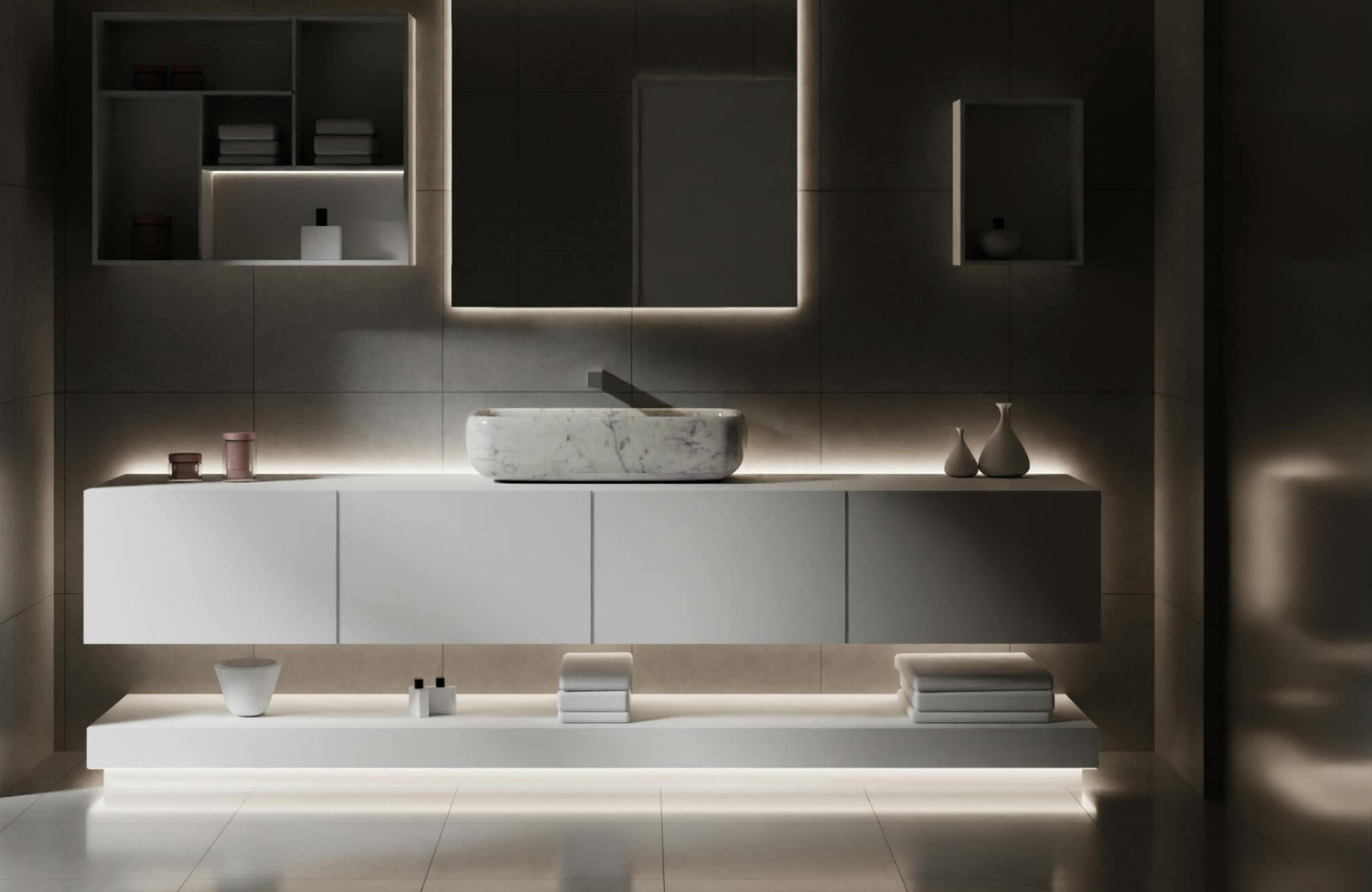
Wall-mounted vanities create openness by revealing more floor area, allowing light to travel freely throughout the room. Their visual lift eliminates bulk and contributes to an airy, uncluttered aesthetic. When paired with continuous flooring or large format tiles, the bathroom appears broader and more fluid. This architectural elevation also simplifies maintenance, enhancing usability without compromising design. Additionally, reflected light beneath the unit produces a floating effect that emphasizes modern sophistication.
A striking example, as shown in the photo above, is the Royce 72" Double Vanity in Chestnut with 3 cm White Zeus Quartz Top, whose geometric wood paneling and suspended silhouette amplify depth and dimension while maintaining visual harmony. Its elongated profile and refined craftsmanship also embody how material texture and structural balance can transform compact bathrooms into spacious, gallery-like compositions.
Intelligent Storage Solutions
Contemporary vanities master the art of hidden sophistication, achieving maximum storage efficiency through engineering that quietly supports minimalist design. Every detail works in harmony—full-extension drawers, customizable inserts, and concealed compartments keep essentials organized while minimizing visual clutter. This thoughtful functionality also extends to integrated outlets and lighting, placing convenience exactly where it’s needed. Even the smallest touch feels intentional, with soft-close systems that maintain a quiet, calming atmosphere. Behind the serene exterior, each mechanism operates with precise reliability and is designed to withstand the rhythm of daily life. In this seamless blend of technology and ergonomics, storage evolves from a practical necessity into a defining feature of modern design.
Ambient Lighting Integration
Lighting now serves as both an aesthetic and functional extension of floating vanity design. For example, under-mounted LED strips cast soft glows that define form and provide ambient visibility. Adjustable color temperatures also allow seamless transitions from invigorating daylight tones to warm evening hues. This lighting flexibility enhances mood while improving energy efficiency and nighttime safety. In addition, reflected illumination along wall surfaces accentuates material texture and architectural depth. This combination of light and form transforms the vanity into an elegant sculptural feature within the bathroom environment.

Integration of Smart Technology and Functional Innovation
The modern vanity has become an intelligent interface where digital convenience meets human-centered design. Smart technology enriches hygiene, comfort, and efficiency while maintaining the refined aesthetic of contemporary interiors.
Sensor-Based Functionality
Advanced vanities redefine interaction through motion sensors, infrared lighting, and touchless faucets that respond effortlessly to every movement. By minimizing surface contact, these innovations not only enhance convenience but also elevate hygiene and cleanliness. The experience extends further with motion-activated drawers that glide open on cue, blending automation with a sense of refined restraint. Beneath the surface, integrated systems run on low-voltage power, ensuring energy efficiency without compromising safety. Each touch, or rather, each gesture, feels intuitive and fluid, quietly supporting the flow of daily routines. In merging precision technology with understated elegance, these vanities transform convenience into an experience of modern living at its most refined.
Adaptive Lighting and Climate Control
Smart lighting systems introduce dynamic illumination that adapts to user needs and time of day. Mirrors with built-in demisters, for instance, maintain clarity even in humid conditions, ensuring uninterrupted functionality. Adjustable brightness levels also enhance visibility for grooming, while soft tones create relaxation during evening rituals. Moreover, integrated temperature controls provide localized comfort in cooler climates. These innovations harmonize functionality with sensory well-being, reinforcing the bathroom’s role as a personal sanctuary. As lighting, air, and comfort intertwine, the vanity evolves into a fully responsive design element.
Built-In Connectivity
Digital integration brings lifestyle technology directly into the bathroom environment. For example, Bluetooth-enabled mirrors, USB charging ports, and smart assistants merge modern convenience with minimalist aesthetics. Concealed wiring also preserves visual cleanliness, while embedded controls ensure effortless operation. Users can now manage lighting, music, and device charging through voice or gesture commands. This connectivity enhances daily efficiency and introduces an elevated sense of personalization. Through intelligent design, the vanity transitions from static furniture into an interactive, tech-enabled centerpiece.

Material Innovation and Sustainable Design Practices
The rise of eco-conscious bathroom design has reshaped how vanities are built, favoring materials that are both sustainable and luxurious. Each component reflects environmental mindfulness paired with technical sophistication.
Eco-Conscious Material Choices3
Manufacturers are increasingly adopting FSC-certified wood, recycled stone, and bamboo composites to create durable, sustainable vanities. These materials embody renewable sourcing without compromising visual richness or longevity. Low-VOC finishes also improve indoor air quality, ensuring a healthier living environment. Additionally, locally produced components reduce carbon footprint while supporting artisanal craftsmanship. The outcome is a vanity that aligns ethical production with timeless design. This seamless blend of environmental integrity and aesthetic refinement defines the modern eco-luxury bathroom.
Water-Resistant and Anti-Microbial Surfaces
High-performance surfaces are critical to maintaining hygiene and durability in modern bathrooms. Solid-surface composites, ceramic polymers, and nano-sealed quartz, in particular, resist moisture and inhibit bacterial growth. These non-porous materials also remain impervious to warping, even under heavy humidity exposure. In addition, anti-microbial coatings extend protection and make cleaning effortless. The tactile warmth of these materials complements their technical strength, ensuring both beauty and longevity.
A great example, as featured in the photo above, is our Paxton 72" Double Vanity in Pebble Oak with 3 cm White Zeus Quartz Top. It showcases a quartz-based sinktop that repels stains and mildew, while its multi-stage UV and moisture-resistant coating ensures enduring surface integrity. Premium undermount drawer slides, brushed aluminum laminate bottoms, and champagne brass pulls also enhance functionality and refinement, exemplifying how thoughtful engineering preserves elegance even in high-moisture environments.
Circular Design and Lifecycle Efficiency
The contemporary vanity embraces circular economy principles through modular construction and recyclable materials. Each element can be disassembled, replaced, or refinished to extend lifespan and minimize waste. Manufacturers now design joinery systems that support component interchangeability for future upgrades. End-of-life recycling programs also allow materials to reenter production cycles. This approach transforms vanities into evolving systems rather than disposable fixtures. It represents a profound shift—one where design intelligence meets ecological consciousness.

The Role of Customization and Bespoke Craftsmanship
Customization defines the next era of luxury bathroom vanity design, where each piece reflects the owner’s aesthetic and lifestyle. Bespoke craftsmanship ensures form, function, and individuality coexist seamlessly.
Precision Engineering and Custom Dimensions
Through digital fabrication and CNC machining, designers now achieve flawless precision even in the most complex geometries. Each component is proportioned to its surroundings, creating perfect harmony between the vanity, wall, and floor lines. This precision isn’t limited to measurement alone—it extends to the way form meets function, capturing both ergonomic comfort and visual rhythm. Every detail, from material joints to basin placement and countertop edges, aligns with millimeter-perfect accuracy, reinforcing a sense of deliberate design. The result is a composition that feels intentional from every angle, where precision engineering elevates craftsmanship into a true expression of architectural art.
Multi-Zone Functionality
Modern lifestyles call for vanities that accommodate multiple users with ease while maintaining a sense of refined elegance. To meet these needs, designers incorporate dual-sink configurations, hidden storage, and integrated seating that balance practicality with style. This adaptability extends to concealed outlets and lighting modules, which simplify daily routines without disrupting the vanity’s clean aesthetic. Smart partitions quietly organize personal items, preserving a clutter-free atmosphere that enhances both function and serenity. Every element is intuitively placed, ensuring comfort, convenience, and harmony within the shared space.
Exemplifying these principles, Edward Martin’s Rosalie 72" Double Vanity in Amber Birch with 3 cm White Zeus Quartz Top, as displayed in the picture above, features a generous array of drawers and open shelving that maximize usability for shared spaces. Its multi-compartment design, complete with removable organizers and smooth-gliding hardware, reflects how craftsmanship and thoughtful engineering can transform traditional storage into an adaptable, multi-zone system of functional beauty.
Artistic Finishes and Textural Expression
Handcrafted finishes and natural textures bring a tactile richness to contemporary vanities, turning simplicity into an experience of subtle luxury. Matte lacquers, brushed brass, and veined marble come together in a balance of artistry and precision, creating visual depth through refined contrast. The interplay between warm wood grain and cool metal detailing also adds a quiet warmth that feels both organic and modern. Every surface invites touch, guiding the eye and hand through a cohesive rhythm of material harmony. Through meticulous craftsmanship, each vanity carries its own distinct character—proof that even within minimalism, individuality and elegance can coexist beautifully.

Aesthetic Versatility and Design Cohesion
Contemporary vanities demonstrate unmatched design adaptability, harmonizing diverse architectural languages through proportion, finish, and form. Their versatility ensures timeless cohesion within every interior concept.
Harmonizing with Architectural Styles
Vanities now integrate seamlessly into a range of aesthetics, from Scandinavian restraint to industrial modern and Japandi minimalism. Natural finishes like oak and ash soften clean lines, while metal frames introduce structural clarity. Interchangeable panels and modular hardware also allow for effortless stylistic transitions. Additionally, coordinated materials link the vanity to the room’s larger design story. This adaptive capability ensures both relevance and longevity in evolving interiors.
As shown in the photo above, our Abigail 60" Single Vanity in Light Natural Oak with 3 cm White Zeus Quartz Top anchors the space with its warm, natural wood tone and subtle curvature. Paired with the Tatum 24x48 Matte Porcelain Tile in Cross-Cut Straw underfoot and the softly reflective Makenna 6x6 Glossy Porcelain Tile in Ice across the walls, the bathroom achieves a balanced dialogue between warmth and luminosity. Over the freestanding tub, the Kaley 16" Pendant in Aged Brass adds a sculptural glow, enhancing the spa-like calm of the space. Together, these elements create a visual rhythm of warmth, light, and natural texture—an embodiment of architectural balance and modern serenity.
Texture, Color, and Surface Coordination
Material coordination is key to achieving a balanced visual rhythm across the bathroom. Soft matte lacquers, brushed metals, and honed quartz surfaces combine to form tactile harmony. Lighting temperature adjustments also accentuate the authenticity of each finish, while subtle tonal contrasts enhance spatial layering, adding dimension without clutter. In addition, consistent hardware finishes ensure seamless design flow from vanity to fixtures. Each carefully aligned element contributes to an atmosphere of cohesive sophistication.
Lighting and Spatial Balance
Lighting design defines how vanities interact with the surrounding architecture, shaping both function and atmosphere. Layered illumination, such as combining overhead fixtures, integrated mirror lights, and under-cabinet glow, creates a balance of clarity and warmth. This even distribution of light also prevents glare while accentuating material texture and detail. Dimmer systems further refine the experience, offering control over ambiance to support both practicality and relaxation. As reflected light softens along the walls, it enhances depth and continuity, making the bathroom feel more expansive and connected. Through light, the vanity transcends mere form, emerging as a sculptural experience within the space.

The Future of Bathroom Vanity Design
The future of bathroom vanity innovation lies in intelligent materials, adaptive systems, and wellness-driven environments. These emerging designs will seamlessly blend sustainability, technology, and human well-being.
Wellness-Centric Design Integration
Future vanities will incorporate circadian lighting, aromatherapy modules, and ergonomic profiles that enhance physical and emotional wellness. Each component supports relaxation while maintaining clinical precision. Touch-free controls and adaptive brightness also ensure effortless use at any time of day. Moreover, material warmth, natural tones, and soft lighting foster sensory calm. This integration of wellness technology transforms the bathroom into a space of rejuvenation. The vanity thus becomes a cornerstone of holistic living design.
Smart Material Advancements
Advancements in bio-resins, self-healing polymers, and adaptive composites are set to redefine vanity durability and sustainability. These intelligent materials respond to temperature, moisture, and wear with regenerative precision, extending the life of each surface. Integrated sensors further enhance performance, continuously monitoring environmental conditions and adjusting automatically for optimal results. Meanwhile, recycled mineral aggregates provide lasting strength while minimizing ecological impact. Even surface treatments are evolving, capable of shifting texture in response to changing light and humidity. Together, this synergy of science and design paves the way for vanities that are not only resilient but truly responsive—crafted for the future of modern living.
AI-Enhanced Customization
Artificial intelligence is poised to personalize vanities through predictive modeling and behavioral analysis, transforming the way users interact with their space. By learning individual preferences, these systems will automatically adjust lighting, water flow, and even mirror height for a tailored experience. Designers, too, will harness AI to simulate materials and configurations before fabrication, ensuring precision long before installation. Voice and gesture controls will blur the boundary between digital precision and sensory experience, creating a seamless dialogue between user and design. With integrated connectivity linking to broader home automation systems, every function will operate in effortless harmony. In this evolution, the vanity becomes more than a fixture—it becomes an intelligent companion, anticipating and adapting to every need.
The Enduring Impact of Contemporary Bathroom Vanities
Contemporary bathroom vanities have redefined modern interiors, blending advanced functionality with architectural artistry to create spaces of lasting elegance. Their seamless integration of smart technology, sustainable materials, and ergonomic design has elevated bathrooms into immersive environments of wellness and sophistication. As design innovation continues to evolve, these vanities remain at the heart of the modern home—adaptable, intelligent, and visually timeless. They not only enhance spatial harmony but also reflect the growing pursuit of sustainable luxury in interior design. In their enduring beauty and performance, contemporary bathroom vanities stand as testaments to how design innovation can truly shape the way we live.
For those envisioning their own modern sanctuary, Edward Martin’s design services offer expert guidance in curating personalized spaces that balance artistry, function, and timeless appeal. Whether you’re seeking tailored recommendations or a full design collaboration, our team can bring your vision to life—explore possibilities or contact us to begin your next design journey today!