



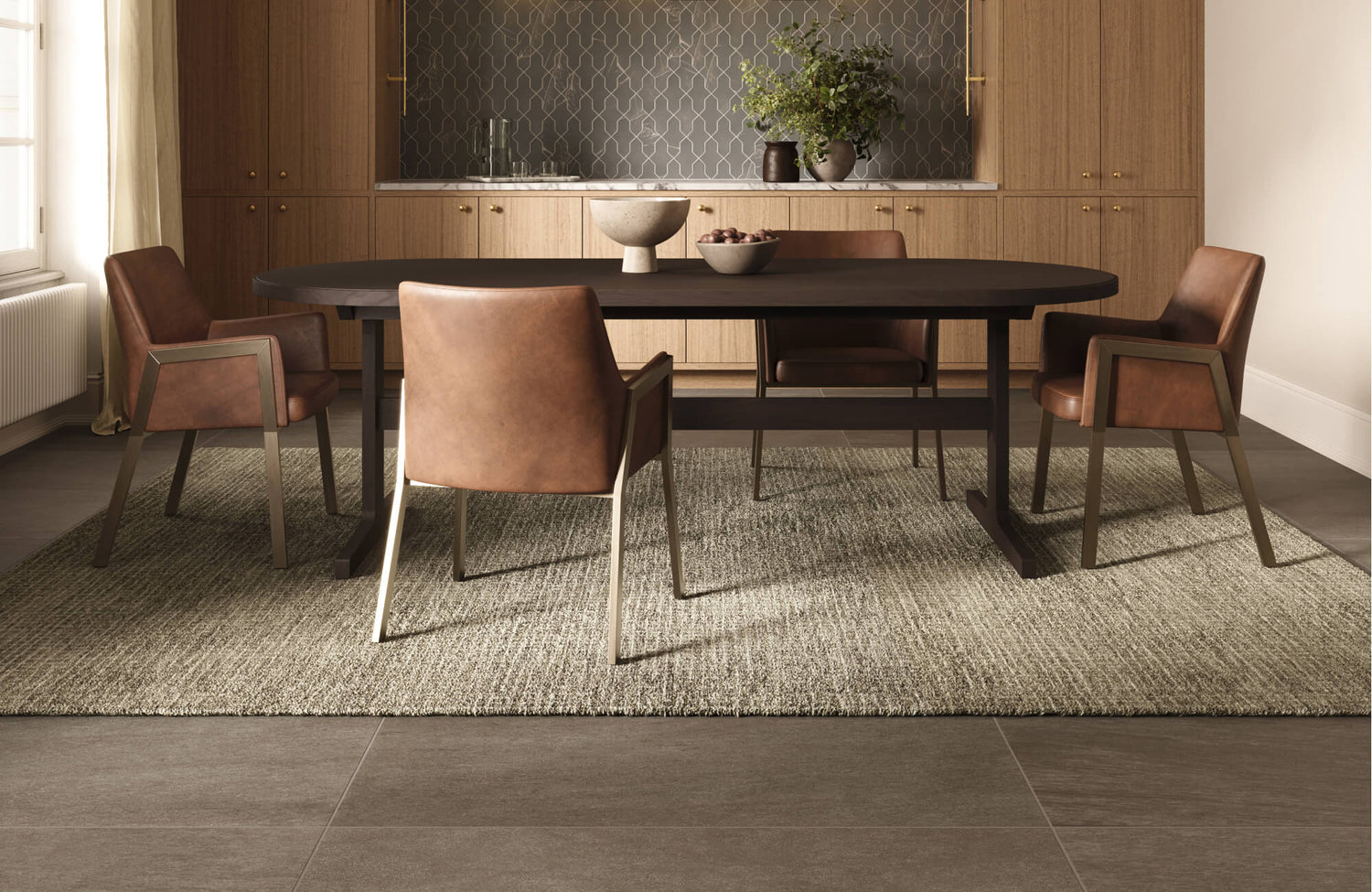
At first glance, choosing between one large rug and several smaller ones may seem like a matter of style or budget. However, once you look closer, rug size has a powerful influence on how a space functions, feels, and holds together visually. A large area rug does more than cover the floor; it establishes flow, enhances comfort, and brings clarity to rooms that might otherwise feel scattered or incomplete.

Visual Cohesion And Spatial Definition
Floor coverings do more than add comfort or color; they shape how a room is visually organized and experienced. A large area rug, typically measuring 8×10 feet or larger, helps define space with intention, especially in layouts where walls alone do not clearly separate functions. By creating a visual foundation, it brings clarity and balance to rooms that might otherwise feel disjointed.
Creating A Unified Visual Anchor
When furniture sits directly on bare flooring, the room can feel unsettled, as if the pieces are disconnected from one another. A large area rug solves this by visually anchoring the furniture, giving the space a clear center and purpose. When you position all furniture legs on the rug, the seating or dining area also reads as a single, cohesive zone rather than a collection of individual pieces.
Even when space constraints make a full “all legs on” layout impractical, allowing at least the front legs of sofas and chairs to rest on the rug maintains visual continuity. The key is ensuring the rug extends beyond the furniture footprint, which keeps everything tied together. As a result, the room feels intentional and grounded rather than loosely arranged.
Reducing Visual Clutter In Open Spaces
Open-plan layouts benefit greatly from visual simplicity, yet multiple smaller rugs often achieve the opposite effect. Each rug introduces its own boundary, breaking up sightlines and creating unnecessary visual interruptions across the floor. Over time, this fragmentation can make the space feel busier and less cohesive than intended.
In contrast, a single large rug streamlines the layout by unifying adjacent functions such as lounging, dining, or entertaining. In spaces like the one shown above, a piece such as our Hutchinson Rug in Burgundy / Denim anchors the seating area with its warm beige and golden yellow accents, adding warmth and definition without interrupting the open flow. By extending beneath key furniture, the rug also reduces visual breaks across the floor, allowing the eye to move smoothly through the room while keeping architectural lines, natural light, and furnishings as the primary focal points rather than competing patterns and edges.
Enhancing Room Proportions
Rug size plays a powerful role in how large or small a room appears. A rug that is too small draws attention inward, visually shrinking the space and making furniture placement feel cramped. By choosing a larger rug that leaves a consistent border of exposed flooring around the perimeter, you guide the eye outward, which helps the room feel more expansive and open.
Orientation also matters when shaping perception. Aligning the rug with the longest wall can visually elongate narrow rooms, while circular or oversized rugs soften hard angles in square spaces. When you select a rug based on the scale of the room rather than just the furniture, you create proportions that feel balanced and thoughtfully considered.

Comfort And Underfoot Experience
Introducing a large area rug over hard flooring transforms how a space feels the moment you step into it. Rather than moving across fragmented surfaces, you experience continuous softness that cushions your steps, absorbs sound, and creates a warmer, more inviting atmosphere. As a result, everyday activities feel more comfortable, whether you are relaxing, walking through the room, or settling into a seating area.
Moreover, a single large rug improves both safety and thermal comfort by reducing exposed edges and insulating the floor beneath. With fewer transitions and a more stable surface, movement feels secure while warmth is better retained at ground level. A refined option such as our Liddy Rug in Graphite / Platinum, seen in the photo above, with its black diamond outlines and staggered blocks on an off-white linear base, enhances this underfoot comfort by adding plush texture and visual calm without overwhelming the room. When these benefits are combined, a large rug delivers a noticeably enhanced underfoot experience that supports comfort, ease, and peace of mind throughout the space.

Furniture Placement And Layout Flexibility
A large area rug does more than sit beneath furniture; it establishes the framework that holds the room together. By acting as a visual foundation, it allows you to arrange and rearrange furniture without the space feeling unbalanced or improvised. This adaptability becomes especially valuable as your needs and preferences evolve over time.
Anchoring Furniture For Better Balance
When a rug is properly sized, it brings order to furniture placement by clearly defining where each piece belongs. In dining areas, allowing the rug to extend well beyond the table ensures chairs remain on the rug even when pulled out, preserving comfort and visual alignment. This creates a cohesive dining zone that feels intentional rather than cramped.
In living rooms, a large rug helps center the seating area and visually connects sofas and chairs to focal points such as a fireplace or media unit. In a setting like the one displayed above, our Haverford Rug in Platinum / Bronze works as a soft, grounding layer, blending warm brown undertones with layered shades of gray and beige to complement wood tones and upholstered seating. By aligning furniture within the rug’s boundaries, you create balance and symmetry that naturally guide how the room is used. The result is a layout that feels stable and well considered, rather than loosely assembled.
Adapting To Furniture Changes Over Time
As furniture styles change or pieces are replaced, a large rug provides continuity that smaller rugs often lack. Instead of being tied to a specific configuration, it accommodates new sofas, chairs, or tables without forcing you to rethink the entire layout. This flexibility allows the room to evolve while maintaining a consistent visual base.
Choosing a rug based on the overall room dimensions rather than current furniture also ensures it remains relevant long term. When you plan for scale rather than a single arrangement, you give yourself the freedom to experiment with layouts. Over time, this approach saves effort and helps the space feel cohesive even as its contents change.
Avoiding Floating Or Disconnected Furniture
Furniture that sits entirely off a rug can appear isolated, making the room feel disjointed. A large rug prevents this by visually tying major pieces together, ensuring they relate to one another within a defined zone. An option like our Quinton Rug in Dove, with its soft beige and gray tones, helps anchor seating and tables while keeping the layout feeling open and cohesive. When at least part of each key furniture item rests on the rug, the arrangement reads as a unified whole rather than separate elements.
In open-concept as well as traditional spaces with large living rooms, great rooms, or vaulted ceilings, extending the rug beyond the main furniture grouping further strengthens this connection. Clear walkways form naturally, and seating areas feel intentional without the need for multiple rugs. As a result, the space remains organized and cohesive while still allowing for comfortable movement throughout the room.

Maintenance And Long-Term Practicality
Maintaining a large area rug is often simpler and more efficient than caring for multiple smaller pieces. With fewer edges, less movement, and a single surface to manage, daily cleaning becomes more streamlined and consistent. Because a large rug stays securely in place, you can vacuum more effectively and reduce uneven wear, allowing the rug to retain its appearance with less ongoing effort.
At the same time, a large rug offers meaningful protection for the flooring beneath it. By covering more surface area, it shields floors from scratches, debris, and prolonged sun exposure while distributing usage more evenly. Over time, this added layer of protection helps preserve the condition of your floors and minimizes the need for repairs or refinishing, making a large rug a practical choice for long-term use.

Design Impact And Style Consistency
Rugs influence how a room feels just as much as furniture or lighting. A large area rug establishes a visual foundation that brings color, pattern, and texture into alignment, helping the space feel intentional rather than pieced together. When chosen thoughtfully, it becomes the element that quietly unifies everything around it.
Strengthening A Defined Design Style
A single large rug reinforces the overall design direction by giving the room a clear stylistic anchor. Whether you lean toward clean, modern lines or prefer a more traditional, layered look, the scale of a large rug supports the visual weight of sofas, tables, and cabinetry. This balance prevents the space from feeling top-heavy or visually scattered.
Because the rug spans a significant portion of the room, it naturally connects different design elements. Textures, finishes, and silhouettes feel more cohesive when they share a common foundation. As a result, the room communicates a stronger design identity without needing excessive decorative accents.
Color And Pattern Control
Working with one large rug simplifies color coordination by providing a clear palette to build from. When you pull accent colors and neutrals directly from the rug, the space feels harmonious rather than forced. In a dining setting featured above, our Davies Rug in Ash / Sand, with its smoky grays and rich, varying tones of beige, grounds the furniture arrangement while quietly echoing surrounding finishes and textures. This approach also reduces the risk of clashing tones that often occur when multiple rugs introduce competing colors and patterns.
At the same time, balance remains essential, especially when the rug features bold patterning. Pairing a striking rug with more understated furniture allows the design to breathe, while subtle rugs benefit from layered textures elsewhere in the room. This give-and-take keeps the space visually engaging without overwhelming the senses.
Making Statement Pieces Work Harder
A large rug has the presence to function as a statement piece on its own. Intricate patterns, rich colors, or artisanal craftsmanship become more impactful when fully visible, rather than broken up by furniture or confined to a small area. A design like our Bowie Rug in Oat / Espresso exemplifies this effect, pairing beige base broken up by staggered brown bars to create visual depth that anchors the room. In this way, the rug acts like functional artwork that grounds the entire space.
To let the rug shine, surrounding furniture should feel balanced and intentional. Keeping profiles lighter and arrangements open allows the rug’s design to remain the focal point. By giving a statement rug room to be seen, you elevate its role from background element to defining feature of the space.

Cost Efficiency And Value Over Time
Although a large area rug often comes with a higher upfront price, its long-term value becomes evident when you look beyond the initial purchase. By covering more square footage with a single piece, you reduce duplicated costs associated with buying multiple smaller rugs and pads. In addition, large rugs are typically constructed with higher-quality materials and denser weaves, which allows them to withstand daily use more effectively and maintain their appearance over time.
Furthermore, a large rug offers financial flexibility well into the future. Its size makes it adaptable to new layouts, different rooms, or even a new space, extending its useful life far beyond a single design phase. Because high-quality large rugs also retain more resale value, your investment continues to work for you rather than depreciating quickly. Taken together, these factors make a large area rug a cost-efficient choice that delivers lasting value rather than short-term savings.
Choosing The Right Rug Size
Choosing a large area rug instead of multiple smaller rugs is ultimately about creating a space that feels cohesive, comfortable, and intentional. A single oversized rug unifies the room visually, supports flexible layouts, improves safety and underfoot comfort, and delivers greater value over time. When you prioritize scale, function, and long-term use, a large rug becomes more than a decorative element; it becomes the foundation that allows the entire space to work better and feel more complete.
If you need guidance selecting the right rug size for your space, our team is available to help you navigate proportions, layouts, and design considerations with confidence. By reaching out through our Contact Us page, you can receive personalized support tailored to your room dimensions, furniture placement, and lifestyle needs, ensuring your rug choice enhances both the look and functionality of your space.


