Subway tiles remain popular because they offer a rare balance of timeless style, durability, affordability, and easy maintenance. Their simple rectangular shape works across a wide range of interiors, from classic kitchens and bathrooms to modern backsplashes, shower walls, and feature areas.
Originally introduced in New York City’s subway stations in the early 1900s, subway tiles were valued for their bright, easy-to-clean glazed surface and practical design. Today, they continue to appeal to homeowners and designers because they can feel clean and traditional, sleek and modern, or bold and expressive, depending on the color, finish, material, and layout. In this article, we’ll explore the history, design versatility, and practical benefits that have made subway tiles a lasting design favorite.

Historical Roots and Timeless Appeal
Subway tiles began as a practical solution for public spaces, but their clean appearance and reliable performance helped them become a design classic. Their history is closely tied to the early New York City subway system, where materials needed to be durable, bright, and easy to maintain. Over time, the same qualities that made subway tiles useful underground made them appealing in homes, especially in kitchens and bathrooms.
How Subway Tiles Began
Subway tiles trace their origins to the early 20th-century New York City subway system, which opened in 1904. The growing subway network required a material that could withstand constant use while helping stations feel clean, bright, and orderly. Traditional materials such as stone or wood were less practical because they were harder to clean, more vulnerable to moisture, and less suited to underground conditions.
In search of a better solution, subway designers turned to glazed ceramic tile. Its smooth, non-porous surface resisted moisture and grime, while its reflective finish helped brighten underground stations. The rectangular format also made the tiles easy to install, align, repair, and maintain, making them a practical choice for a demanding public environment.
Impact and Popularization
The use of glazed ceramic tiles in New York City subway stations helped establish their reputation for cleanliness, brightness, and durability. Their crisp white surfaces stood in contrast to the darker, more crowded conditions of the city above, giving subway stations a more modern and hygienic appearance. Over time, homeowners began to see subway tiles not only as practical surfaces but also as design elements that could brighten and refine kitchens and bathrooms. Their association with cleanliness, order, and urban progress helped move them from public transit spaces into residential interiors.
Aesthetic Evolution
Beyond their practical advantages, subway tiles also offered a simpler alternative to the ornate tile styles common in earlier interiors. Their clean lines and minimalist shape suited the emerging design preferences of the early 20th century, especially in rooms where hygiene and ease of maintenance mattered. Architects and designers began using ceramic subway tiles in kitchens, bathrooms, and utility areas, where their bright appearance and practical surface made them especially useful. Their understated look allowed them to complement many architectural styles without feeling overly decorative.
Modern Adaptations and Lasting Relevance
Over time, subway tiles moved well beyond their original white glazed design. Manufacturers began offering them in a wider range of colors, sizes, finishes, and materials, giving homeowners more freedom to personalize their spaces. Edward Martin’s Makenna 3x11 Glossy Porcelain Tile in Forest, as shown in the photo above, reflects this evolution beautifully with its elongated shape, zellige-inspired character, and rich green gloss, which adds depth and personality to the setting.
Today, subway tiles are no longer limited to historical or industrial-inspired interiors. Their ability to adapt to changing design trends while maintaining a simple, recognizable form is one of the key reasons they remain relevant in both residential and commercial spaces.

Design Flexibility of Subway Tiles
One of the biggest reasons subway tiles remain popular is their design flexibility. Their simple shape can be arranged in different patterns, paired with a wide range of colors and finishes, and used across many interior styles. Whether used for a classic backsplash, a modern shower wall, or a bold feature area, subway tiles can be adapted to match the room’s overall look and feel.
Layout Patterns
The layout pattern can dramatically change how subway tiles look in a space. A traditional brick layout feels classic and familiar, while a vertical stack can look sleek and contemporary. More decorative layouts, such as herringbone or chevron, add movement and visual interest.
Herringbone
The herringbone pattern places tiles diagonally, creating a continuous zigzag effect. This layout adds movement and energy, making it especially effective for feature walls, backsplashes, and larger surfaces that need more visual interest.
Edward Martin’s Everett 2x10 Matte Ceramic Tile in Almond, as shown in the photo featured above, highlights how herringbone can turn a simple tile shape into a striking design feature. Its warm almond tone and matte ceramic finish soften the geometric pattern, while the elongated tile format gives the wall a refined sense of movement. The result is decorative and elevated without feeling overly busy.
Brick Bond
Brick bond is the classic subway tile layout, with each row offset from the one above and below it. This arrangement creates a sense of order and familiarity, making it one of the most versatile choices for kitchens, bathrooms, laundry rooms, and shower walls. Its timeless structure works well with both traditional and modern interiors.
Stack Bond
The stack bond pattern places tiles directly above one another, creating clean vertical and horizontal lines. This layout feels simple, orderly, and especially suited to contemporary interiors. It can make a wall look crisp and architectural, particularly when paired with a bold grout color or a sleek tile finish.
Chevron
The chevron pattern arranges tiles in a continuous V shape, creating a polished and directional look. Unlike herringbone, chevron tiles meet in sharp points, giving the pattern a more tailored and refined appearance. This layout works well in entryways, shower walls, accent areas, and upscale kitchens where a more designed look is desired.
Design Palette
In addition to layout patterns, subway tiles offer a wide range of colors, finishes, and materials. These choices allow homeowners to create anything from a subtle backdrop to a bold focal point. The same basic tile shape can look classic, modern, rustic, or dramatic depending on the design palette.
Colors
Glossy white subway tile remains the most iconic choice, but today’s options come in a wide range of colors. Black, navy, green, gray, cream, and even brighter shades can be used to create different moods and design effects. Dark colors add contrast and drama, while softer hues create a quieter, more blended look.
This range of colors makes it easy to tailor subway tiles to your space, whether you want a clean neutral backdrop or a more expressive design feature. A soft gray option, such as Jaden 2.5x16 Glossy Ceramic Tile in Tender Gray, can bring a calm, versatile look while still adding a polished finish. White subway tile can brighten a kitchen, while deeper blue or green tiles can add depth and personality.
Finishes
Tile finish also plays an important role in the overall effect. Glossy finishes reflect light, making rooms feel brighter and more open, while matte finishes create a softer, more understated look. Textured finishes add depth and tactile interest, giving even simple subway tile layouts more character.
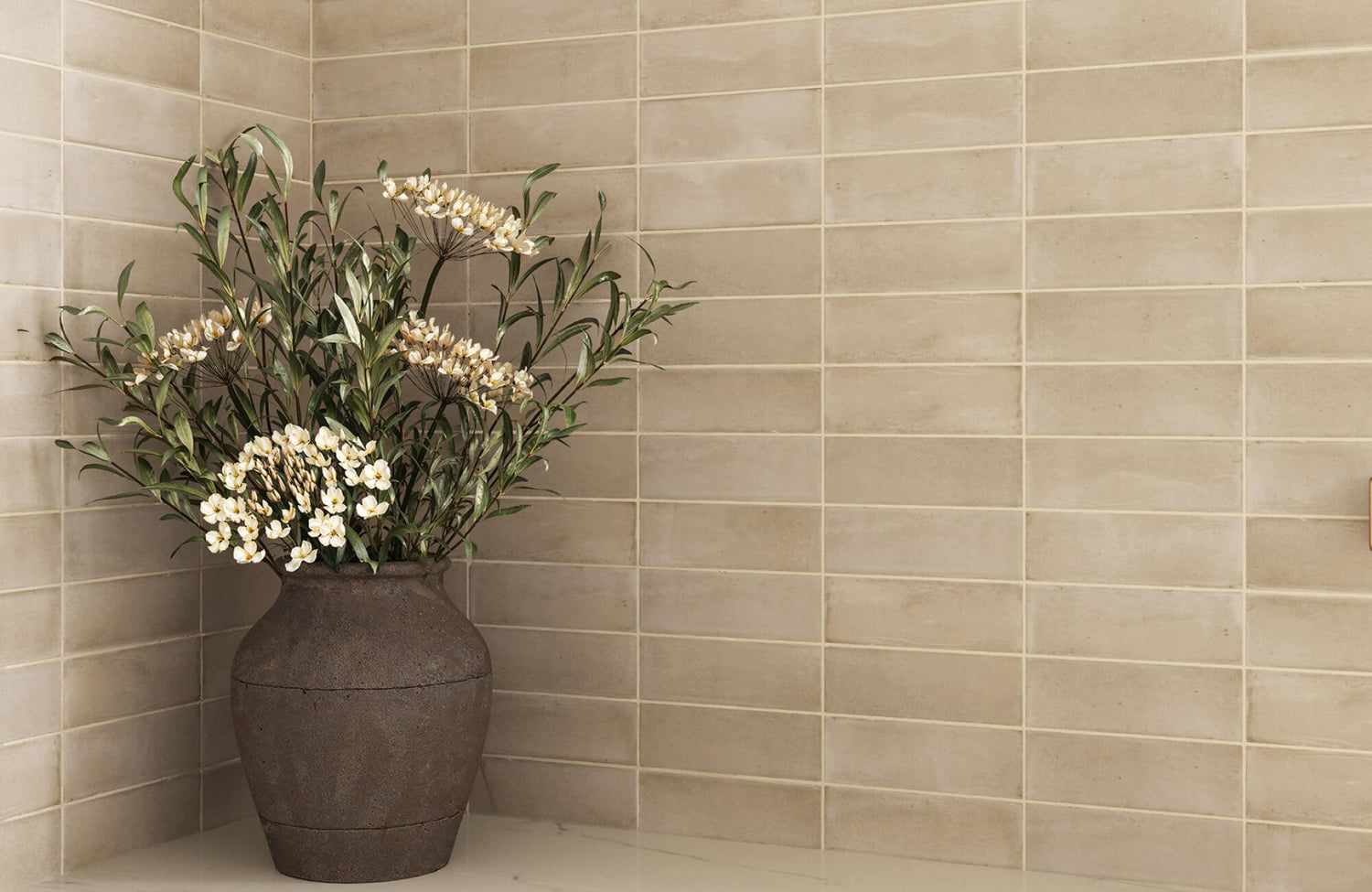
The right finish can shift the atmosphere of a room. A glossy white tile can feel crisp and classic, while a matte handmade-look tile feels warmer and more relaxed. For example, Juliet 2.5x10 Matte Porcelain Tile in Pearl offers a soft, muted finish that creates a calm and refined look without relying on bold color or a complex layout.
Materials
Subway tiles are commonly made from ceramic and porcelain, but they are also available in glass, metal, and natural stone. Each material brings its own texture, shine, and personality to a space. Ceramic tiles are popular for their classic look and accessibility, while porcelain is especially valued for its density, durability, and water resistance.
Porcelain subway tiles are a practical choice for many spaces because they are durable, easy to clean, and available in many colors and finishes. For a brighter look, glass subway tiles can reflect light beautifully, while natural stone adds a more organic, textured feel.
With so many layouts, colors, finishes, and materials available, it can be helpful to see how different subway tiles will look before making a final choice. Our AR tool lets you visualize tile options in your own space, making it easier to compare styles and choose a design that feels right for your home.

The Practical Benefits of Subway Tiles for Homeowners
Subway tiles are not only popular because they look good. They also offer practical benefits that make them a smart choice for busy homes. Their durability, moisture resistance, easy maintenance, and affordability all contribute to their lasting appeal.
Exceptional Durability
Ceramic and porcelain subway tiles are made from kiln-fired clay, giving them a strong, hard surface that can withstand daily use. This makes them a reliable option for kitchens, bathrooms, laundry rooms, and other areas where walls and surfaces need to handle splashes, cleaning, and regular contact.
This durability is especially valuable in bathrooms, where tile needs to withstand moisture, steam, and routine cleaning. Edward Martin’s Ellie 2.5x8 Matte Ceramic Tile in Moss, as shown in the photo featured above, illustrates how a durable ceramic tile can also bring strong design impact. Its moss green color adds depth to the shower wall, while the matte finish creates a softer, more relaxed look.
Porcelain subway tiles are especially durable because they are denser and less porous than many other tile types. This makes them a practical choice for areas exposed to moisture or frequent use, while still offering a polished, design-forward appearance.
Moisture and Stain Resistance
Traditional glazed ceramic subway tiles have a smooth surface that helps repel water and resist stains. This makes them especially useful for backsplashes, shower walls, bathroom surrounds, and other areas where moisture is common.
Whether dealing with cooking splatters, soap residue, or everyday spills, subway tiles are generally easy to wipe clean. Their ability to resist moisture is one of the main reasons they remain a favorite for kitchens and bathrooms.
Low Maintenance
Subway tiles are also popular because they are easy to maintain. Dirt and grime are less likely to cling to a smooth glazed surface, making regular cleaning simple with mild soap and water. This ease of care is especially helpful for busy households that want a surface that looks fresh without requiring extensive upkeep.
Grout selection can also influence maintenance. Choosing a darker grout can help minimize the appearance of discoloration, while properly sealed grout can make cleaning easier over time.
Affordability
Ceramic and porcelain subway tiles are often more affordable than many decorative tile options, such as natural stone, handmade specialty tile, or glass mosaics. This makes them accessible for a wide range of projects without sacrificing style. Their affordability also allows homeowners to use them across larger surfaces, such as full shower walls or extended kitchen backsplashes. With so many sizes, colors, and finishes available, subway tiles can suit a range of budgets while still creating a polished, timeless look.
Why Subway Tiles Remain a Design Staple Today
Subway tiles have remained popular because they combine simple beauty with everyday practicality. Their clean lines, durable surface, and wide range of design options allow them to work in many different interiors. They can feel classic in a white brick bond layout, modern in a vertical stack, or bold when used in deep colors, glossy finishes, or decorative patterns.
Their lasting appeal comes from this balance of style and function. Subway tiles are easy to live with, easy to personalize, and flexible enough to evolve with changing design trends. Whether used as a subtle backdrop or a standout feature, they continue to bring a clean, refined, and enduring look to kitchens, bathrooms, and beyond.
For more tailored guidance, our design services can help you choose the right subway tile color, finish, material, and layout for your space. With expert recommendations and personalized support, you can create a design that feels both timeless and true to your home.