Modern design continues to evolve, yet certain materials maintain a timeless presence. Cementitious tiles have emerged as a favorite among designers and homeowners for their balance of raw, industrial character and refined elegance.
From minimalist lofts to family homes, they deliver versatility that bridges old-world craftsmanship with modern functionality. Offering the organic feel of concrete with a polished, durable finish, these tiles create interiors that feel both grounded and aspirational. In this blog, we’ll explore the qualities that make cementitious tiles a defining element in contemporary spaces.

The Aesthetic Appeal of Raw and Refined Textures
Cementitious tiles first capture attention with their striking balance of raw character and refined detail. They bring depth and dimension to interiors in ways that feel both modern and timeless.
Mimicking the Look of Concrete without the Drawbacks
Concrete-inspired surfaces offer the visual depth and raw character of cast concrete without its weight, porosity, or structural limitations. Advanced porcelain and cementitious tiles replicate the matte finish, tonal variation, and tactile quality of concrete, providing designers with durable, low-maintenance alternatives suitable for both residential and commercial applications. These surfaces maintain the industrial aesthetic while eliminating issues such as cracking, sealing requirements, or long curing times.
A Natural Palette for Modern Interiors
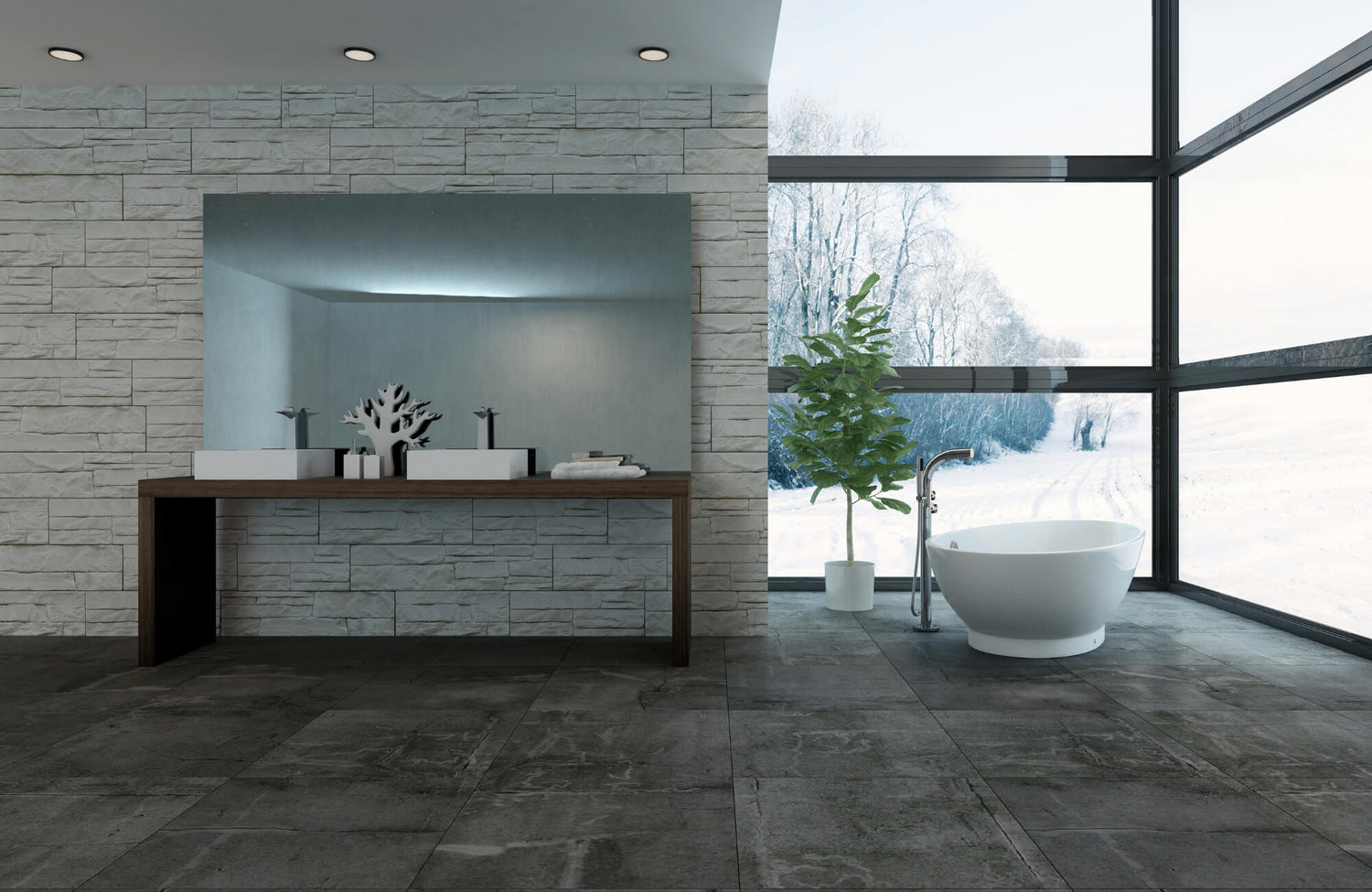
Raw textures often feature muted tones, think shades of slate, sand, ash, or chalk, that harmonize effortlessly with a broad range of design schemes. Edward Martin’s Sloane 24x24 Matte Porcelain Tile in Charcoal illustrates this balance above, with deep gray hues and subtle speckling that echo the organic qualities of stone while maintaining a modern edge. Palettes like these support biophilic principles by linking interiors to nature, all while offering a versatile backdrop for layering furniture, textiles, and artwork with warmth and sophistication.
Creating Seamless and Expansive Spaces
Large-format tiles and continuous surface treatments amplify the aesthetic of raw and refined finishes, minimizing grout lines to create uninterrupted planes of texture. This approach emphasizes clean geometry and spatial flow, particularly in open-plan living areas, hospitality settings, and busy commercial interiors. By extending the same surface across floors, walls, and countertops, designers achieve cohesion and visual expansion, blurring the boundary between architectural elements while reinforcing the minimalist ethos central to modern design.

Unparalleled Versatility in Application and Style
Building on their visual impact, these tiles also prove remarkably adaptable. From sleek lofts to cozy homes, they transition across styles and settings with ease, opening endless design possibilities.
From Industrial Chic to Scandinavian Simplicity
Textured porcelain, cementitious composites, and stone-look finishes allow designers to shift between bold, urban aesthetics and minimalist environments. For industrial-inspired schemes, matte gray tiles emulate raw concrete and exposed structural elements, while in Scandinavian interiors, pale, neutral tones and fine-grain textures evoke warmth, restraint, and light. This stylistic flexibility enables a single material category to address dramatically different design narratives without sacrificing cohesion.
A Perfect Match for Indoor Outdoor Living
Durable, frost-resistant, and slip-rated tiles bridge the gap between interior spaces and exterior landscapes. Large-format slabs extend living areas onto patios, terraces, or pool surrounds, creating a unified flow that supports contemporary indoor-outdoor living trends. Technical advancements such as rectified edges and UV-resistant pigments ensure longevity and dimensional stability, even under fluctuating weather conditions. This adaptability makes them a practical yet visually compelling choice for multifunctional environments.
Mixing and Matching for Unique Personalities
Modularity in surface materials gives homeowners and designers the freedom to personalize patterns, tones, and finishes to suit individual style. A good example is Edward Martin’s Sloane 12x24 Matte Porcelain Tile in Charcoal, whose elongated format pairs effortlessly with lighter marble looks or decorative accents to create striking but cohesive contrasts, as seen above. Combined with polished and honed textures or bold motifs set against subtle neutrals, materials like this enable layered compositions that balance harmony with individuality—an approach that reflects how technical innovation empowers expressive design.

The Practical and Long-Lasting Benefits
Beyond style and versatility, cementitious tiles shine in everyday performance. Their durability, simple upkeep, and sustainable qualities make them a practical foundation for long-term living.
Durability and Resistance for Busy Areas
Engineered surfaces such as porcelain and cementitious tiles are manufactured under high pressure and extreme heat, resulting in dense, non-porous structures that withstand heavy foot movement without warping or degrading. Their resistance to scratches, impact, and stains makes them especially suitable for lobbies, kitchens, and retail environments. Many products also achieve industry-standard slip-resistance ratings, ensuring both safety and performance in demanding applications.
Effortless Maintenance and Easy Cleaning
Unlike natural stone, which often requires periodic sealing and specialized cleaners, modern tile surfaces are designed for low upkeep. Their impervious finish resists water absorption, mold, and bacterial growth, making routine cleaning as simple as mopping with mild detergents. This ease of care not only reduces long-term maintenance costs but also preserves the material’s original appearance, ensuring spaces remain fresh and polished over time. To maintain that performance consistently, following the manufacturer’s care and maintenance guidelines is always the best way to achieve lasting results.
A Sustainable and Eco-Friendly Choice
Many manufacturers are adopting environmentally conscious practices, incorporating recycled content and low-VOC pigments into their production. The long lifecycle of durable tile materials minimizes the need for frequent replacement, reducing overall environmental impact. Additionally, their thermal mass properties can contribute to energy efficiency by stabilizing indoor temperatures, particularly in climates with significant heat variation. As sustainability becomes integral to design, these attributes make tile surfaces both a responsible and future-proof choice.

The Appeal of Texture and Tactile Experience
Practical benefits don’t come at the expense of sensory appeal. These tiles invite touch as much as admiration, adding warmth, authenticity, and subtle detail to any space.
Adding Warmth and Character to a Minimalist Room
Minimalist interiors often rely on clean lines, restrained palettes, and uncluttered layouts. Without texture, however, these spaces risk feeling stark or impersonal. Finishes such as honed stone, brushed porcelain, or wood-look tiles introduce subtle variation and tactile warmth, softening the aesthetic while preserving the minimalist ethos. This interplay of smooth and matte surfaces creates depth and visual movement, making restrained interiors feel more inviting and lived-in.
Creating a Foundation of Authenticity
Natural and nature-inspired textures communicate a sense of honesty in materials, reinforcing the value of authenticity in modern design. Whether replicating the grain of oak, the strata of limestone, or the raw character of cement, these surfaces convey a connection to craftsmanship and natural processes. Their irregularities and tonal shifts establish an organic foundation that balances technological precision with a grounded, human quality. This authenticity resonates across both residential and commercial environments, aligning with the growing emphasis on biophilic and sustainable design principles.
The Power of Subtlety in Design
Not all impactful textures rely on bold expression. Subtle finishes, such as a lightly textured matte glaze or faint linear striations, can influence how light interacts with a surface, adding nuance without overwhelming a scheme. As shown in the bathroom above, Edward Martin’s Adrian 7x8.25 Matte Porcelain Tile in Smoke demonstrates this effect, with its hexagonal form and soft gray tones catching light at shifting angles to create quiet depth without clutter. Details like these enhance shadow play, highlight architectural features, and support layered compositions, showing how understated materials can shape spatial experience in meaningful ways.

A Smart Investment for Lasting Value
When beauty, versatility, and performance come together, the result is lasting value. Cementitious tiles not only elevate interiors today but also strengthen a home’s future appeal.
Resale Value and Broad Market Appeal
High-quality tile installations are widely recognized as a value-adding feature in real estate. Potential buyers respond positively to the perception of durability, low maintenance, and design flexibility, making tiled interiors a strong selling point. Neutral palettes and natural textures, in particular, appeal across demographic groups, ensuring spaces resonate with a broad range of future occupants and helping to maximize resale potential.
A Timeless Look That Avoids Trends
Unlike materials tied to fleeting fashions, tiles modeled after stone, wood, or concrete maintain relevance year after year. Their understated elegance resists the rapid cycle of design trends, offering a stable aesthetic foundation that complements evolving décor. This timeless quality means homeowners can refresh paint, furnishings, or accents without needing to replace foundational surfaces, extending the practical life of their design investment.
Longevity That Outlasts Other Flooring Options
Tiles are engineered for performance under demanding conditions, resisting wear, water, and stains more effectively than alternatives like vinyl, laminate, or even natural wood. Featured above, Edward Martin’s Adrian 7x8.25 Matte Porcelain Tile in Almond reflects this resilience, combining a warm neutral surface with porcelain’s strength to ensure both beauty and longevity. When properly installed, durable materials like these help reduce replacement costs, minimize environmental impact, and retain their appeal for decades, making them one of the most reliable flooring investments available today.
A Defining Choice for Contemporary Spaces
The enduring popularity of cementitious tiles in modern design is no accident. They combine beauty with practical performance, offering versatility, durability, and low maintenance. Speaking of which, Edward Martin’s Augmented Reality (AR) Visualization Tool lets customers preview tile styles directly in their own rooms, ensuring the right aesthetic and fit before committing. To further support confident decisions, Edward Martin also provides tile samples, allowing homeowners to experience texture and color in person. Together, these tools transform inspiration into certainty, making tile selection both seamless and reliable.