Wooden flooring has long been loved for its timeless beauty and versatility, making it a popular option among homeowners. However, with so many options available, selecting the right type requires careful consideration of factors such as durability, aesthetics, budget, and sustainability.
In this article, we’ll explore the characteristics, benefits, and challenges of various wooden flooring types, from classic solid hardwood to eco-friendly bamboo. We'll also offer advice on how to match flooring options to your lifestyle, as well as introduce wood look tiles as a practical and stylish option for homeowners looking for durability without sacrificing appearance.

Solid Hardwood Flooring
Solid hardwood flooring is a traditional choice that exudes timeless elegance and durability. Made from a single piece of natural wood, species such as oak, maple, and walnut offer unmatched longevity and rich finishes that can elevate any interior. However, it can also be expensive and is susceptible to moisture damage, which requires careful maintenance.
Furthermore, its natural composition causes it to expand and contract with changes in humidity and temperature, making it unsuitable for areas with fluctuating conditions like basements or bathrooms. On the upside, solid hardwood can be refinished multiple times, preserving its beauty and extending its lifespan. This flooring type is ideal for homeowners who value a luxurious, high-end aesthetic that remains stunning for decades.

Engineered Wood Flooring
Engineered wood flooring combines the beauty of natural wood with enhanced stability and moisture resistance. It is constructed with a hardwood veneer on top, supported by multiple layers of high-quality plywood or fiberboard underneath. This layered structure provides added durability and reduces the risk of warping, making it a versatile and pet-friendly option for many households.
Additionally, engineered wood is well-suited for areas with radiant heating or moderate moisture exposure, such as kitchens and basements, thanks to its structural resilience. This flooring type is available in a variety of finishes and styles, making it easy to match both modern and traditional interiors. Although it may lack the full authenticity of solid hardwood, engineered wood provides a budget-friendly way to achieve a sophisticated and luxurious look.

Laminate Wood Flooring
Laminate wood flooring is a multi-layered synthetic option crafted to replicate the look of natural wood while offering greater durability and affordability. Its composition includes a dense fiberboard core for stability, a high-definition photographic layer for a realistic wood appearance, and a clear, protective topcoat that resists scratches and wear. This creative design ensures both aesthetic appeal and practical performance, making laminate a flexible option for many.
Its scratch-resistant surface is especially suitable for families with pets or children, ensuring long-lasting appeal in busy households. Its straightforward click-and-lock installation also makes it a favorite among DIY enthusiasts. Moreover, this flooring type resists fading from sunlight, making it an excellent option for spaces with large windows or bright natural light. Although it lacks the tactile warmth of genuine wood, its affordability and ease of upkeep make it particularly suited for rental properties or busy areas.

Bamboo Flooring
Bamboo flooring, crafted from fast-growing bamboo grass, is an eco-friendly option that offers modern appeal and moisture resistance. Its distinctive texture and durability make it versatile, fitting well in spaces like bedrooms and offices. However, it is more prone to scratching and offers fewer color options compared to traditional hardwoods. Strand-woven bamboo, a denser variation, provides better durability, making it suitable for moderately used areas such as living rooms or study spaces.
Bamboo's sustainability also stands out as a key advantage, as it regenerates much faster than hardwood species. For eco-conscious homeowners, this flooring is a stylish choice that seamlessly combines nature-inspired aesthetics with practical benefits for a greener home.

Reclaimed Wood Flooring
Reclaimed wood flooring adds rustic charm to interiors, providing a sustainable and character-rich option. Salvaged from sources like old buildings, barns, or furniture, it is an environmentally friendly way to introduce a vintage aesthetic to living spaces. Although it may present quality variations that demand careful selection, its aged patina and historical significance make it a standout choice for homeowners seeking unique and eco-conscious designs.
Furthermore, reclaimed wood works exceptionally well in spaces where individuality and character are key, such as home offices, dining rooms, or feature walls. Its weathered appearance not only tells a story but also enhances the artistic appeal of interiors. Additionally, this eco-friendly option adds depth and texture, making it a meaningful and stylish feature for any home.

Wood Look Tile Flooring
Porcelain wood look tiles offer a practical and stylish alternative to traditional wood flooring, combining the charm of natural wood with modern durability. These tiles are crafted to replicate the grain and texture of hardwood, making them a versatile choice for both contemporary and classic interiors. With a wide range of finishes available, they seamlessly fit into various design themes while providing a low-maintenance solution for busy households.
Durability
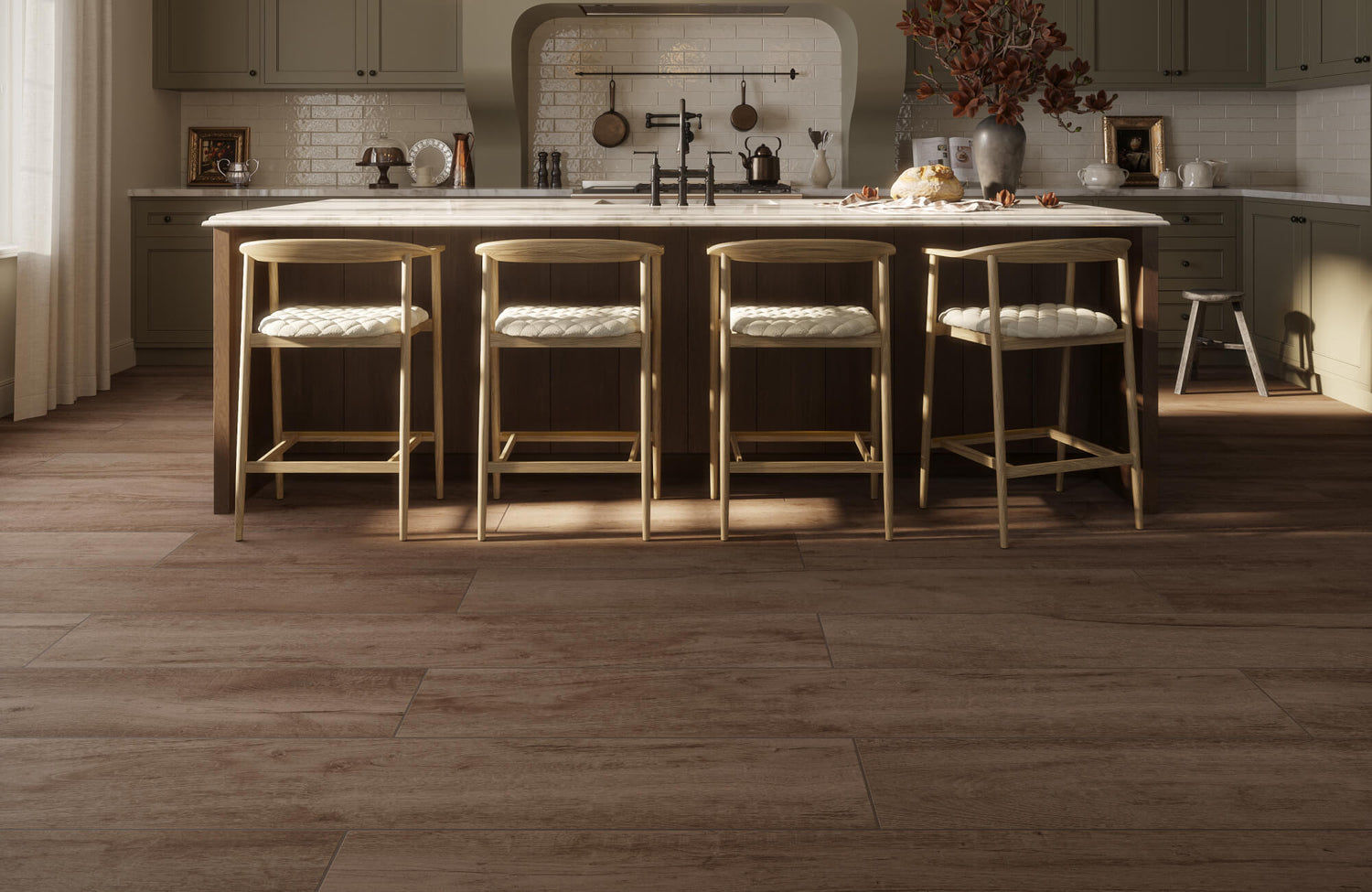
One of the most significant benefits of these porcelain planks is their exceptional durability. Resistant to water, stains, and scratches, they are perfect for high-moisture areas like kitchens, bathrooms, and outdoor patios. Edward Martin’s wood look tile collection, which includes Preston 8x48 Matte Porcelain Tile in White Oak shown above, for instance, is specifically engineered to eliminate the need for sealing, further reducing maintenance requirements. This feature, along with their easy-to-clean surface, ensures these tiles retain their beauty for years with minimal effort.
Water and Moisture Resistance
Unlike natural wood flooring, porcelain wood look tiles are highly resistant to water and humidity. This makes them an excellent choice for moisture-prone areas such as bathrooms, kitchens, laundry rooms, and even outdoor spaces. Hardwood and laminate can warp or swell when exposed to water, but porcelain tiles maintain their structure and appearance even in damp environments, offering greater long-term reliability. A perfect example is the Jameson 8x48 Matte Porcelain Tile in Latte, which captures the warm look of natural wood while providing the moisture resistance and durability needed for high-humidity areas.
Low Maintenance
Wood look porcelain tiles require significantly less upkeep compared to traditional wood flooring. Natural wood often needs refinishing, sealing, or specialized cleaning products to maintain its appearance, while porcelain tiles simply require routine sweeping and occasional mopping. Their non-porous surface also resists stains and odors, making them especially convenient for busy households with pets or children.
Modern manufacturing technology allows porcelain wood look tiles to replicate the intricate grain patterns, knots, and tonal variations found in real hardwood. They are available in a variety of plank sizes, colors, and finishes—from light Scandinavian-inspired tones to deep walnut hues. This versatility allows homeowners to achieve the warmth of wood in spaces where traditional hardwood would typically be unsuitable. Ceramic wood look tiles also offer a stylish alternative for areas where lighter use is expected, including walls. Edward Martin’s Zayne 12x36 Matte Ceramic Tile in Slat, for example, features a cool-toned fluted design with elongated grooves that add subtle texture and contemporary character to interiors. Its elongated format and matte finish help recreate the natural look of wood planks while maintaining the easy maintenance and visual flexibility that wood look tiles are known for. Although wood look tiles may have a similar upfront cost to some wood flooring options, their longevity and minimal maintenance often make them more cost-effective over time. Because porcelain does not require refinishing and is less prone to wear, homeowners can enjoy the look of wood for decades without the recurring maintenance expenses associated with traditional hardwood. If you want to see how the right wood look tile can transform your home, use our augmented reality (AR) tool to view different colors and finishes in real-time. It's a great way to test out different options and see how each tile choice affects your interior design before making a final decision. Choosing the right wooden flooring requires a careful balance between aesthetics, durability, and environmental impact. From the classic charm of solid hardwood to the eco-friendliness of reclaimed wood, each option provides distinct benefits that cater to a variety of styles and functional needs. Consider factors such as longevity, maintenance, and cost to make a decision that meets your personal preferences while also improving the design and value of your home. Furthermore, using sustainable materials ensures that your choice is both fashionable and environmentally responsible. For any inquiries or tailored advice, feel free to contact us! Our team is ready to assist you throughout the entire process of selecting and installing wood look tiles, helping you create a space that perfectly balances style and durability.Design Versatility
Long-Term Value
The Right Wooden Flooring