
)
)
)
)
)
)
)
)
Which Way Should A Rug Go In the Living Room?
Choosing how to position a rug in your living room may seem like a minor detail at first, but it can have a significant impact on how your space looks, feels, and functions. Whether your room is wide open or more compact, the right rug direction brings in comfort, ties everything together, and helps the space feel more natural and connected. If you’re not quite sure which way to turn your rug or how it should fit into your layout, we’ve got you covered.
Consider the Shape and Proportions of the Room
Before we consider style or color, we need to understand the structure of your living room. The room’s shape and size naturally guide us toward the most effective rug orientation, giving us a solid starting point for everything else.
Rectangular Rooms Call for Balance
In longer, rectangular living rooms, it’s essential for the rug placement to complement the room’s natural shape rather than compete with it. Ideally, the rug should align with the longest wall or follow the length of the space. This orientation emphasizes the room’s flow and reinforces its structure. When you place the rug lengthwise beneath your main seating arrangement, sofa and chairs, it not only anchors the furniture but also draws the eye through the room, creating a clear and organized layout.
What we want to avoid is a rug that divides the space awkwardly or appears to be floating without a clear role. By keeping the rug parallel to the room’s length, everything feels more intentional, pulled together, and visually balanced, especially if the room doubles as a walkway to other areas.
Square Rooms Benefit from Centering
In square or nearly square living rooms, the layout approach naturally shifts. Without a dominant visual direction, the rug becomes essential for creating balance. Placing it at the center of the space helps anchor the seating area and ties the furniture together, giving the room a more cohesive, well-composed feel.
A square or large round rug works especially well here, echoing the room’s shape and enhancing its symmetry. This centered placement also offers more flexibility with your furniture arrangement, allowing the space to flow naturally without needing to emphasize one direction over another.
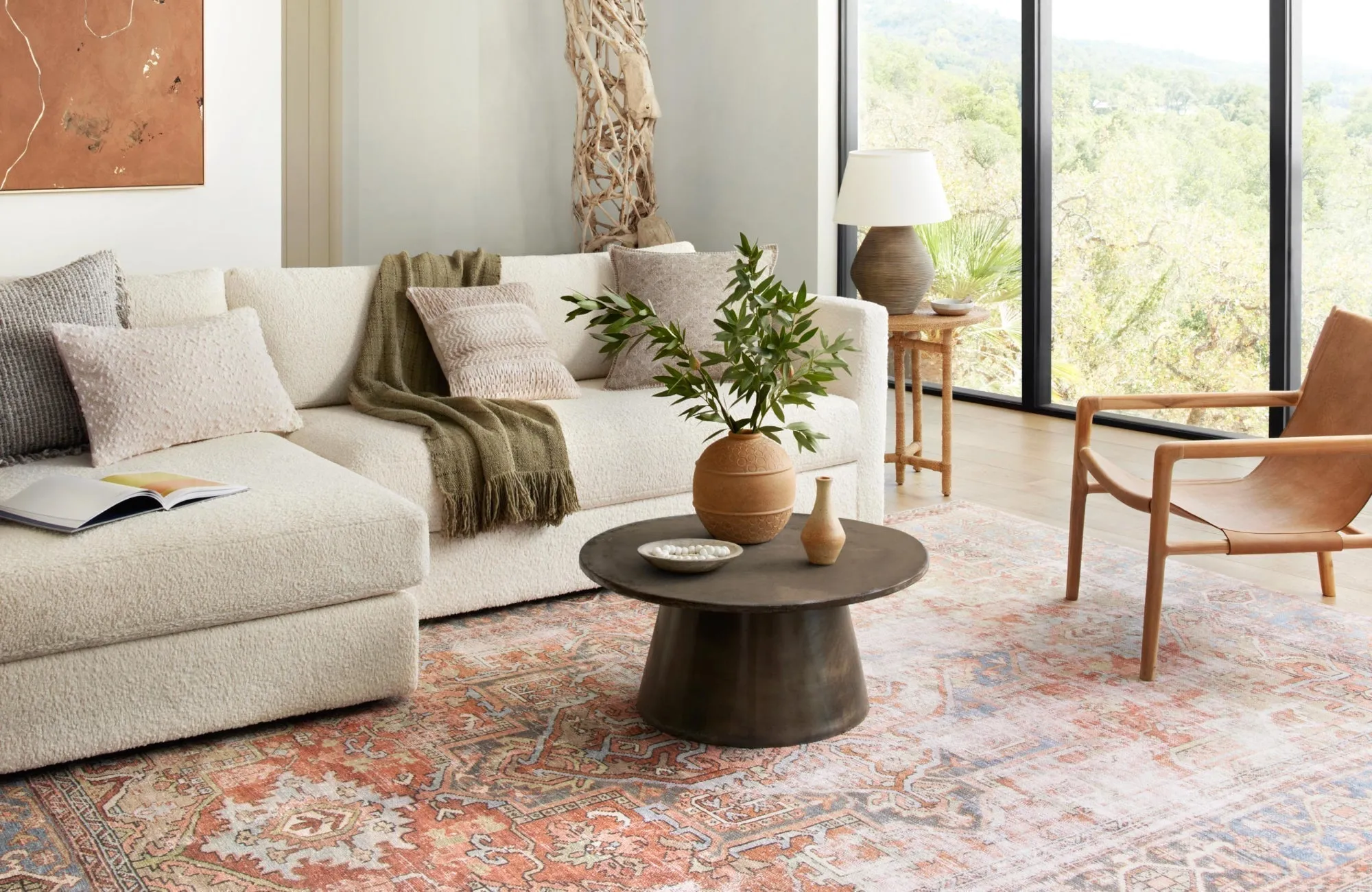
A great example of this approach is Edward Martin’s Pascal Polyester Face Rug in Spice / Cobalt, featured in the photo above. Its intricate design and rich, earthy tones bring subtle character to the space without overpowering it. Placed at the heart of the room beneath the coffee table and surrounding seating, it shows how the right rug can effortlessly ground a square layout and tie the entire room together.
Align the Rug with Your Main Furniture Setup
In most living rooms, the seating area is where everything comes together. It’s the spot for relaxing, gathering, and connecting. The rug should feel like part of the setup, grounding the space rather than sitting off to the side like it doesn’t belong.
Sofa and Chairs Define the Zone
If your living room features a traditional setup, flanked by one or two chairs, then your rug should follow the line of the sofa. Run it parallel to the sofa’s front edge and make sure it extends past both ends. Ideally, all the front legs of your seating pieces should sit on the rug. This creates a strong visual connection between your furniture and gives the room a polished, well-proportioned look.
What we’re doing here is defining the zone. Rather than letting furniture pieces feel scattered or disconnected, the rug acts like an invisible frame that ties everything together. It also brings softness and comfort to the area where you’ll spend the most time relaxing.
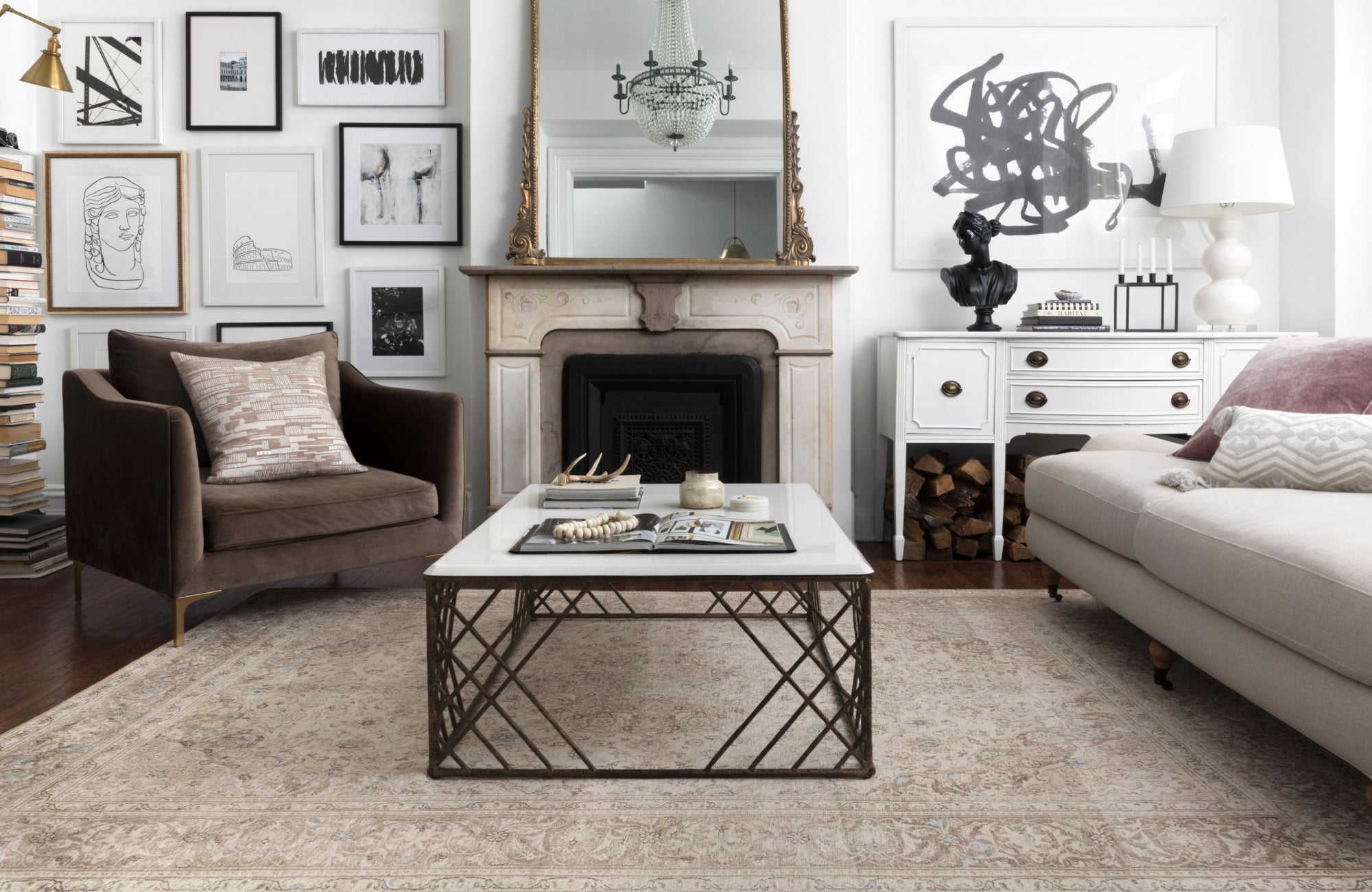
A great example of this is the setup shown in the photo above, featuring Edward Martin’s Pascal Polyester Face Rug in Chalk / Ash. Its neutral tones and classic pattern enhance the sense of symmetry, while its placement under both the sofa and chairs pulls the whole seating area into one cohesive arrangement. It’s a simple yet effective way to make the space feel grounded and thoughtfully composed.
Sectionals Have Their Own Rules
When it comes to sectionals, especially L-shaped or curved styles, rug placement calls for a bit more care. These larger seating setups naturally create their own zone, and the rug should work within that shape to bring everything together. It doesn’t have to be oversized, but it should be large enough to sit under the front legs of the entire sectional, along with any nearby chairs or tables.
Here, the aim is to create a sense of unity. A rug that’s too small can throw off the balance, making the sectional feel disconnected or overpowering. Alternatively, a rug that reflects the shape of the sectional sofa helps define the space and amplifies the cozy, tucked-in vibe that makes this type of seating so appealing. Even if your layout is a little unconventional, the right rug placement can also make the entire room feel purposeful, comfortable, and visually cohesive.
Look at Entry Points and Walkways
When deciding which way your rug should go, don’t overlook how people enter and move through the room. Aligning the rug with key entry points or pathways helps everything feel connected and prevents the layout from feeling disjointed or awkward.
Let the Rug Guide the Flow
Start by paying attention to the natural walking patterns in your living room, perhaps it’s the path from the entryway to the sofa, or the route leading from the living area to the kitchen. Ideally, your rug should follow that flow, either aligning with these paths or resting just beside them to keep movement feeling smooth and intuitive.
If a rug interrupts these routes, it can throw off the room’s rhythm and make the layout feel awkward. To avoid this, it’s best to leave about one to two feet of open floor space around busy walkways. This provides a clear, comfortable path for movement while still allowing the rug to remain an integrated part of the design.
Ultimately, think of your rug as a quiet guide; it gently shapes how the space is used, encouraging natural flow and gathering without ever feeling intrusive.
Give Entryways Room to Breathe
If your living room opens into other spaces, like a hallway, dining area, or front door, the rug’s orientation should support those transitions. Avoid placing the edge of the rug too close to the doorway, as that can make the space feel tight and uninviting.
Instead, try positioning the rug in a way that naturally draws the eye into the room, creating a subtle visual invitation. It should frame the entrance gracefully rather than cut it off. At the same time, pay attention to your furniture placement, avoid blocking or crowding these open walkways. This not only supports smooth movement but also makes the entire space feel more open and inviting.
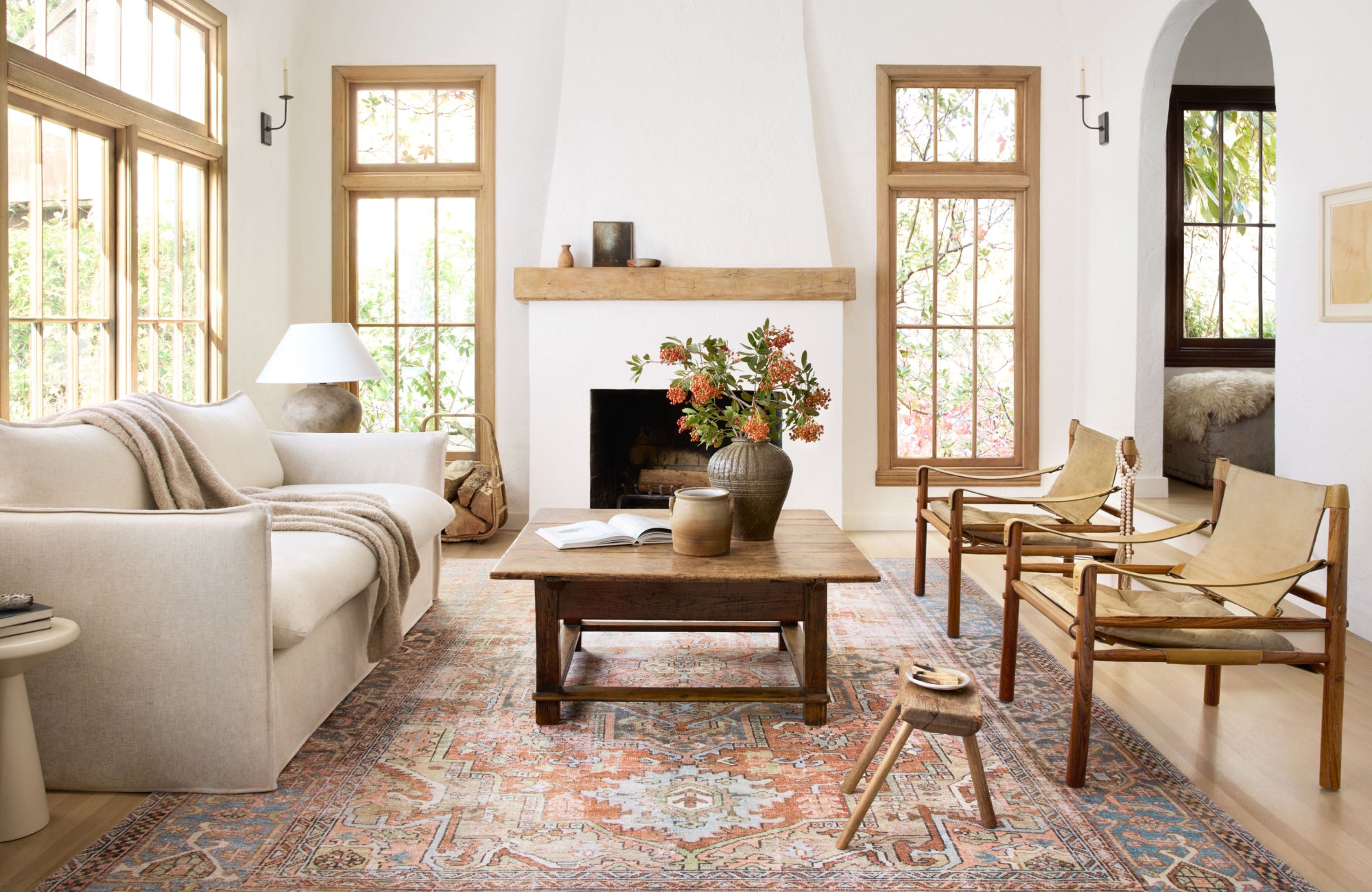
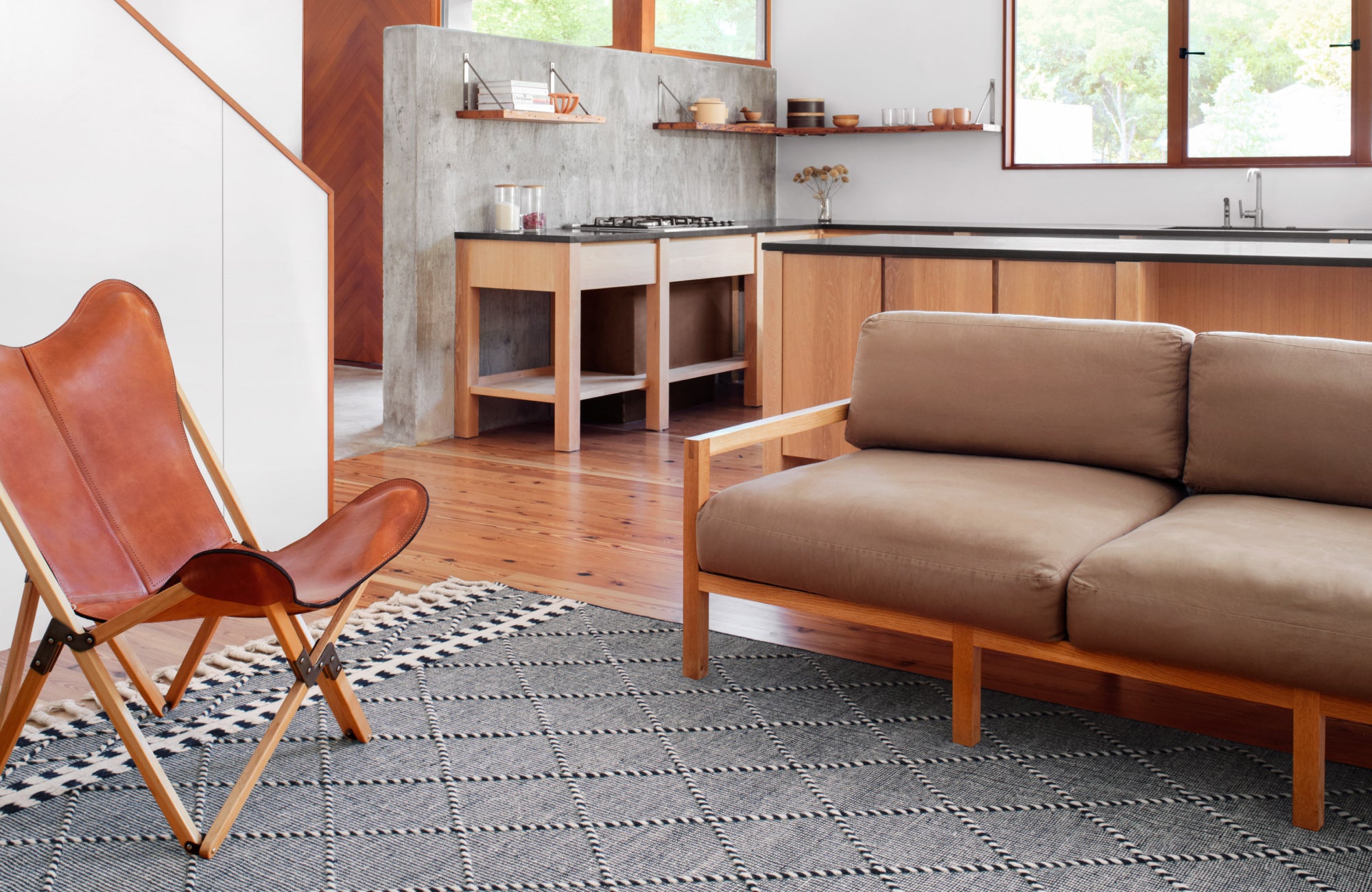
You can see this idea in action in the photo above, featuring Edward Martin’s Lafferty Wool Blend Rug in Indigo. Its placement leaves ample space around the entry and seating areas, allowing the rug to define the zone without disrupting the movement between rooms. It’s a great example of how thoughtful rug orientation enhances both function and flow.
Think About Visual Impact and Flow
The orientation of both the rug and its design can guide the eye, shift the room’s proportions, and either calm or energize the space. Whether you're aiming for symmetry, softness, or a bold statement, how you position your rug also plays a powerful role in setting the visual tone.
Direction Influences Perception
The way you orient your rug can significantly influence how a space feels. Placing it lengthwise can visually stretch a narrow room, making it appear longer and more open. On the other hand, turning the rug perpendicular to the room’s length can make the space feel wider and more grounded, creating a cozy, intimate vibe.
If your living room feels rigid or lacks warmth, simply adjusting the rug’s direction can soften the layout and restore visual balance. It’s a subtle design move that can also shift the mood of the entire room without changing anything else.
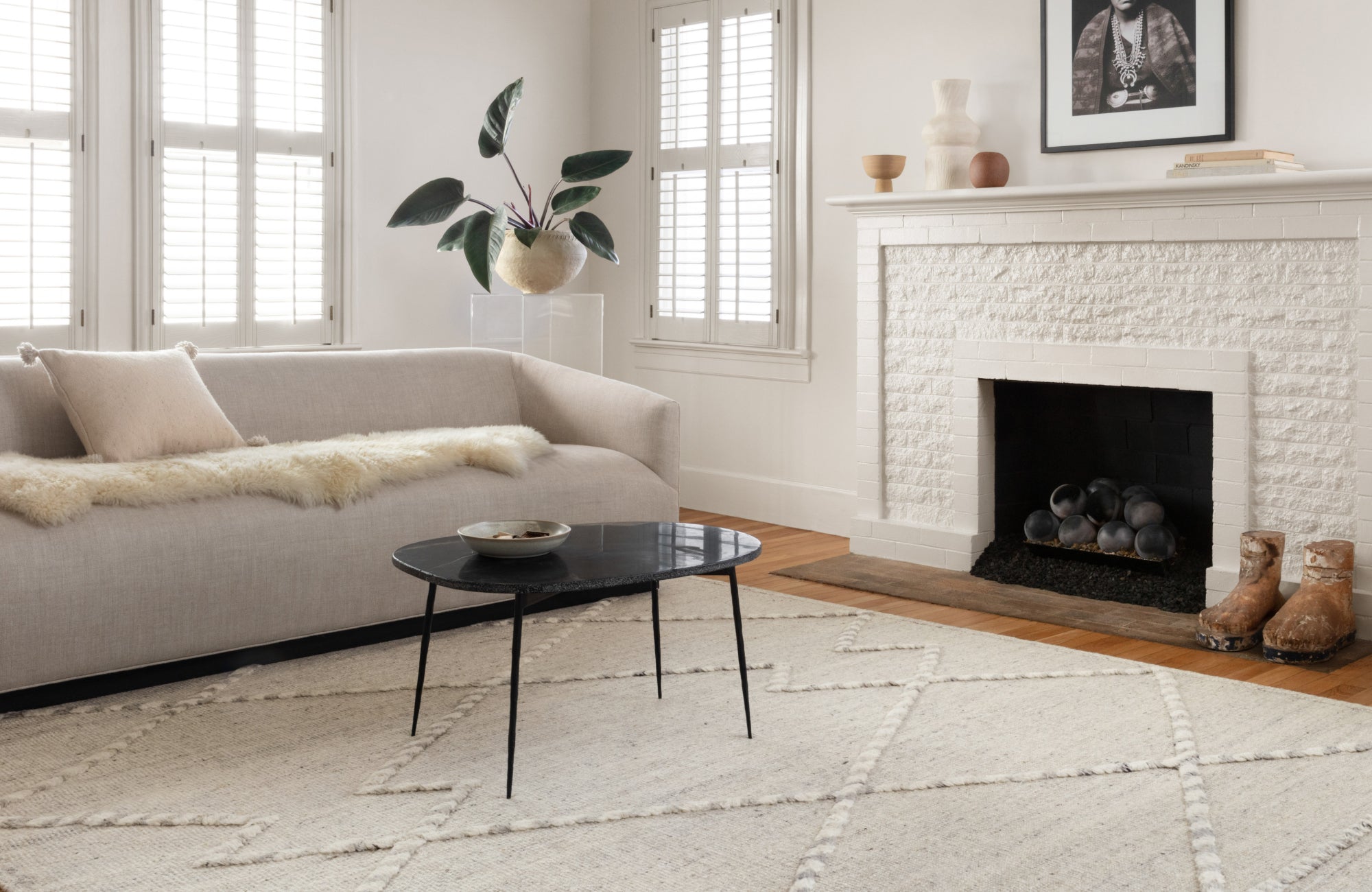
One example of this is the Micah Wool Blend Rug in Cream / Dove by Edward Martin, as displayed in the photo above. Its soft texture and subtle pattern add a relaxed, welcoming feel, while its lengthwise placement opens up the room and highlights its clean, modern lines. This small directional choice quietly transforms the room’s proportions and enhances its overall flow.
Patterns Should Be Intentional
When your rug features bold patterns, stripes, geometric designs, or ornate motifs, the direction you place it becomes even more important. If the pattern doesn’t align with the layout of your furniture, it can feel off, drawing attention in the wrong direction and throwing off the room’s flow.
To create a cohesive look, try to align the pattern with your main seating arrangement. For example, if your rug has stripes, let them run in the same direction as your sofa. If there’s a medallion or central design, center it beneath your coffee table or main seating area so it feels intentional. Ultimately, the pattern should complement the space, not compete with it, helping the room feel balanced, unified, and thoughtfully styled.
Match Rug Orientation with Lighting and Windows
Placing a rug isn’t just about covering the floor, it’s also about how it interacts with the light in your space. The way natural light hits the rug can either bring out its colors and textures or make it appear muted, depending on its relation with the windows.
Let the Light Lead
Pay attention to where natural sunlight enters your living room, this should guide how you position your rug. When light flows in from large windows along one wall, placing your rug in the same direction can make a big difference. It allows the light to move naturally through the space, enhancing the rug’s texture and bringing out its full depth of color.
Working with natural light also helps avoid harsh shadows or uneven highlights, especially on patterned rugs. Lighter styles tend to reflect sunlight, adding a soft, airy glow, while darker ones absorb it, creating a grounded, cozy atmosphere.
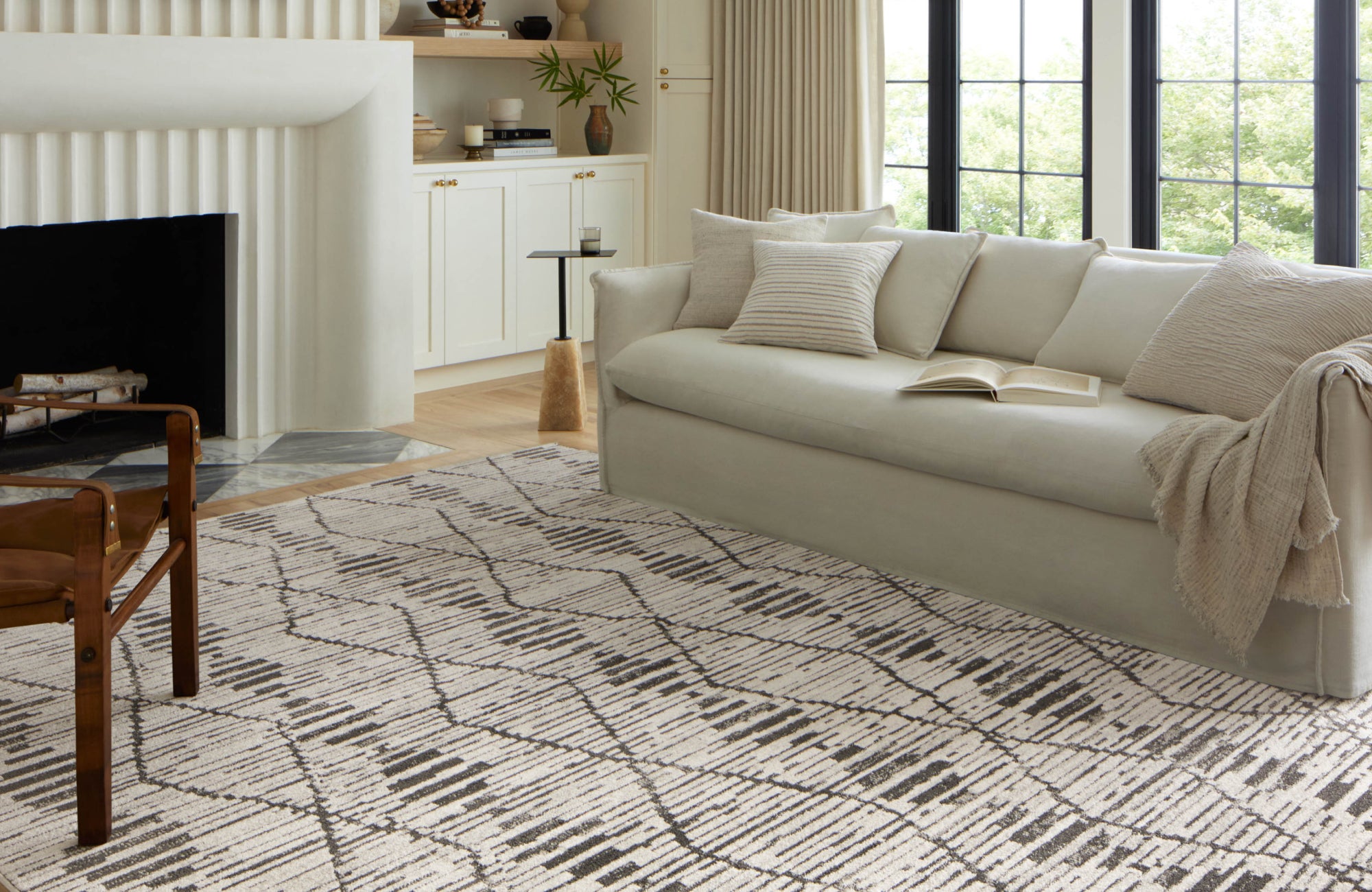
You can see this effect in Edward Martin’s Liddy Polyester Pile Rug in Graphite / Platinum, pictured above. Its placement runs with the light from the windows, allowing the sun to highlight its texture and modern pattern. The result is a space that feels bright, balanced, and effortlessly pulled together.
Consider Window-Focused Layouts
If your living room features a standout window or glass doors with a beautiful view, it’s worth orienting the rug in a way that complements and enhances that focal point. For instance, placing the rug perpendicular to a wide window can naturally draw the eye outward, creating a sense of depth and making the entire space feel more expansive.
This approach also works well with minimalist furniture and light, airy curtains, allowing the view to become an integral part of the room’s design. Instead of feeling like a backdrop, the window becomes a visual extension of the space. Thoughtful rug placement also helps frame that view in a subtle, cohesive way, tying the indoors to the outdoors without overwhelming the layout.
Experiment with Style and Layering
Not every living room needs to follow a traditional setup. If you enjoy expressing creativity through design, rug orientation gives you the freedom to play. With a few bold choices, you can reimagine the space in fresh, unexpected ways.
Angled Rugs Add Energy
Turning a rug slightly, not diagonally across the entire room, but just enough, can introduce a sense of movement and casual charm. This approach works especially well in eclectic, boho, or transitional spaces where mixing textures and styles feels natural.
The key is to keep the angle subtle enough that your main furniture still feels anchored. You’re not aiming for disorder, but for a touch of visual rhythm. A slightly angled rug can also make the room feel more approachable and full of character.
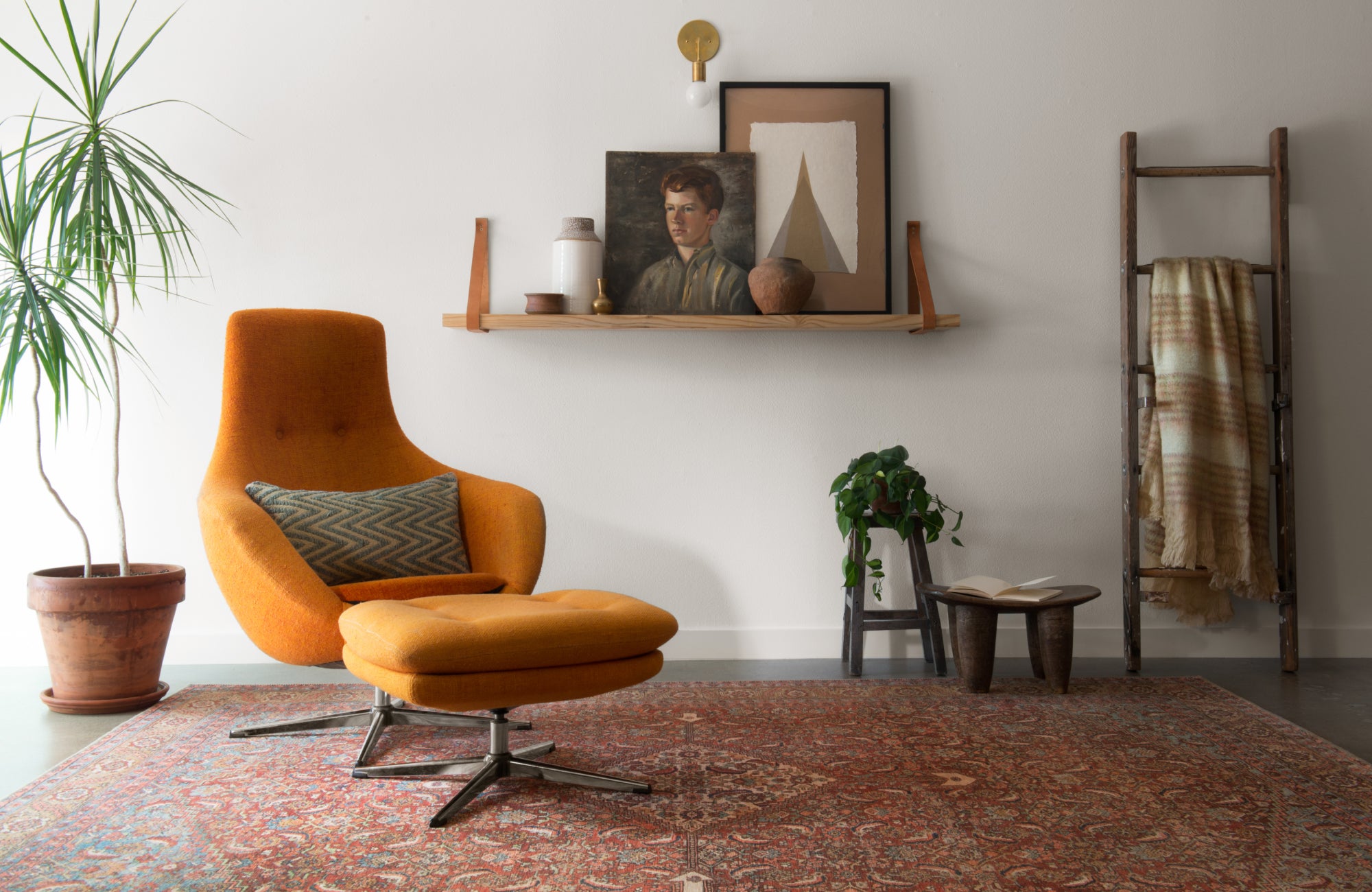
You can see this idea brought to life with the Pascal Polyester Face Rug in Brick / Multi, featured in the photo above. Its angled placement adds just the right amount of playfulness while still tying together the surrounding furniture and decor. The result is a space that feels curated, comfortable, and full of personality.
Layering Brings Texture and Warmth
Layering rugs is a great way to add both style and function to your space. If you have a favorite patterned rug that’s too small for the room, don’t count it out; try placing it over a larger, neutral rug instead. This approach gives you the coverage you need while keeping your statement piece front and center.
It also opens up the opportunity to play with direction. You can position the base rug in line with your furniture and angle the top rug slightly for a bit of contrast. The result is a layered look that adds depth, texture, and warmth, especially welcome during the cooler months.
Choosing the Right Rug Direction for a Cohesive Space
By the time you’re deciding which way your rug should go, you’ve likely chosen the color, material, and style, but orientation is what makes it all work in the space. It’s not just about filling space, but also about shaping how the room works, feels, and flows. The right orientation defines zones, guides the eye, and gives your living room a sense of purpose.
If you’re unsure where to start or want a second opinion, we’re here to help. Contact us for personalized advice or schedule a complimentary design consultation. We’ll help you find the perfect rug direction that fits both your space and your style!
Follow us on Instagram
@EDWARD.MARTIN
)
)
)
)
)
)
)
)
)
)
)
)
)
)
)
)