Tile that looks like wood combines the warmth of natural grain with the durability of porcelain, making it a thoughtful choice for many areas of the home. It delivers the character of real wood while withstanding moisture, scratches, and everyday wear that often challenge traditional hardwood. When you understand where this material performs best, you can plan each room with confidence and choose options that feel both practical and inviting. In this article, we’ll look at how wood-look tile supports daily living across various spaces and the advantages it can bring to your home.

Kitchen Spaces
Wood-looking tile is well-suited for kitchens because it remains dependable through everyday cooking, cleaning, and family activity. It offers the warmth of wood while resisting moisture and wear, helping you create a welcoming kitchen that performs reliably over time.
Supporting Daily Kitchen Activity
Kitchens support many everyday tasks, so the flooring needs to stay dependable under constant movement. Tile like hardwood resists dents and scratches that can appear on softer surfaces, giving you confidence as you work around busy prep zones. If you prefer more stability near the sink or stove, textured finishes can offer added grip in areas where spills are likely. These subtle textures also contribute to the room’s visual depth, helping you maintain a comfortable and practical kitchen environment.
Enhancing Open Concept Layouts
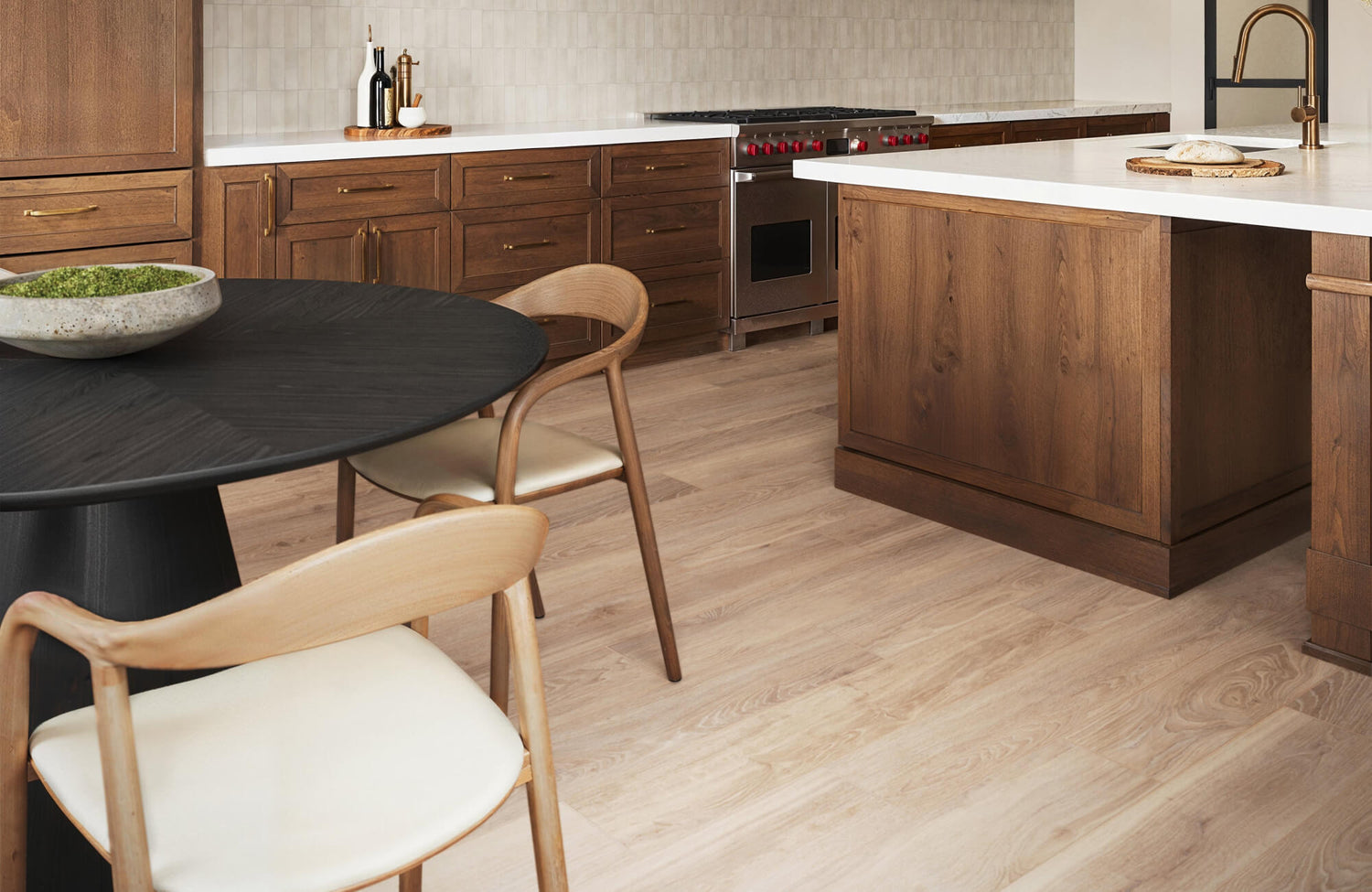
In open-layout homes, you often want the kitchen to feel connected to the surrounding spaces rather than isolated. Wood-looking tile supports this by creating a continuous surface that links the kitchen with nearby dining or lounge areas, allowing the eye to move comfortably across the room. You can see how this works in the photo featured above, where the warm tone of Edward Martin’s Jameson 8x48 Matte Porcelain Tile in Camel reinforces a unified, open feel across the entire space.
Consistent flooring also helps the room appear more expansive, especially when tile sizes are chosen to match the scale of each area. Longer planks suit wide, open rooms, while shorter lengths work well in compact kitchens. With thoughtful planning, you can achieve a layout where each zone transitions naturally into the next.
Pairing With Cabinet Colors
Your flooring and cabinetry work together to shape the entire feel of the kitchen, so choosing colors that complement each other is important. Wood-looking tile offers flexibility, ranging from pale oak shades to deep walnut hues. Light cabinets often pair well with mid-tone tiles for a clean, balanced look, while darker cabinetry can feel more inviting when matched with warm, honey-colored planks. If your cabinets are bold or colorful, consider tiles with subtle grain patterns that support the design without competing for attention. Paying attention to undertones further helps these combinations feel cohesive, and selecting a grout color close to the plank shade keeps the overall look seamless.

Bathrooms
Bathrooms require materials that can withstand moisture while still contributing to a warm, inviting atmosphere. Wood-look tile offers the appearance of natural grain with dependable water resistance, making it a practical choice for a wide range of bathroom styles.
Flooring for Wet Zones
Bathroom floors are frequently exposed to water, especially around tubs and showers, so the surface needs stability. Hardwood look tile avoids the warping that real wood can experience, and slip-resistant finishes offer added security in wet areas without feeling harsh underfoot. Because the tile does not absorb moisture or stains, cleaning stays simple, and the surface maintains its appearance over time. With consistent care, you can enjoy a comfortable bathroom floor without worrying about ongoing maintenance.
Creating Spa-Inspired Designs
Many people want their bathrooms to feel calm, and wood-look tile supports that goal by bringing a natural, relaxing atmosphere into the space. When paired with stone accents, gentle w, or simple fixtures, it helps to create a spa-inspired environment. Lighter tones can brighten the room, while deeper shades offer a more grounded feel. The grain patterns add a nature-inspired touch without the concerns of real wood, allowing you to create a soothing retreat that’s easy to maintain.
Extending Wood Look Into Shower Walls
Extending wood-look tile onto shower walls creates a cohesive, visually elevated design. Plank-shaped tiles naturally draw the eye upward, making compact showers feel more spacious. You can see this effect in the photo displayed above, where the vertical installation of Edward Martin’s Zayne 12x36 Matte Ceramic Tile in Slat adds height and definition to the shower area. Using larger formats also reduces grout lines, creating a cleaner look while making the walls easier to maintain. If the bathroom floor already features wood-look tile, continuing the material into the shower strengthens the overall design and makes the space feel intentional and well-coordinated.

Living Areas
Living rooms and family rooms require flooring that can handle everyday activity while still feeling comfortable and welcoming. Hardwood look tile offers the warmth of hardwood with dependable durability, helping these spaces stay attractive and low-maintenance over time.
Supporting Heavy Furniture Placement
Sofas, media consoles, and bookshelves can leave marks on softer flooring, but hardwood look tile holds its shape under the weight of furniture. You can see this in the photo featured above, where the warm tone of Edward Martin’s Preston 8x48 Matte Porcelain Tile in Pine supports a full living room layout without any visible surface compression. This makes it a dependable choice if you enjoy rearranging your living space, since the surface maintains a consistent appearance over time. Using felt pads or low-profile rugs can further protect both the tile and your furniture, keeping the room stable while preserving a clean, natural look.
Creating a Continuous Indoor Outdoor Feel
If your living area opens to a patio or balcony, hardwood look tile can help create a seamless connection between the two. Using the same material indoors and outdoors visually extends the space, making it feel more open and inviting, especially when hosting. Ensure to choose exterior-rated tile for outdoor areas so the surface performs well in varying conditions. With thoughtful planning, you can achieve a home that feels naturally connected to its surroundings.
Improving Temperature Control With Radiant Heat
Hardwood look tile works seamlessly with radiant heating systems, helping living areas feel warm and comfortable throughout the day. The tile conducts heat evenly, reducing the need to rely entirely on forced air and making a noticeable difference in cooler climates. Because it stays stable as temperatures shift, the surface keeps its appearance and feel over time. With radiant heat, you can enjoy added comfort while still maintaining the style you want.

Laundry and Mudrooms
Laundry rooms and mudrooms require flooring that can handle moisture, dirt, and constant activity without losing its appearance. Tiles that look like wood can provide that reliability while giving these hardworking spaces a clean, cohesive look that feels more polished than purely utilitarian.
Handling Water Spills and Appliance Vibrations
Washing machines and utility sinks can create occasional spills, and tile helps prevent moisture from penetrating the floor. In the photo displayed above, the warm tone of Edward Martin’s Jameson 8x48 Matte Porcelain Tile in Camel provides a stable, water-resistant foundation that holds up well around appliances. Tiles that look like wood remain consistent even if a machine leaks or vibrates during a cycle, reducing the risk of long-term damage and allowing you to focus on the task at hand. For added peace of mind, sealing the grout near sinks and appliances can further help prevent staining and make upkeep easier.
Managing Dirt From Outdoor Entry Points
Mudrooms naturally collect dirt, sand, and debris from shoes, pets, and outdoor gear, so the flooring needs to be easy to maintain. Tiles that look like wood make cleanup easy, allowing you to sweep or mop without concern for damaging the surface. Textured options can also help mask minor debris until you have time to clean, keeping the room looking orderly. Because the tile resists wear from grit and everyday use, the floor maintains a consistent appearance over time.
Coordinating With Built-Ins
Many laundry rooms and mudrooms include built-in benches, cubbies, or storage cabinets. Wood-look tile supports these features by providing a neutral foundation that complements different wood stains and paint colors. Whether your built-ins are light and streamlined or more rustic, the tile helps maintain a cohesive look. Choosing colors that match or contrast with the cabinetry can enhance the room’s design, making it feel both functional and visually appealing.

Outdoor and Semi-Outdoor Areas
Outdoor kitchens, patios, balconies, and sunrooms require flooring that can handle shifting weather conditions without losing its appearance. Wood-looking porcelain tile gives you the appearance of real wood while delivering the durability for outdoors, helping interior and exterior spaces feel more connected.
Improving Weather Resilience
Exterior-rated wood-looking tile is built to withstand sun, rain, and seasonal changes with ease. It stays stable through freeze-thaw cycles, making it reliable in both warm and cold climates. Unlike real wood, it resists fading when exposed to direct sunlight, helping your outdoor spaces maintain a consistent look over time. By choosing tile specifically designed for exterior use, you can trust it to stay durable across a wide range of weather conditions.
Coordinating With Natural Landscape Elements
Outdoor spaces often feature plants, stone, and metal elements, and wood-looking tile complements them naturally through its grain patterns. Lighter options, such as Preston 8x48 Matte Porcelain Tile in Poplar, pair nicely with modern patios that incorporate concrete or gravel. In contrast, darker shades work well alongside lush greenery or shaded areas. When the flooring aligns with the surrounding landscape, the space feels more intentional and expressive of your style. The result is an outdoor setting that feels connected to its environment.
Creating Slip-Resistant Surfaces
Safety also matters in outdoor areas, especially where surfaces may get wet. Choosing tiles with outdoor-rated textures helps maintain traction during rainy weather or after watering plants. These subtle surface variations enhance stability without changing the overall look. When selected thoughtfully, wood-looking tile offers a secure walking surface while preserving the natural appearance you want.
Choosing the Right Rooms for Wood Look Tile
Tiles that look like wood are best used for rooms that require both warmth and durability, such as kitchens, bathrooms, living areas, basements, and even outdoor spaces. Their ability to withstand moisture, daily use, and changing conditions makes them a practical fit in places where real wood may struggle. By considering how each room functions and the atmosphere you want to create, you can confidently identify where this material will perform at its best. If you’d like to explore how different styles look in your space, try using our AR tool for a real-time preview, or contact us for guidance as you plan your project.