Selecting the right rug size is one of the most impactful choices you can make in a room, because the rug acts as both a visual anchor and a functional foundation. The right dimensions can instantly enhance balance, improve flow, and create a sense of purpose in any space.
As you explore the guidelines behind rug sizing, you begin to see that these dimensions are far from arbitrary. They are shaped by manufacturing realities, architectural layouts, and long-standing design principles, all of which work together to help you create rooms that feel polished and inviting. With this knowledge, choosing the perfect rug becomes less of a guess and more of a strategic, enjoyable part of shaping your space.

Why Standard Rug Sizes Exist
Standard rug sizes exist not only to make shopping easier but also to ensure that most rooms can be furnished with comfort, balance, and efficiency. These familiar dimensions grew out of practical manufacturing limitations, where high-speed looms and standardized backing materials naturally produced rugs in predictable increments, whether plush wools, performance blends, or natural textures like sisal. By keeping to these established sizes, manufacturers reduce waste, streamline production, and maintain affordability; advantages that ultimately help you find a rug that fits your space without the need for costly customization. At the same time, these dimensions conveniently align with common room proportions, making it easier for you to create layouts that feel intentional and cohesive.
Beyond production efficiency, standardization also reflects deeper architectural and cultural influences. Rectangular rugs harmonize with the right-angled structure of most spaces, making them ideal for grounding seating areas, dining arrangements, and pathways. Moreover, today’s dimensions have roots in centuries of global rug-making, where traditional measurements from regions like Persia, Turkey, and India were later converted and adapted for modern retail. This blend of old and new explains why handmade rugs may feature slight irregularities such as subtle reminders of their artisanal origins. When you consider these factors while planning your layout, you can select a rug size that not only enhances visual balance but also honors the craftsmanship behind the piece.

Aesthetic Value and Timeless Appeal
Standard rug sizes don’t just make shopping easier; they also support visual balance in your space. By following proportions that naturally feel harmonious, these dimensions help you create rooms that look cohesive, grounded, and timeless.
Visual Rhythm and Scale
Standard rug dimensions are built around aesthetic principles such as the Rule of Thirds and proportional balance. These ratios create a natural rhythm in a room, ensuring the rug feels intentionally placed rather than overwhelming. By allowing an even perimeter of exposed flooring, often around 18–24 inches, you maintain a clean architectural reveal that enhances the shape of the room instead of mimicking wall-to-wall carpeting.
When you choose a rug based on these visual guidelines, the whole space feels more structured and inviting. If your ceilings run high or your room feels a bit lofty, selecting a larger rug like a 9′ × 12′ can help anchor the furnishings and restore a sense of scale, making the room feel more cohesive. This is especially true with pattern-forward pieces such as our Hutchinson Polyester Face Rug in Sage / Graphite, seen in the image above, whose olive green and earthy beige, with dark gray and golden yellow accents, distribute color evenly enough to ground a room without overwhelming it.
Color Distribution
The surface area of a rug plays a major role in how patterns and colors are perceived. Traditional designs with medallions, borders, or detailed motifs need enough room to display their full artwork. When these patterns are compressed into smaller spaces, they can appear crowded or lose their intended impact, which is why larger standardized sizes are the norm for richly patterned rugs.
By choosing a rug size that allows the design to unfold naturally, you let its colors land softly and its details shine without overwhelming your room. If your rug features intricate patterns or strong contrasts, sizing up, perhaps to something like a 9′ × 12′, gives the design the breathing room it needs to elevate the entire space.
Recurring Layout Templates
Common room layouts consistently pair well with standard rug sizes, which is why these dimensions have become so dependable. Whether you’re arranging an L-shaped sectional around a coffee table or centering your bed along the longest wall, sizes like 8′ × 10′ or 9′ × 12′ are designed to support the spacing and proportions these templates require. Because these pairings work reliably, manufacturers continue producing rugs that align with these familiar layouts.
As you plan your space, experimenting with digital mockups or even simple floor cutouts can also help you visualize how these standard sizes interact with your furniture. This lets you see how a particular rug strengthens the layout you prefer, creating a smoother, more confident design process.

How Rug Sizes Interact With Furniture
Rug sizes play a powerful role in how your furniture feels anchored and organized within a room. By choosing dimensions that support your seating, beds, or dining arrangements, you create zones that feel intentional, balanced, and comfortable.
Sofa
The width of your sofa naturally guides the size of the rug you need to create a cohesive seating area. Since most sofas range from 72 to 96 inches wide, an 8′ × 10′ rug usually provides just enough room for a front-legs-on placement that feels stable without overwhelming the space. If you prefer a fuller, more grounded look, a 9′ × 12′ rug gives you the space to place the entire sofa on the rug while still maintaining clean margins on either side.
A great example of this is the layout shown above, where a generously sized rug helps anchor the sofa and soften the room’s overall palette. A piece like our Georgette Polyester Pile Rug in Desert / Multi, featuring a blend of clay, sand, and muted earth hues, naturally complements light upholstery and layered neutrals, tying the entire seating area together while maintaining visual warmth. Choosing a rug that extends at least 16 inches wider than your sofa also helps visually unite your seating elements. When your furniture and rug work together in scale, the whole area feels more welcoming and thoughtfully arranged.
Bed
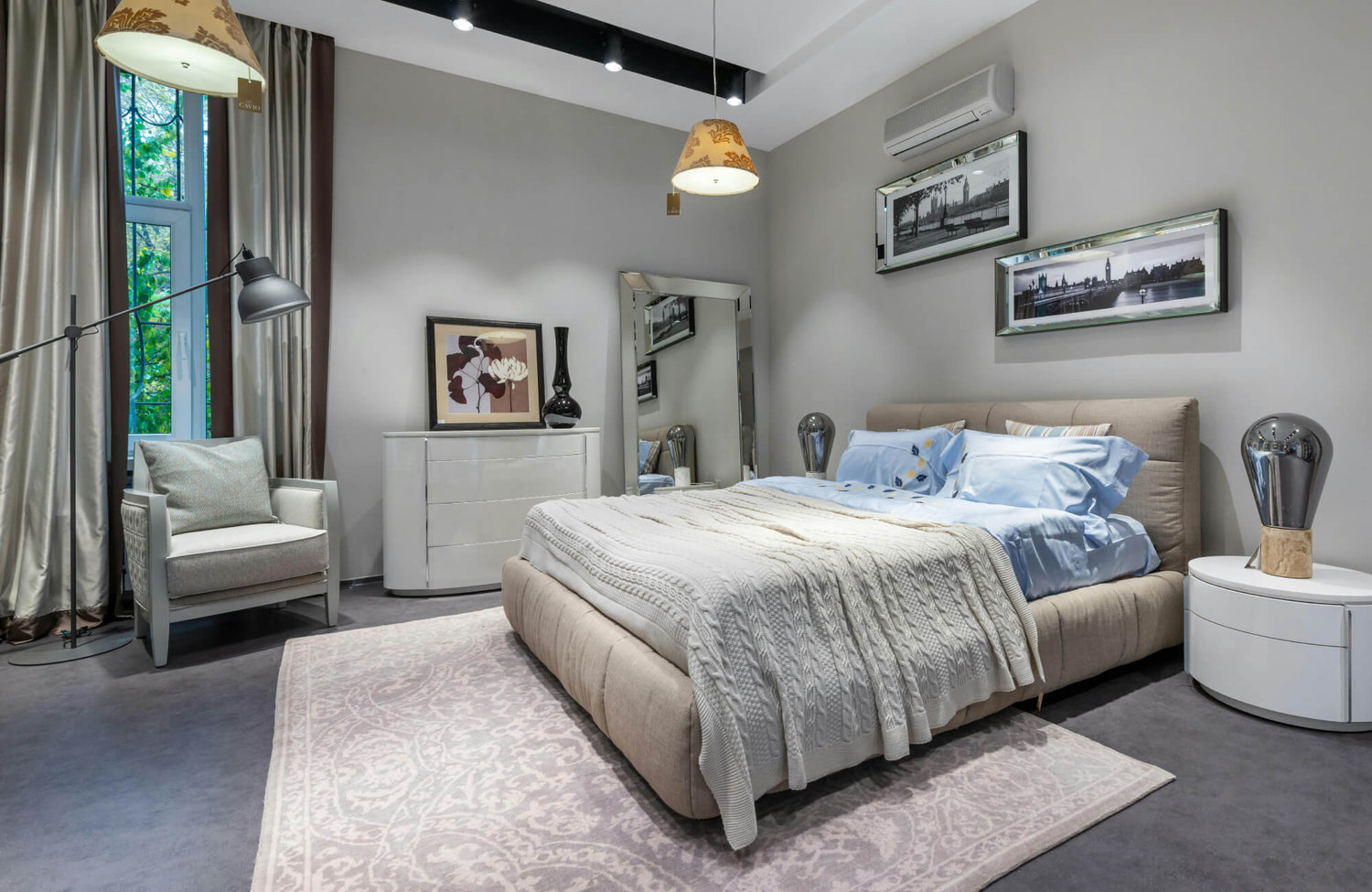
Because Queen and King beds occupy such a dominant space in the bedroom, the rug beneath them must support both symmetry and comfort. Standard sizes like 8′ × 10′ and 9′ × 12′ provide generous fabric around the sides and foot of the bed, creating soft landings and preventing the rug from looking undersized. These dimensions also enhance balance, making the bed feel centered rather than floating awkwardly on the floor.
A rug such as our Marcela Cotton Blend Rug in Lake / Spice, with its modern tonal palette of light beige and gray, softened with subtle green undertones and faint terracotta red, works especially well in these larger sizes. Its palette adds depth without overpowering the room, helping anchor the bed while bringing a sense of calm, layered color to the space. Additionally, allowing 18 to 24 inches of rug to extend beyond the bed frame gives the room a finished, harmonious appearance. This extra fabric not only adds comfort underfoot but also frames the bed in a way that instantly elevates the overall design.
Dining Table
Dining areas demand rugs that can accommodate both the table and chairs throughout their full range of movement. When chairs are pulled back, all four legs should still rest comfortably on the rug to avoid wobbling and protect your floors. This is why a 9′ × 12′ rug is often considered the starting point for six- to eight-person tables; it provides the necessary clearance without feeling cramped. For spaces that need both durability and a balanced, grounded palette, consider incorporating a piece like our McGowan Polyester & Polypropylene Pile Rug in Ash / Multi. Its canvas of beige and gray hues with subtle earthy red accents pairs well with a wide range of dining finishes and offers a sturdy foundation that stands up to daily movement around the table.
To create a dining layout that flows effortlessly, choose a rug that extends at least 30 inches beyond each edge of the table. This extra space allows chairs to glide smoothly and ensures the entire dining set feels unified and well-proportioned within the room.

Where Standard Sizes Work Best
Standard rug sizes shine in different types of rooms, helping you strike the right balance between coverage, proportion, and flexibility. Depending on how you use the space, a medium, large, or narrow rug may be the most effective choice.
Medium Rugs
When you’re working with a smaller or multifunctional living room, medium-sized rugs such as 6′ × 9′ or 8′ × 10′ offer the versatility you need. These dimensions help you define a seating zone without overwhelming the entire floor, allowing the room to breathe. Because your furniture isn’t locked into a rigid layout, you also gain the freedom to adjust pieces as your needs evolve.
For rooms that benefit from soft neutrals and understated depth, incorporating a rug like our Bowie Wool Blend Rug in Sand / Graphite can create just the right balance. Its mix of earthy, neutral base with fine brown lines provides subtle contrast while still keeping the space open and adaptable, an ideal match for medium rug sizes that shape a room without dominating it. Allowing just the front legs of your seating to rest on the rug also keeps the arrangement visually connected while maintaining an appealing perimeter of exposed flooring. This approach preserves the room’s openness and prevents the rug from feeling oversized or restrictive.
Large Rugs
In open-concept layouts, larger rugs such as 9′ × 12′ or 10′ × 14′ play an essential role in grounding sprawling spaces. Their generous scale creates a unified visual field that ties seating or dining areas together, ensuring the room feels cohesive instead of fragmented. The right large rug also improves circulation, making transitions between zones feel smooth and intentional.
By keeping a 12–18 inch architectural reveal around the rug, you maintain the airy qualities of an open-plan room while still creating clearly defined functional areas. This subtle border helps the rug enhance the layout rather than dominate it.
Narrow and Long Rugs
Transitional areas like hallways, entryways, and stair landings benefit immensely from narrow, elongated rugs. Runners, often around 2′ × 8′ or 3′ × 10′, naturally guide movement and visually connect one area to another. Their slim shape helps soften hard surfaces, absorb sound, and bring warmth to otherwise utilitarian passages.
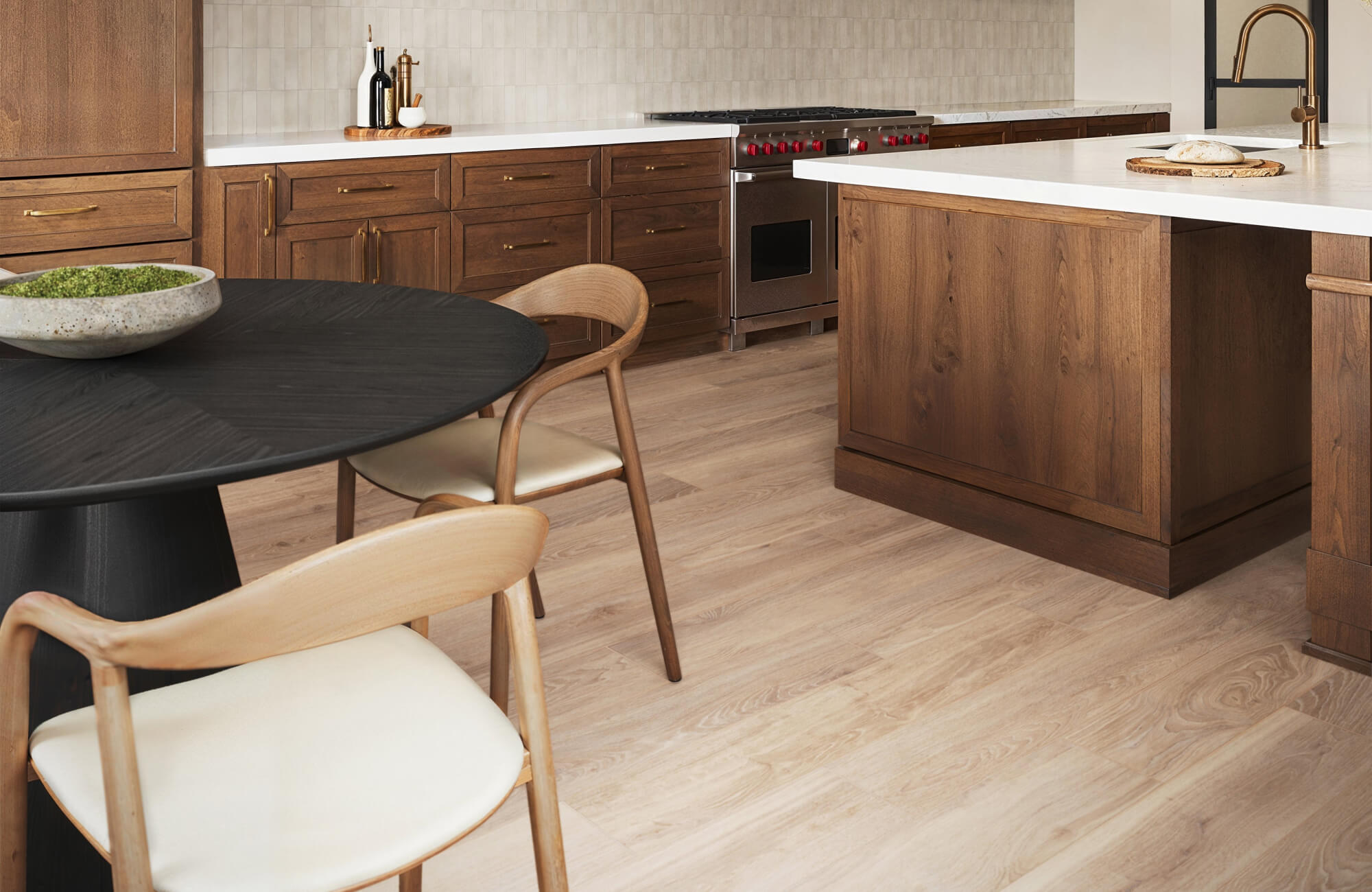
In spaces like the one shown above, where wood cabinetry, soft neutrals, and hardworking surfaces come together, a runner with subtle depth can make all the difference. A style such as our Hutchinson Polyester Face Rug in Graphite / Olive, featuring a grounded blend of dark gray and earthy green with soft beige and blue accents, adds texture and color without overwhelming a narrow laundry space with a corridor-style layout.
To maintain balance, keeping several inches of exposed flooring along both sides of the runner preserves a sense of proportion and prevents the space from feeling cramped. Additionally, stopping the rug short of door openings keeps sightlines clean, allowing the runner to enhance the space without introducing unnecessary visual clutter.

Practical Methods for Choosing the Right Rug Size
Choosing the correct rug size becomes far easier when you use practical, real-world strategies that help you visualize how the rug will function. With a bit of planning, you can select a size that works for your space today and continues to support your layout as it evolves.
Spatial Mapping
Spatial mapping turns abstract measurements into something you can actually experience. By outlining rug dimensions with painter’s tape or laying down pieces of cut fabric, you can immediately see how different sizes will feel underfoot and around your furniture. This hands-on approach helps you evaluate proportions, balance, and the overall presence a rug will have in the room.
Living with two potential tape outlines, such as comparing an 8′ × 10′ with a 9′ × 12′, also gives you valuable insight into which footprint feels more natural. As you move through the room, sit in the seating area, or simply glance around, you’ll start to develop a clear preference based on comfort and visual harmony.
Evaluate Movement Paths
A well-chosen rug should support the natural flow of the room, not disrupt it. If a rug forces you to tiptoe along its border or repeatedly step on and off it, the space can start to feel awkward or even unsafe. Observing how you typically navigate the room makes it easier to choose a rug that integrates smoothly into these movement patterns.
Leaving at least three feet of open walkway between furniture and walls or doorways also helps maintain a smooth, unobstructed path. With this buffer in mind, the rug becomes a supportive design element rather than a barrier, enhancing comfort and ease throughout your daily routine.
Match Rug Scale to Your Long-Term Layout Plan
Rug purchases should reflect not only your current setup but also your future vision for the room. If you plan to upgrade to a larger sofa, add additional seating, or reconfigure the layout, choosing a rug that accommodates these changes protects you from having to repurchase later. Thinking a step ahead also ensures your investment continues to serve your space as it grows.
By selecting a rug that fits your maximum anticipated layout, you build flexibility into the design. This forward-thinking approach gives you the freedom to evolve the room without outgrowing your rug, keeping your space cohesive and your budget intact.
Designing With Confidence
Understanding what rug sizes are considered standard gives you the foundation to choose a rug that not only fits your room but also elevates its overall experience. As you consider how these sizes interact with architecture, furniture proportions, and long-term plans, you gain the clarity to select a rug that feels intentional, balanced, and visually grounded. With this insight, you can confidently shape a room where every element works together, allowing your rug to enhance the flow, comfort, and style of your space.
If you ever need guidance choosing the ideal rug size or want expert help matching a rug to your layout, our team is ready to assist. You can easily reach out through our Contact Us page, where knowledgeable specialists can answer questions, offer tailored recommendations, and help you make choices that support your design goals. This personalized support also ensures you move forward with confidence, knowing your rug selection aligns beautifully with your vision.