Wall sconces are more than just accent lighting; they're a strategic design choice that blends form and function in spaces where overhead lighting alone falls short. These compact fixtures direct light upward, downward, or across walls to soften shadows, emphasize texture, and enhance overall ambiance without crowding surfaces or floors.
To fully unlock their potential, however, it’s important to understand where and how they’re most effective. In the right rooms, sconces contribute not only to lighting performance but also to the overall character and spatial flow of a home. Throughout this article, we’ll explore the spaces where sconces shine brightest and offer guidance on selecting fixtures that thoughtfully balance style and utility.

The Living Room
Because the living room serves so many roles, comfort zone, gathering place, and design showcase, it deserves lighting that’s both flexible and expressive. That’s where sconces come in, adding depth, warmth, and visual interest in ways that overhead fixtures alone simply can’t.
Enhancing Ambient Light and Mood
To start, sconces contribute significantly to a living room’s ambient lighting, softening shadows and reducing glare for a more inviting environment. Unlike ceiling-mounted lights, they distribute illumination across vertical surfaces, enhancing both visual comfort and atmosphere. For ideal effect, they should be installed 60 to 66 inches from the floor, roughly at eye level, to allow light to diffuse evenly outward.
Moreover, dimmable sconces offer control over brightness and mood, whether you're entertaining guests or settling in for a quiet evening. A warm color temperature (2700K–3000K) fosters a cozy, relaxed tone. When layered with recessed lighting, floor lamps, or natural daylight, sconces also add depth and nuance that enrich the overall design.
An excellent illustration of this concept is Edward Martin’s Asha Wall Sconce in Old Bronze. Featuring a cylindrical alabaster-style diffuser and sleek silhouette, it delivers a warm, diffused glow that adds softness and balance, ideal for living spaces where comfort and architectural elegance intersect.
Highlighting Artwork and Architectural Features
In addition to enhancing mood, sconces excel at accent lighting, making them ideal for drawing attention to a room’s focal points. When placed beside or above artwork, they provide directional light that brings out detail and color accuracy, especially when paired with a CRI of 90 or higher.
Adjustable-arm or narrow-beam sconces are particularly effective for precise illumination without harsh shadows. They can also be used to emphasize architectural features such as fireplace mantels, textured walls, or built-in shelving. Techniques like grazing, where light skims across a surface, enhance depth and texture, while wall-washer sconces broaden visual emphasis across larger areas. Altogether, these strategies help guide the eye and reinforce the room’s overall design narrative.

The Bedroom
In a room where rest and routine intersect, the right lighting can make all the difference. Thoughtfully placed sconces help strike that balance, offering both practical support and a calming atmosphere where it’s needed most.
Optimal Bedside Illumination
Wall-mounted sconces are an efficient alternative to table lamps for bedside lighting, especially when nightstand space is limited. Positioned 5 to 7 inches above shoulder height when seated and 6 to 12 inches from the headboard, they provide glare-free illumination ideal for reading, journaling, or winding down, all without disturbing a partner.
Moreover, swing-arm and articulating models allow for directional flexibility, while integrated dimmer switches or smart controls offer tailored brightness at any hour. A warm color temperature around 2700K supports natural sleep rhythms, and although a high CRI isn’t essential in this zone, it still enhances the appearance of textiles and skin tones.
Adding Soft Ambient Glow
In addition to task lighting, sconces contribute significantly to establishing a restful tone throughout the bedroom. Unlike ceiling lights, which can feel harsh or clinical, sconces distribute light laterally, softening the room’s overall ambiance and promoting relaxation.
To achieve this effect, consider placing sconces along accent walls, beside wardrobes, or flanking a dresser. Uplight or backlit styles paired with materials like frosted glass or linen help produce a diffused glow, perfect for pre-sleep routines. When incorporated into a layered lighting plan alongside recessed or cove fixtures, these sconces contribute to a seamless, balanced atmosphere across zones.
One standout example is Edward Martin’s Frances Wall Sconce in Black Brass. With its sculptural form and soft vertical illumination, it enhances the room’s visual texture while maintaining a peaceful, cocoon-like effect, ideal for bedrooms that prioritize both style and serenity.

Hallways and Entryways
Though often overlooked, hallways and entryways shape how we experience a home from the moment we walk in. With the right sconce lighting, these spaces become not only safer to navigate but also more visually engaging and welcoming.
Safe Navigation and Spatial Definition
In transitional areas like corridors and stairways, sconces offer consistent, glare-free illumination that enhances safety, reducing the risk of trips and falls, especially in narrow or multi-level zones. Mounting sconces 60 to 66 inches from the floor and spacing them 6 to 8 feet apart helps ensure balanced light distribution without shadows or hot spots.
In addition to improving visibility, sconces can be used to highlight the architectural character of a space. They accentuate wall planes, textures, and depth, elements that ceiling fixtures often overlook. For this purpose, low-profile or up-and-down lighting styles are especially effective, guiding movement while maintaining clear walkways. This kind of layered lighting also enhances the utility and rhythm of the space.
One fitting example is Edward Martin’s Zia Wall Sconce in Matte Black Plaster. Its dome-like silhouette casts a soft upward glow, adding sculptural elegance and a sense of quiet refinement to functional corridors.
Creating an Inviting Entry Statement
In the entryway, sconces help establish the home's design tone while improving visibility for key features like artwork, mirrors, or console tables. When placed symmetrically or in pairs, they add visual balance and bring attention to focal points that ceiling fixtures may fail to emphasize.
To ensure continuity, match the sconce’s color temperature with nearby rooms, typically a warm white (2700K–3000K) to create a welcoming transition. Additionally, fixtures with translucent diffusers, such as alabaster or frosted glass, produce a soft, flattering glow perfect for greeting guests. Incorporating smart features like motion sensors or dimmers further enhances convenience and adaptability.
Altogether, by combining form with function, sconces transform hallways and entryways into well-lit, design-forward passages that elevate both movement and mood from the moment you step inside.

The Bathroom Combining Functionality with Spa-like Serenity
The bathroom demands a thoughtful balance between utility and tranquility, where bright, focused light meets soft, soothing ambiance. With well-placed sconces, it’s possible to achieve both, enhancing everything from morning routines to evening unwinding.
Superior Vanity Lighting
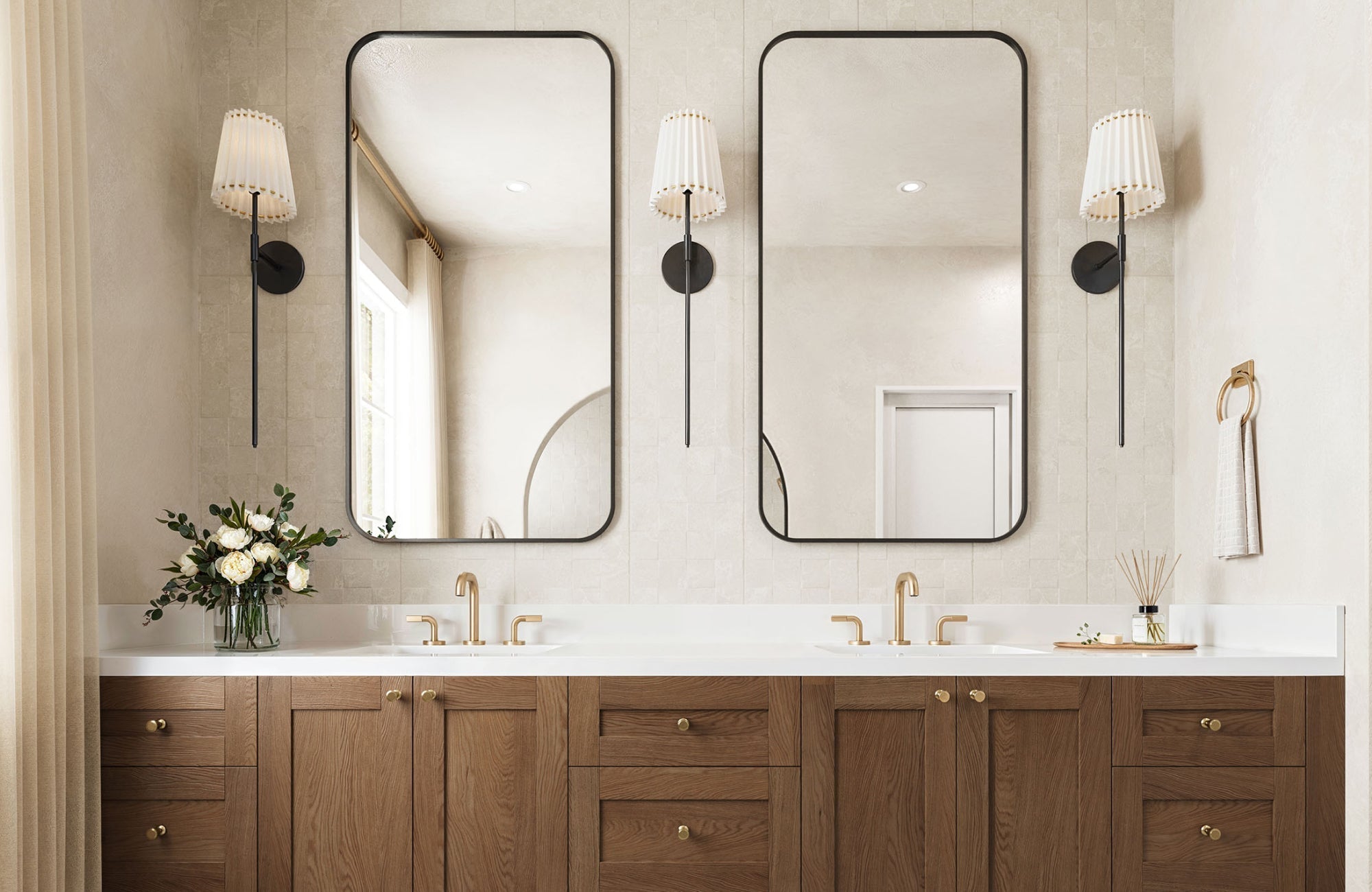
Grooming tasks like shaving or makeup application require precise, flattering lighting at the vanity. Mounting sconces at eye level, 65 to 70 inches from the floor and spaced 36 to 40 inches apart, ensures cross-illumination that minimizes shadows on the face, outperforming overhead lighting alone.
To further optimize visibility, choose sconces with a high Color Rendering Index (CRI) of 90 or above. A combined output of 1,500 to 2,000 lumens and a neutral white temperature (3000K–3500K) strikes the ideal balance between clarity and comfort, suitable for both early mornings and nighttime wind-downs.
A prime example of this balance is Edward Martin’s Wilma Wall Sconce in Aged Brass. As featured in the picture above, its softly diffused glass and warm metallic finish offer both functional brightness and timeless style, making it a versatile addition to traditional and contemporary vanities alike.
Enhancing Ambiance and Relaxation
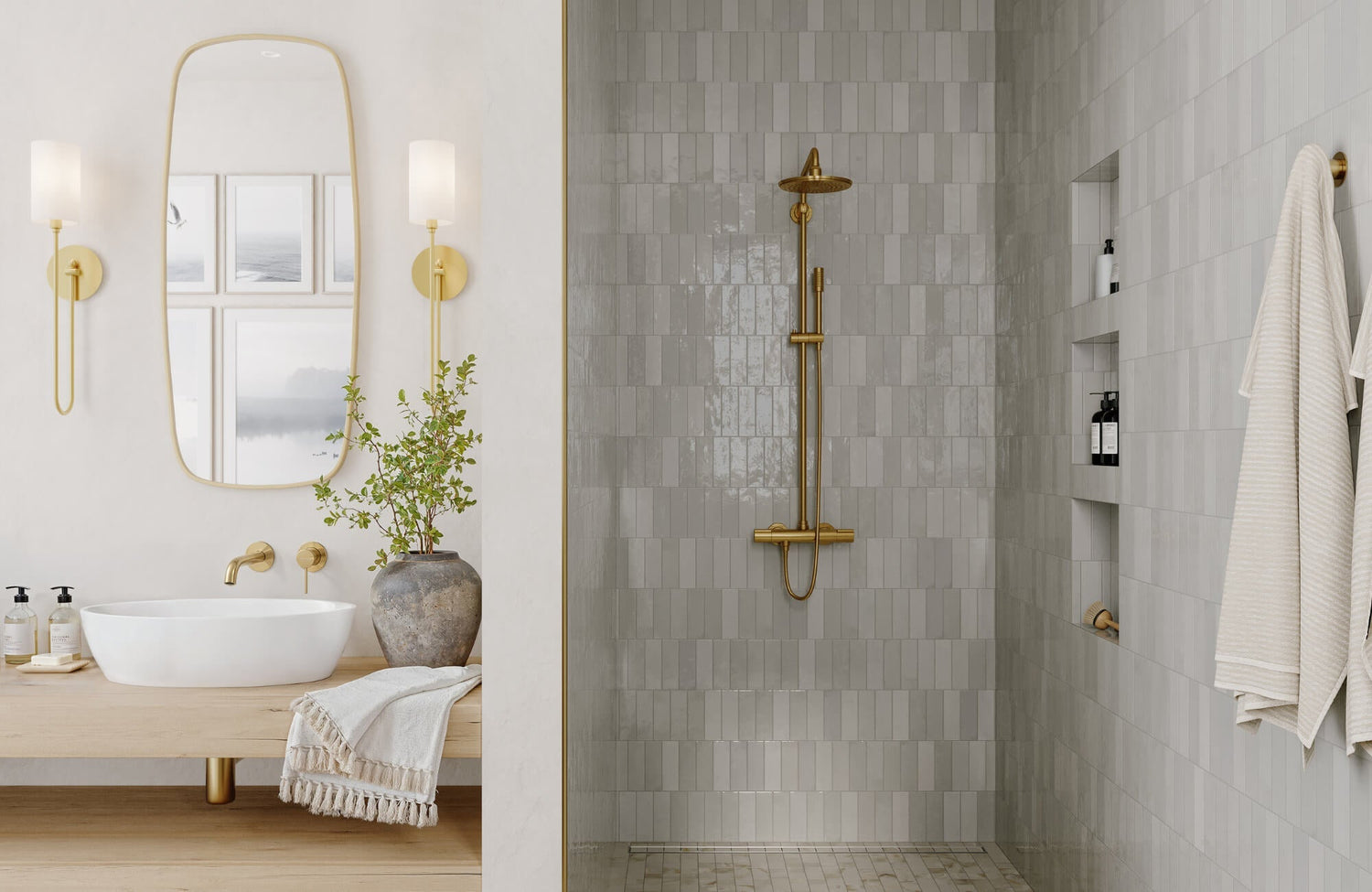
The bathroom is not only a task-oriented space, but it’s increasingly viewed as a personal retreat. Beyond the vanity, sconces are essential in creating a spa-like atmosphere by adding ambient layers of light. When installed near a soaking tub, along tiled niches, or beside accent walls, they also bring depth and softness to the space.
To support a calming environment, opt for sconces with frosted or fabric diffusers that gently filter light. Adding dimmer switches or smart lighting controls further enhances adaptability, allowing users to tailor brightness throughout the day. Additionally, warmer color temperatures (2700K–3000K) foster relaxation, while IP44-rated fixtures ensure safety and longevity in moisture-prone zones.
To make these design decisions easier, Edward Martin offers a personalized design consultation service, pairing you one-on-one with a designer who can help coordinate your lighting and tile selections with clarity and confidence.
If you're unsure about fixture compatibility, finish selections, or how to round out your space with complementary pieces like rugs or vanities, don't hesitate to contact us. The Edward Martin team is here to assist with expert, tailored recommendations from start to finish.

The Dining Room
The dining room sets the tone for everything from casual family meals to elegant dinner parties, making the atmosphere just as important as functionality. With the right sconce lighting, you can shape both the mood around the table and the visual appeal of the surrounding serving areas.
Creating an Intimate Dining Experience
Wall sconces add warmth and depth to dining spaces, offering directional lighting that softens overhead brightness and reduces glare, unlike chandeliers or pendant lights, which often illuminate more broadly. When mounted 60 to 66 inches from the floor, sconces help define the room’s perimeter and contribute to a welcoming, cocooned atmosphere.
Furthermore, opaque or translucent diffusers cast a gentle, even glow, while dimmer compatibility provides flexibility to match the moment, whether you're hosting a lively gathering or enjoying a quiet evening. A warm color temperature around 2700K enhances both food presentation and skin tones, creating a flattering and enjoyable setting. In addition, well-placed sconces can draw attention to textures, wall treatments, or architectural features, enriching the sensory experience.
This layered elegance comes to life in Edward Martin’s Esme 26" Wall Sconce in Aged Brass. As displayed above, its elongated silhouette and ambient glow provide sculptural presence while maintaining a soft, functional light, perfect for elevating the mood of the space.
Accenting Buffets and Serving Areas
In addition to dining table lighting, sconces can enhance adjacent zones such as buffets, sideboards, and drink stations. These areas often double as display surfaces and serving hubs, and targeted lighting not only improves visibility but also draws attention to curated décor.
To achieve this, directional or adjustable sconces are especially effective, offering task-ready lighting for plating or pouring while simultaneously highlighting surrounding design elements. Choosing fixtures that echo the finish or shape of nearby furniture or cabinetry helps establish visual continuity and cohesion throughout the space.
Ultimately, thoughtfully placed sconces elevate both the utility and ambiance of the dining room, turning everyday meals into memorable, immersive experiences.
Elevating Every Room with Purposeful Lighting
Sconce lighting offers more than just visual appeal; it introduces intentionality and precision to spaces where lighting is often overlooked. Whether adding warmth to a bedroom nook or guiding footfall through an entryway, sconces deliver tailored illumination that supports both form and function.
At Edward Martin, we see lighting as an essential design layer, equally important as furniture, tile, and texture. As you plan your next project, consider how the right sconce can subtly elevate the atmosphere and bring cohesion to your overall aesthetic. It's these quiet, deliberate choices that transform a space from merely well-designed to deeply lived in. Let your lighting speak with the same care and clarity as every other detail you choose.