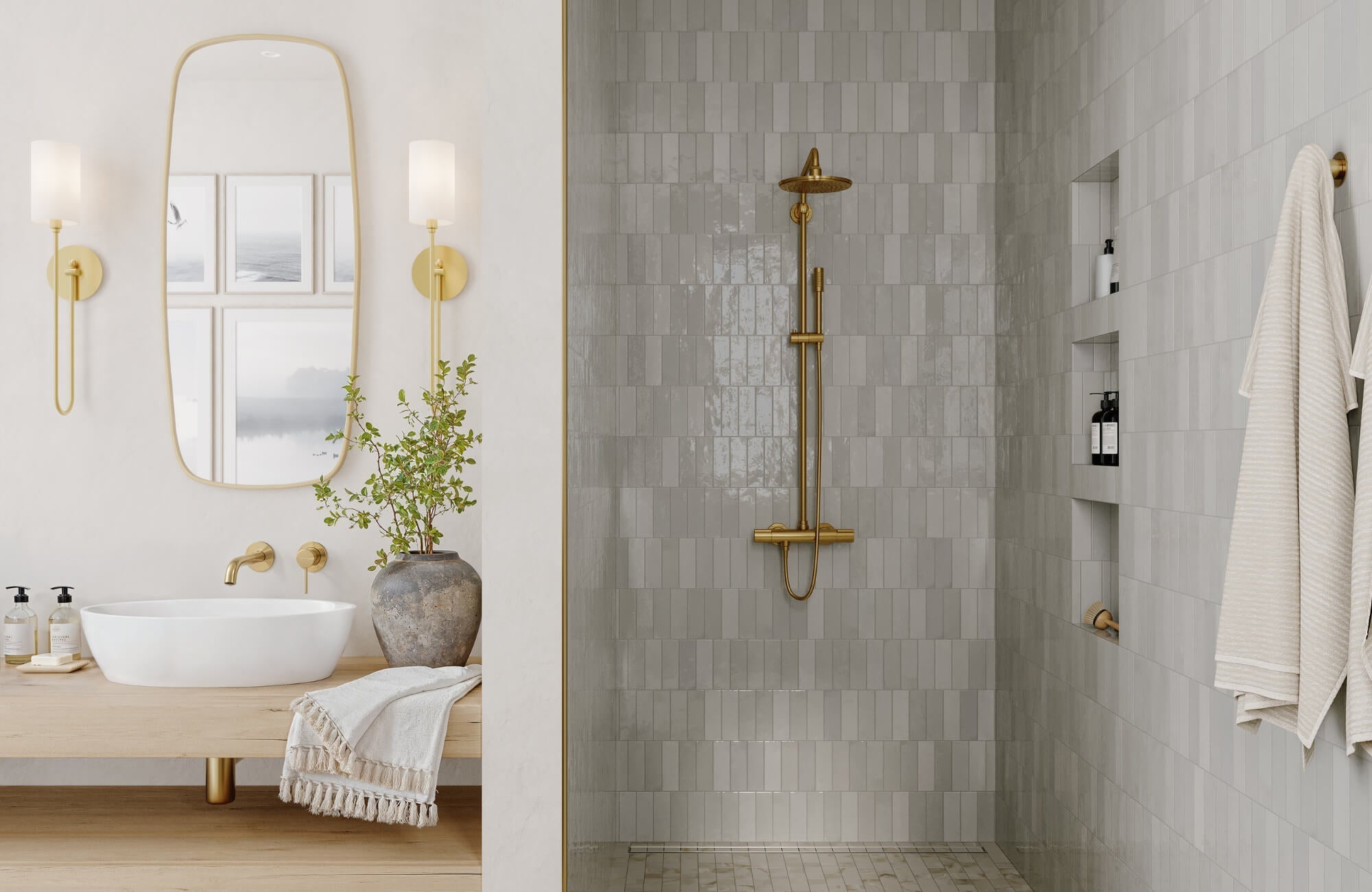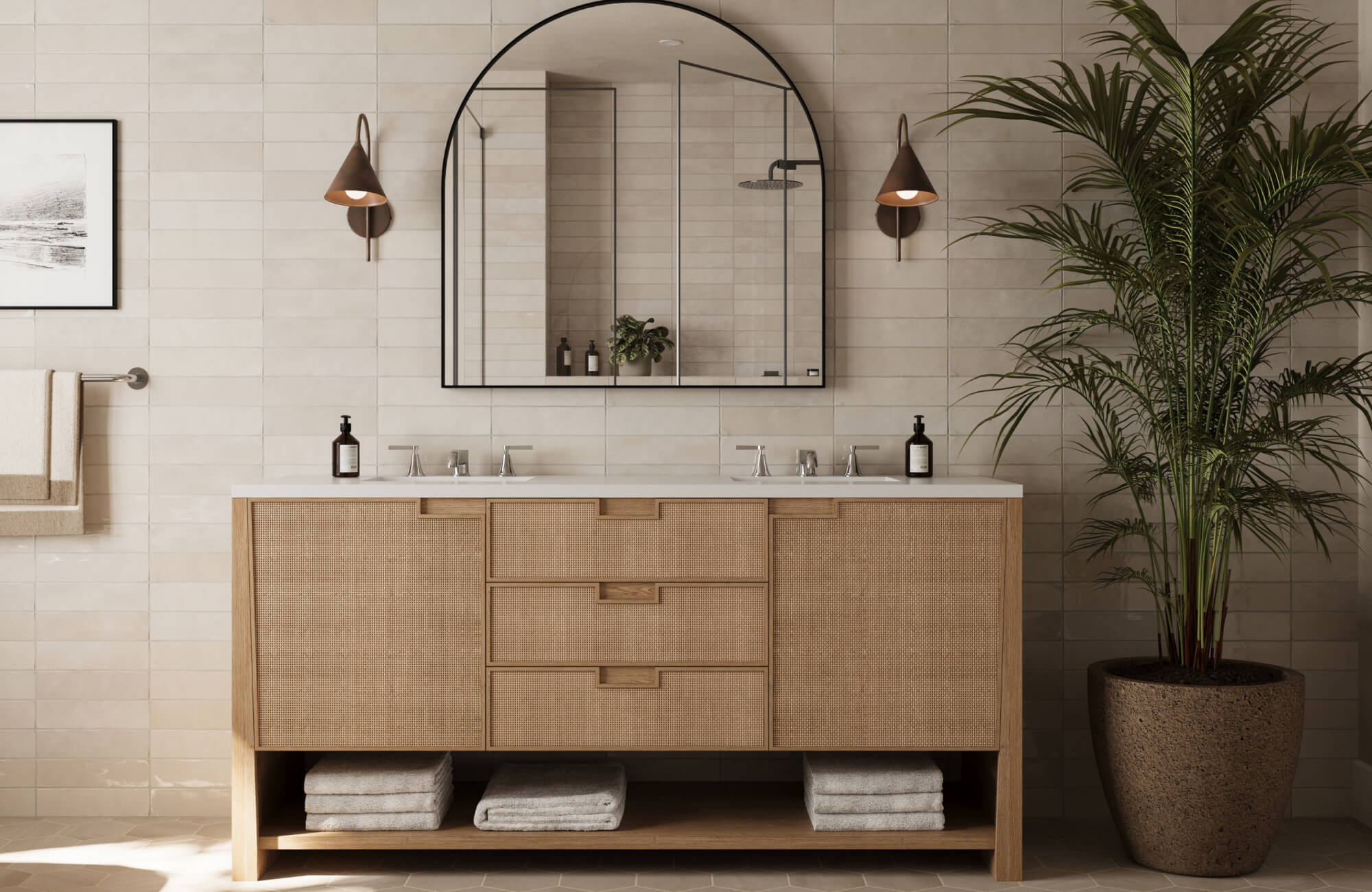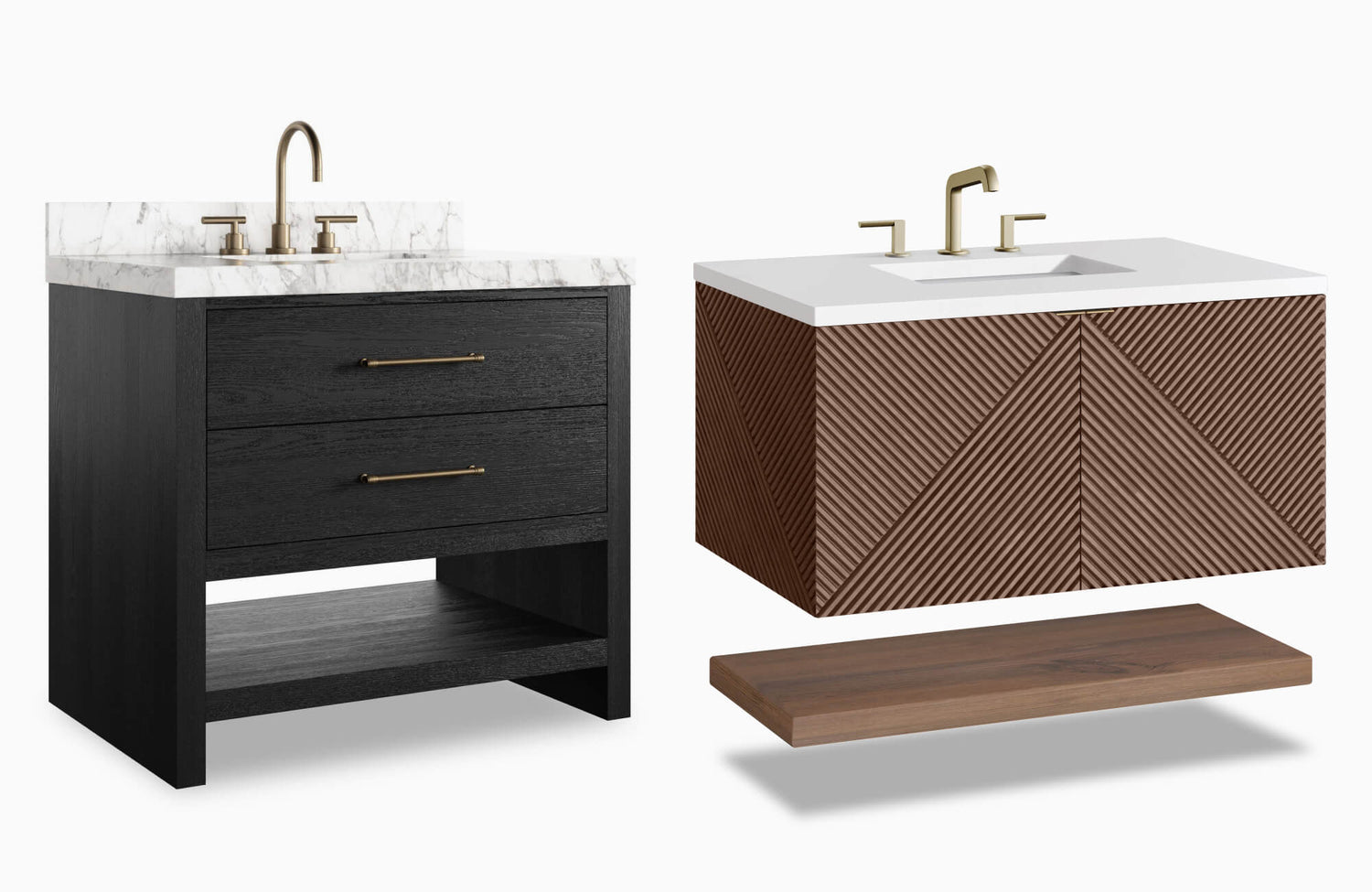
Choosing between a wall-mounted and freestanding vanity isn’t just about looks; it’s about how your bathroom works every day. From how much space you have to how you clean, store, and move around, the right vanity style can make your routine feel smoother without you even realizing it.
In this article, we’ll break down the real-world differences between the two, including structure, storage, and daily use. Whether you're remodeling or starting from scratch, this guide will help you figure out which type fits your space, your lifestyle, and the way you want your bathroom to feel.

What’s the Difference Between Wall-Mounted & Freestanding Vanities?
Before choosing between vanity types, it helps to understand how they’re built and installed. Each one not only functions differently but also brings a distinct presence to the room. Below, we’ll go over how wall-mounted and freestanding vanities are structured and how they influence your layout.
Wall-Mounted Vanities
Wall-mounted vanities are secured directly to the wall studs, leaving the floor area beneath them completely open. This creates a “floating” effect that visually lightens the room and makes even a small bathroom feel more spacious. Their structure relies on strong wall support, so they’re best suited for walls that can hold the weight of both the cabinet and what’s stored inside. Also, this setup makes it easier to clean underneath, as there’s no base touching the floor.
The floating design works especially well in minimalist or contemporary spaces. It helps create clean lines and a sense of openness that complements sleek tilework or simple fixtures. The visible floor underneath also gives the illusion of more square footage, which can be helpful in tight layouts. That said, installation often requires professional reinforcement, especially for larger vanities, such as those measuring 60” to 72” or those with stone countertops.
Freestanding Vanities
Freestanding vanities, such as our Gwen 48" Single Vanity in Pebble Oak with 3 cm White Zeus Quartz Top above, are built like standalone furniture pieces and rest directly on the floor. They typically have a full base or legs, which gives them a grounded, substantial appearance. Because they don’t require wall attachment, they can often be placed more flexibly within the room. Also, they’re commonly used in traditional or transitional bathrooms where a more solid, anchored look is preferred.
These vanities come in a variety of styles but usually take up more visual space than their wall-mounted counterparts. Their solid structure can give the bathroom a cozy, well-furnished feel, especially when paired with warm finishes or wood tones. However, since they touch the floor, cleaning around them can be trickier, especially under vanities with a low base. Their design is ideal for homeowners who prefer a classic layout and need extra internal storage.
Core Differences in Look, Feel, and Setup
The most immediate difference between these two vanity types lies in how they shape the room’s atmosphere. Wall-mounted vanities tend to feel light, airy, and modern, while freestanding vanities create a fuller, more rooted impression. That shift in tone can affect how large the space feels, especially in smaller bathrooms where every inch counts. Also, wall-mounted vanities offer a sleeker silhouette, while freestanding options give a more furniture-style presence.
Installation is another key difference. Wall-mounted vanities require careful alignment and strong anchoring to the studs, often needing extra wall reinforcement. Freestanding models, on the other hand, only need level flooring and access to plumbing. Each type also affects how visible your flooring is, with wall-mounted designs showing more floor and freestanding ones covering more ground. These differences play a big role in how the bathroom looks and functions long-term.

Pros and Cons of Wall-Mounted Vanities
Wall-mounted vanities, as seen above with our Royce 36" Single Vanity in Chestnut with 3 cm White Zeus Quartz Top, offer more than just modern style; they can also improve how a bathroom feels and functions. But with their space-saving advantages come a few practical limitations.
Makes Small Bathrooms Feel Bigger
Because they float above the floor, wall-mounted vanities create the illusion of more space by exposing more of the flooring underneath. This open gap makes tight bathrooms feel less cramped and helps light move more freely throughout the room. In small powder rooms or narrow layouts, that visual lift can make a big difference in overall comfort. The airy design also pairs well with minimalistic styles, which adds to the sense of openness. While it doesn’t add square footage, it helps the room feel more breathable.
Easier to Clean Around and Underneath
Cleaning around a wall-mounted vanity is often quicker and simpler since there are no cabinet bases or legs to work around. The open area beneath allows you to sweep or mop without obstructions, especially helpful in bathrooms that see daily use. This also means fewer spots for dust or moisture to build up over time. Unlike freestanding models, there’s no baseboard gap that traps debris or requires awkward bending. It’s a low-maintenance bonus that many homeowners appreciate.
Limited Storage and Weight Capacity
Because wall-mounted vanities don’t reach the floor, they often come with less internal storage compared to freestanding versions. Their compact size and floating design limit how much weight they can safely hold without stressing the wall anchors. You’ll likely get fewer drawers or shallower shelves, which might not work for households with lots of toiletries or shared use. If storage is a priority, this setup may feel a bit restrictive. It’s a trade-off between clean design and practical function.
Requires Secure Wall Support and Professional Installation
Installing a wall-mounted vanity isn’t as simple as placing it where it fits; your wall has to be structurally sound enough to handle its weight. Most floating vanities require mounting into wall studs, and in some cases, extra reinforcement may be necessary. That often means professional installation, especially if the vanity is large or topped with a heavy countertop. Without the right support, the vanity can sag or pull away from the wall over time. It’s not a DIY-friendly option for everyone, but with the right setup, it holds up well.

Pros and Cons of Freestanding Vanities
Freestanding vanities are a classic go-to for good reason; they’re sturdy, flexible, and offer plenty of usable space. But their full-bodied design can also make a room feel heavier, especially in smaller layouts.
Offers Generous Storage Space
One of the biggest perks of freestanding vanities, as you can see above with our Sasha 60" Double Vanity in Mid Century Walnut with 3 cm White Zeus Quartz Top, is the built-in storage they offer. With a full cabinet structure that reaches the floor, you’ll typically get deeper drawers, larger compartments, and more space overall. This makes them ideal for families, shared bathrooms, or anyone who needs to keep essentials tucked away. From toiletries to towels, it’s all within reach and hidden neatly out of sight. That practical storage capacity is what makes this style such a long-standing favorite.
Easier to Replace or Reposition
Unlike wall-mounted vanities, freestanding options don’t rely on fixed mounting points or reinforced studs. This makes them easier to swap out or relocate if you’re remodeling, upgrading, or just want a change in layout. You won’t need major construction work, just disconnect the plumbing and move the unit. That flexibility is especially useful in rental spaces or when planning future updates. It’s a more adaptable solution for evolving bathroom needs.
Can Make Tight Bathrooms Feel Cramped
Because they take up visual and physical space from the floor up, freestanding vanities can make small bathrooms feel boxed in. Their solid base covers more of the flooring, which can interrupt the open feel and limit how light flows through the room. In compact layouts, this can lead to a more crowded atmosphere, even if the vanity itself fits fine. The added storage may be great, but it comes with a sense of visual bulk. For tighter bathrooms, that trade-off might not be worth it.
Touches the Floor – Can Be Harder to Clean Under
Since these vanities sit flush with the floor, cleaning around or beneath them can be a challenge. Dust, hair, and moisture tend to collect at the base, especially in corners where it’s hard to reach. Unlike floating vanities, you won’t have open access for a quick sweep or mop underneath. Some styles come with legs, which can help a bit, but they still create small crevices. Over time, those hard-to-reach areas may need more attention to stay tidy.

How to Choose Based on Bathroom Size and Layout
Bathroom layout plays a huge role in which vanity style actually works best. Whether your space is small, wide open, or has an unusual shape, your choice should support comfort, function, and flow. Below, we’ll look at how wall-mounted and freestanding vanities fit into different room configurations.
Small Bathrooms or Powder Rooms
In tight spaces, wall-mounted vanities usually make the most sense. Their floating design helps keep the floor visible, which can make a room feel noticeably more open. Even a few extra inches of clearance below the vanity can change how spacious the area feels. This effect is especially helpful in powder rooms or narrow half baths where every bit of airiness counts.
That said, storage often takes a back seat. Wall-mounted vanities tend to be shallower and offer fewer drawers or compartments. If you only need to store a few essentials, they’re perfect, but for larger storage needs, creative solutions like wall shelves might be necessary. It’s about finding a balance between openness and usability.
Large or Open Layouts
With extra space to work with, freestanding vanities become a great option. They ground the layout visually and provide more cabinet room, which works well in primary bathrooms or master suites. These vanities also help define specific zones within an open-plan space, especially when centered beneath a large mirror or lighting fixture. Their bulk isn’t an issue in rooms that can handle it, for instance, our Colton 72" Double Vanity in Sable with 3 cm White Zeus Quartz Top, as seen above, fits beautifully in a spacious layout without overwhelming the room.
Wall-mounted styles still work here, particularly if you want a clean, spa-like feel. Larger layouts give you more flexibility to prioritize visual impact or storage, depending on your needs. Both styles can look balanced in this context; you just need to consider how they play with the rest of the space. Room scale is your biggest advantage in this setup.
Odd-Shaped Spaces and Corners
Awkward angles, narrow walls, or unusual layouts can limit where a vanity can go. Wall-mounted vanities can be custom-sized and positioned more freely, which helps you make use of irregular nooks or tight corners. They’re especially useful when you need to avoid floor obstacles or fit plumbing into tricky spots. Their flexible placement can save space and minimize visual clutter.
Freestanding vanities are a little less forgiving in unusual layouts. Their full footprint requires a flat, open space, and they’re harder to tuck into tight corners without looking forced. If you’re working around window ledges, door swings, or off-center plumbing, the floating option gives you more room to adjust. In these cases, customization and maneuverability really matter.
Shared or Multi-User Bathrooms
In bathrooms used by multiple people, like shared family spaces or guest setups, storage and accessibility become top priorities. Freestanding vanities tend to offer more room for organizing personal items, which helps keep the space from feeling chaotic. Their structure supports wider countertops and double sinks, making it easier for two people to get ready at once.
However, wall-mounted vanities can still be a good fit if designed with intention. Dual floating units or extended countertops can provide individualized space while keeping the room light and airy. Just keep in mind that these setups often require more upfront planning. In a shared layout, the right vanity keeps the function smooth without sacrificing flow.

Everyday Functionality
A vanity isn’t just a design choice; it’s a daily-use feature. The right setup should support how you use the space every day, from morning routines to quick cleanups. Below, we’ll explore how storage layout, accessibility, and usable space differ between vanity types.
Countertop Surface Area
Countertop size can make or break the usability of your vanity. Freestanding styles typically offer wider surfaces, giving you more room to spread out morning essentials or add accessories like soap dishes or canisters. This space is useful for households with multiple users or more elaborate grooming routines. It also helps if you like to keep certain items within easy reach rather than stored away.
Wall-mounted vanities are often more compact, so their counter space tends to be narrower. While this helps maintain a sleek look, it may feel limiting if you use lots of personal items daily. Still, some models extend horizontally to offer more usable surface area without taking up floor space. It's all about choosing what supports your actual habits, not just the aesthetic.
Vertical vs. Floor Storage
Freestanding vanities, as you can see above with our Holly 72" Double Vanity in Sunwashed Oak with 3 cm White Zeus Quartz Top, take full advantage of floor-to-counter storage, often stacking drawers or shelving from the base upward. This offers more volume and lets you organize items by height, making it easier to group things by size or use. Wall-mounted vanities, by contrast, rely on suspended storage, often just one or two streamlined drawers. The look is lighter, but the available space is reduced.
That said, wall-mounted designs open up the floor below, giving you room to store baskets or bins if needed. They also pair well with vertical shelving on nearby walls to supplement the limited capacity. If you're tight on square footage but need clever storage solutions, combining open and closed storage can be a smart workaround. Your habits will determine which layout makes daily use easier.
Easy Access for All Household Members
A vanity should work for everyone who uses it, whether it’s a solo setup or shared among multiple family members. Freestanding vanities generally offer fixed-height storage that’s accessible to most adults but may be less convenient for kids. They also allow for wider drawers and multi-user countertop access, which comes in handy in busier homes. Their traditional shape makes them intuitive to use for guests, too.
Wall-mounted vanities offer more flexibility when height needs vary. Because they’re installed at custom heights, they can be mounted lower to suit children or higher for taller adults. They also provide better clearance for wheelchair access if needed. The right vanity isn’t just about form, it should make everyday use feel seamless for everyone who walks in.

Cleaning and Maintenance Considerations
While style and function take the spotlight, a vanity’s upkeep can quietly shape your daily experience. The way a vanity interacts with moisture, dust, and general wear plays a big role in long-term convenience.
Under-Vanity Floor Cleaning
Wall-mounted vanities offer the clear advantage of easier floor access, making it simple to sweep or mop underneath. This is especially helpful in tight bathrooms where dust and hair tend to collect quickly. With nothing touching the ground, cleaning becomes less of a chore and more of a quick routine. Freestanding vanities, on the other hand, sit flush with the floor or have low bases that can trap dust along the edges. Reaching under or behind them often requires extra effort or a deep clean.
Water Exposure and Moisture Buildup
Any bathroom fixture needs to hold up against humidity, but vanities are particularly prone to splashes and condensation. Wall-mounted designs can reduce water contact around the base since they don’t sit directly on damp floors. Freestanding vanities, especially those made from wood, may absorb moisture at the bottom over time if not sealed properly. Spills or puddles near the sink can pool around the base, increasing the chance of long-term damage. Choosing a setup that stays dry or is easy to wipe down helps preserve its finish.
Repair Access and Plumbing Reachability
When it comes time for plumbing repairs or upgrades, vanity design can either help or hinder the process. Wall-mounted vanities often offer better rear access since they leave space around the pipes and don’t box in the plumbing. Freestanding vanities may hide connections behind full cabinetry, making them harder to reach without removing panels. This can complicate repairs or slow down routine maintenance. If your bathroom sees frequent updates or you want to simplify future fixes, that’s something worth considering.

Style and Design Preferences Over Time
Vanity styles don’t just reflect today’s trends; they shape how your bathroom will feel years from now. Whether you're drawn to a sleek modern look or something more timeless, the vanity you choose plays a major role.
Long-Term Appeal and Trends
Wall-mounted vanities tend to align with modern or minimalist styles, which have stayed popular thanks to their clean lines and open feel. They work especially well in contemporary homes or spaces with a spa-like vibe. Freestanding vanities, by contrast, often appeal to more classic or transitional tastes and resemble traditional furniture. Their versatility makes them a safe long-term choice, especially if you're planning to stay in the home for years. Both can look current or dated depending on the finish and shape, so consider which style reflects your long-term vision.
Visual Weight in the Room
The way a vanity fills space can affect the overall feel of the room. Wall-mounted options create a lighter, more open visual profile since they leave space underneath and hug the wall. This can make the room feel taller or more spacious, especially in compact bathrooms. Freestanding vanities carry more visual weight, grounding the space and adding a sense of permanence. While both have their place, the impact on balance and openness can shift how the bathroom feels day-to-day.
Personal Style vs. Resale Considerations
If you're designing purely for yourself, either option can be customized to match your taste. Wall-mounted vanities make a bold, modern statement that reflects a more curated, design-forward approach. However, if you’re thinking about future buyers, freestanding vanities often appeal to a wider range of people. Their traditional shape and familiar setup tend to feel more approachable to different style preferences. Balancing your personality with what future homeowners may want can help guide your final choice.
Which Vanity Is Right for You?
Choosing between wall-mounted and freestanding vanities isn’t just about style; it’s about how your bathroom functions day to day. From visual weight and storage capacity to ease of cleaning and long-term flexibility, each option supports different routines and design priorities. Whether you’re looking to create a lighter, more modern space or prefer something grounded and full of storage, the right vanity can shift how your bathroom feels and works.
If you're still not sure which direction fits your space best, our design consultation team is here to help. They can walk you through the layout, lifestyle, and maintenance considerations that matter most and help you choose a vanity setup that truly works for your needs.