
)
)
)
)
)
)
)
)
Which Mirror Shapes Are Feng Shui-Approved For Bathrooms?
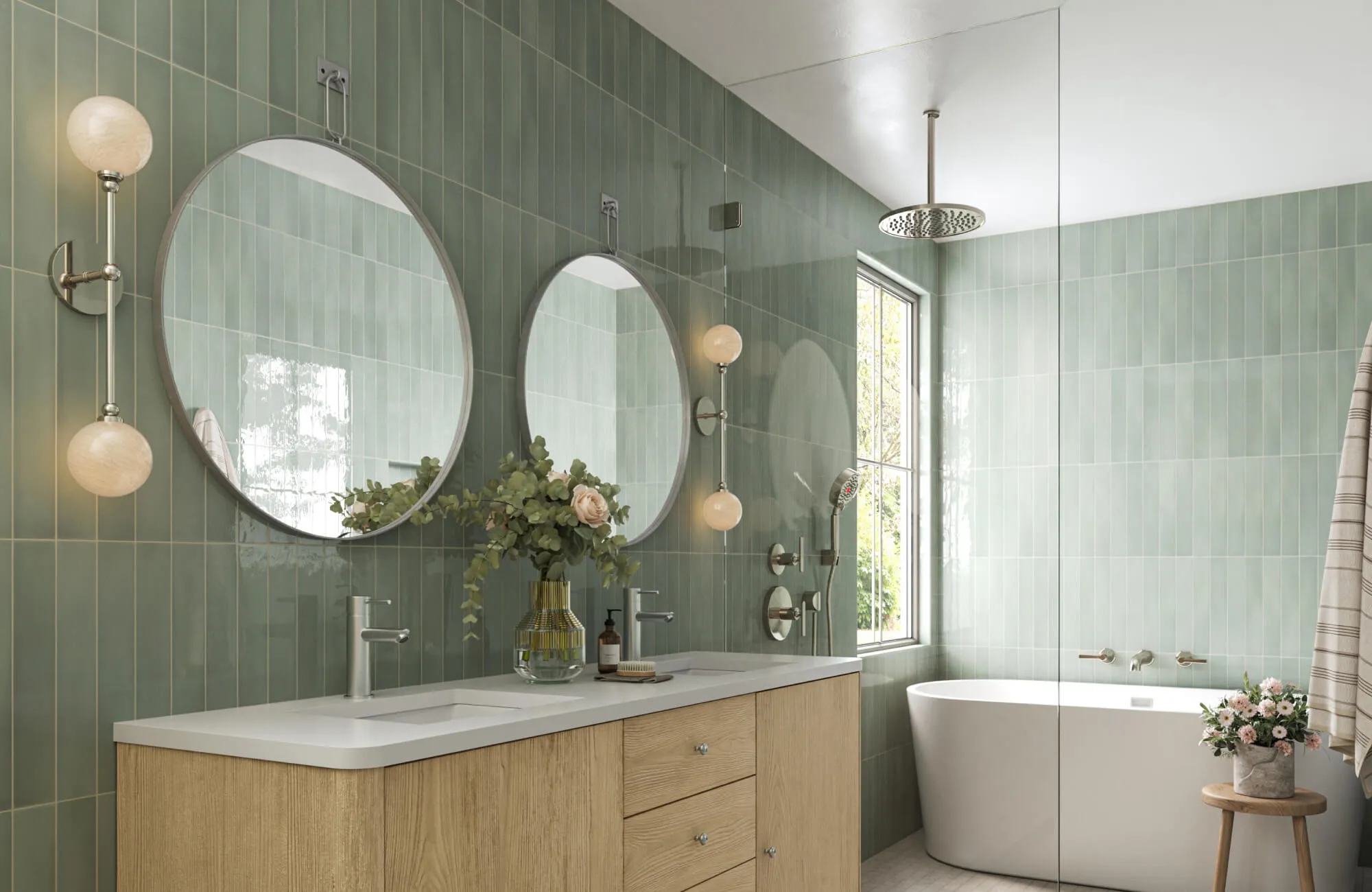
A bathroom is more than a functional space—it is where energy is shed, refreshed, and renewed. In Feng Shui, mirrors are not simply reflective surfaces; they are powerful energetic tools capable of either nourishing or depleting the chi within your environment. Nowhere is their impact more noticeable than in bathrooms, where water and energy constantly circulate.
Choosing the right mirror shape in this space can significantly affect your emotional well-being, sense of balance, and even your relationships. From calming circles to grounding rectangles and the caution around abstract or symbolic forms, this article explores how different mirror shapes interact with Feng Shui principles. Whether you're refreshing your bathroom or building one with intention, understanding these energetic choices can also transform the feel and flow of the entire space.
Round Mirrors and the Balance of Yin Energy
Round mirrors are one of the most Feng Shui-endorsed shapes for bathrooms. Their soft, unbroken curves foster calm, receptivity, and introspection, essential qualities in a space meant for rejuvenation and energetic renewal.
Harmonizing with Water Elements
Round mirrors naturally align with the water element in Feng Shui, echoing its fluid, flowing nature. This shape encourages chi to move gently and evenly, rather than bouncing erratically as it might with sharp or angular forms. When you position a round mirror above the sink or vanity, it also helps circulate Sheng Qi smoothly throughout the room, supporting the bathroom’s core function as a space of cleansing and release.
Moreover, this energetic flow reinforces a calming emotional environment. Since water governs emotions in Feng Shui, amplifying its positive expression through a round mirror supports emotional balance, particularly during routines like washing or skincare, where you transition between states of mind.
Reducing Harshness in Confined Spaces
Bathrooms are often compact and filled with rigid lines, from tile edges to cabinetry. These sharp boundaries can accumulate Sha Qi, or harsh energy, especially in corners or cramped zones. A round mirror introduces a visual and energetic softness that helps dissolve these harsh edges. By softening sightlines and reducing abrupt visual stops, the circular form makes your bathroom feel more harmonious. It also becomes easier to relax in a space where energy flows smoothly and no part of the room feels harsh or restrictive.
Enhancing Relaxation and Introspection
The continuous, unbroken curve of a round mirror symbolizes unity and wholeness, aligning perfectly with moments of self-care and reflection. Whether you’re beginning or ending your day, looking into a round mirror can promote a more mindful and grounded experience.
This effect is deepened when the mirror is paired with materials that evoke warmth, contrast, or texture, enhancing not just how a space looks, but how it feels. A piece like our Tristan Round Mirror in Rustic Black embodies this harmony beautifully. Its soft shape encourages introspection, while the matte black frame adds quiet definition that anchors the space without overwhelming it. The rustic finish also complements natural wood vanities or stone counters, helping create a calm, centered environment where reflection, both literal and emotional, comes naturally.
Softening Hard Design Elements
Round mirrors provide visual relief in bathrooms dominated by sharp angles and cold materials. They create a gentle counterbalance that enhances both the aesthetics and the energetic flow of the room.
One of the most noticeable effects of a round mirror is how it interrupts the visual rigidity of typical bathroom layouts. With square tiles, sharp-edged vanities, and linear fixtures dominating the scene, the bathroom can begin to feel overly structured or even tense. A round mirror breaks this pattern with its continuous curve, offering a visual rhythm that flows rather than stops abruptly. This uninterrupted line also invites the eye to move smoothly across the space, reducing the sense of visual strain and encouraging a more calming experience.
Alongside this rhythmic relief, the mirror’s organic shape works to soften the impact of harsh materials often found in bathrooms, such as chrome fittings, porcelain sinks, or glass panels. These materials, although practical, can create a cold and impersonal atmosphere. Introducing a round mirror warms the space both visually and energetically, counteracting the starkness and making the environment feel more nurturing. The curvature also brings in a natural element that offsets the industrial feel, allowing the bathroom to feel less clinical and more like a space of care and comfort.
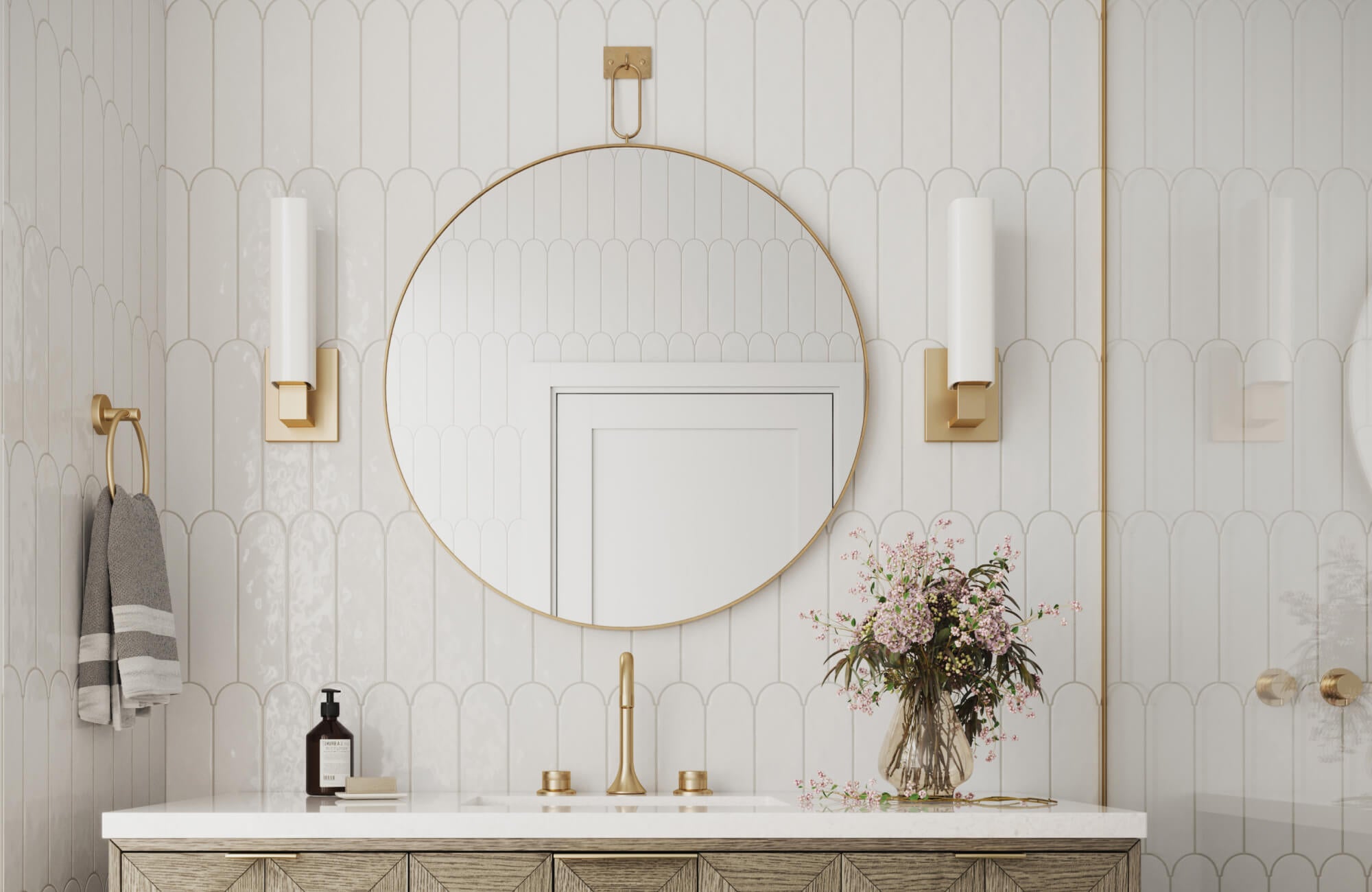
This softness becomes even more impactful when paired with warm finishes and natural textures, as seen in the beautifully styled bathroom above. The featured mirror, our Fitz Mirror in Antique Brass, brings subtle elegance through its gentle shape and warm gold-toned frame. Its simplicity also enhances the mirror’s Yin quality, making it an ideal choice for those seeking both visual harmony and energetic flow in a Feng Shui-informed design.
Expanding Space Through Light and Reflection
Beyond their emotional and energetic benefits, round mirrors help open up the space by manipulating light and perspective. In smaller or dimmer bathrooms, they create an illusion of spaciousness and harmony.
The curved edges of a round mirror also have a unique way of extending sightlines. Unlike rectangular mirrors that direct your gaze in a confined horizontal or vertical direction, the round form gently guides the eye outward in all directions. This subtle expansion gives the impression of a broader, more open space, even in compact bathrooms. Furthermore, the absence of corners prevents your visual field from feeling blocked, making the room feel airier and less constricted.
At the same time, round mirrors play an important role in dispersing light evenly. Their shape allows both natural and artificial light to bounce softly across the room, avoiding harsh shadows or sharp glares. One example of this balance between form and function is our Esmeralda Round Mirror in Iron Matte Black. With its clean, minimal profile and deep black frame, it adds contrast that anchors the room while still maintaining a light visual presence. Furthermore, the matte finish reduces glare, helping to diffuse light gently, while the round shape subtly broadens the room’s dimensions. Altogether, it supports a tranquil, luminous atmosphere, perfect for creating a bathroom that feels both restorative and refined.
Rectangular Mirrors and Their Stabilizing Effects
Although round mirrors invite softness and flow, rectangular mirrors introduce structure and groundedness. In Feng Shui, they resonate with the Earth element, making them ideal if you seek clarity, routine, and emotional steadiness in your bathroom environment.
Supporting Routine and Discipline
The shape and alignment of rectangular mirrors play a subtle yet powerful role in reinforcing your daily rhythm. When hung vertically, they draw energy upward, encouraging ambition and forward movement. When placed horizontally, they provide a sense of stability and emotional calm, grounding your energy as you go through morning or nighttime routines.
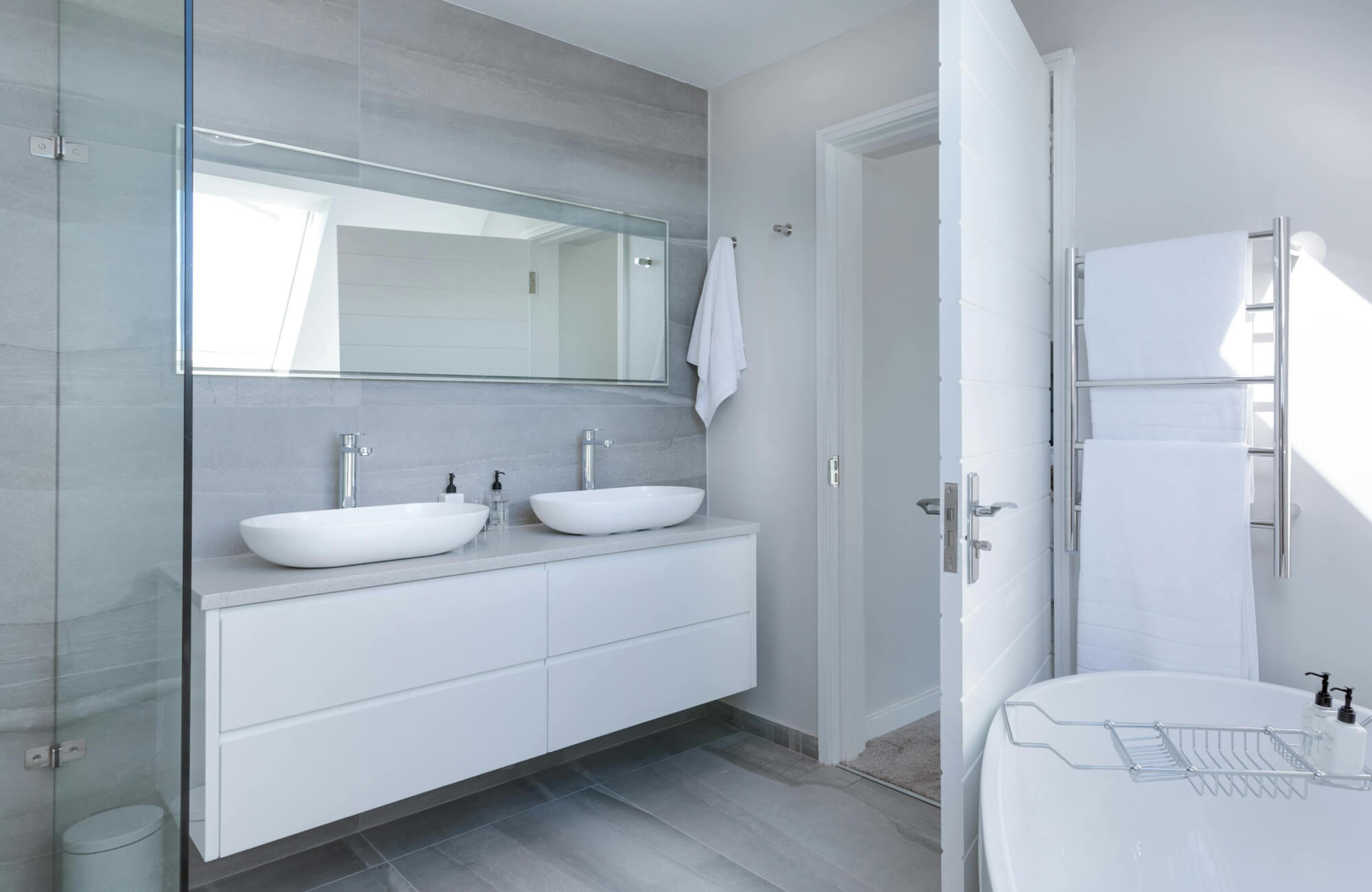
This structure extends beyond just energy. In larger or shared bathrooms, a wide rectangular mirror above a double vanity helps establish clear functional zones. By subtly defining each person’s area, it also promotes a balanced and respectful use of space. You’re able to maintain focus on your own routine while still feeling part of a cohesive and well-organized environment. This division supports both individual clarity and shared harmony.
Creating Visual Expansion
A horizontally placed rectangular mirror can dramatically alter how a bathroom feels, especially in tight or narrow layouts. It stretches the room visually, making the space appear wider and more breathable without requiring any physical change to the structure.
This sense of expansion also affects the way energy moves. When your bathroom feels less constricted, it becomes easier for chi to flow freely, supporting a more relaxed and open atmosphere. Your body picks up on that spaciousness, helping to release tension and maintain a sense of lightness during your time in the space.
Best Orientations for Grounded Energy
In Feng Shui, proportion and placement matter just as much as shape. Rectangular mirrors should be scaled to match the size of the wall or vanity they accompany; too long or too narrow, and they can disrupt the balance of the room. A well-proportioned mirror also creates a sense of equilibrium and supports steady, nurturing chi.
One of the most important placement guidelines is to avoid positioning a mirror directly across from the toilet. Doing so can reflect and amplify draining energy, pulling chi away from the room before it has a chance to circulate. Instead, use the mirror to reflect something life-giving, such as a plant, window, or calming artwork, so the energy it bounces back is uplifting and restorative. The presence of a substantial, rectangular mirror in this configuration also brings visual weight and stability. Its form adds a sense of permanence and reliability, reinforcing emotional grounding and encouraging consistency in your daily habits.
Reinforcing Design Symmetry and Structure
Rectangular mirrors work in harmony with the structural lines already present in most bathroom architecture. From tile seams and cabinetry to doorframes and countertops, the geometric clarity of a rectangular mirror enhances the sense of visual order and alignment. Rather than competing with other elements, it echoes them, creating a smooth and cohesive visual rhythm.
This integration allows energy to move cleanly through the space without encountering visual or energetic friction. You experience a room that feels intentional and well-organized, qualities that support a clear mind and calm emotional state. Whether you’re beginning your day or winding it down, the mirror also becomes a steadying presence, helping to center your energy and bring the entire space into balance.
Double Mirrors and Mirrored Walls in Shared Bathrooms
In shared bathrooms, mirrors influence more than just appearance. They also play an active role in shaping how energy flows between individuals. Whether you’re sharing the space with a partner or managing multiple functional zones, the way mirrors are used can subtly support or disrupt harmony, communication, and emotional balance.
Dual Mirrors for Couples and Energetic Equality
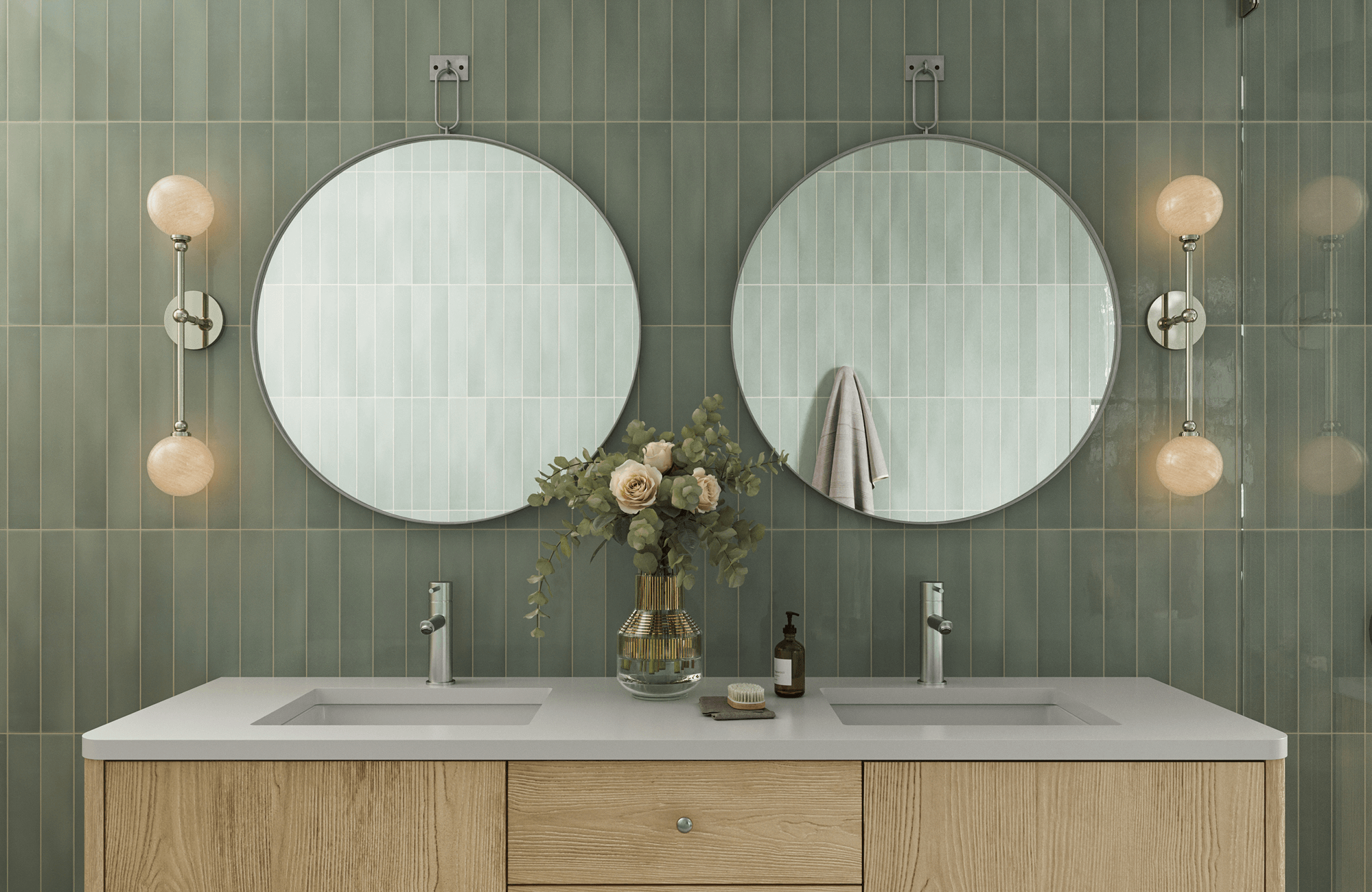
When you install two identical mirrors above a dual vanity, you’re symbolically reinforcing equality in the relationship. Matching mirrors in size, shape, and height helps maintain a balanced distribution of chi between partners. Even slight differences can introduce an unintended energetic hierarchy, which may eventually affect the atmosphere of mutual respect and shared space.
Symmetry in mirror placement also cultivates a calm, supportive environment that mirrors your intention to relate as equals. Each person has a defined, mirrored area that feels energetically personal yet unified with the other. A perfect illustration of this principle can be seen in the setup above, where two evenly spaced round mirrors provide clarity and cohesion. Our Fitz Mirror in Antique Silver, with a soft silver finish, adds a touch of refined coolness without overpowering the space. Its understated elegance works beautifully against both warm and muted tones, making it an ideal choice for couples seeking balance, harmony, and timeless design in their shared bathroom.
Mirrored Walls and Energy Overload
Although mirrored walls may seem like a dramatic design choice, they are rarely suitable for bathrooms from a Feng Shui perspective. Large, uninterrupted reflective surfaces tend to overstimulate the flow of chi, causing it to bounce rapidly and without direction. This also creates a sense of energetic agitation and can leave the space feeling chaotic or draining, far from the restful energy a bathroom should hold.
To maintain a balanced atmosphere, it’s far more effective to use framed mirrors in specific, intentional locations. Frames act like energetic boundaries, containing the mirror’s influence and softening how energy circulates. Instead of allowing reflections to multiply unchecked, this approach helps establish calm and control within the space.
Intentional Placement and Reflection
When incorporating multiple mirrors in a shared bathroom, it’s important to approach their use with intention, considering not only their quantity and placement but also what they reflect. Each mirror should have a clear purpose, whether it’s to aid in grooming, enhance available light, or create a greater sense of space. Just as important is what the mirror reflects. Ideally, mirrors should capture calming, life-affirming visuals such as a soft light fixture, a healthy plant, or a scenic view, all of which help uplift the room’s energy.
In contrast, reflections of toilets, drains, or cluttered shelves introduce visual and energetic noise, reinforcing the very imbalances that Feng Shui aims to correct. Thoughtful mirror placement, therefore, supports a more harmonious and restorative bathroom environment.
The alignment of mirrors also directly impacts the flow of chi. Placing a mirror directly across from the bathroom door is one of the most common energetic missteps, as it causes beneficial chi to enter and immediately escape. Instead, mirrors should be angled or positioned to retain energy within the room, encouraging it to move gently and evenly. Thoughtful mirror alignment not only enhances spatial flow but also preserves a sense of emotional calm, making the shared environment more restful and energetically supportive.
Square Mirrors and the Power of Balanced Containment
Square mirrors may not be as commonly discussed as round or rectangular ones in Feng Shui, but they hold their own quiet power. Representing perfect balance and the stabilizing Earth element, square mirrors offer a sense of containment and centeredness that is especially valuable in the energetically dynamic environment of a bathroom.
Embracing Symmetry and Stillness
With equal sides and right angles, square mirrors symbolize uniformity, equality, and stability. Unlike rectangles, which direct energy either horizontally or vertically, the square creates a balanced field where chi is evenly distributed. This quality makes it an ideal choice if your bathroom feels ungrounded or visually chaotic, as the square shape promotes stillness and containment without suppressing natural flow.
This symmetry also reinforces emotional equilibrium. When used thoughtfully, a square mirror helps bring consistency to your daily rituals, allowing you to step into and out of the space with greater awareness and calm. Moreover, it acts as an anchor, visually and energetically, giving the room a quiet strength that supports reflection and restoration.
Where Square Mirrors Work Best
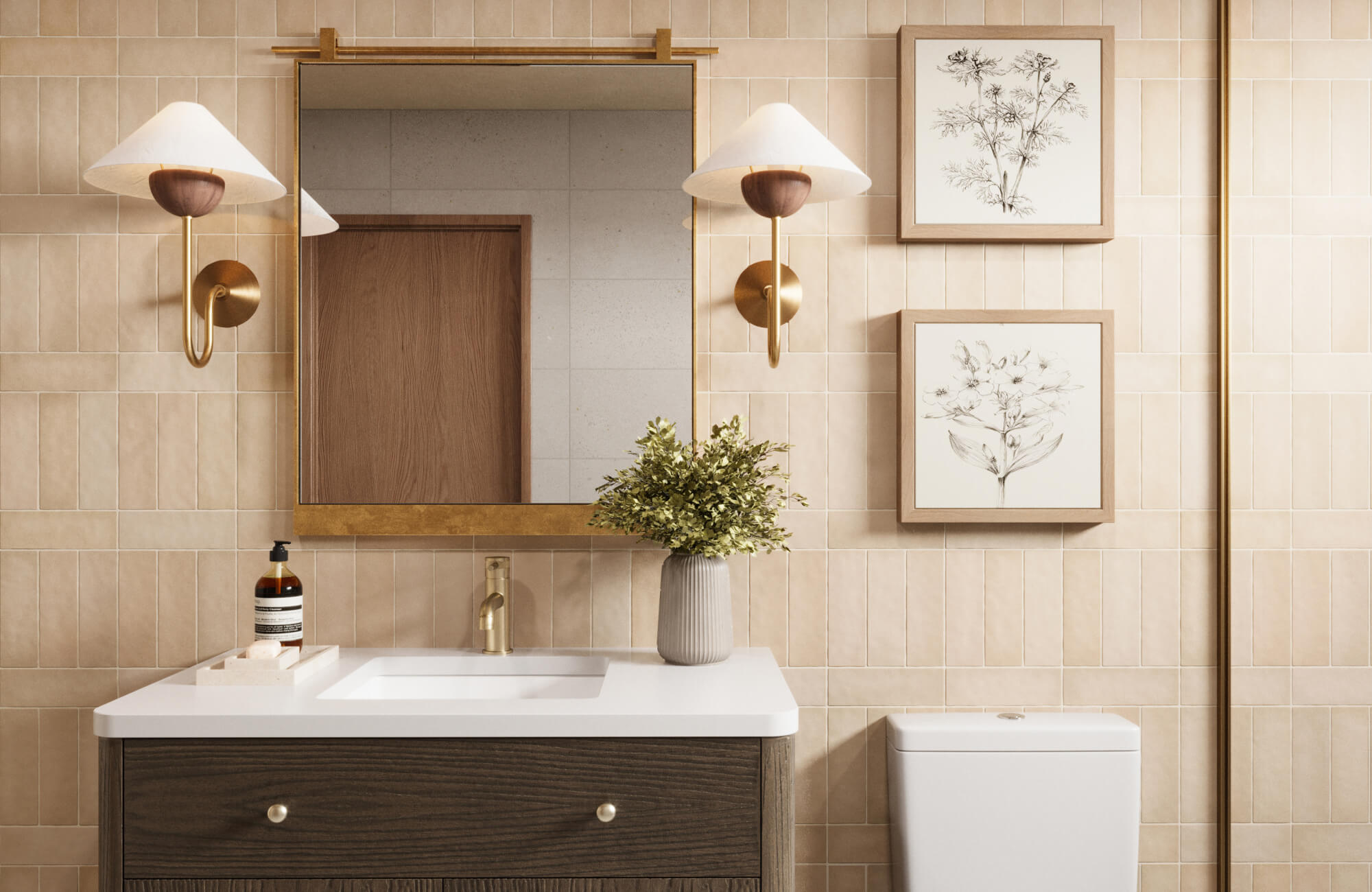
Square mirrors are especially well-suited to smaller bathrooms or powder rooms, where a sense of centeredness can help prevent chi from dispersing too quickly. They also pair beautifully with natural materials like wood or stone, which enhance their grounding energy. When installed above a vanity with clean lines or natural finishes, the square shape reinforces the visual harmony and helps maintain a steady, nurturing environment.
In the photo above, the square mirror framed in a soft golden hue complements the warm, earthy palette and pairs elegantly with the curved sconces and botanical artwork. The mirror shown is our Clancy Small Mirror in Antique Brass, a timeless piece finished in a classic golden tone that enhances the room’s balance and sense of calm. Its understated frame also allows the natural elements around it, like woodgrain cabinetry and soft lighting, to take center stage, while still anchoring the space with structure and warmth.
For optimal Feng Shui, avoid placing square mirrors directly across from the bathroom door or toilet, as this can still lead to energy loss. Instead, let them reflect elements that evoke peace and vitality, such as warm lighting, gentle artwork, or greenery. When thoughtfully placed, a square mirror can also be a powerful ally in cultivating a space that feels both grounded and emotionally replenishing.
Arched Mirrors and the Harmony of Soft Strength
Arched mirrors bridge the gap between the structured energy of rectangles and the softness of curves. With their strong vertical lines and gently rounded tops, they embody a balance of yin and yang that can bring both uplift and serenity to a bathroom space.
Supporting Uplift with Grace
The vertical body of an arched mirror channels upward energy, symbolizing growth, aspiration, and movement, similar to rectangular mirrors hung vertically. However, the curved top introduces a yin influence that tempers this rise with softness and receptivity. This makes arched mirrors ideal for promoting calm ambition or a graceful start and end to your daily routine.
When used above a vanity, especially in a smaller or more angular space, the arched shape also guides chi upward without it feeling abrupt or forceful. The curve at the top creates a sense of welcome and openness, helping energy rise and circulate gently, rather than rushing out or becoming stagnant.
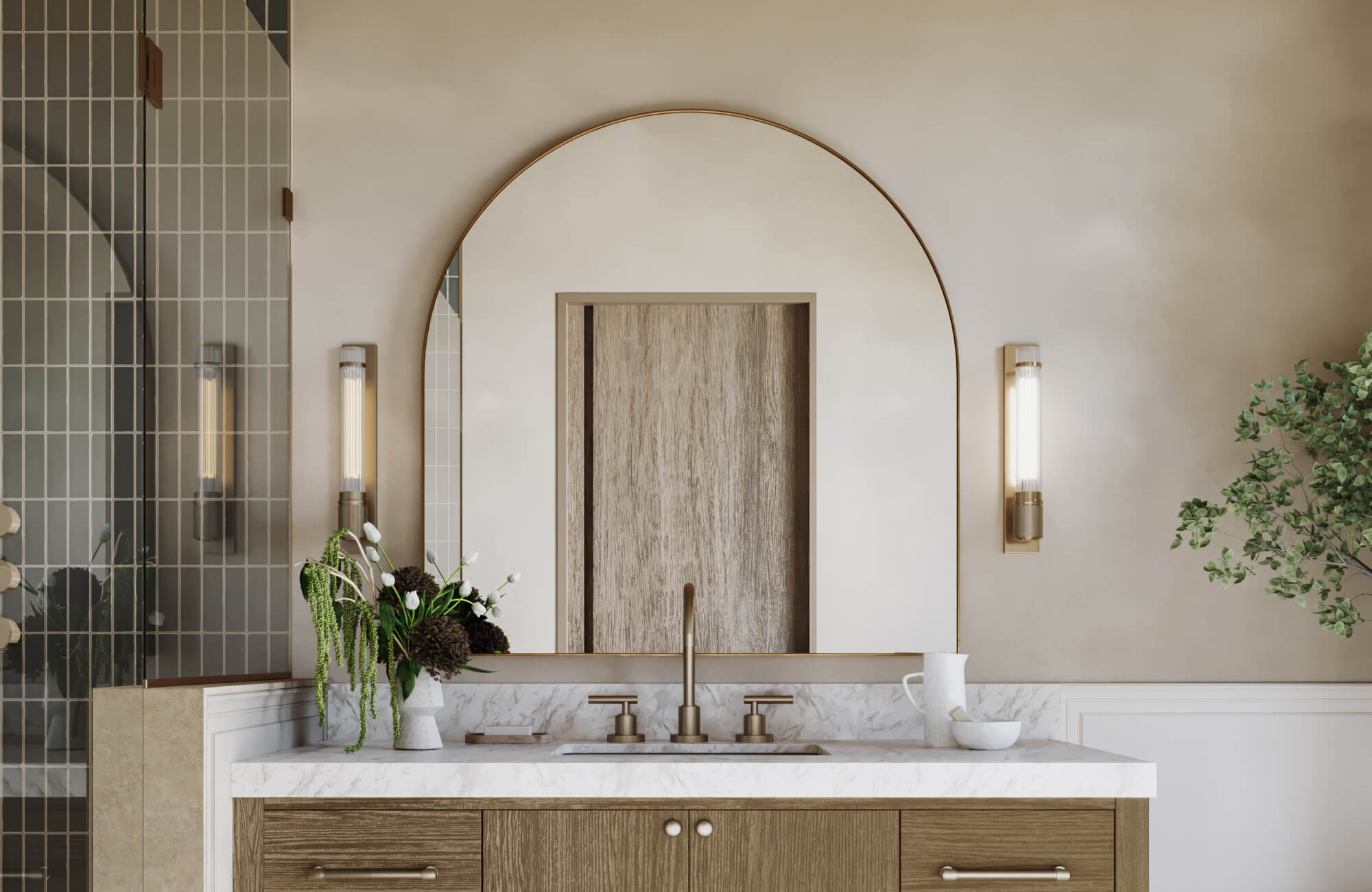
In the bathroom picture above, the arched mirror provides a perfect counterpoint to the rectilinear forms of the vanity, tile, and architectural details. Framed in a warm metallic finish, it anchors the space while still lifting the energy upward. This is our Esmeralda Wide Mirror in Polished Brass, a piece that combines a soft curve with a polished gold-toned frame for a look that’s both graceful and grounded. Its reflective surface also helps amplify natural light and serene elements like plants and marble, further enhancing the sense of ease and flow.
Best Placement and Energetic Considerations
Arched mirrors work well in bathrooms where you want to soften a predominantly angular design but still maintain structure. They’re particularly beneficial in modern or minimalist spaces, where too many hard lines can lead to Sha Qi (harsh energy). The arched top breaks up this rigidity while still offering visual stability.
For best Feng Shui impact, position arched mirrors so they reflect supportive elements, like a light fixture, plant, or soothing art; never a toilet or drain. Also, choose frames in materials that align with your intent: wood for warmth and growth, metal for clarity, or stone for grounding. When used purposefully, arched mirrors can create a bathroom that feels elegant, uplifting, and energetically balanced.
Irregular and Abstract Mirror Shapes and Their Risks
Although abstract or unconventional mirrors might seem like bold artistic statements, their impact in Feng Shui can be deeply unsettling. In a space as energetically sensitive as the bathroom, where balance and release are essential, these shapes often do more harm than good.
Energetic Fragmentation and Dissonance
Mirrors with uneven, jagged, or asymmetrical outlines disrupt the flow of chi by scattering it in multiple directions. Rather than encouraging smooth, nourishing energy circulation, these shapes fragment it, leaving the space feeling chaotic or emotionally unstable. This kind of energetic dissonance is particularly problematic in bathrooms, which already deal with downward and draining forces due to plumbing and water activity.
When you surround yourself with mirrors that offer no visual rhythm or energetic consistency, your own sense of balance can also be affected. Over time, this scattered energy may contribute to feelings of restlessness, lack of clarity, or even mild anxiety, which is an especially unwelcome effect in a room meant to calm, cleanse, and restore.
Avoiding Sharp Angles and Pointed Edges
In Feng Shui, any mirror that includes pointed corners or sharp protrusions is considered to emit Sha Qi, a harmful or aggressive energy. These sharp angles, often seen in starburst, irregular polygon, or sculptural designs, act like poison arrows, sending harsh chi into the space and directly at those using it.
Bathrooms are already vulnerable to imbalances because they feature many hard surfaces and are typically enclosed. Introducing mirrors with aggressive forms amplifies that vulnerability, making the room feel uncomfortable or even subtly hostile. If you find yourself uneasy in your bathroom without understanding why, the mirror's shape could be part of the problem.
Alternative Options for Creative Aesthetics
If your style leans toward the artistic or unconventional, there are still ways to express creativity without compromising Feng Shui principles. Mirrors with unique but harmonious shapes, such as softly curved edges, oval forms, or symmetrical geometric variations, can deliver visual interest while supporting a steady chi flow.
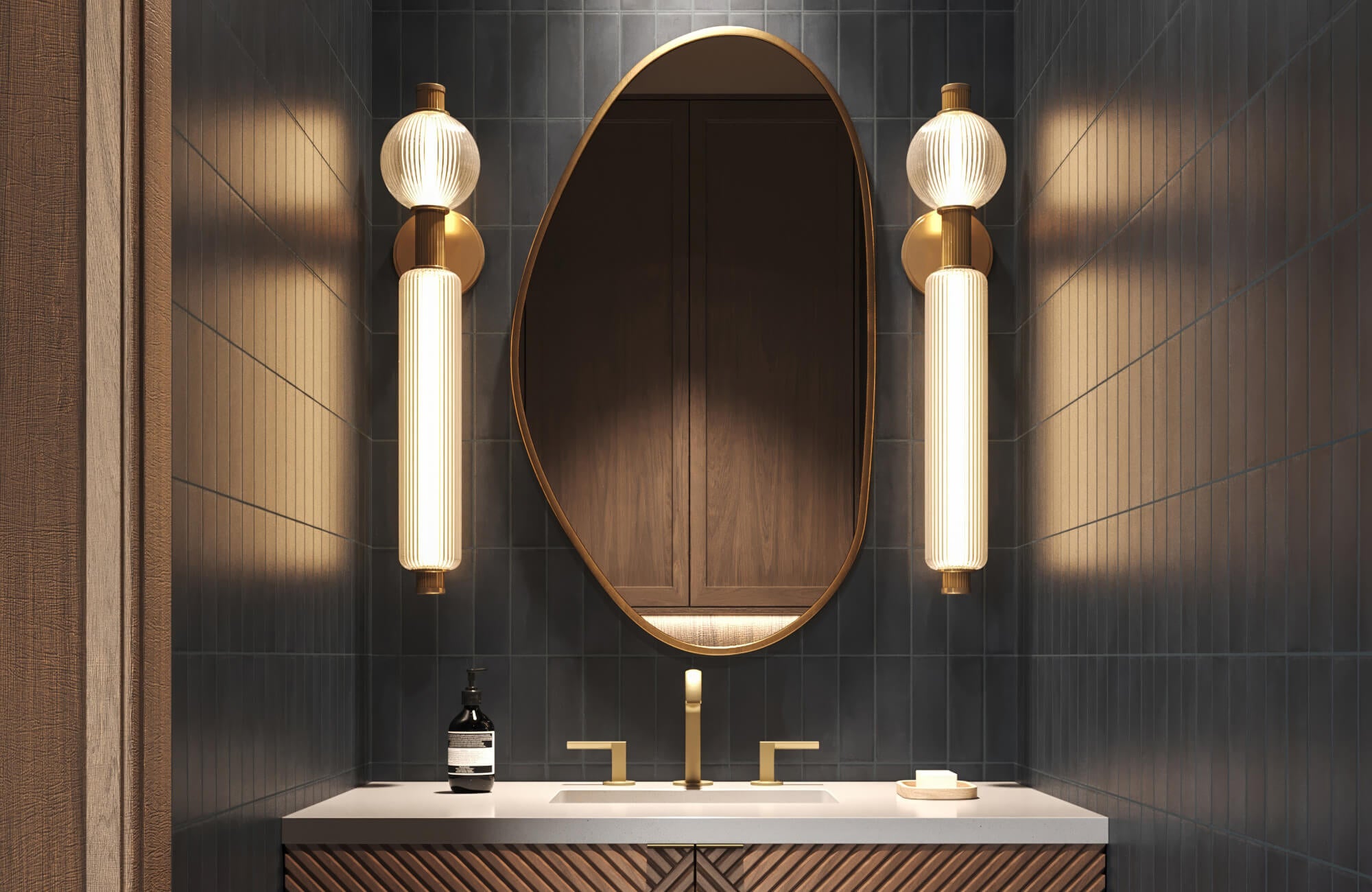
In the powder room shown above, the use of an elongated oval mirror softens the verticality of the narrow space while introducing an elegant focal point. Framed in a warm, muted metallic finish, it complements the sculptural sconces and textured wood vanity, enhancing the ambiance without overwhelming it. The mirror featured is our Rory Mirror in Antique Brass Iron, whose organic silhouette and antique brass finish add a refined, artisan touch. Its curved form not only contributes to visual softness but also encourages a smooth and continuous flow of chi, especially in compact or transitional spaces.
You can also explore mirrors that combine function with aesthetic detail in the frame rather than the shape itself. This allows you to bring in artistry through materials or design motifs while preserving the energetic clarity of a round or rectangular mirror. With thoughtful choices, you can enjoy a beautiful and unique bathroom environment that feels balanced, comforting, and energetically sound.
Frame Materials and Their Elemental Impact on Mirror Shape Effectiveness
The frame around a mirror significantly affects how the mirror's energy is expressed. In Feng Shui, the material of a frame influences the elemental balance within the room, either amplifying or distorting the mirror’s intended role.
Wood Frames for Growth and Vitality
Wood frames support the element of Wood, which governs growth, vitality, and health. When paired with a round or rectangular mirror, a wood frame enhances your sense of renewal and self-development, making it ideal for a bathroom where healing and rejuvenation occur daily.
Using materials like bamboo, walnut, or oak introduces a grounding yet upward-moving energy. These natural textures also soften the space visually, fostering a connection to nature that aligns with personal wellness and calm. You’ll notice the subtle shift toward warmth and liveliness when natural wood surrounds your reflection.
Metal Frames for Clarity and Sharpness
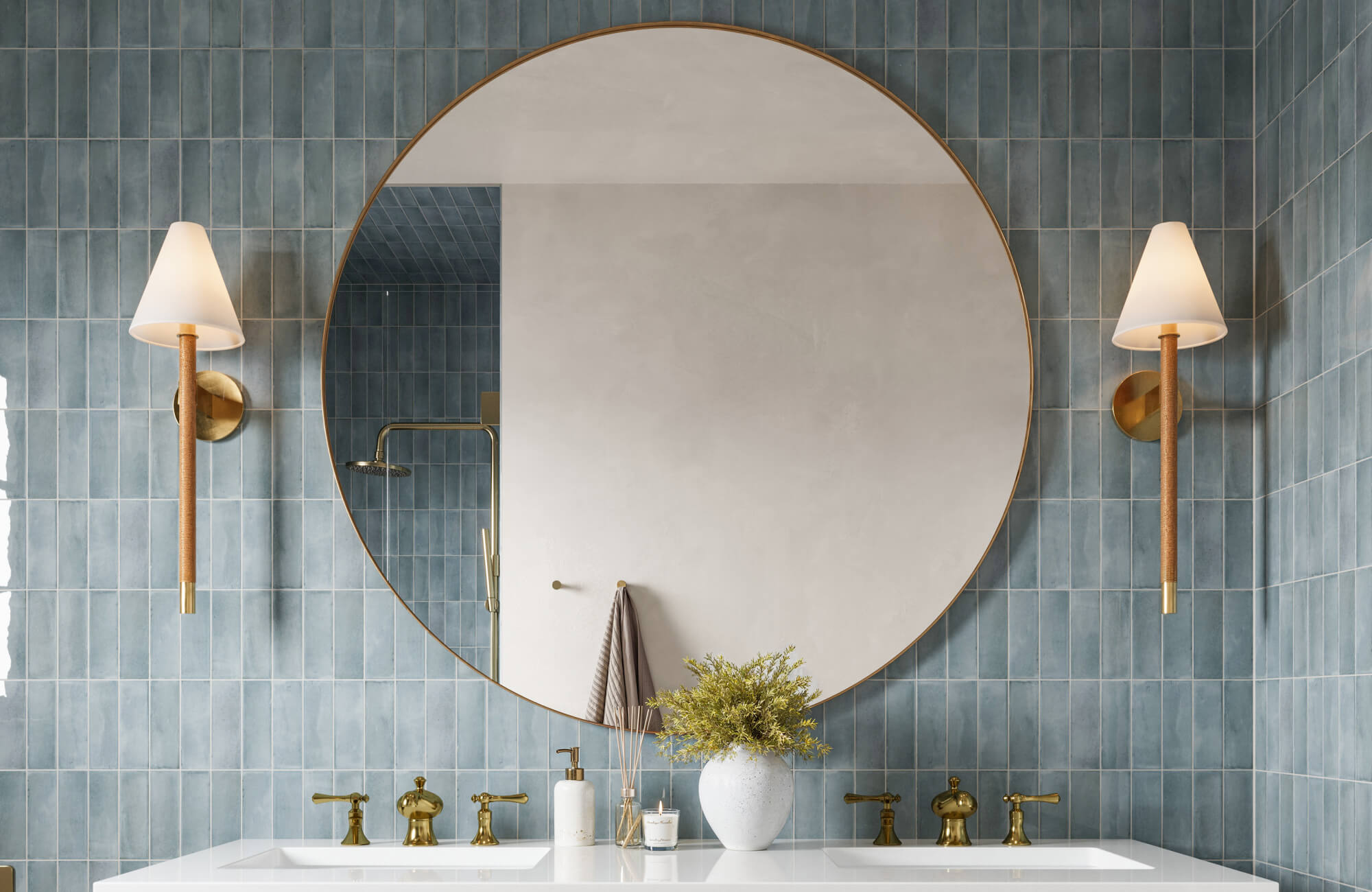
Metal represents precision, mental clarity, and order. A metal frame can sharpen the energetic tone of your bathroom mirror, making it easier to focus and think clearly. This is particularly useful when you're preparing for the day ahead and need a clean, mental reset.
As seen in the photo above, the large round mirror framed in a polished golden metal introduces that sense of clarity while softening it through its expansive, circular shape. The mirror shown is our Tristan Round Mirror in Polished Brass, a refined piece whose warm-toned metal frame encourages clear-mindedness without the cold edge of harsher finishes. Its polished brass surface also subtly energizes the space while maintaining a calming visual harmony, ideal for a bathroom designed to support fresh starts and gentle focus.
However, in a bathroom setting where too much harsh energy can feel unsettling, it’s best to choose metal finishes that are brushed, matte, or softened in tone. These temper the metal’s intensity while preserving its ability to clarify and streamline your space without overwhelming it.
Stone and Ceramic Frames for Grounding
Stone and ceramic materials bring the Earth element into your bathroom, which helps stabilize and anchor chi. Their solid, enduring nature also provides a strong counterbalance to fast-moving water energy, which can sometimes create a feeling of emotional ungroundedness in this space.
When you use stone or ceramic to frame a mirror, the result is a calming presence that holds the space with quiet strength. These materials are especially beneficial in bright or modern bathrooms, where they add necessary weight and warmth, encouraging you to feel more centered and present.
Avoiding Plastic and Synthetic Materials
Although plastic and resin frames may be convenient or budget-friendly, they lack the energetic depth needed for true Feng Shui harmony. These materials carry artificial, low-vibration energy that disrupts the flow of chi and offers little in the way of elemental balance.
Instead of relying on synthetic options, invest in high-quality, natural materials that support your well-being over time. Not only do these materials enhance the mirror’s Feng Shui function, but they also contribute to a more intentional, nourishing atmosphere, one that reflects and reinforces your long-term peace and vitality.
Creating Intentional Reflection in Feng Shui Bathrooms
Choosing the perfect mirror shape for your bathroom is a powerful way to influence the flow of energy, or chi, in the space. Whether it’s the calming presence of a round mirror, the grounded stability of a square or rectangular one, or the uplifting elegance of an arched design, each shape offers distinct benefits when used intentionally. Avoiding abstract or overly sharp forms also helps maintain harmony, while thoughtful placement and natural frame materials further enhance energetic balance. In Feng Shui, a mirror is more than a reflection—it’s a tool to support clarity, calm, and the emotional rhythm of daily life.
If you’re ready to apply these principles to your own space but aren’t sure where to begin, our team is here to guide you. Whether you're selecting a mirror that aligns with your energy or need expert advice on finishes and proportions, we’re committed to helping you create a bathroom that reflects both beauty and balance!
Follow us on Instagram
@EDWARD.MARTIN
)
)
)
)
)
)
)
)
)
)
)
)
)
)
)
)